Note: This website was automatically translated, so some terms or nuances may not be completely accurate.
 From the E-commerce Kingdom! New Marketing Discoveries! [1/7]
Discovery! "Selling" was like pouring water into a cup.
Welcome to Kyushu, the Mail-Order Kingdom!
Here, advertising is a simple world where "how much it sells" is everything. Precisely because of this, hints that get to the heart of "selling" are scattered everywhere.
What exactly is "selling"?
Madness erupts in the office. If you witness such a scene at a Kyushu ad agency, it's almost certainly the moment a newly produced TV shopping commercial triggers a flood of order calls. For advertising professionals in mail-order, seeing their ads hit the mark is incredibly gratifying. Conversely, that level of success is precisely how difficult it is to achieve in mail-order advertising.
I've been immersed in this direct response industry for nearly a decade now. For ten years, as a marketer and sometimes as a producer, I've grappled with the real-world market response: "What kind of creative will generate what kind of response?" No branding, no entertainment—just raw numbers and mountains of rejected ideas. Repeating this experience, I've recently begun to see the answer to a question I've held for years: the fundamental question of "What makes an ad sell?"
Three Key Points Hidden Within the Act of "Buying"
The catalyst for reaching this answer was the discovery of three key points hidden within the act of "buying," uncovered while sifting through vast response data. Let's start by introducing them.
<Point 1> The starting point for "buying" is always "need"
Marketing books often say things like "create new needs," but unfortunately, in most cases, people tend to buy only things they already feel a need for.
However, this need isn't always consciously present. Much like forgetting shopping items unless you jot them down, unless the need is significant, it tends to be tucked away somewhere in the back of the mind. That's precisely why, to generate purchasing desire, it's crucial not to "create" the need, but to "make people aware" of it – to draw their attention to and remind them of a need usually stored deep in the recesses of their mind. Actual data also shows a significant difference in response rates between ads that first remind people of their needs and those that don't.
<Point 2> The "right brain" always decides to "buy"!
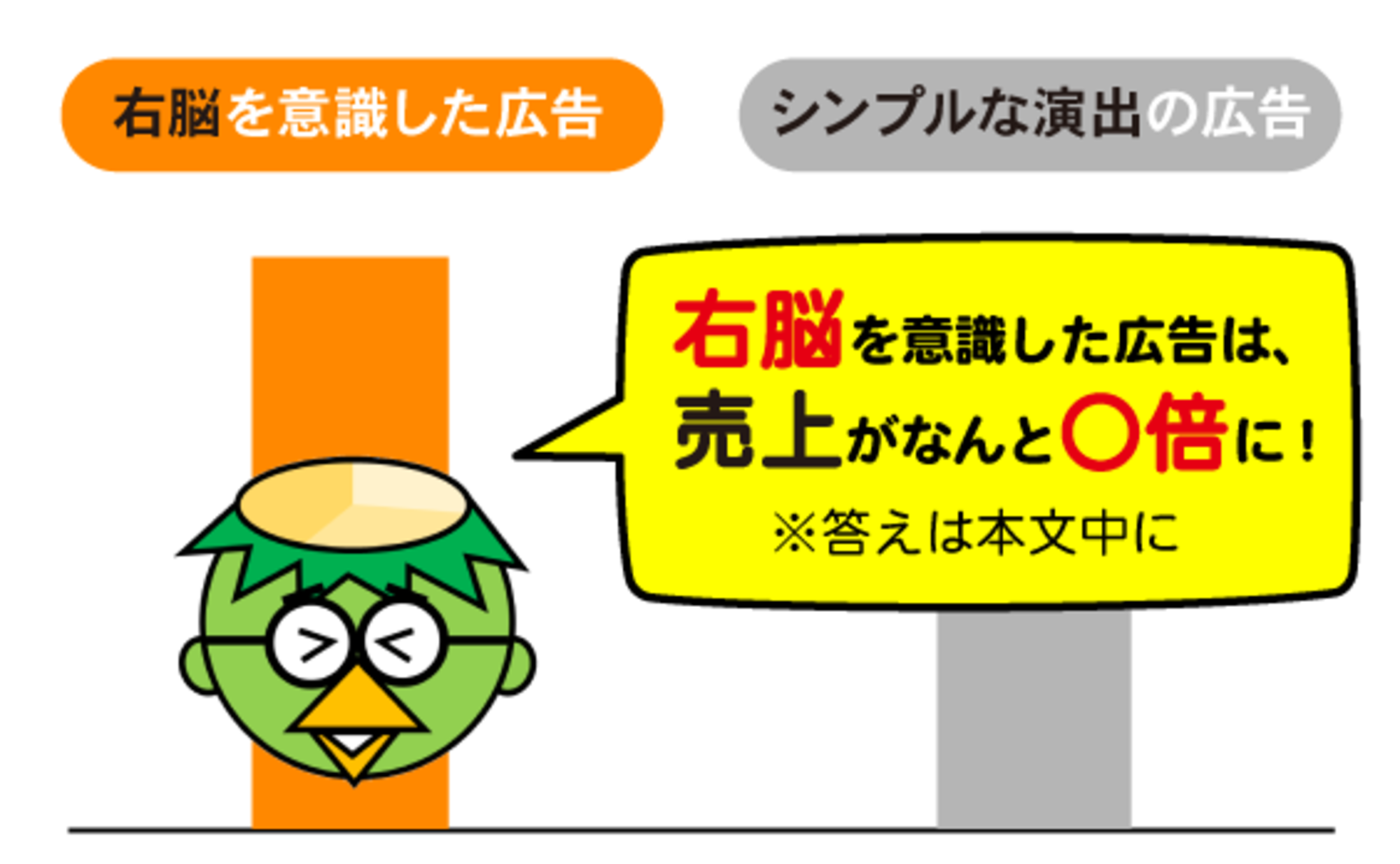
Another common feature of successful direct mail ads is the inclusion of expressions that appeal to the right brain. Specifically, data shows that responses are sluggish when ads rely solely on "left-brain" functional explanations based on logic and theory. However, responses improve when "right-brain" elements are added – elements that directly resonate with feelings like "happy," "pleasant," "beautiful," or "delicious. " This clearly demonstrates that the right brain makes the purchasing decision. A familiar example is "impulse buying" – purchasing something without a clear reason. This behavior also illustrates that it's the right brain, not the left brain, that makes the buying decision.
Incidentally, this doesn't mean the left brain is entirely useless. It seems to play a supporting role, constructing reasons to buy and backing up the right brain's decision. A prime example is checking reviews on a review site after an impulse purchase. Even in mail-order advertising, expressions lacking any left-brain explanations tend to result in lower response rates.
<Point 3> "Buying" is a state where accumulated positive feelings reach a breaking point
So, what drives the "decision to buy"? The answer we arrived at is "no solution." In other words, buying isn't fundamentally a decision made; rather, it seems to be something like automatically entering a "want to buy" mode once accumulated positive information exceeds a certain threshold.
The proof lies in mail-order ads, which typically follow repetitive information patterns. Companies uniformly adopt this "format" precisely because the accumulation of information yields results. Surveys of mail-order buyers also revealed that most respondents initiated their purchase after accumulating a certain amount of information. From this, we concluded that when positive feelings overflow beyond a certain threshold, consumers enter a "want to buy" mode.
The Essential Structure for Selling, Born from Backward Calculation
These three key points of the "buying" psychology. Working backward from them reveals the essential structure needed to "sell." Let's organize it in a schematic diagram.

This structure resembles the approach to sales talk in customer service roles. Whether it's face-to-face sales or mail-order advertising, as long as the target is human, the psychology driving purchasing decisions remains constant. In that sense, even in general mass campaigns, structuring efforts with this purchasing psychology in mind could potentially yield better results.
To strengthen the "selling" aspect...
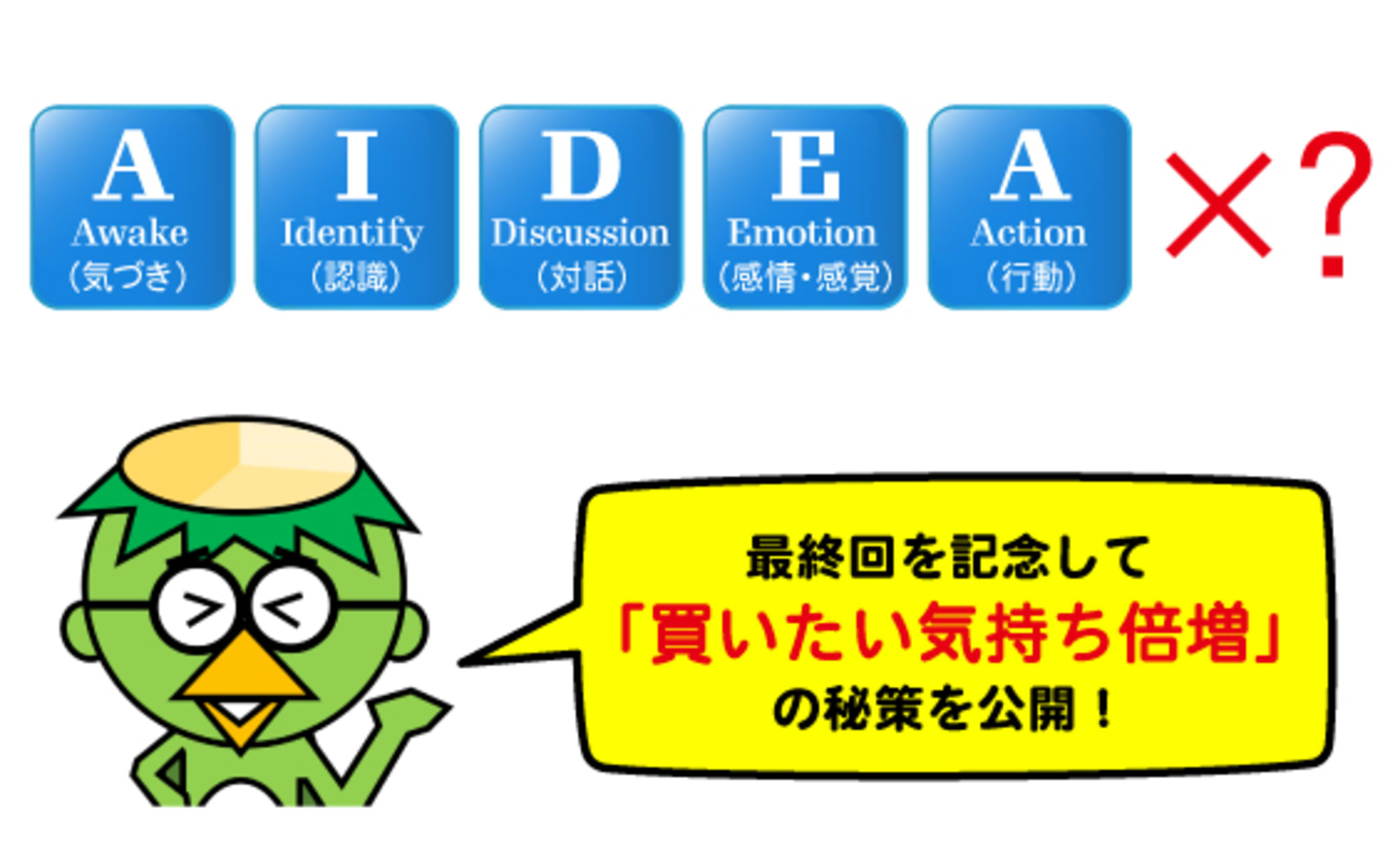
The emerging "approach to selling ads"—what do you think? Our team refers to this concept as the "AIDBA" model, a new purchasing psychology framework (read the explanation at the end of this article if you're curious about its origin). Of course, if selling were as simple as just having a concept, we wouldn't have any trouble. So, in future articles, we'll delve deeper into more concrete selling techniques based on this concept. Thank you for reading!
★Bonus Explanation: The AIDBA Model

Was this article helpful?
Share this article


Newsletter registration is here
We select and publish important news every day
For inquiries about this article
Author

Katsuyuki Kazuki
Dentsu Kyushu Inc.
Communication Design Bureau Direct Marketing Department