Note: This website was automatically translated, so some terms or nuances may not be completely accurate.
 The Psychology of Modern Consumers Revealed Through the Synergy of Mail-Order Advertising and Psychology [5/7]
How can we unlock the key to purchasing—the "right brain"?
A unique project team combining mail-order advertising and psychology spent three years analyzing mail-order advertising data. We present topics from the resulting book, " The 7 Laws of Effective Advertising " (Kobunsha Shinsho), in a 7-part series.
When it comes to human organs with distinct right and left sides, the lungs and kidneys come to mind. In terms of being internally divided, the heart could also be considered one. While all are vital organs, the differences in function between their right and left sides are surprisingly little known.
Amidst this, there exists a rare organ where most people can instantly describe the functions of its right and left sides: the brain. It's almost common knowledge that the left brain governs reason while the right brain governs emotion. The reason the right and left brain are so well-known is likely because reason and emotion are distinct for humans, and everyone has experienced frustration over this difference in inclination.
This time, I'd like to explore how this very tension between reason and emotion influences human shopping behavior.
Oh, and by the way, the idea that the left brain is rational and the right brain is emotional actually has a surprising flip side. I'll share that intriguing story at the end of this column.
We choose with "reason" and decide with "emotion" – that's modern shopping.
In purchasing, reason and emotion function as entirely separate entities. While using "reason" to evaluate whether a product meets one's needs, we simultaneously use "emotion" or "sensation" to judge whether we can allow that product into our world. That is the shopping behavior of modern people. There are many examples illustrating this.
For example, take "girly-type" consumption: buying something because it's cute, even when its specs are clearly subpar. This is a purchase where emotion overrides the rational evaluation.
Then there's the "obsessive dad type" consumption often seen in adult men, who insist, "I won't buy anything but this brand." Here, even if reason understands the value of other products, emotion won't permit choosing them – a purchase entirely driven by emotion.
Whether reason or emotion wins varies by person and by what's being bought, but overall, emotion seems to prevail more often. Personally, I feel like emotion stamps its approval on a rational decision before giving the green light to buy.
In any case, within the purchasing steps, it's reasonable to consider the stage of rational evaluation and the stage of judging whether something appeals on a sensory/emotional level as distinct processes.
A New Purchase Psychology Model Focusing on "Reason" and "Emotion"
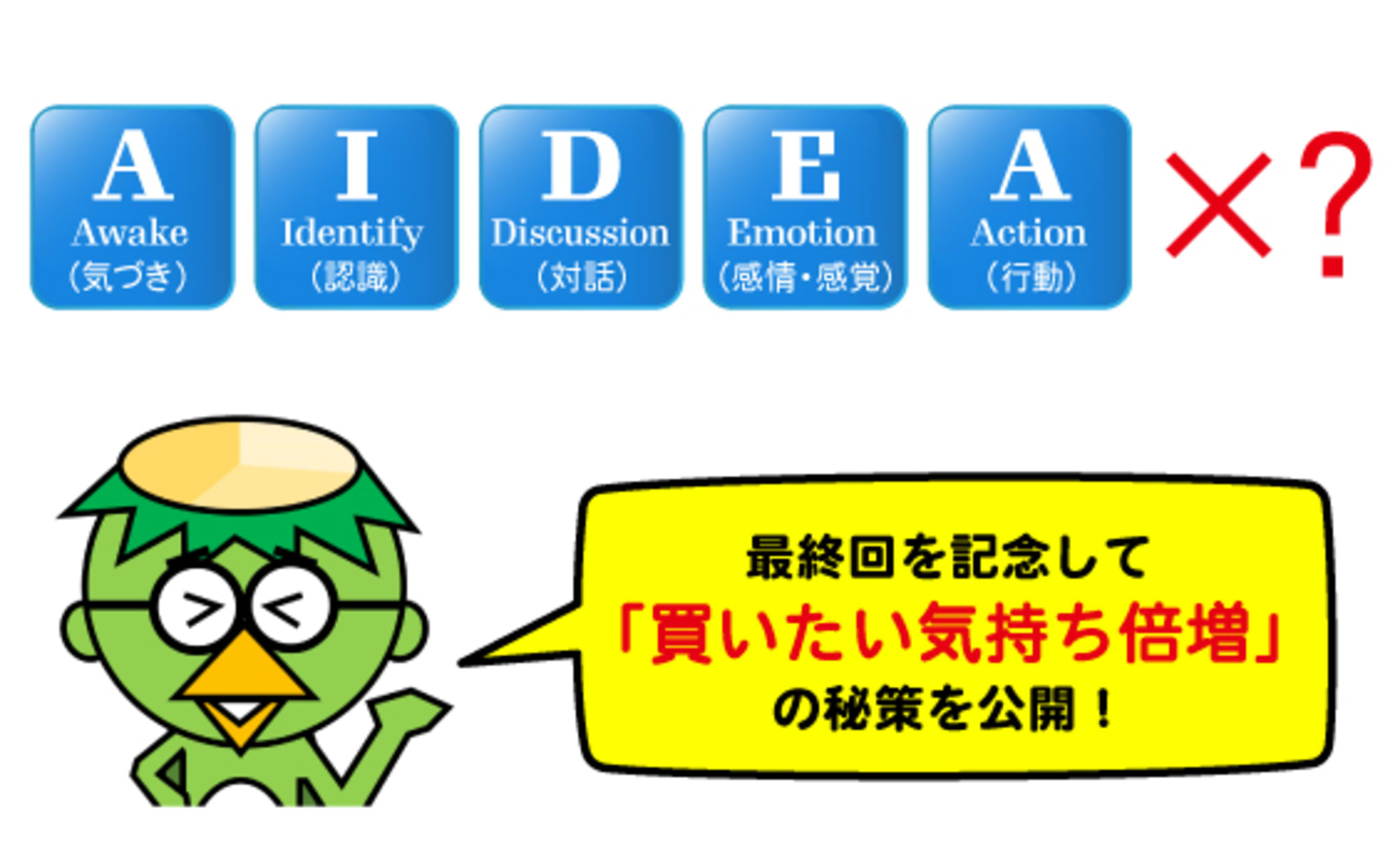
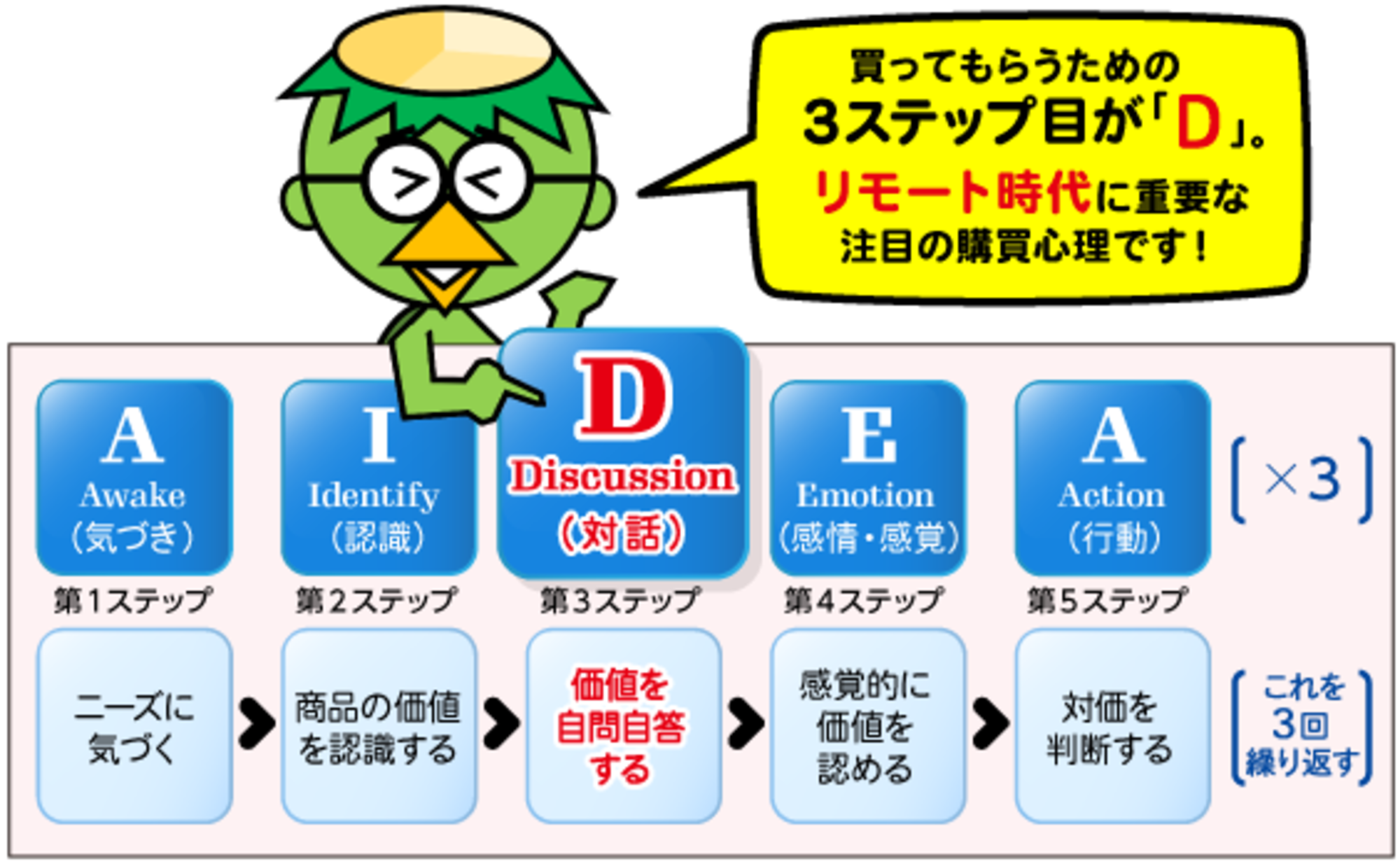
Our proposed purchasing psychology model, the "A·I·D·E·A (×3)" model, was born by focusing on the workings of this "reason" and "sensation/emotion."
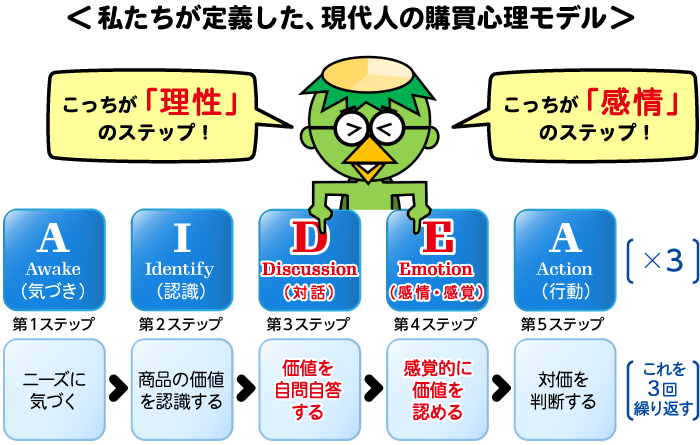
The third step, "Discussion," introduced in the previous column, is where consumers internally question and evaluate the product's value. This step is precisely positioned as the stage of rational consideration.
Immediately following this is the fourth step, "Emotion (Emotion/Sensation)." This step involves judging whether one likes the product, purely without logic.
Previous purchasing psychology models largely overlooked this distinction between reason and emotion. They tended to cram both rational and emotional evaluations into a single step, such as "consideration" or "research," which signifies reason.
However, in actual purchasing behavior, these two aspects function in parallel, influencing the buying decision. That's precisely why our model deliberately separates the "Emotion" step from "Rationality," making them distinct steps.
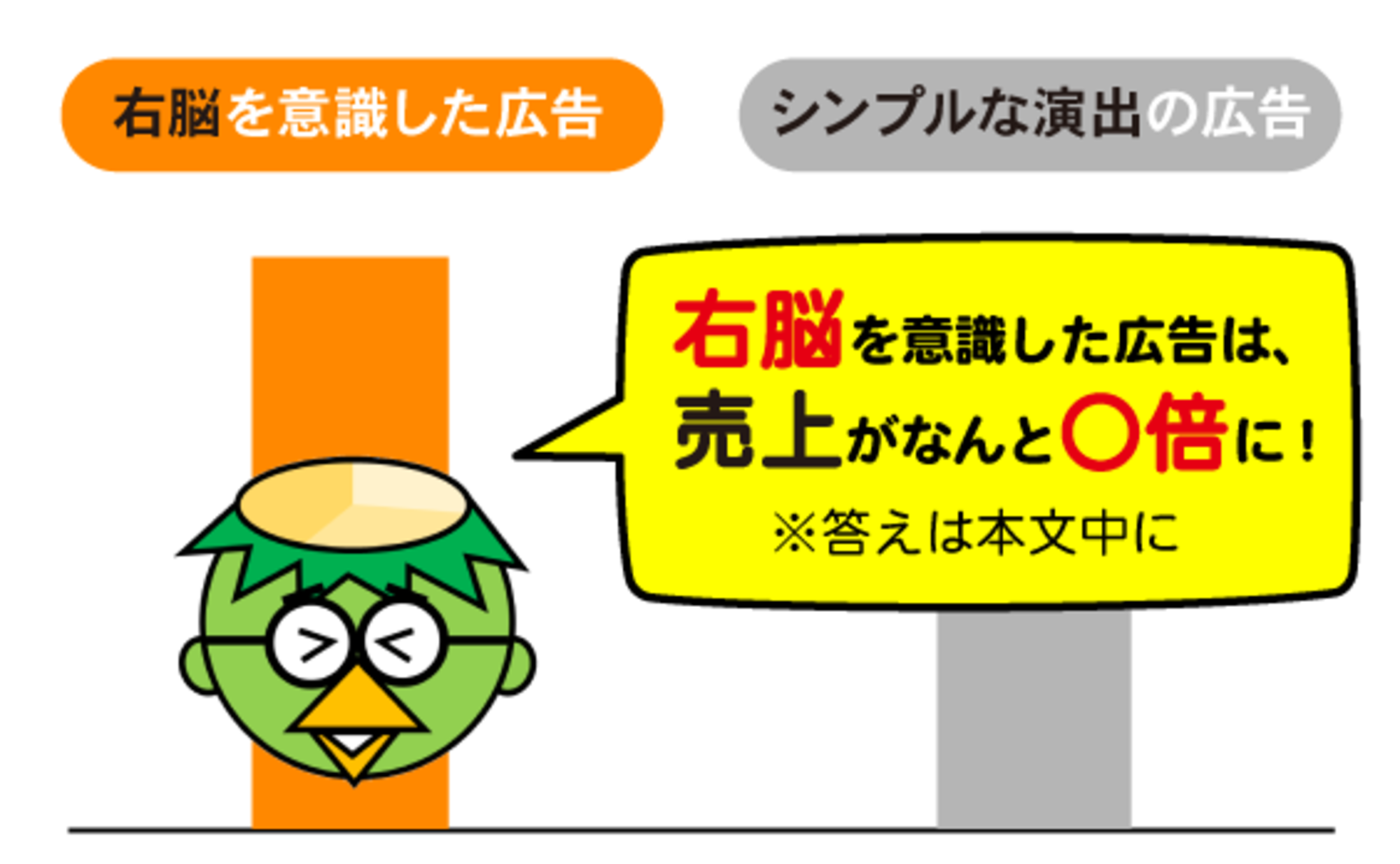
When appealing to "emotion," the number of purchasers increased by a remarkable 1.7 times.
There's a clear reason we're so confident that "Emotion (feelings/sensations)" is such a crucial element that it warrants its own step. It's because, during our research, we obtained experimental data like this. It's a bit complex, so bear with me as I explain.
We conducted an experiment (AB test) comparing, roughly speaking, "mail-order ads conveying only rational information" with "mail-order ads incorporating elements that stimulate emotion and sensation in addition to rational information."
In fact, a proven technique for targeting emotions and sensations in mail-order ads is the effective use of BGM and telop, as shown in the diagram below. This method involves significantly altering the BGM and telop design—using lively, upbeat music and elegant fonts for positive scenes, and somber music with weak telop designs for negative scenes—to boost response rates.
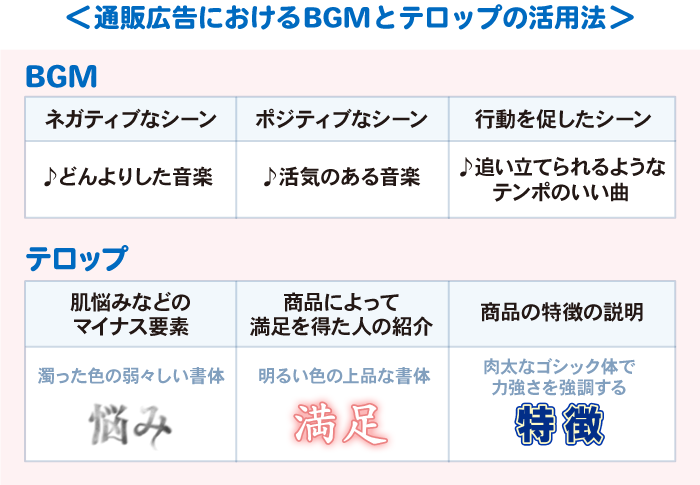
For the experiment, we adopted this technique. We produced two versions of the same product's TV shopping program: one with the changes shown above in the BGM and text design (we call this Pattern A), and another with mostly consistent, monotonous BGM and text design (we call this Pattern B). We actually aired both versions and measured how many orders each generated.
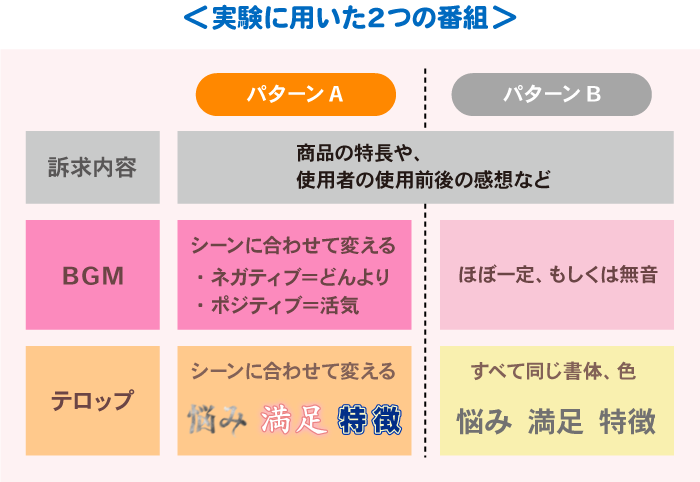
The two programs were nearly identical in all elements other than BGM and text design. This means the explanations of the product and its selling points, as well as the presenters and their comments, were largely the same. In other words, the information appealing to "reason" was identical; only the aspects related to "emotion" and "sensation" – such as music and text design – differed. Therefore, the difference in results between the two programs can be directly interpreted as demonstrating the effect of "Emotion (emotion/sensation)."
Now, the intriguing results are as follows.
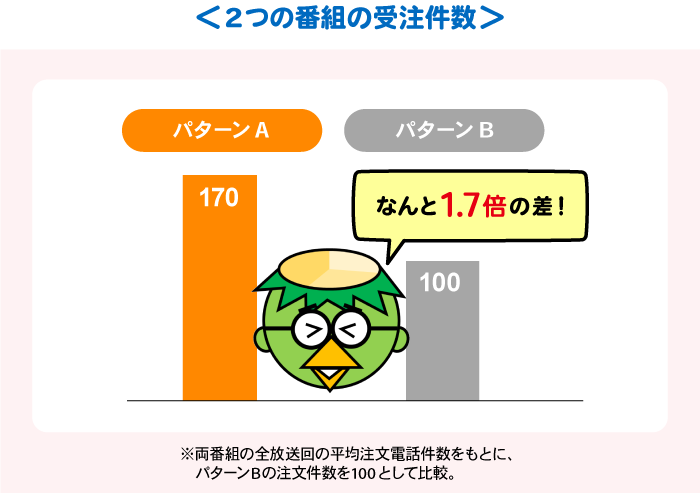
As you can see, the difference in orders between Pattern A, which appealed to "Emotion (emotion/sensation)," and Pattern B, which did not, was a remarkable 1.7 times greater. This demonstrates that whether or not you appeal to "Emotion (emotion/sensation)" can create a 1.7-fold difference in promotional effectiveness. This result clearly shows how crucial the "right brain" is in purchasing behavior.
Tapping into "Emotion" is one of the keys to future business success
In mail-order sales, call centers play an even more crucial role than advertising. Due to my work, I often speak with call center staff. When I ask top-performing salespeople for their secrets, they consistently mention the same thing: the key to successful sales is "speaking in a way that paints a picture in the customer's mind." Similar advice frequently appears in how-to books by skilled retail salespeople.
Given this, it's undeniable that in modern purchasing behavior, "emotion" and "sensation" – filling the mind with positive images and creating a favorable mood – play a crucial role in securing a sale. The "Emotion" step introduced here precisely fulfills this function.
In today's fiercely competitive era where products increasingly become commoditized, trying to win solely on product specifications requires enormous development and manufacturing costs. Considering this, a key to winning future competition might lie not just in product development, but also in developing effective sales approaches. How to stimulate the senses, how to satisfy emotions. Products that achieve this are more likely to succeed. As an advertiser myself, I intend to keep racking my brain to develop ads that can stimulate more "Emotion."
Incidentally, the biggest takeaway I gained from this joint research with the psychologist—the very topic mentioned at the beginning—concerns the truth about the right and left brain. It turns out that the notion of "right brain = emotion/sensation" and "left brain = reason/theory" is completely pseudoscience, lacking any scientific basis. Neuroscience has revealed that the functions of each are not biased toward one hemisphere of the cerebrum.
Yet many people readily accept the right-brain/left-brain narrative. I suppose it's because most of us still tend to feel that reason and sensation are fundamentally separate things.
Was this article helpful?
Share this article


Newsletter registration is here
We select and publish important news every day
For inquiries about this article
Back Numbers
Author

Katsuyuki Kazuki
Dentsu Kyushu Inc.
Communication Design Bureau Direct Marketing Department