Note: This website was automatically translated, so some terms or nuances may not be completely accurate.
 Toward Digital Technologies That Move People [5/6]
Creating Together with Consumers Why Crowdfunding and User-Co-Created Services Seem Poised to Change the World
Last time, we discussed the importance of "local" in the online sphere and the new forms of communication emerging from dialogue with "communities." This time, we'd like to explore the idea of co-creating services and quality alongside communities.
Crowdfunding: Where the Creator's Passion Generates Support
Many of you may be wondering, "What exactly is crowdfunding?" Crowdfunding is a portmanteau of "crowd" and "funding," referring to a service that allows anyone to raise funds by soliciting investments from an unspecified number of people via the internet.
In the US, Kickstarter is a popular site, and many products have reached global markets through this service. In Japan too, numerous services have launched, and countless projects have taken shape through crowdfunding. (Perhaps some of you reading this have even backed a project through crowdfunding?)
Crowdfunding is a service where a project creator registers their desired project on a platform operated by a crowdfunding company. Supporters who agree with the project then contribute funds via credit card payment, based on the "rewards" they will receive upon the project's successful completion. The interesting aspect here is that the creator sets the required amount (the funding goal) themselves. If the goal isn't met by the deadline, the supporters' credit cards are not charged, and the creator receives no funds.
Therefore, project creators call for support through social media. This call spreads on platforms like Twitter and Facebook, gathering support from people who resonate with the vision. As the deadline approaches, driven by the desire to make the project happen, the creator and supporters unite to amplify the project's message. Because the project creator and supporters who share their vision communicate closely together, by the time funding is secured and the project starts, a community formed by the creator and supporters has already taken shape. Many project rewards include things like "an invitation to a results report party" or "access to a work unveiling reception," designed to turn online connections into real-world ones.
"Passion" Connects Consumers and Creators
The crucial element in crowdfunding is "passion." Traditionally, product development, event organization, and operational management prioritized "how to generate revenue." Without projected ROI, securing investment and executing projects was impossible. Crowdfunding, however, creates a situation where necessary funding is secured upfront. Therefore, the key factor isn't ROI, but "how compelling the passion is."
What's required is a strong passion: "I want to make the world more convenient with this product," or "I want to create this kind of organization to help these kinds of people." If this passion is strong enough, even if the need is highly personal, people who catch that information online and empathize will rally support for others who share that same passion. In fact, the key to whether a project succeeds lies in close communication on social media. The few projects I personally funded that successfully launched were, without exception, ones where the project creator personally followed me on social media. I was deeply moved by their strong passion for the project and their commitment to pursuing their dream. People moved in this way spread that enthusiasm, generating new support.
Co-creation with users begins by conveying "passion"
While crowdfunding was a mechanism for raising "funds," communication centered around "passion" generates support not only in the form of money but also ideas and advice.
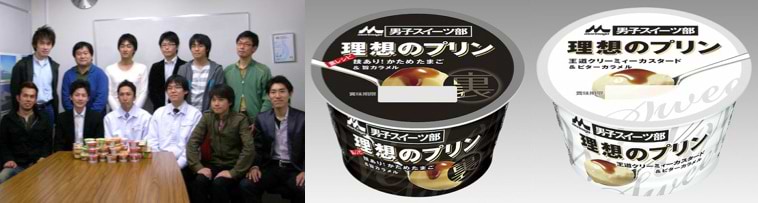
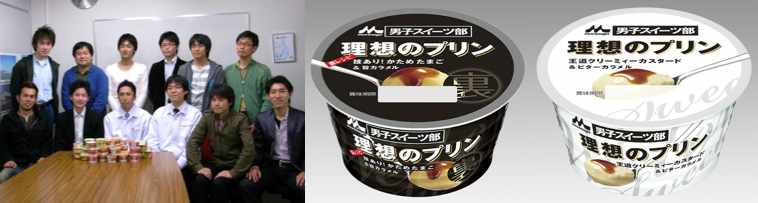
Nifty has long fostered new product development and corporate-user collaborations through communication with internet users, exemplified by initiatives like the "Men's Sweets Club" and "Sake Community." Crucially, the opinions of "passionate consumers" become valuable assets for producers.
Morinaga Milk Industry × Boys' Sweets Club "The Ideal Pudding"
Source: http://sweets.nifty.com/cs/catalog/sweets_report/genre/category_rpt-category-31/1.htm
Takara Shuzo × Women's Sake Community "Ginger Plum Wine"
Source: http://sake-commu.cocolog-nifty.com/main/ume.html
It enables product development that leverages consumer feedback—ideas producers wouldn't conceive, unexpected improvement points, and actually valued features—that aren't visible in producers' own data. Furthermore, consumers who participate in product creation become the product's first fans, thinking "I made that!" and voluntarily become the leading advocates for word-of-mouth promotion. This is an immensely valuable asset.
Toward a Society Where Consumers and Producers Connect
The traditional roles of "consumer" and "producer" may begin to shift. Previously, the connection between consumers and producers existed solely through the products and services themselves. Now, however, social media has ushered in an era where companies can connect directly with consumers. As mentioned earlier, "consumers" are not just looking to consume; they seek encounters with businesses that will help them realize their own aspirations. Producers engaging with such consumers need more than just "making what sells"; they need a compelling "vision" that resonates with consumers—a vision that inspires them to say, "I want to make this happen!" through the products and services they produce.
I believe we will see more direct connection points between such consumers and producers in the future. Dentsu Inc., together with Nifty, has launched a service called "Umai Mon Producer" to connect local producers with consumers.
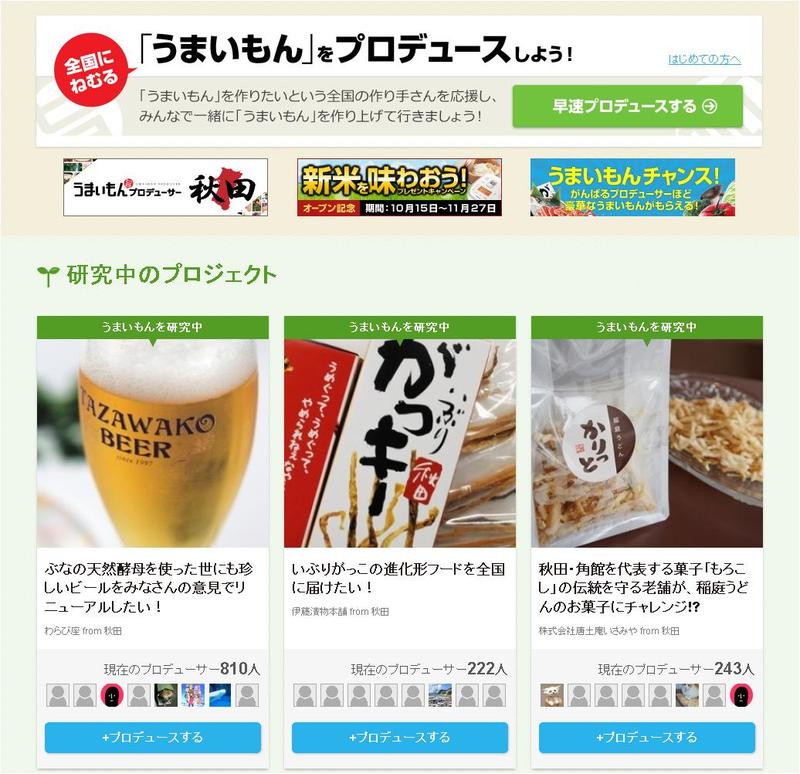
Umai Mon Producer https://umaimon-p.nifty.com/
This service specifically aims to create connections between local producers and consumers centered around the theme of "food." As you can see on the site, this service shows the "faces" of the producers and is filled with their "passion." By glimpsing the stories behind who makes the products and why they are passionate about them, consumers can experience encounters with products unlike anything before.
In this way, online communication has transformed relationships between consumers and producers. The internet, which was once just a collection of "homepages," has evolved into a tool that creates human connections and builds a better society.
This column has traced the evolution of online communication from the birth of the internet through Web 2.0 and social media. Next time, I'll summarize these developments and reflect on the path forward for communication mediated by the online world. This column will conclude with the next installment. I hope you'll stay with me until the end.
Was this article helpful?
Share this article


Newsletter registration is here
We select and publish important news every day
For inquiries about this article
Back Numbers
Author

Sato Jun
Dentsu Hokkaido Inc.
Media and Digital Bureau