Note: This website was automatically translated, so some terms or nuances may not be completely accurate.
 Toward Digital Technologies That Move People [6/6]
The Future Online Experience Brought by Real-Time Web Digital Technology, Our Lives, and Future Consumption
Well, this column has now reached its final installment. Thank you to everyone who has read it so far! This time, we'll look back on the series while also looking ahead to the future of digital technology and the world we are heading towards.
From Web 2.0 to Real-Time Web: The "Website" Becomes a Timeline
The information explosion sparked by Web 2.0. Today, numerous "constantly changing" digital media, starting with social media, have emerged. The concept of a "site" is fading, replaced by personalized timelines unique to each individual. Indeed, SNS platforms like Twitter and Facebook no longer have the concept of a "homepage"; instead, they display each person's individual timeline.
Furthermore, future websites will undoubtedly be primarily accessed via smartphones. Websites will no longer be confined to desktop viewing but will become accessible anytime, anywhere.
Until now, the "Internet" was thought of as something accessed through a computer browser (like Internet Explorer or Firefox). However, communication via smartphone apps has become a reality, and in the future, we might see the emergence of a "body that is always online and accessible to information," transcending the concept of a mere screen. While this may seem like a distant future, the miniaturization of devices that extend bodily senses, using smartphones as hubs, is steadily progressing.
Technology Connecting the Body and Environment
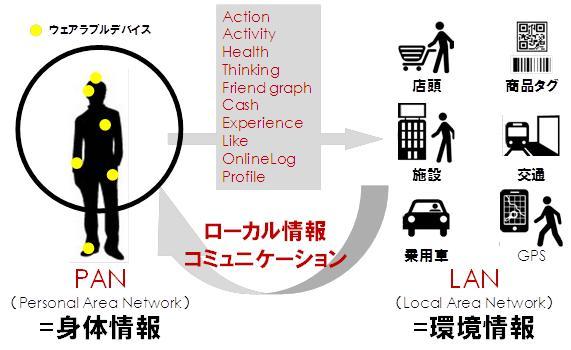
Currently, "wearable devices" like Google Glass and smartwatches are developing rapidly. These devices will realize the aforementioned "body that accesses online information anytime." Thus, the body's senses, movements, and even thoughts and biometric information will be shared online in real-time, synchronizing with external information.
However, our bodies can only experience reality in the place where they physically exist—the local environment. Even as communication methods expand, the reliability of these connections is secured by social graphs tied to the real world (trust relationships with friends, communities, and media).
Furthermore, the means (vehicles) for distributing this information will diversify. To deliver local information to body-side information terminals like wearable devices, information dissemination from buildings or transportation systems, as well as location-based information provision, are conceivable. What kind of message we embed in these new information channels becomes crucial.
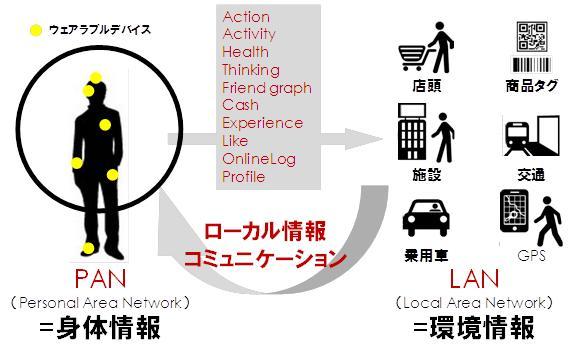
Examples of Interaction Between Body Information and Environmental Information
Heartfelt communication is essential
We will increasingly experience interactions with information through these multiple channels. In such situations, companies often prioritize direct sales appeals driven by marketing. Moving forward, it will be necessary to speak to each consumer's unique story—addressing "Why is this product or service important to you?" By imagining not just the purchase history, but the entire situation leading up to the consumer's buying decision, businesses can provide service that truly understands the consumer's intent. Whether in-store or online, delivering such messages to consumers creates genuine hospitality.
To effectively reach consumers, the key lies in crafting stories through influential communities and authorities within their sphere, along with curating the context. Ultimately, people are driven by heartfelt communication.
While digital marketing has prioritized harvest-type approaches like listing ads, the emergence of online-to-offline touchpoints will likely lead to a renewed focus on human-to-human marketing.
When we encounter products or services imbued with genuine care, we feel joy. This very joy sparks further consumption and leads to marketing that brings in loyal customers.
It began with digital technology, yet concluded with a very analog outcome. This is my vision for the future of digital technology and consumption. I conclude this column dreaming of a world overflowing with joyful shopping experiences. Thank you for your long-standing readership.
Was this article helpful?
Share this article


Newsletter registration is here
We select and publish important news every day
For inquiries about this article
Back Numbers
Author

Sato Jun
Dentsu Hokkaido Inc.
Media and Digital Bureau