Note: This website was automatically translated, so some terms or nuances may not be completely accurate.
 Toward Digital Technologies That Move People [3/6]
What is SOLOMO? Tips for boosting real-time web communication
Currently, digital marketing in Japan is often discussed within the context of "O2O," but in the United States, the term "SOLOMO" is increasingly becoming the mainstream equivalent.
This "SOLOMO" may sound unfamiliar to many, but it's named by taking the initial letters of "SOcial/LOcal/MObile" and actually captures the essence of real-time web.
"O2O" stands for Online to Offline (and sometimes Offline to Online), referring to strategies like driving actions from online ads to physical stores, or detecting smartphone location data to issue coupons to users, thereby tracking conversions (such as purchases) online.
"SOLOMO" focuses on the offline aspect as "local," gaining attention as a strategy to activate local communication that cannot be captured by data alone. This time, let's delve into the concept of "SOLOMO" and explore hints for engaging with consumers in the real-time web.
Social = Local-Minded Communication
Recently, in Japan too, we've seen many companies utilizing social media like Facebook pages and Twitter accounts. However, most companies likely view social media as just one online communication channel.
However, as companies operate their social media, they likely realize that the source of their content often stems from local, offline events.
This point was echoed by Facebook Director Mark D'Arcy at ad:tech Tokyo 2012 when he stated, "Facebook is 'local'." The importance of information originating locally within social media is growing. This is because, on a web that was fundamentally anonymous, sharing information using real names has made online content reflect the real-life environments of specific individuals (communities). Consequently, there is now a demand for local and authentic information.
Information connects us in real time through mobile
And the bridge connecting social media and the local sphere is the smartphone. Various social media platforms are constantly accessible via smartphone apps, and thanks to high-performance cameras, content like photos and videos can now be shared in real time without complex editing. It's uploaded to social media as if capturing the world right before your eyes.
This information is instantly shared and disseminated on social media. Because smartphones deliver notifications, it reaches users before it gets lost in the vastness of the online world.
Thus, the convergence of three elements—social, local, and mobile—has enabled real-time online communication.
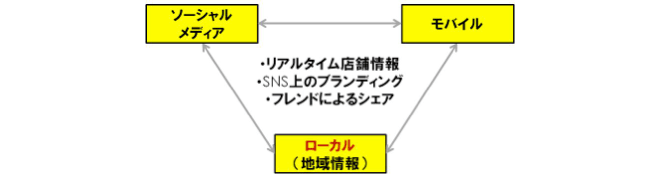
Pausing to reflect, paradoxically, the key to understanding current online communication may lie in how we leverage the "local" channel—the offline element—among these three.
The Importance of Local Information Sharing and Community
Technologically, sharing information from the local level is straightforward. Social media platforms have evolved precisely to facilitate this rich sharing of local content. They not only include features like photo editing within the app but also incorporate location tags and user recommendation functions, making it easy to share information without even typing.
However, the crucial factor in attracting consumers through such local information sharing is how trustworthy that information is.
For example, when users encounter completely unfamiliar information on social media, they first consider, "Is this information beneficial to me?" If the source is a shop they know or information shared by a friend, they can personalize and accept it based on their own experiences and memories. In other words, it becomes crucial that the information is shared as part of their own community.
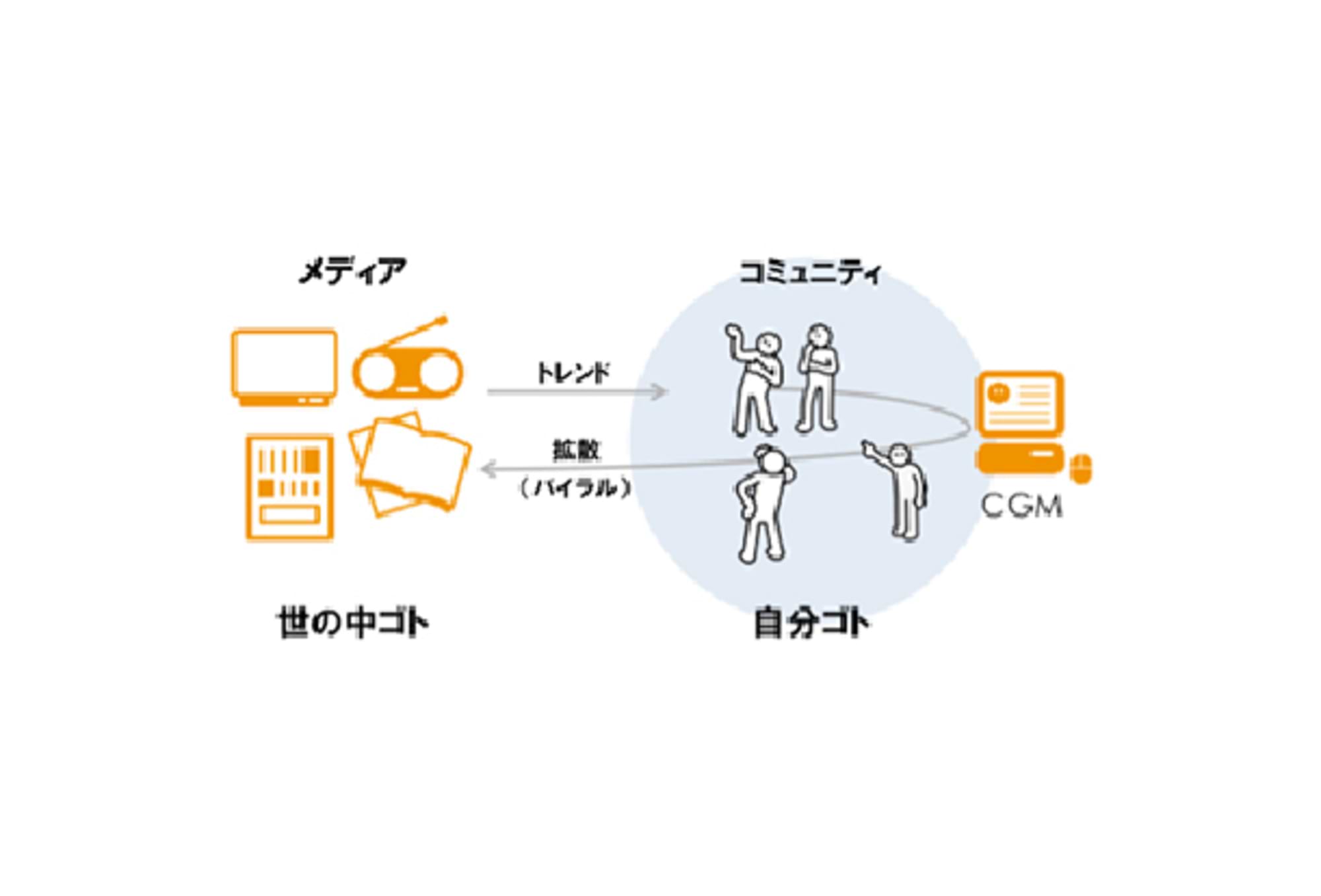
So, how should such communication be conducted? For companies themselves, maintaining active communication on social media or running community platforms like membership sites can sometimes be a high hurdle. In this context, specialized web media and locally rooted media (such as local newspapers and regional TV stations) are gaining attention. By collaborating with such media and curating information as an authority within the community, consumers find it easier to internalize the received information as something personally relevant. This transforms mere information dissemination into digestible, shareable stories that can go viral.
While "tie-up content" has long leveraged media characteristics for information dissemination, I feel a deeper connection with the community is increasingly necessary going forward. Utilizing such collaborations with external media could be key to building stronger relationships within real-time communication.
Next time, with the focus on real-time web communities, I'd like to discuss the value created through dialogue with these communities.
Was this article helpful?
Share this article


Newsletter registration is here
We select and publish important news every day
For inquiries about this article
Back Numbers

Author

Sato Jun
Dentsu Hokkaido Inc.
Media and Digital Bureau