Note: This website was automatically translated, so some terms or nuances may not be completely accurate.
 Toward Digital Technologies That Move People [2/6]
Connecting Directly with Consumers Through Social Media and O2O Four Things to Consider When the Boundaries Between Online and Offline Disappear
The emergence of the "real-time web" concept is cited as a key factor driving the shift in demand from Web 2.0 to social media and O2O. Particularly since the advent of smartphones, we can now access online information via the internet wherever we are, enabling companies to instantly deliver information to users' actions through their smartphones.
For us as individuals, smartphones now let us instantly share our actions—like uploading photos online immediately after taking them or reacting instantly to friends' social media posts.
Thus, in the modern era, consumers' real-world actions and online information flow are synchronized in real time. Social media has evolved to capture this shift, and businesses are beginning to engage with users through O2O (Online-to-Offline) channels. When considering communication in this real-time web era, businesses should focus on four key points:
① Verify "behavior" at consumer touchpoints
Previously, consumers accessed corporate information through company websites, product catalogs, product advertisements in various media, and corporate sites. However, as it became commonplace for many companies to have Facebook pages where they report on CSR activities or for store staff to post messages directly, consumers began expecting the messages companies send to reflect the company's identity. While companies naturally want to deliver product information through consumer communication channels, consumers can now discern much more through social media. They can grasp not only the product catalogs posted on the company's own site but also what the company thinks, what kind of people work there, what worldview it wants to convey, and what value it aims to provide to society. Consumers read a great deal from this "corporate behavior" as a form of communication.
② Prepare for Direct Messaging
Historically, communication with consumers through media was not part of standard corporate activities. Consumer touchpoints were centralized in customer service centers and kept as closed as possible. However, going forward, users will send messages to companies in open spaces like social media. At that point, the ability to communicate empathetically with users, both effectively and quickly, will be essential.
Furthermore, proactive communication from companies to users will become increasingly important.
When a power outage occurred during the 2013 American Super Bowl, the cookie brand Oreo tweeted: "No power? No problem. Even in the dark, you can still dunk an Oreo in your milk." This generated a huge response, causing Oreo's social media reputation to skyrocket. This success can be attributed to the brand's ability to align its communication with the user's perspective – showing that, as a company, they were just as excited about the Super Bowl, a major event everyone in the US watches!
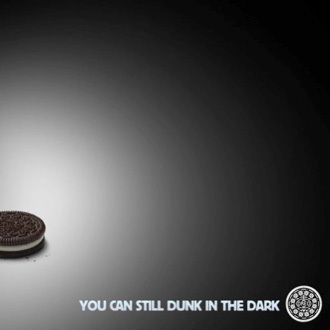
Image from Oreo's product account (@oreo) posted on Twitter during the 2013 Super Bowl.
Posted during an unexpected power outage with the message "Power out? No problem."
This "Dunking in the dark" tweet won a Silver Lion in the Direct (Digital Marketing) category and a Bronze Lion in the Cyber (Viral) category at the 2013 Cannes Lions International Festival of Creativity.
in the Direct (Digital Marketing) category and a Bronze Lion in the Cyber (Viral) category.
③ Listening to User Voices
On social media, users actively voice their opinions and comment on various events. While user voices were primarily "comments" on website content in the past, on platforms like Twitter, users not only share text-based opinions but also create and spread content like images and videos. This information spreads within communities through the connections users form (the social graph). Furthermore, recently, anyone can now "curate" and compile such movements from the outside, increasing opportunities for information to be disseminated beyond the community to which the original user belongs. By closely observing this communication, we can see many previously unseen reactions to corporate campaigns and evaluations of products. Listening to these user voices and connecting them to the next step in marketing is called "social listening," which is currently gaining attention.
④ Valuing the User's Story
Using social listening techniques, companies can now capture previously inaccessible user sentiments as data. However, a concurrent challenge emerges: "Users do not want to be walled in by companies." Since the advent of Web 2.0, "targeting" has been a key marketing theme. Yet, if this targeting doesn't align with users' feelings or their shopping mood, it can cause significant discomfort. Forcing product recommendations just because "it matches user attributes" or "they're frequent buyers" will only make users annoyed.
Applying this data usage to in-store customer service is like secretly peeking into a customer's shopping bag. Rather than blatantly using this information, it's crucial to imagine the user's lifestyle and the story that led them to that store. Using this as a conversation starter or making recommendations aligned with the customer's worldview can foster a mutually beneficial relationship for both the company and the consumer.
In the real-time web, businesses and consumers become members of the same community.
In short, it might be described as "standing on the same level as the consumer." When online and offline connect, and faces become visible, consumers are no longer seen as anonymous subjects for analysis. Instead, they are recognized as members of the same community, connected through the products and services the company provides. If this communication can be nurtured together with the user, it will forge a strong bond with the consumer. Conversely, if the company acts unilaterally and self-righteously here, consumers will drift away.
Particularly now, this communication happens in real time, and it's becoming increasingly difficult for companies to keep up with the speed of these interactions. Within this context, how can we communicate in real time, on the same level as consumers? I'll discuss the key points for achieving this in my next column.
Was this article helpful?
Share this article


Newsletter registration is here
We select and publish important news every day
For inquiries about this article
Author

Sato Jun
Dentsu Hokkaido Inc.
Media and Digital Bureau