Note: This website was automatically translated, so some terms or nuances may not be completely accurate.
 Toward Digital Technologies That Move People [1/6]
From Web 2.0 to Social Media and O2O A Timely Review of How Digital Technology Transformed Media
This column explores digital initiatives that transcend traditional media frameworks, drawing insights from the growing demand for digital solutions like social media and O2O (online-to-offline: strategies connecting web and physical stores). We'll introduce examples and concepts that go beyond mechanical ad delivery optimization, showcasing the mutual utilization of online and offline channels and sparking ideas for new approaches.
When you hear "Web 2.0," many of you might think, "Ah, there was a time when people talked about that." I worry that marketers who joined the field recently might not even recognize the term "Web 2.0." Yet, Web 2.0 began trending in Japan around 2006. While terms like "social" and "O2O" have since taken its place as buzzwords, the Web 2.0 concept has continuously shaped the evolving media landscape.
What exactly is Web 2.0 again?
The concept of Web 2.0 itself was incredibly "conceptual," and even its proponent, Tim O'Reilly, never listed specific requirements for it. However, during this period, the web transformed from something "finished once published" into something "shaped by user actions." This very shift was called Web 2.0, and the internet greatly expanded its possibilities. While it's commonplace now, let's look back at what Web 2.0 created.
CGM (Consumer-Generated Media)
Websites and blog media known as "word-of-mouth sites" emerged around this time. Previously, site administrators, as content providers, could only unilaterally deliver information. But programs installed on servers enabled users to write directly onto web pages, leading to user-generated content being produced across various media. This paved the way for the birth of social media, which places a strong emphasis on user-generated content.
Targeting
Traditionally, web advertising, like newspaper or magazine ads, involved placing ads in media-owned ad spaces for a "set period." This meant everyone visiting the site during that period saw the same ad. However, after Web 2.0, a major change occurred, particularly impacting advertising: targeting. Programs installed on websites could identify the characteristics of visitors and determine which ads (or content) would be most appropriate to display. This enabled media outlets and advertisers to automatically deliver their desired messages to the right users.
These two changes gradually began to transform offline media and our consumption behaviors as well.
The Birth of Communities That Cultivate Trends
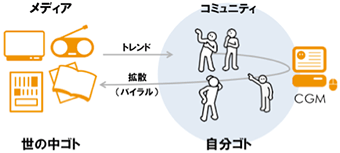
The expansion of information-sharing channels, starting with CGM, enabled consumers to exchange diverse opinions about trends. Beyond directly absorbing trends disseminated by media, they could customize them to their liking, share these customizations online, and exchange opinions.
Notably, news disseminated by media outlets is now discussed and spread virally through CGM, while content that gains traction within CGM communities can generate nationwide fans and become established as cultural phenomena. Trends disseminated as "worldly matters" are now digested within close-knit communities and shared as "personal matters." Consequently, media and advertising must shift focus beyond merely providing information unilaterally. Building better relationships with consumers now requires conscious effort to foster intimacy with communities and encourage the personalization of information.
Targeting-Based Marketing PDCA
Particularly for service providers engaging directly with users, the emergence of targeting as a method to efficiently utilize marketing budgets led to marketing being conducted based on unit costs per user or per purchase. This further evolved into the ability to automatically generate recommendations like "This person is likely seeking this kind of information" based on user attributes. Services like Google's AdSense, which delivers ads tailored to content, and Amazon's "Customers who bought this item also bought..." recommendations have become increasingly common.
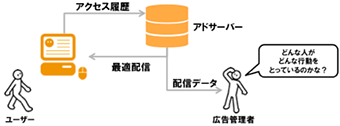
This "automated" approach to consumers, driven by data, allowed media and marketers to improve marketing efficiency without direct consumer contact. This drivable data is now called "big data," and analyzing it is touted as the key to further boosting marketing efficiency.
While the Web 2.0 era may seem to have passed, the changes it spawned continue to profoundly impact the present. A key point is the emergence of a channel for "user-initiated engagement" – something traditional media lacked – particularly in terms of "connecting with users." This shift means companies and marketers now need strategies that go beyond one-way information dissemination. They must consider what information to share and how to motivate users to take specific actions. Next time, we'll explore how to approach the resulting strategies—like social media and O2O—that emerged as an extension of this shift.
Was this article helpful?
Share this article


Newsletter registration is here
We select and publish important news every day
For inquiries about this article
Author

Sato Jun
Dentsu Hokkaido Inc.
Media and Digital Bureau