
Note: This website was automatically translated, so some terms or nuances may not be completely accurate.
 Japan Study Talk [2/2]
Japan and Life: What an 85-Year-Old Master Told Me in New York (Part 2)
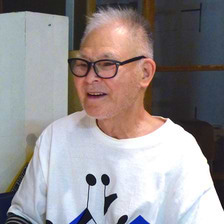
Takeshi Kawashima
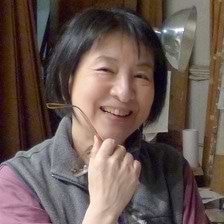
Junko Kawashima
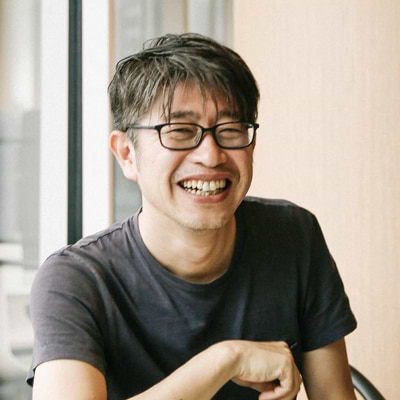
Hidetoshi Kurashige
Creative Project Base Co., Ltd.
A new series exploring hints for Japan's future through Talk (=interview) with Japanese individuals active in various fields overseas. Continuing from last time, Hidetoshi Kurashige, Creative Director at DENTSU SOKEN INC., spoke with artist Takeshi Kawashima and his wife Junko, who have been active in New York for nearly 50 years.
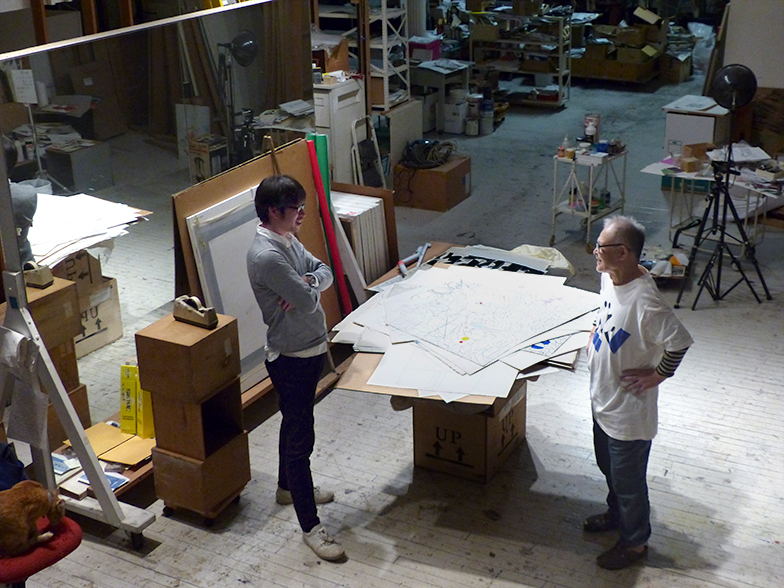
What matters is "Why born?"
Kurashige: Mr. Kawashima, is there anything you'd like to say about Japan?
Kawashima: When young people like you come and talk with me, I don't need to say anything. It's just fun.
Kurashige: No, no, no, please tell me. I want to hear it. Because Japan is at a turning point now. We all need to unite our feelings and make changes. Please, I insist.
Kawashima: I just wanted to get out of Japan. In Japan, whenever something happens, it's always "Your father helped me out," "Did you go to Tokyo University? Waseda?" "Did you even graduate high school?" "Are you the president's son?" People judge you based on comparisons to others way too much. There's no real sense of reality or existence. I love reality, existence, and Whaibon – like the Three Sacred Treasures.
Kurashige: What's Whaibon?
Kawashima: Why you were born.
Junko: Why were you born? Basically, my husband always says he keeps painting because he doesn't know the answer. He says once he finds that answer, he won't need to paint anymore, and he might as well just die.
Kawashima: Here, if you don't define your own way of living, you might as well not exist. It's all about the individual. Why born? Why was I born? Japan is a country where you don't need to say that kind of thing. You can exist without doing anything. "You're such a filial son~. Take over the family business and do it properly," and so on. So, it's the complete opposite. If you ask which is better, there's no better or worse.
It's just about what you choose to do. I'm the eldest son in the middle of nowhere, but I do have some land. If I'd just inherited the family home, it would've been a completely different life. I'd have done something else. For the village, for the town. On a larger scale, maybe become a politician and serve the country. But you don't have the time for that, do you? Life is less than a hundred years. And you spend a third of it sleeping.
Kurashina: So, did you find your "Why born?" Kawashima-san?
Kawashima: Not quite. If I had some kind of confidence in my work, maybe I'd find it. But I still don't know. I don't know myself.
Kurashiro: What about moments like, "Ah, I see a glimmer of light"?
Kawashima: I think it's fading. In my twenties, it was full of light. But as you get older, biologically, it fades. If we could live 100 or 200 years, I think the light would just keep getting brighter.
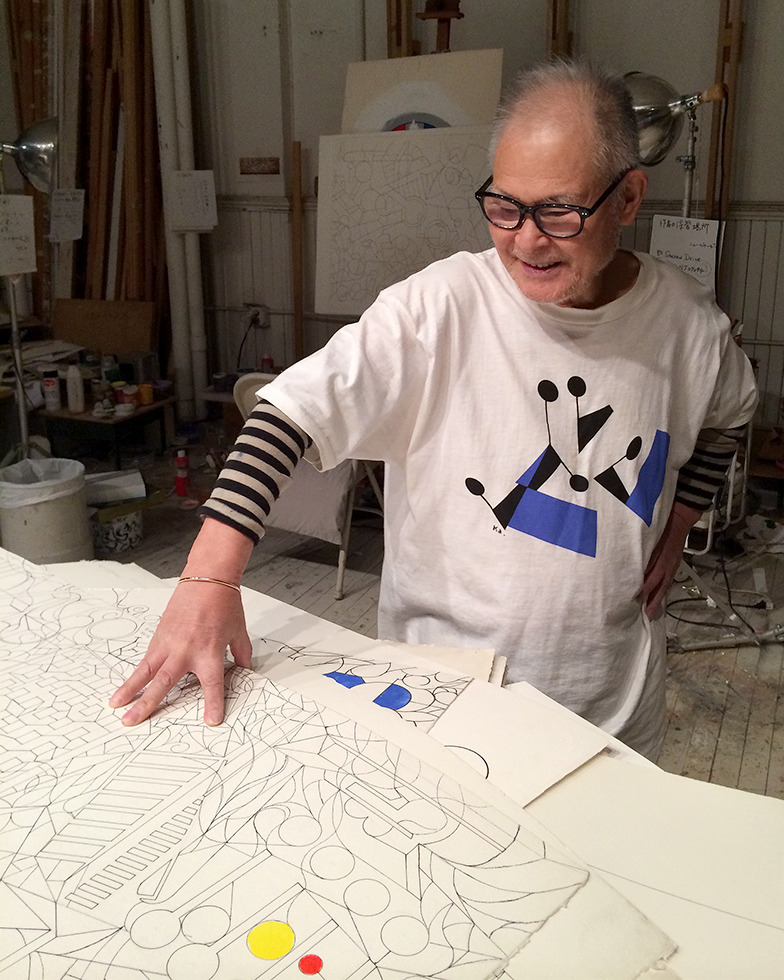
Junko: But you know, it's been over 40 years since I've been with him, right? Back then, he'd often say, "This is no good~" and draw a big X on his paintings, or just rip them up. But lately, whatever he does becomes a work of art. You can tell just by looking. He himself doesn't realize it. Lately, whatever he does, it's good.
Kawashima: Before, he was like, "I'm a painter!" and would just slap paint on canvases like a fool. He'd say, "It's not just paintings, it's three-dimensional!" and tried everything—sculpture, stone, all sorts of things. Now it's natural. Well, to put it dramatically, he wants to turn everything he touches, everything he sees, into art.
Kurashige: Junko, do you see a bit of Kawashima's "Why bron?"
Junko: I don't see it, so that's why he paints, right? If he saw it, he'd quit painting, surround himself with women, become the mayor of Soho Village or something. I don't think he'd do art anymore. So if he did see it, I'd have to excuse myself too (laughs).
Kurashige: Good thing you can't see it, huh? (laughs)
Junko: Exactly. Because I can't see it, I can stay with him. If I could see it, it would be over.
Kawashima: You know, when you can explain your life, it means your life isn't moving. Like, "That guy became a section chief," or whatever. Between that kind of reality and dreams, which is better? We came over to this side, right? As people who paint dreams. By the way, how old are you now, Kuranari-san?
Kurashige: A 39-year-old full of inner conflict.
Kawashima: Yeah, that's right. It's definitely all conflict. It lasts forever. Unless you become authoritarian. It's the world of reality, existence, Why born, How are you doing, How do you do it – the world of doing. I'm doing too, you know.
What Tokyo needs is a revolution that values people?
Kurashige: Besides "Why born?", you also mentioned the term "life concept" when we met before. What's your life concept, Kawashima-san?
Kawashima: Be kind to people. Value people.
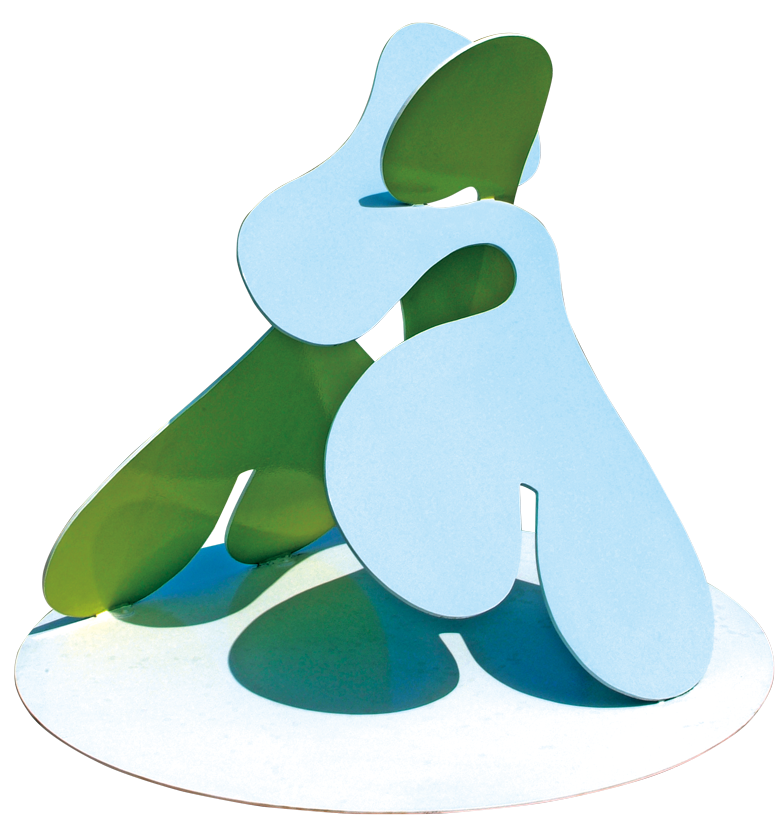
"The Circle" 1999-2000
Kurashige: I heard you've invited or hosted about 1,000 people at your home so far. Is that what you meant?
Junko: Well, when he came to New York, it seems he was helped by all sorts of people. That's why he feels like he should let people in trouble stay over. Though, some people just come over without any trouble at all, of course.
Kawashima: In my day, even though there were lots of hardships, there wasn't much mutual support. So I'm just paying it forward. I hope the next person who comes along will do the same.
Junko: Among those hundreds, if even one person is a gem, that's something. And really, I'd like someone to understand how Takeshi Kawashima lived. So when rumors spread like "Mr. Kawashima is too nice, he'll let anyone stay," I really dislike that. That's not what it's about.
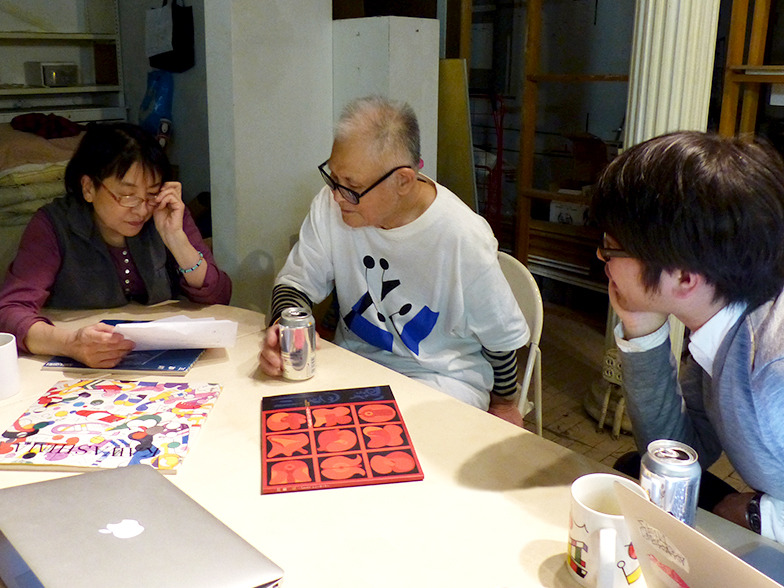
Kawashima: If we're talking about one in a hundred, yes. Creators only appear once or twice in a hundred people, but it's creators who change the times. The elite class? They're not creators. They're the ones who refine things, give advice, shape the times. It's incredibly important. Both are wonderful. Both are vital. Otherwise, Japan and the world would perish. That's the difference between refinement and revolution.
Revolution, you see, is doing something that doesn't exist. It changes people. It's like monkeys becoming humans.
Junko: Let's start a revolution. Let's start a revolution (laughs).
Kurashige: In today's terms, maybe creators are 0→1, and the elite are 1→100. By the way, what kind of revolution will the Kawashima Revolution bring about?
Kawashima: A revolution that values people.
Junko: A gentle revolution, huh? (laughs)
Kurashige: Ah, I think that's exactly the revolution Tokyo needs right now.
Kawashima: Huh?
Kuranari: The other day, I had a meeting scheduled for 8:30 AM, so I took the packed 8 o'clock Yamanote Line. During those 15 minutes, right in front of me, there were two or three arguments break out. "You pushed me," "No, I didn't." "My bag got caught," "No, it didn't."
Junko: People fight over that?
Kurashige: And then, there was this day when someone stepped on my shoe three times. The first time, it was a middle schooler, but they just walked away without saying anything. The second time, it was a salaryman, same thing. The third time, someone actually apologized for the first time, saying "Gomen nasai." That one was a foreigner.
Kawashima: Hmm, I totally get that.
Junko: When I'm over here, walking down the street, if I don't understand something, I can ask a complete stranger. But when I was in Tokyo, if I tried to ask, I was scared.
Kurashige: What was that about?
Junko: I just couldn't. And when I tried to ask, saying, "Um, excuse me," they'd glare at me.
Kurashige: These days, after the Olympics end, they try to leave a "legacy," and right now, all of Japan is really focused on that. But instead of just leaving behind venues or technology, if what stayed was "Tokyo people became kinder," then I'd think it was great that the Olympics came to Tokyo. That's the kind of Olympics I'd like to see. A gentle revolution, valuing people.
Announcement:
Saturday, April 18, 2015 - Wednesday, April 29, 2015
An exhibition by Takeshi Kawashima will be held at Gallery Shimada in Kobe City.
Details here: http://gallery-shimada.com/
Was this article helpful?
Share this article


Newsletter registration is here
We select and publish important news every day
For inquiries about this article
Back Numbers
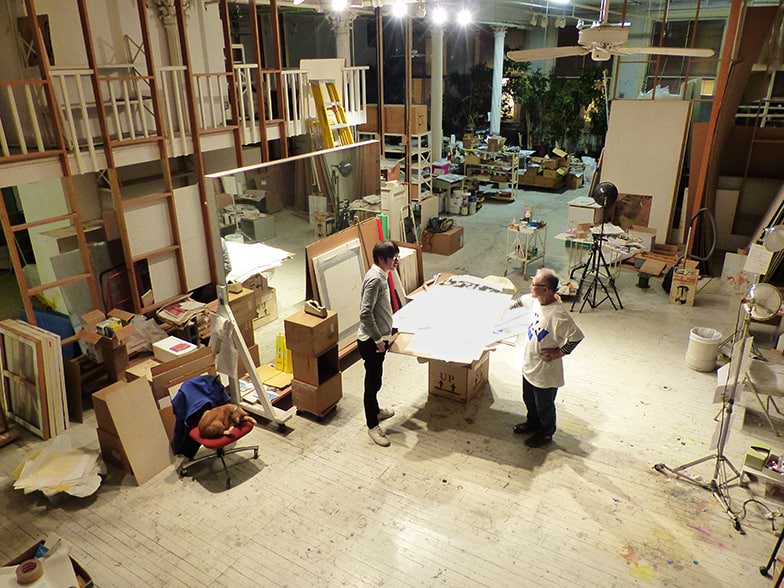
Author
Takeshi Kawashima
Artist
Junko Kawashima
Hidetoshi Kurashige
Creative Project Base Co., Ltd.
Representative Director/Creative Project Director