
Note: This website was automatically translated, so some terms or nuances may not be completely accurate.
 FASHION HACKED [2/3]
The Future of Fashion and Technology (Kaie Murakami × Megumi Wakabayashi × Rina Kyōraku)

Kaie Murakami
Representative of SIMONE INC.

Megumi Wakabayashi

Kyōraku Rina
SIMONE INC.

Recently, the event "SXstyle 2015 Report," organized by branding agency SIMONE INC. and WIRED Japan, was held at VACANT in Harajuku. At the event, SIMONE's Kaie Murakami and Rina Kyogaku, along with Megumi Wakabayashi, Editor-in-Chief of WIRED Japan, introduced "SXstyle" (South by Style), the fashion category of SXSW (South by Southwest), the U.S. event combining music, film, and interactive media. They also held a talk session on the future of fashion and technology.
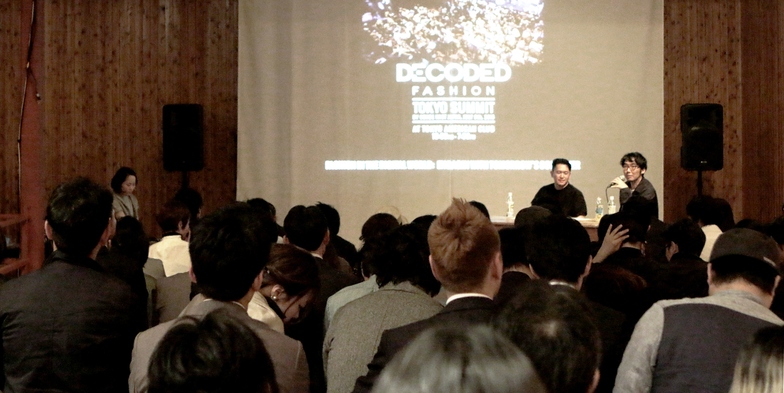
As previously reported, the "Decoded Fashion Summit" (hosted by Condé Nast Japan) made its debut in Japan on Thursday, July 9. Within SXSW's newly introduced fashion category "SXstyle," members of "Decoded Fashion" conducted panel discussions, parties, and mentorship sessions over five days.
SIMONE's Kyōraku, who attended the event, introduced examples of fashion and technology convergence: "Material Forward," "Mass Customization," and "Retail Revolution."
Fashion × Technology 1: Material Forward
The Material Forward category featured not only digital fabrication and wearable electronics but also many next-generation wearables, such as fabric materials.
"What I found unique was something called soft circuits—essentially techno-crafts where circuits and LEDs are embedded within sewing. There were also fabrics that change in response to body temperature or ambient temperature, known as smart materials. Many smart material experts participated in the panel discussions," said Kyōraku.
Kyōraku further introduced examples such as "snowboard wear designed to extend jump distance and absorb impact during falls," "tracking shirts that measure physical load and impact," and "fashion-specific coworking spaces equipped for digital fabrication."
Mr. Murakami stated, "There are already numerous practical applications of digital fabrication, such as designer Iris Van Herpen creating heels solely through 3D printing at Paris Fashion Week. This will continue to evolve. If Alexander McQueen were alive today, he would undoubtedly be using it."
Fashion × Technology 2: Mass Customization
Mass customization refers to implementing bespoke or custom-made products within a mass production framework. While automakers have long modified parts based on customer needs, the mass customization at "SXstyle" specifically involves using 3D printers and similar technologies for customization.
"For example, in e-commerce, there are services that fully print your own textiles or designer graphics onto items like T-shirts. Beyond just print customization, there are also services like pattern ordering where you can choose body parts or three-dimensional embroidery like sequins," said Mr. Kyōraku.
Regarding e-commerce print services, Murakami praised their high fashion appeal: "While tech-focused people have tried this approach before, few had good taste, so it never caught on. The services introduced today show involvement from fashion professionals, even in the base T-shirts and sweatshirts."
Fashion × Technology 3: Retail Revolution
"Last year at SXSW, most online topics focused on how to drive traffic to e-commerce. This time, the term 'e-commerce' barely came up; the focus was on 'retail.' The key discussion revolved around how digital technology can enrich the real shopping experience in physical stores. There seems to be a lot of collaboration happening between department stores, brands, and retail tech startups," said Kyōraku.
Kyōraku cited examples of collaboration, such as "smart mirrors that save multiple photos during fittings for comparison" and "systems that deliver coupons via iBeacon without requiring users to install a dedicated app." Murakami noted that mechanisms bypassing the app download barrier can increase contact points.
"Accumulating small actions builds trust in the brand and leads to purchasing behavior. Increasing touchpoints naturally, rather than forcing them, is effective," (Mr. Murakami)
Talk Session: Murakami Kaie × Wakabayashi Megumi
Next, Wakabayashi interviewed Murakami about "Fashion × Technology."
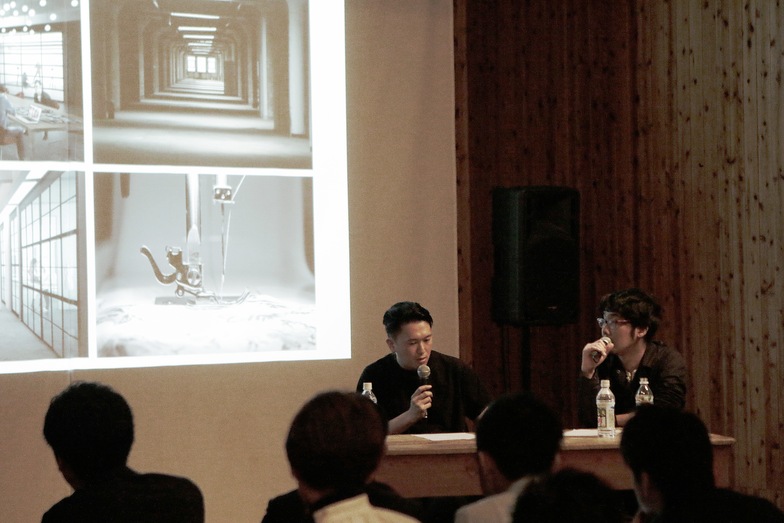
Normcore and Fashion Tagging
Wakabayashi: What do you personally expect from Fashion × Technology, Kaie?
Murakami: From the consumer's perspective, the benefits of Fashion × Technology are already present in our lives. For example, sneakers are the only fashion item evolving rapidly both functionally and contextually. They have the power to change people's behavior, like making someone think, "They're so comfortable to walk in, I'll just walk an extra station." This seems simple, but wouldn't you agree it's actually incredibly difficult to replicate in other fields? When people talk about technological evolution, many expect so-called innovation. But what's fundamentally most impactful is when it permeates daily life unnoticed and completely transforms existing patterns.
Services allowing online customization of individual garments originated in the sports industry. When personalized creation merges with the functionalities attached to sneakers and smart fabrics in the future, it will give birth to an entirely new form of fashion that completely transforms our existing lifestyles. The current fashion values, like the parallelization seen in normcore, will likely evolve into something entirely different—disconnected from ornamentation or fashion trends—through continuous cross-pollination and experimentation across these disparate fields. Technologies like digital fabrication will profoundly impact the very nature of fashion.
Wakabayashi: What do you think will happen with 3D printing?
Murakami: Fashion designers who sell data rather than clothes will emerge. We already have accessory designers doing something similar.
Wakabayashi: Watching sci-fi movies, I always wondered how they made those tight-fitting clothes. But that's customization, right? It's a 3D printer kind of concept. That's becoming a reality.
Murakami: But if you look at fashion history, designs have become simpler and less ornamental as we approach the modern era. Even if it doesn't happen immediately, if the functionality demanded by the environment outweighs the emotional appeal people seek in fashion, it could easily flip. UNIQLO's HEATTECH is a perfect example. Now, New Yorkers' winter fashion is almost like wearing a shell of information over HEATTECH. Since last year, we've seen the rise of Normcore, this counterculture sparked by the web. But I think the fact that the term "Normcore" was coined in 2014 marks a pivotal shift in fashion's role within society.
Wakabayashi: Are you personally nomcore, Kaie?
Murakami: I don't think normcore is everything, but I do resonate with its origins and the spirit it represents. It's like, "Is this level of self-expression through fashion just about right?" Today's fashion feels less like wearing clothes and more like wearing information. I think for many people in Japan, choosing clothes is about symbols and tags. For example, Made in Japan, the brand name, the designer's name, which celebrities wore it – clothes become a collection of tags. The web has made our perception of fashion more tag-like, and within that, sneakers are perhaps the most fashionable thing right now.
Wakabayashi: So, they're extremely symbolic?
Murakami: Exactly. Take Hiroshi Fujiwara collaborating with Nike to reissue past sneakers, choosing specific colorways, selling them limited-edition at select specialty stores... Within the fashion context, that's a collection of high-quality tags. Multiply those tags, and you get something fashion-wise extremely valuable, which is why kids worldwide go crazy for them, lining up. I usually consult for various brands and oversee designs myself, but lately I've been making clothes to match sneakers more often.
Wearing leather-soled dress shoes now even feels sentimental. They have their own inherent coolness, and I occasionally want to wear them, but upon reflection, I realize it's just nostalgia. What's happening around fashion today is an industrial revolution, detached from such memories and emotions.
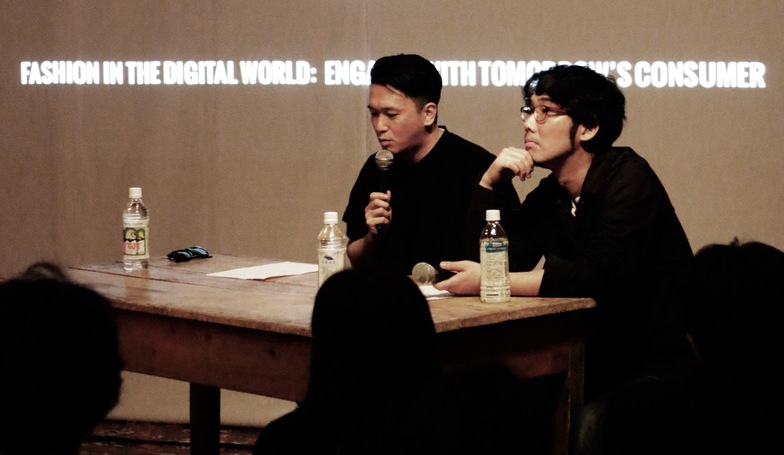
Recommendations and Trends
Wakabayashi: This ties into the retail revolution we discussed earlier, but what's your take on recommendations?
Murakami: The results are definitely there. But sometimes I find it a bit noisy.
Wakabayashi: Yeah, I get that. It's not necessarily bad, but it's about how to improve the accuracy, right?
Murakami: That's true. I think targeting precision will likely improve. Being in the fashion industry means constantly dealing with this mysterious phenomenon called "trends," whose origin is often unclear. Trends are formed from two things: upstream, pre-generated information like "this mood will be big in about two years" from textile manufacturers, and the real-time atmosphere of society. But with SNS, speed and immediacy are demanded, and we're seeing phenomena where reactions aren't clear until right before delivery. In this context, we should be able to envision a different approach to recommendations than what we have now.
Wakabayashi: What kind of approaches are possible?
Murakami: Take fall/winter fashion. Clothes hit stores around late August, but the trade shows showcasing those collections happen roughly 4-5 months prior. At that point, production volumes become clear, allowing us to predict realistic trends likely to emerge six months later. Combine that with quantum marketing (featured in WIRED VOL.14), and you should see signs of what people truly want and what companies or industries themselves are trying to make popular.
Wakabayashi: I see. So, at this point, isn't it possible to redesign products in real-time based on market conditions?
Murakami: Fashion brands originating from 109 were one of the few examples that managed to do this quite early on. Back then, there were fanatical fans who supported that culture, even among the creators themselves, and they worked tirelessly to make it happen. But now, without that kind of passionate mass culture, there's no one to do it. Technology will undoubtedly fill that gap. Integrated solutions that manage everything from production to delivery, along with 3D printing, will drastically shorten production lead times.
We should introduce technology starting with areas where it can contribute to the business.
Murakami: What strikes me as odd when talking with clients is how their profit structures—specifically how costs, promotional expenses, and such are allocated—haven't changed at all since the advent of the internet. They should have changed, but they haven't. Yet overseas, many brands and stores emerged from the start with new business systems anticipating this shift.
Wakabayashi: That's the Retail Revolution.
Murakami: Exactly. While Material Forward and Mass Customization might take time for commercial adoption, the Retail Revolution is something we must tackle now or risk being left behind. I can say that with certainty. I plan to discuss this further in Decoded Fashion. While the fashion industry has a conservative side that makes it hesitant to embrace new initiatives, we should introduce technology where it can contribute to the business. Essentially, invest in what delivers immediate results. Fashion and technology meetups will become essential going forward. I hope Decoded Fashion sparks that focus.
Wakabayashi: Well then, thank you very much for today.
Was this article helpful?
Share this article


Newsletter registration is here
We select and publish important news every day
For inquiries about this article

Author
Kaie Murakami
Representative of SIMONE INC.
Megumi Wakabayashi
Editor-in-Chief, WIRED Japan
Kyōraku Rina
SIMONE INC.