
Note: This website was automatically translated, so some terms or nuances may not be completely accurate.
 On-Site Report: Cannes Lions 2015 [6/6]
The Quest for Advertising's Purpose and the Enduring Power of Ideas
Shusaku Hirota
Henge Inc.
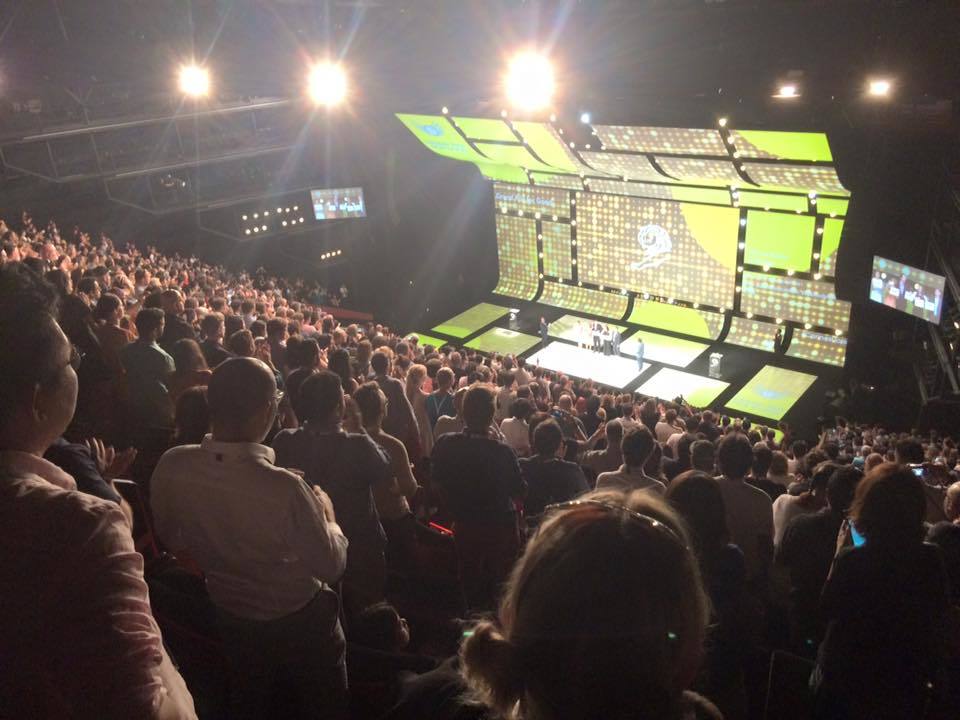
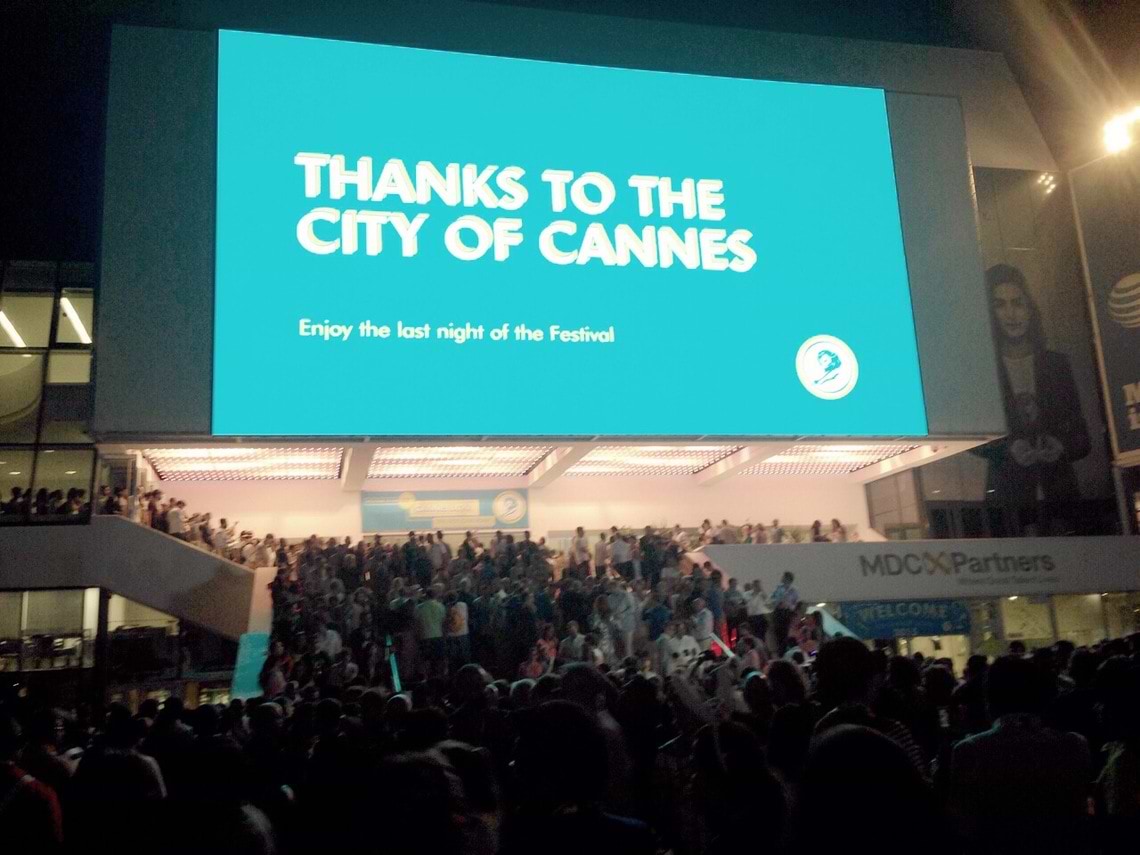
It's already been a week since Cannes Lions 2015 ended. While various reports and analyses are being published everywhere, I thought I'd write about what I felt as one of the on-site staff members.
At the Cannes venue, I was constantly reviewing the shortlists. Having seen an overwhelming number of entries, I still haven't fully processed them all. Among them were a wide variety: pieces I personally liked, ones I found difficult to engage with, those I could learn from, ideas that genuinely moved me, and even some where, due to cultural differences, I honestly couldn't grasp the intended aim of the concept.
Among them, I believe the works that won Gold or higher did share certain tendencies. I'm no critic, so this is purely my subjective view, but I'd like to write about the trends I noticed in the direction of the winning entries.
1. Entries with social significance that also deliver undeniable "results"
Over the past few years, entries focused on social good—those tackling socially meaningful issues—have frequently won awards, and this trend continued this year. In fact, it felt even stronger. One judge mentioned that social good had become "an implicit prerequisite in the judging process." This might indicate that social good has evolved beyond a fleeting trend into a permanent, significant imperative for corporate branding. Particularly this year (though this is my subjective view), entries demonstrating tangible, measurable results seemed to hold a strong advantage.
The Ice Bucket Challenge winning the Grand Prix for Good is symbolic. It wasn't just about conveying a message of doing good; it was about actually conveying it and achieving tangible results. This suggests the challenge level has risen from "doing good as a formality" to "truly doing good and making an impact." I interpret this trend as contributing to the establishment of the Glass Lions this year.
2. Agencies themselves are moving closer to manufacturers and investment firms
This year saw numerous boutique agencies specializing in IoT products and digital design, exemplified by the US-based R/GA, receive awards. Ideas for services that inherently incorporate product design, like "Alvio," "Owlet," and "Hammerhead," won across multiple categories. However, these wins aren't just about high-quality products or services; their business models are also groundbreaking.
Indeed, R/GA's session was incredibly impactful, with attendees unanimously stating they felt inspired. Crucially, they no longer simply create services for clients in exchange for money; they position themselves as startups. They invest 10 million yen in tech ventures within three months, commit themselves to branding through design and storytelling, and only receive compensation if the venture shows promise. If that venture grows, it becomes their own client. This approach is markedly different from the business model of major advertising agencies.
3. From competing on technical skills to competing on discovering and solving problems
This may relate to points 1 and 2. At Cannes Lions, alongside the main competition, Lions Innovation and Lions Health were newly established, and this year, Glass Lions was added as a new category. I believe the reasons for each of these additions warrant consideration. Traditionally, Cannes focused on competing within the framework of "each medium = a means" – evaluating how expressive an idea could be within a specific medium like Film or Cyber, judging the sophistication and appeal of the technique or concept. However, a recent trend shows it's increasingly common for the same entry to win Gold across multiple categories simultaneously. To realize an idea, it's natural to use various media as means, so it's only logical that it would be highly valued within each category. What this signifies is that Cannes is fundamentally shifting—it's no longer just about "expression or ideas within each media" but increasingly about "the scale of the challenge and the brilliance of its solution." While effectively capturing the characteristics of the media remains a fundamental prerequisite, the focus now is on what was changed. That's what's being pursued.
Indeed, the introduction of the Glass Lions and Lions Health categories clearly illustrates this trend, doesn't it? Rather than evaluating strictly by media type, they set major objectives (health, gender, innovation) and assess how boldly the challenge is tackled and whether results are achieved—regardless of the medium. If this trend continues, we might even see categories like Sports Lions or Liberal Lions (!) emerge in the future.
That's what I've observed. In a way, Cannes could be described as the place where advertising professionals themselves, in a self-referential manner, continually redefine advertising's place in society.
In 2011, Cannes dropped the word "advertising" from its name, rebranding itself as the Festival of Creativity. By no longer calling itself an advertising festival, I felt it signaled that advertising is desperately searching for its place and purpose in society.
Of course, the value of good ideas and good design hasn't changed. What moves people is universal, yet it remains largely a black box. As long as clients have challenges and society has problems, ideas will always be sought. That part hasn't changed, but advertising has also begun to shoulder a greater mission...
Going to Cannes, I felt once again that as an advertiser, you are inevitably and deeply questioned: "How deeply have you thought? How brilliantly have you solved the problem?" I hope to transform what I learned in that place into questions for myself, making the work right in front of me a little more valuable, a little better.
Was this article helpful?
Share this article


Newsletter registration is here
We select and publish important news every day
For inquiries about this article
Back Numbers

Author
Shusaku Hirota
Henge Inc.
CEO / Director