
Note: This website was automatically translated, so some terms or nuances may not be completely accurate.
 On-Site Report: Cannes Lions 2015 [5/6]
Connecting at Cannes I met with Twitter's Vice President

Shusaku Hirota
Henge Inc.
In the previous report, we mentioned how creators worldwide are diligently working on their entries. This time, shifting our perspective, we'd like to report on the interactions with people from around the globe.
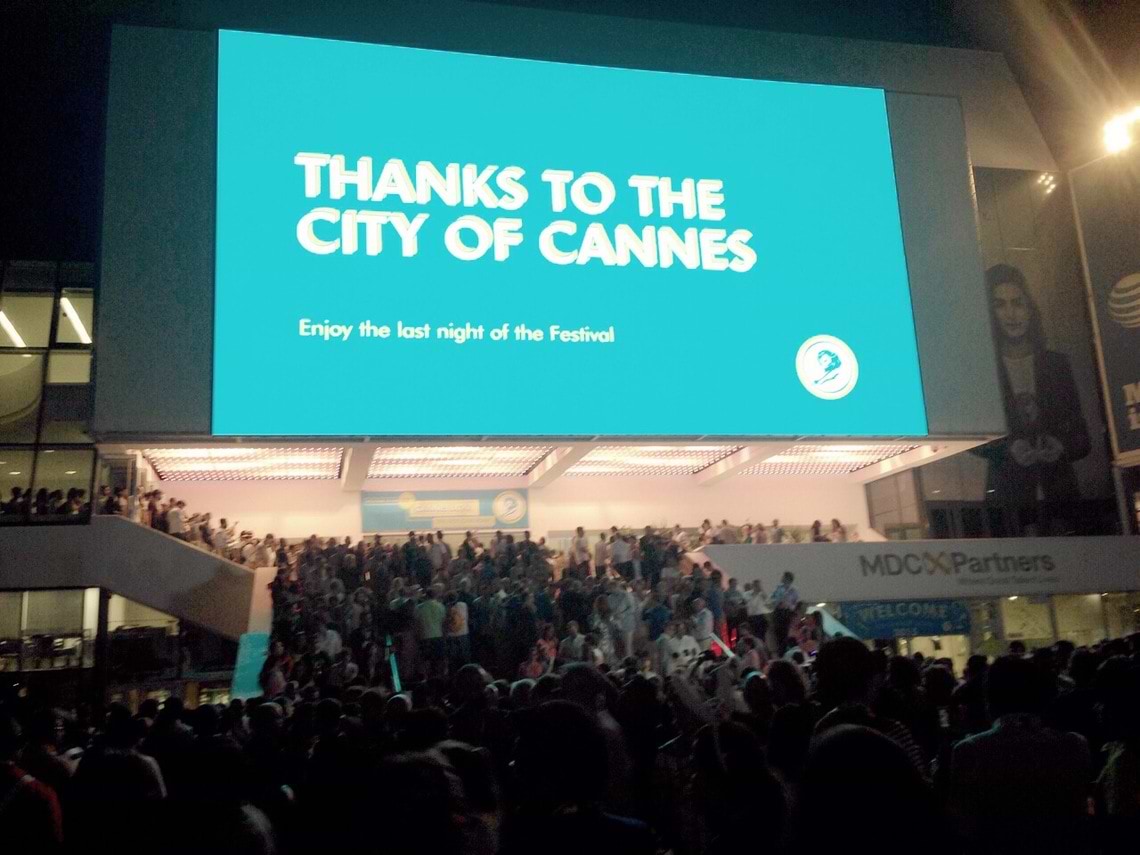
Naturally, Cannes gathers advertising professionals from around the world. Beyond seminar venues, cafes and restaurants throughout the city are filled with people from various countries, day and night, cheerfully discussing advertising. Furthermore, not only ad agencies but also media companies and ad tech firms gather here. They host their own seminars, rent hotel suites for exhibitions, and look for business opportunities. Amidst this, I was fortunate enough to interview Chris Moody, Vice President of Twitter, immediately after his well-received seminar titled 'Connecting people in a transparent world'. Speaking about 'data patterns'.
In Japan, opportunities to casually discuss corporate strategy with executives from overseas media companies while wearing just a T-shirt and shorts are rare.
In Japan, opportunities to casually discuss corporate strategy with overseas media executives—wearing just a T-shirt and shorts—are rare. Yet in Cannes, this frank, relaxed atmosphere actually allows for serious business discussions, which is part of its appeal.
Now, with Dick Costolo stepping down as CEO and founder Jack Dorsey returning to lead Twitter, I found my conversation with Chris Moody, head of data strategy, particularly insightful. I'd like to share it here.
Hirota: Chris, your presentation was fascinating. It really drove home how creators can no longer ignore data and are increasingly expected to respond in real time. But for creative professionals, data can be intimidating. How should they get started?
Chris: Data is indeed becoming crucial. But as you mentioned, the sheer volume of data makes analysis challenging. That's why it's vital to start with clear objectives. First, pinpoint what you want to know and focus your listening efforts there.
Hirota: Sharing analysis results is important not just for creators but also for clients. How can we effectively communicate the importance of data to clients?
Chris: This is a very difficult issue even in the US. I think it's vital to form a joint team between the client and the agency and share data. Also, introducing success stories and case studies to gradually build familiarity is important. Some companies have even created social media command centers.
Hirota: At this year's Cannes, artificial intelligence (AI) seemed to be getting a lot of attention. When Twitter is finding insights within its massive data, are such initiatives effective?
Chris: Twitter partners with companies like Data Miner to detect signs of change within data. News organizations are also adopting these technologies to effectively find new story ideas. It can also identify tweets that resemble rumors and help determine their veracity.
Hirota: That's fascinating! However, when dealing with big data like Twitter's, engineers often boast about "accurately analyzing massive amounts of data," while marketers want "meaningful insights." This can lead to misalignment in discussions about the same data.
Chris: I totally get that (laughs). However, Twitter places a strong emphasis on fairness and avoids providing "interpretations" of tweet content as official information. For example, a tweet containing "idiot" could mean exactly that, or it could be used affectionately. We leave that kind of analysis to third-party marketing companies.
Hirota: As real-time marketing using social media becomes increasingly vital for corporate activities, is Twitter undertaking any initiatives to help businesses understand its value more deeply?
Chris: We're partnering with 1,500 IBM consultants to help prepare companies to leverage Twitter for their business activities. We're also pursuing collaborations with creative companies, like working with film studios to use Twitter data for casting and script ideas. Furthermore, we're advancing Twitter's use in the political sphere. Twitter can be used for speechwriting and timing considerations.
In Japan, we're collaborating with government organizations to attract tourists ahead of the Olympics. Twitter is also becoming crucial not just for business, but for social infrastructure. A good example is Jakarta, where residents used Twitter to share information about flooded areas during a flood.
Hirota: Recently, news about Twitter's CEO Dick Costolo stepping down and legendary founder Jack Dorsey returning has caused quite a stir. How is this being received internally?
Chris: Mr. Dorsey has been closely watching Twitter and understands Mr. Costolo's strategy well, so I don't think much will change for a while.
Hirota: I hear Costolo placed a lot of importance on doing improv comedy within the company. Can we assume that will continue?
Chris: No way! (Everyone bursts out laughing) Their personalities are complete opposites.
Hirota: Thank you. Finally, could you share a message for Japanese users who love Twitter?
Chris: You can express so much in 140 Japanese characters. Because of that, you use it quite differently from people in other countries. I think everyone in Japan is a creator. Also, recently, we've been offering services like Periscope through Twitter, opening up opportunities with video, photos, and more. I'm looking forward to seeing the creativity of the Japanese people. At Cannes, it's not just creatives who gather—people from all kinds of professions come together. Plus, opportunities to strike up conversations and connect for business are everywhere. I think anyone working in this industry will definitely gain something.

Was this article helpful?
Share this article


Newsletter registration is here
We select and publish important news every day
For inquiries about this article
Back Numbers

Author
Shusaku Hirota
Henge Inc.
CEO / Director