
Note: This website was automatically translated, so some terms or nuances may not be completely accurate.
 Inbound Marketing in Action: The Front Lines [4/7]
Target the Spring Festival! How to Get on the "Shopping Spree" "Shopping List" (Part 1) ~ Insights from the "Chinese Tourist Shopping List & Vehicle Survey" Results

The Travelers' Journey Team
Dentsu Inc.
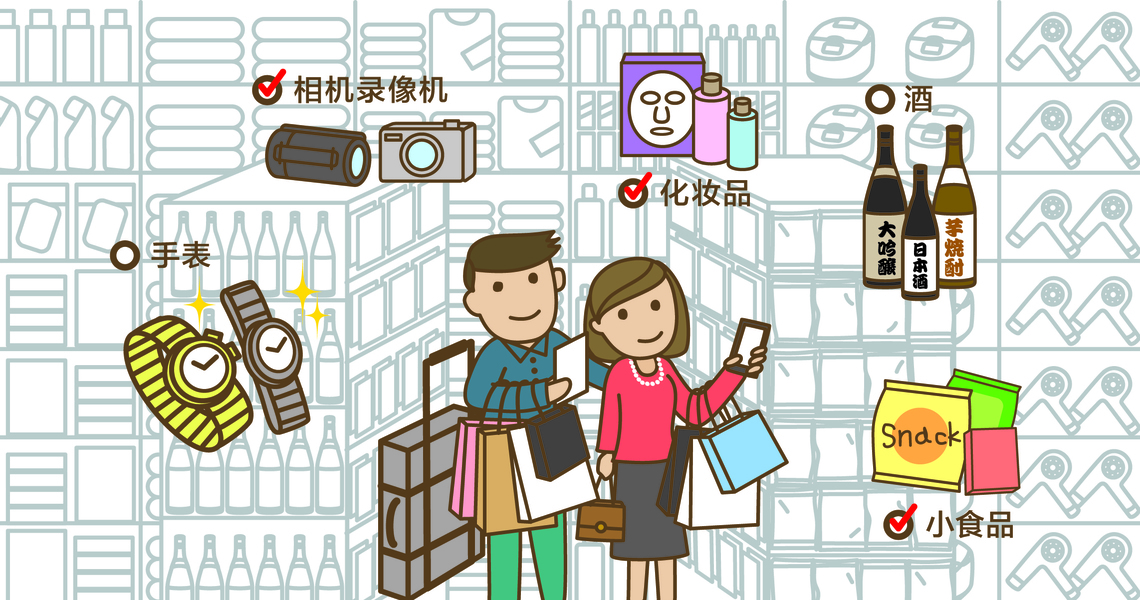
By the end of October 2015, the cumulative number of foreign visitors to Japan had already surpassed 16 million (confirm latest figures), significantly exceeding the previous annual record. Achieving the 2020 target of 20 million visitors ahead of schedule is now certain. Among these, Chinese tourists' "spending sprees" have swept across Japan. This phenomenon was featured prominently in the media daily, ultimately ranking first in this year's "2015 Ranking of Topics and Products Chosen by Consumers" (DENTSU SOKEN INC.) under "Spending Sprees/Inbound Tourism," and even winning the New Words and Buzzwords of the Year award.
By the way, many people have probably seen Chinese tourists shopping in the streets, looking at their smartphone screens or holding paper lists while they shop. What they're actually looking at is their "shopping list." To get them to buy your product, getting listed on that list is essential.
The specialized unit "Travelers' Journey," which previously highlighted the existence of "million-dollar shoppers" spending ¥1 million per visit, has now focused on these Chinese tourists' shopping lists, thoroughly investigating their sources of information. With the Spring Festival on February 8th next year approaching, list-making is already reaching its peak!
Surprisingly, over 95% of Chinese visitors to Japan create shopping lists

95.The findings show that 95% of Chinese tourists visiting Japan create shopping lists in some form. This figure, exceeding expectations, confirms the rumors. Most use either "handwritten lists" (73.4%) or "smartphone memos" (60.6%). The lists include not only product names but also photos and prices in Japan, revealing their meticulous advance research.
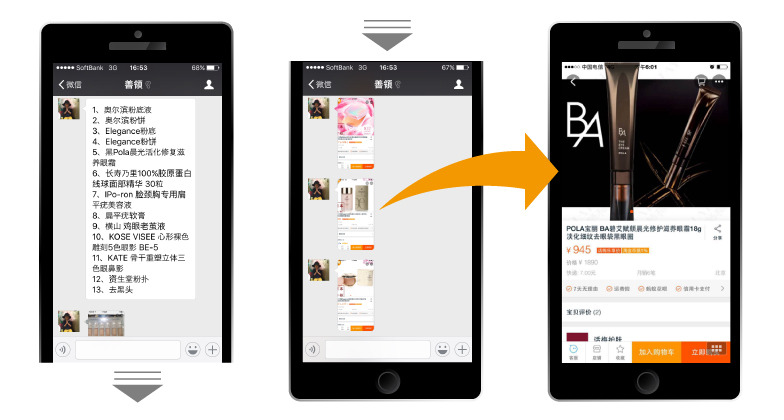
Once travel is decided, list creation starts immediately
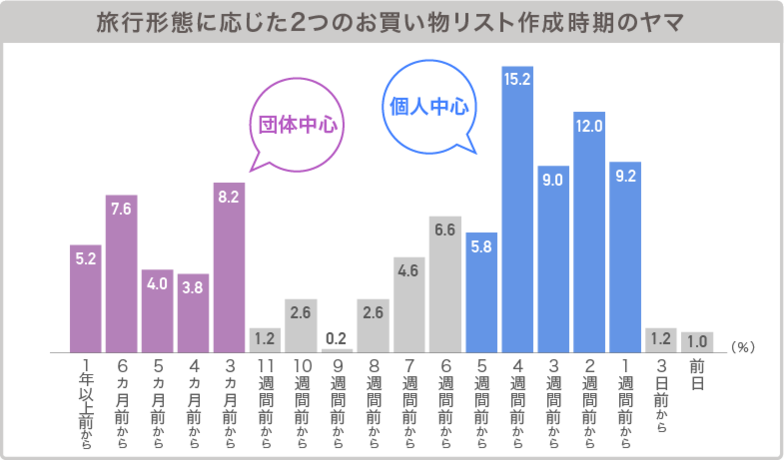
When exactly do they start creating shopping lists? The survey results show two distinct peaks depending on the travel type. For group tour participants, the peak is surprisingly between one year and three months before the trip. For independent travelers, the peak is one month before departure, with list creation continuing right up until departure. This closely aligns with when the trip is decided, showing they start making lists immediately after the trip is confirmed. Incidentally, while Chinese travelers are often associated with tour packages, independent arrangements and customized packages now account for over 53% of the total, indicating independent travel is becoming mainstream.
List creation rates vary significantly by product category
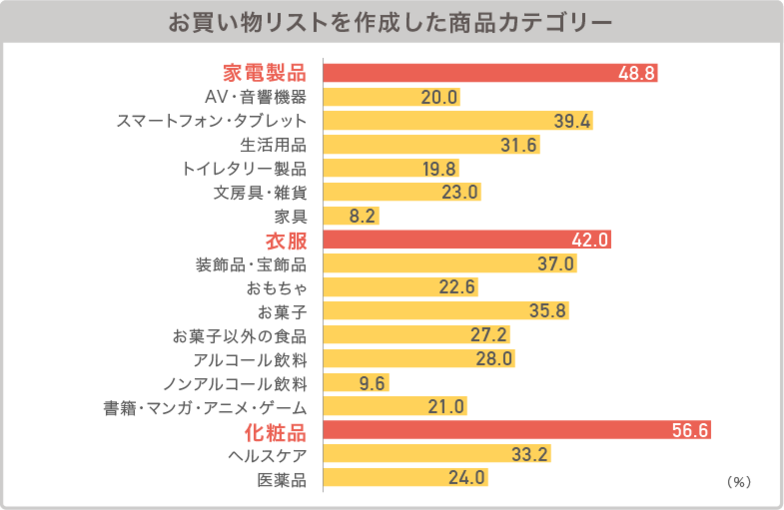
Looking at list creation rates by product category, cosmetics, home appliances, and clothing show particularly high rates. Conversely, categories like "non-alcoholic beverages" and "furniture" fall below 10%, showing significant variation by category.
Information sources include search giant "Baidu" and social media platforms "WeChat" and "Weibo"
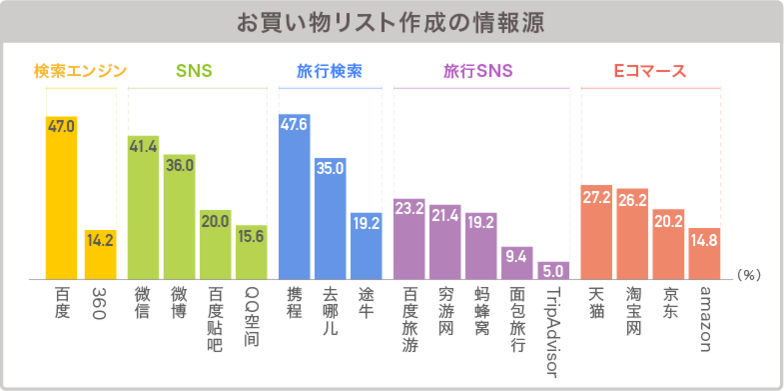
The primary sources for shopping list creation are "portal sites" (45.4%), followed by "family/friends/acquaintances" (33.6%), "travel guidebooks" (31.6%), and "TV programs" (31.4%). Specific sources are detailed in the table above, with China's largest search engine, Baidu, demonstrating overwhelming dominance. For social media, the messenger app "WeChat" and the SNS site "Weibo" are primary sources. For travel searches, major players include e-commerce sites like Ctrip and Qunar. Incidentally, Baidu owns Ctrip, the SNS "Baidu Tieba," and the travel SNS "Baidu Travel," giving the group an overwhelming market share.
Furthermore, when compiling lists, we always check sales performance and pricing on Chinese e-commerce sites. Alibaba Group's Tmall and Taobao, along with Tencent's JD.com, are also crucial sources of information.
74% of Listed Items Purchased
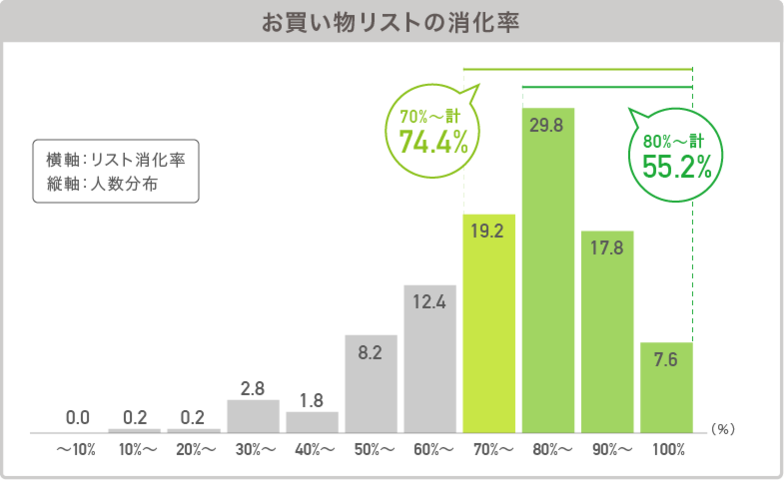
How much of the shopping list is actually purchased? As shown in the chart above, a remarkable 74% of shopping list creators purchased over 70% of the items on their list. Looking at product categories, purchases reached 60% to 70% across all categories, with particularly high rates of around 80% for cosmetics, home appliances, food, and pharmaceuticals.
Even if it's not on the list, there's still a chance!
Over half buy alternatives if they can't find it
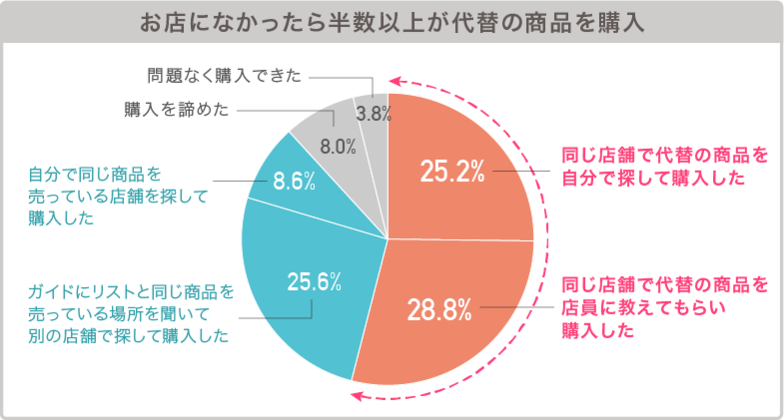
So, if an item isn't on the list, does that mean it won't be purchased? Actually, that's not necessarily the case. If an item on the list isn't found in the store, about 30% of shoppers look for it in another store. Over half of all shoppers purchase a substitute item.
Nearly 90% also buy "products not on the list"

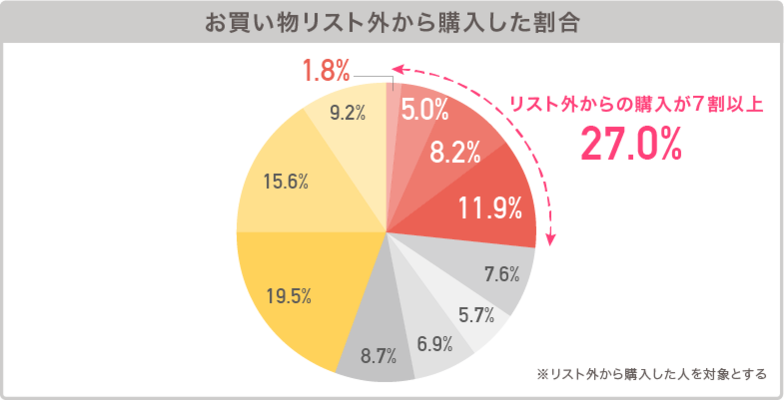
Furthermore, among those who bought off-list items, 27% reported that off-list purchases accounted for over 70% of their total shopping. This is a significant proportion.
The tendency to buy unlisted items is particularly high for daily necessities and clothing, with shoppers deciding what to buy directly after seeing items in-store. Reasons for purchasing included: for electronics, "because it was sold at a famous store"; for toiletries and medicines, "because family/friends recommended it," "because a salesperson recommended it," or "because I received a sample and liked it." Even without being on the list, there are still plenty of opportunities.
(Continued in Part 2. Next time, we'll introduce approach methods)
<Chinese Tourists in Japan: Shopping List & Vehicle Survey Overview>
・Survey Method: Online survey
・Sample criteria: 500 respondents meeting the following conditions
Chinese men and women aged 20-60 (no residential area restrictions)
Experienced travelers to Japan after the 2015 Spring Festival (Lunar New Year)
Shopping list creators (identified through screening)
・Survey Period: August 15-16, 2015
Dentsu Inc. possesses diverse teams and solutions within the inbound sector. The Dentsu Inc. Inbound Business Unit flexibly combines these varied resources to provide optimal solutions tailored to each client's challenges. kanko-unit@dentsu.co.jpまでお問い合わせください.
Was this article helpful?
Share this article


Newsletter registration is here
We select and publish important news every day
For inquiries about this article
Back Numbers


Author
The Travelers' Journey Team
Dentsu Inc.
Marketing Solutions Division