
Note: This website was automatically translated, so some terms or nuances may not be completely accurate.
"Learn from Estonia, the EU's Rising Star of 'Small Merits'!" Event Held
※Reprinted from Forbes JAPAN article"Small Merits: Learn from Estonia, the EU's Rising Star!"

"Wouldn't people in Japan also like to live in a 'Zero Bureaucracy' society?" asked Thomas Mool, Consul at the Embassy of the Republic of Estonia in Japan, from the podium.
"Bureaucracy" refers to bureaucratic practices and cumbersome official procedures. Estonia, a small EU nation with a population of just over 1.3 million and a GDP of approximately $25 billion, has pioneered cutting-edge open government. It interconnects about 170 government systems to provide over 3,000 services, achieving an e-ID Card (electronic national ID card) adoption rate exceeding 80%. Why has this nation of just 1.3 million people and a GDP of approximately $25 billion—which Mr. Maal himself calls a "startup government"—managed to create Skype and become a model IT nation in just over two decades since gaining independence from the former Soviet Union in 1991?
On January 28, Forbes Japan co-hosted an event with DENTSU SOKEN INC. B Team and Academy Hills Library. Approximately 120 attendees gathered at the Academy Hills Roppongi Library venue, including Academy Hills members and winners selected from public applications. To further develop and deepen the concept of "Small Merits" featured in the first installment of the popular Forbes JAPAN business magazine series "Dentsu Research Institute B Team's NEW CONCEPT Collection," the event welcomed guests from Estonia: Mr. Thomas Mõll (First Secretary/Consul, Embassy of the Republic of Estonia), Kosaku Yamaguchi (Head of Enterprise Estonia Japan) were invited. From DENTSU SOKEN INC. B Team, Creative Director Hidetoshi Kurashige and Copywriter Nadezhda Kirillova took the stage, along with Masaharu Fujiyoshi, Deputy Editor-in-Chief/Senior Writer from Forbes JAPAN. They delivered presentations and held a panel discussion to explore hints for Japan's future in Estonia.
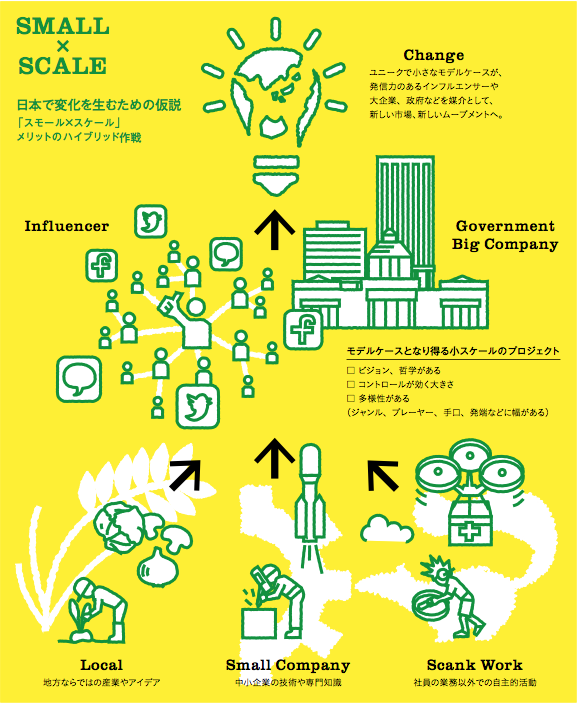
At the outset, Hidetoshi Kurashige, author of the first installment, introduced the concept of "small merits" explored in his article. His initial interest in Estonia stemmed from learning about the "singing revolution" – the bloodless revolution achieved through song during its independence from the Soviet Union in 1991. During his visit to Estonia, he met an architect couple who made the cool statement, "We built our country from scratch." He was also struck by the remarkable speed with which they shaped their new nation. Kuranari's analysis then shifts to Japan and Japanese companies.
Compared to the "large" scale of "scale advantages" focused on productivity and economic efficiency, might there be advantages to "small" in various aspects—consensus, risk, speed, quality control? From paper to twigs, then to logs. Like a bonfire that catches and grows, could innovation be born from a hybrid of scale and small?

Following Mr. Kurashina's explanation of the concept, Thomas Mohr spoke about Estonia's "present."
Read more in Forbes JAPAN : "Small Merits: Learn from Estonia, the EU's Rising Star!"
(Text: Forbes JAPAN Editorial Department, Fumiko Iwasato)
Was this article helpful?
Share this article


