
Note: This website was automatically translated, so some terms or nuances may not be completely accurate.
"Growing our fanbase through open Noh performances, passing it on to future generations. Carrying the 'present' of this 650-year-old traditional art form." Kie Yamamoto
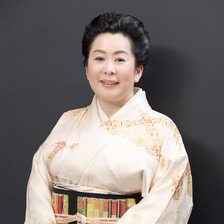
Yamamoto Yoshie
Yamamoto Noh Theater
To convey the appeal of Noh to people today
Yamamoto Noh Theater was founded in 1927. It was destroyed in the 1945 Osaka air raids but was rebuilt with the support of the local community. I entered this world by marrying Akihiro Yamamoto, a third-generation Noh performer born into a Noh family. As we strive to pass on Noh, which has continued for 650 years, for another 650 years, we see ourselves as just one cog in the wheel, coincidentally entrusted with this particular period. Therefore, we are actively considering what we can do to help as many people as possible in this era become familiar with and develop an appreciation for Noh.
Looking back on our activities, around 2006 marked a significant turning point with several major events converging: our connection with the Osaka Chamber of Commerce and Industry, encounters with various artists, and the recognition of the Noh theater building as a National Registered Tangible Cultural Property.
On New Year's Eve 2006, we collaborated with the Chamber to present a "New Year's Eve Live for Adults." This groundbreaking program condensed the highlights of Kansai performing arts—including Noh, Bunraku, Kōdan storytelling, and Rakugo comedy—and tickets sold out immediately. We served original cocktails and offered New Year's Eve soba noodles, making the inaugural event a huge success. At the time, the Chamber was seeking nighttime cultural initiatives to foster a safe, culturally enriching environment for enjoying Osaka's evenings. Around the same time, inspired by my husband's idea, we had started weekday evening performances starting at 7:30 PM to accommodate people after work. A representative from the Chamber came to see one of these shows and suggested we collaborate, leading to the New Year's Eve performance. Osaka is famous as a city of merchants, but it's also a place where rich traditional performing arts have flourished. To introduce this unique culture, we now host the "Kansai Traditional Performing Arts Night for Beginners," organized by us, co-hosted by the Chamber of Commerce and Osaka City, and supported by the Osaka Convention & Tourism Bureau.
The concept is an "open Noh theater," refreshing existing perceptions.
Encounters with artists also expanded our activities. With the cooperation of many contemporary artists, we offer "Art-Based Noh Introductions" for children. Before performances, children enjoy Noh-themed crafts. While Noh itself, being intangible, cannot be taken home, these creations can. We continue this, hoping that someday, when they become adults, seeing these crafts will rekindle memories and serve as a "re-entry ticket" to Noh. At the public-private partnership event "Water City Osaka 2009," we premiered our new work "Ring of Water," themed around water and the environment. "Ring of Water" has since been performed repeatedly in various locations, involving local children.
Last autumn, we borrowed a decorated mobile stage trailer, an installation by contemporary artist Miwa Yanagi, to stage a genre-mix version of "Ring of Water." This fusion featured Noh, classical music, rakugo storytelling, and even pole dancing. While there was initial hesitation about the pole dancing collaboration, it was very well received.
The Yamamoto Noh Theater building was recognized as a Registered Tangible Cultural Property, leading to its selection as a model case for the Agency for Cultural Affairs' Public Utilization Project. This initiative paved the way for the building renovation work undertaken starting in 2011. The concept was to create "an open Noh theater, a place where people gather," suited to the modern era. Thinking about long-term use, we aimed not just for formality, but for a place where young people could easily come, a space for artistic creation born from new encounters.
We want children with strong sensibilities to experience it at least once
We are now actively performing not only domestically but also overseas. It began in 2008 when Petko Slabov, a Bulgarian exchange student, visited us saying, "I want to learn Noh." Thanks to his determination and help, we started workshops in Bulgaria in 2010. Since then, we have held solo performances and workshops annually in Central and Eastern Europe. Last fall, my husband trained ten Bulgarian actors, and they performed the piece "Momijigari" locally. With Petko, we're also undertaking new initiatives, such as jointly developing a "Noh App" that allows users to enjoy the Noh accompaniment (hayashi) and understand the story.
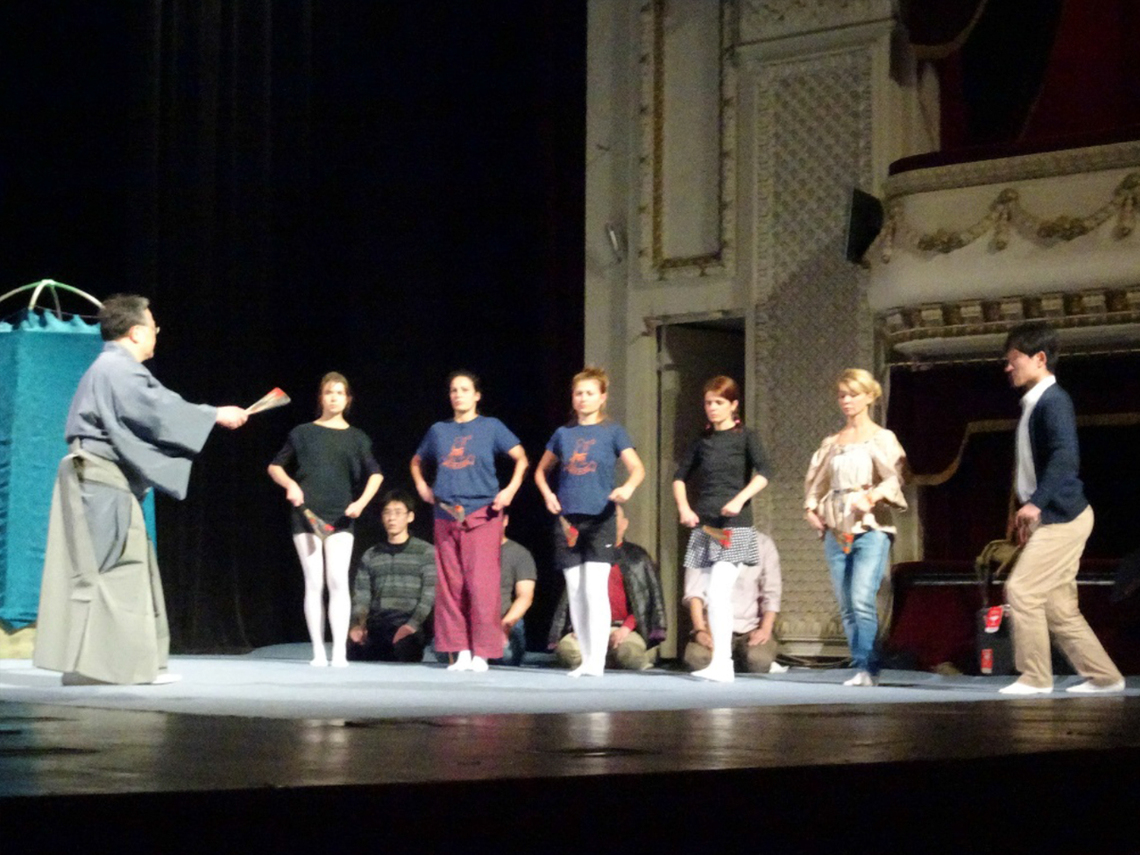
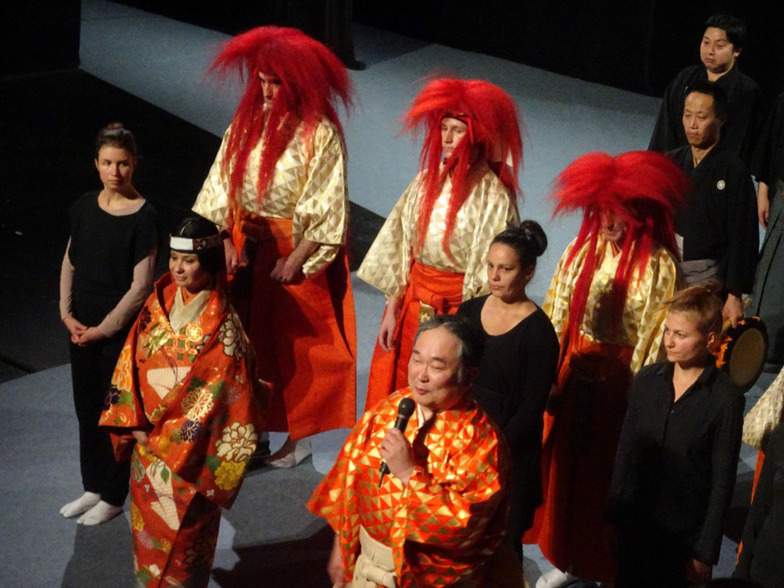
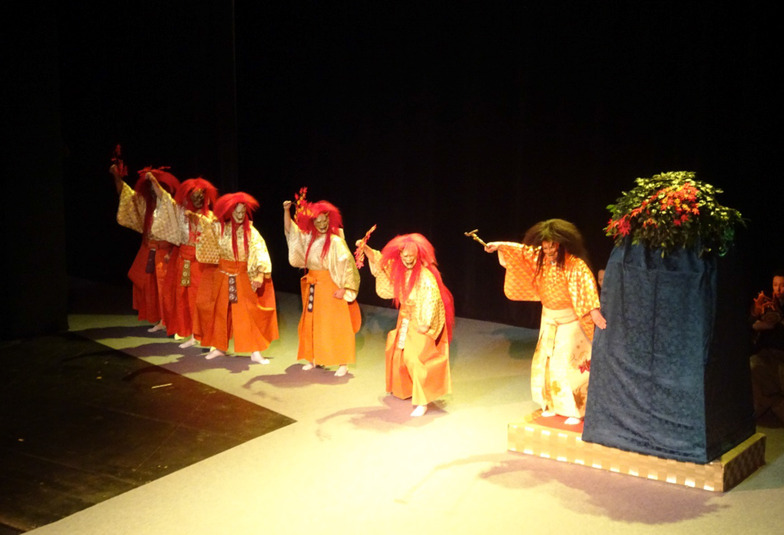
Noh often carries an image of being "lofty and formal," and I've worked hard over the past decade to dispel that perception. It was an honor to recently receive the Japan Foundation Global Citizen Award in recognition of these cultural exchange efforts and diverse initiatives through Noh. Moving forward, I intend to pursue initiatives that forge closer ties between Noh, this classical performing art, and society. One approach involves tourism. As Osaka is a city of performing arts, we are working with the Chamber of Commerce and the Tourism Bureau to help tourists, including international visitors, discover our rich cultural heritage.
Then there's school education. Through a project with the Agency for Cultural Affairs I've been involved with for 10 years, we've introduced Noh to about 30,000 children nationwide, including approximately 200 schools in Osaka Prefecture. To convey the appeal of traditional performing arts to the next generation, I believe it's vital for children—with their open minds and heightened sensitivity—to experience it at least once. If they do, they might return as adults, or even in their 40s or 50s. I intend to continue prioritizing outreach to children. Yamamoto Noh Theater Website
*The Japan Foundation Global Citizen Award recognizes domestic organizations that conduct outstanding, community-based international cultural exchange.
Was this article helpful?
Share this article


Newsletter registration is here
We select and publish important news every day
For inquiries about this article
Author
Yamamoto Yoshie
Yamamoto Noh Theater
Executive Director