
Note: This website was automatically translated, so some terms or nuances may not be completely accurate.
Dentsu Digital Inc. Holds Digital Marketing Seminar at Launch Event
On July 1, Dentsu Inc. established a new company specializing in digital marketing, 'Dentsu Digital Inc.'. On the 8th, it held a launch announcement and commemorative digital marketing seminar at The Prince Park Tower Tokyo in Minato Ward.
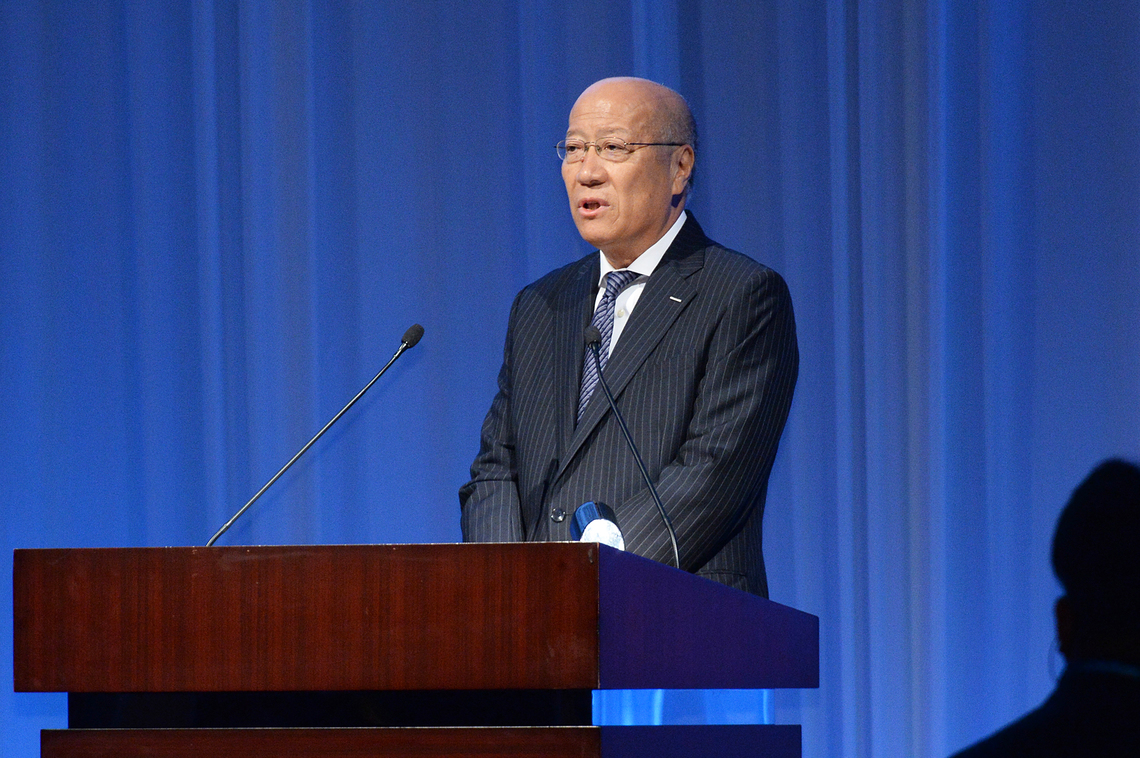
In his opening remarks, Dentsu Inc. President Ishii stated, "After announcing the establishment of Dentsu Digital Inc., we received various opinions, including some suggesting it might be too late. While I personally wished we could have established it sooner, this allowed us to conduct thorough verification. I am confident that from this very moment of its launch, it will be a group capable of providing practical services." He added, "The Dentsu Group has a network spanning over 100 countries, with nearly 60% of our work volume being digital. We will continue to transform and challenge ourselves, including leveraging this global network, to become the partner of choice committed to the growth and success of your business."
Following him, Yoshito Maruoka, President and COO of Dentsu Digital Inc., delivered a presentation titled "Marketing Can Evolve Further." He began by noting that while conventional railways transformed into bullet trains and black telephones evolved into smartphones over the past 50 years, marketing has not seen such dramatic evolution. He then explained various issues and solutions.
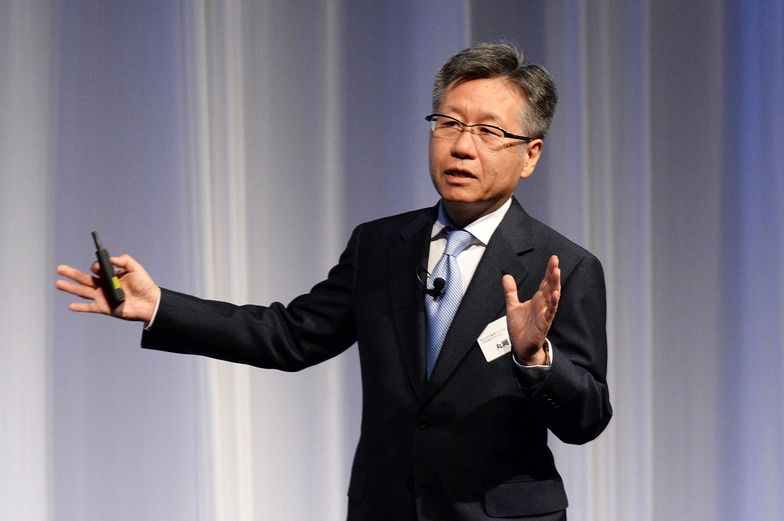
Citing examples such as companies implementing marketing systems without fully utilizing their functions, or optimizing customer acquisition while neglecting investment in customer management, he emphasized, "We need to rethink what digital marketing truly means for our company." He stressed that marketing requires integration across data, facilities, and operations.
He then introduced the company's operational structure: "One of Dentsu Digital Inc.'s key strengths is our 'team approach,' where we form an integrated organization with the client. At this stage, we believe working together in physically close proximity is efficient and effective. Additionally, we assign one person, called a Chief Consultant, to serve as the responsible leader for each project." He further introduced the operational structure. While noting that having hybrid talent with experience across various fields like marketing and digital is a company strength, he concluded, "We handle our areas of expertise, but for other areas, we would like to collaborate with specialized companies and experts in those fields."
Following the launch event, a digital marketing seminar featured a keynote speech by Joichi Ito, Director of the MIT Media Lab, who presented his vision of the future brought about by digitalization.
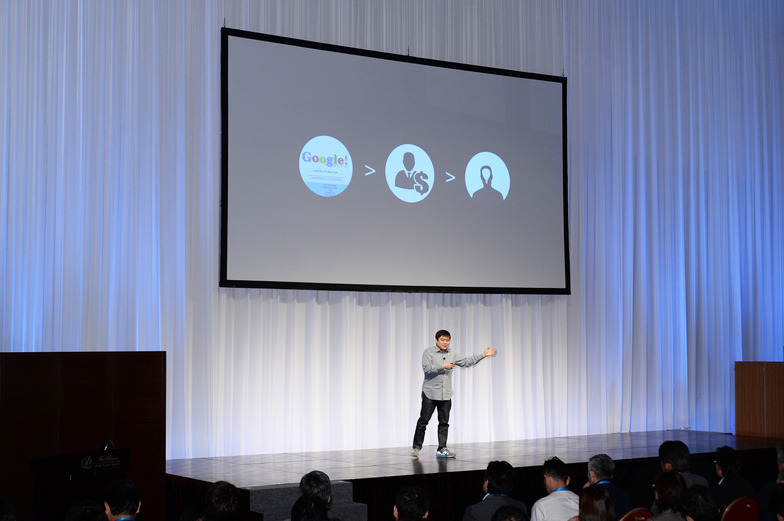
"Unlike typical universities, the MIT Media Lab integrates our degrees with our research. While others write papers to earn degrees and conduct separate research, we learn by building things—without lectures," he explained, introducing the lab's unique style and diverse activities. He explained that "Anti-disciplinary Research" is a keyword representing this characteristic. While traditional universities tend to have various fields that become increasingly deep and narrow, making it difficult to obtain degrees in the areas between these fields, lacking specialists, and struggling to secure budgets, the MIT Media Lab bridges these gaps.
Discussing the eras before and after the internet's widespread adoption, termed "BI (Before Internet)" and "AI (After Internet)," he noted that the internet's emergence lowered innovation costs. This enabled student-founded startups to compete with large corporations, fundamentally changing business structures.
He also touched on the evolution of education, stating, "I believe it's crucial to work on projects with peers in an exciting way. Traditional schools use textbooks for solitary study, telling students passion doesn't matter and to stop playing. In the era before robots, we needed robot-like humans, but in this age of artificial intelligence, we don't need robot-like humans. What we need are creative humans," he said, adding, "Humans shouldn't do what AI can do. What is uniquely human is play, entertainment, and creativity. I hope Dentsu Digital Inc. can effectively promote the human approach and raison d'être suited to the age of AI."
Next, Dentsu Digital Inc.'s Chief Consultants Takashi Asaoka, Yumiko Yasuda, and Tomohiko Sugiura joined the discussion. They explored "How is Dentsu Digital Inc.'s approach different?" and presented from various angles, including new brand experiences created by digital.
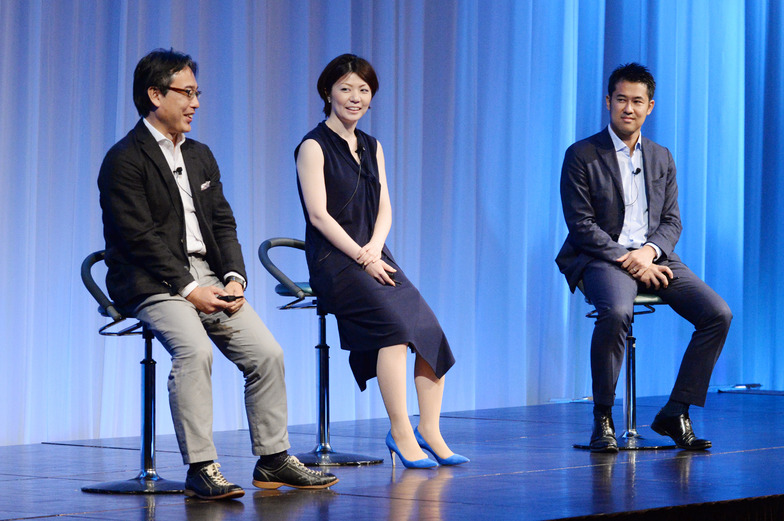
They explained that the keys to achieving results in the increasingly complex world of digital marketing include: aggregating sufficient data and visualizing it in real time; pre-establishing consensus on which metrics to judge and how, from the field to upper management; and reliably updating and catching up on the latest knowledge. They emphasized that success is impossible if any of these elements are missing.
Regarding Dentsu Digital Inc.'s new approach, Sugiura stated, "There are parts that change and parts that remain unchanged. The unchanged part is Dentsu Inc.'s DNA: committing to delivering results for our clients and seeing it through. However, the means and direction to achieve that are new at Dentsu Digital Inc." Yasuda commented, "While 'What' and 'How' are important for digital marketing to succeed, 'Who' – who does it – is also crucial." We need people who can connect others with a vision." Asaoka concluded the presentation by stating, "Future creativity will require devising ways to quickly release content by creating one core concept and gradually adapting it across formats, rather than spending time preparing multiple formats."
Was this article helpful?
Share this article


