
Note: This website was automatically translated, so some terms or nuances may not be completely accurate.
Grab Innovation Hints! Stylus "Innovation Forum"
Stylus, based in the UK and US, researches global innovation and advises companies on new business development. Having previously held its "Innovation Forum" events showcasing global innovation cases in London and New York, the company finally made its debut in Japan in July 2016. This article covers the "Innovation Forum" held at Omotesando Hills.
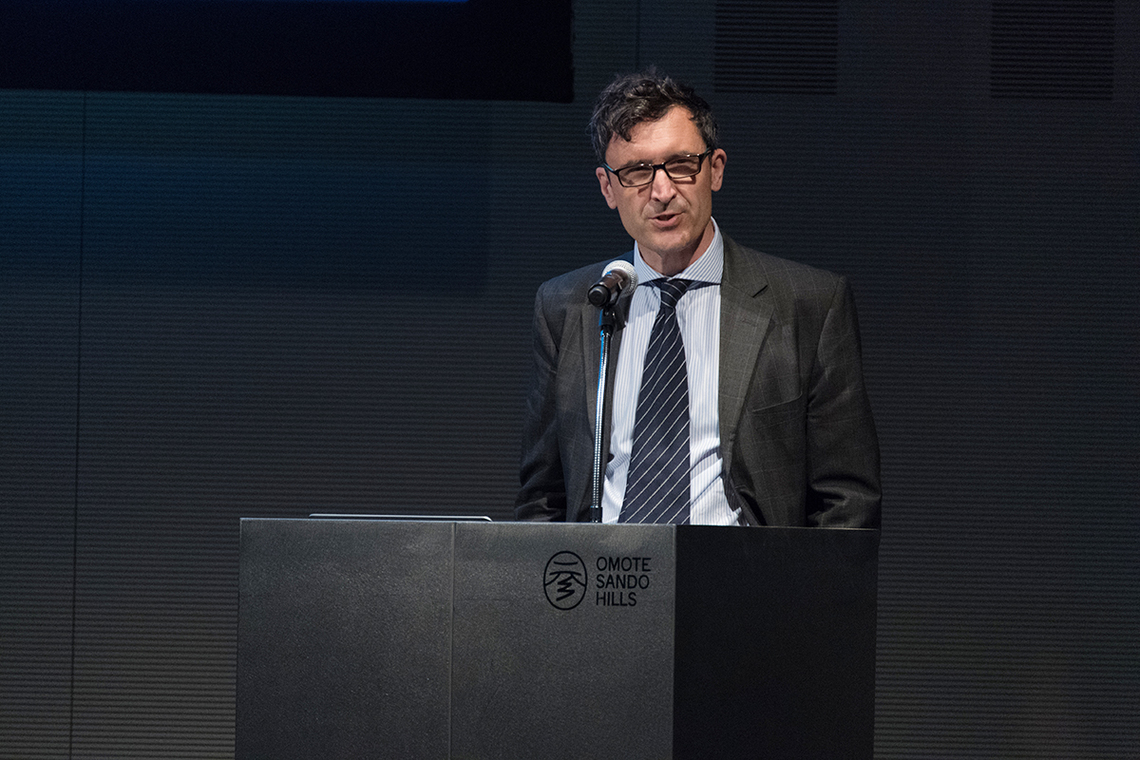
First, Stephen Morgan, Chief Revenue Officer of the company, took the stage to introduce Stylus. Founded in London six years ago, Stylus quickly secured over 500 clients. Today, its 60 staff analyze innovation cases across 15 industries. A key feature of its advisory services is support extending beyond idea generation to execution. Morgan stated, "Innovation in one industry influences another. There is value in providing innovation ideas that transcend industry boundaries."
The Luxury Market by Target Group in 2030
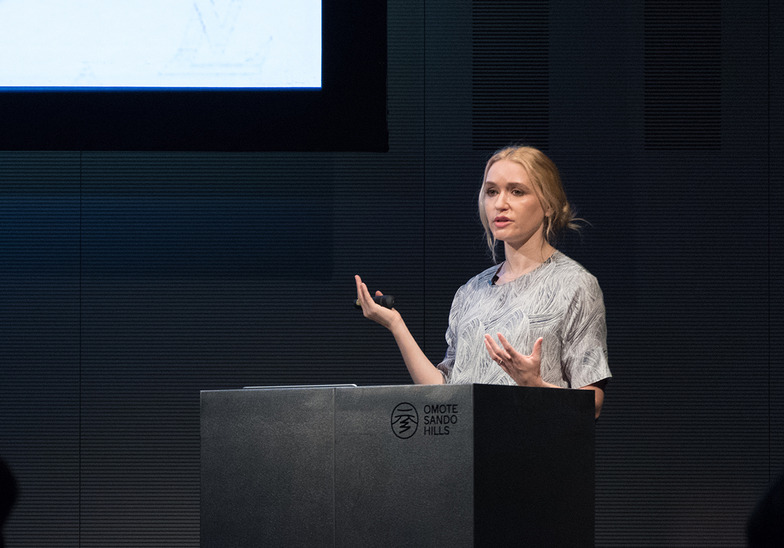
Next, Stylus's top analyst, Shannon Davenport, took the stage to present the consumption behaviors of the luxury market in 2030, introducing the characteristics and examples of three distinct generations.
First, Generation Z, who will be 21 to 35 years old in 2030. They call this generation "adventurers seeking unique experiences." Characteristics include a tendency to "prioritize experiences over material purchases," "enjoy the moment and prefer immersion," and "favor rentals and subscription services," illustrated with examples. An example of enjoying immersion was Christian Dior offering VR experiences in its stores. Users wearing original VR headsets can experience the brand story, including the craftsmanship behind product creation.
The second generation introduced is the Millennial generation, who will be 36 to 49 years old in 2030, dubbed "Non-Brand-Obsessed Enthusiasts." Their characteristics include "preferring healthy lifestyles," "seeking simple functionality and minimalism," and being "hyper-personal." For example, the anti-aging cosmetics company GENEU has PhD staff swab customers' mouths to collect samples, investigating genetic and aging tendencies. Tests that typically take weeks and cost money are completed in 30 minutes, providing customers with a unique experience.
The third generation consists of the baby boomers who will be 66 to 84 years old in 2030, termed "Status Seekers Who Know Life Inside Out." Characteristics include "prioritizing legacies worth passing to children," "seeking knowledge about products and brands," "demanding authenticity," "staying active through autonomous driving," and "preferring digital." As an example, he introduced BMW's unveiling of the "BMW Vision Next 100" concept car, designed with the next 100 years in mind. This future vehicle, capable of changing its body according to road conditions and freely expanding its functions, satisfies this authenticity-driven generation.
Finally, Mr. Davenport encouraged the audience, stating, "Future consumers expect new things, and there are many seeds for breakthroughs."
Global Examples Inspiring Future Innovation
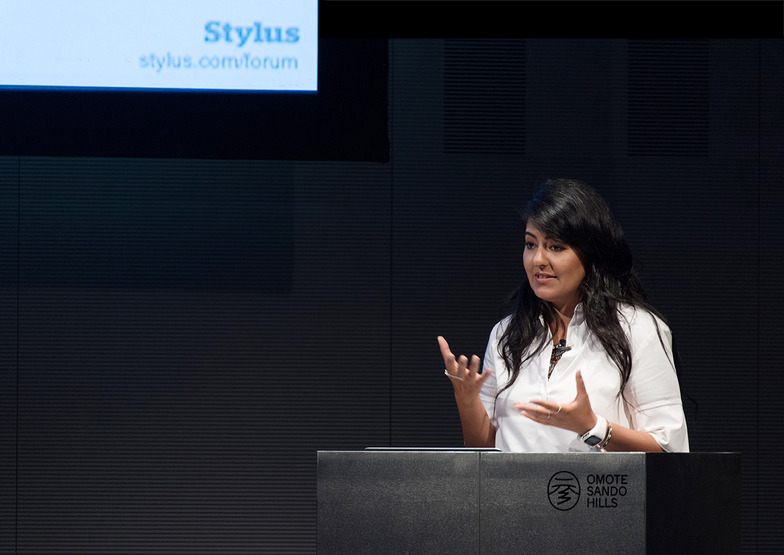
Next to take the stage was Saisangis Daswani, also a top analyst at Stylus. She introduced "The New Paradigm in the Luxury Market." She explained that consumer expectations for luxury are shifting in terms of quality, exclusivity, and service. For example, regarding quality, functional and experiential luxury is gaining attention over purely decorative luxury. She highlighted trends, using examples, showing that Millennials, in particular, have less interest in traditional brands and perceived luxury, preferring functional items that can be customized for themselves.
Subsequently, Daswani introduced the color palette set to dominate trends from 2017 to 2018. Stylus researches color trends across diverse fields like art, industrial products, and the internet, proposing color combinations likely to gain prominence.
Mr. Davenport then returned to the stage to discuss materials. Material trends are also researched across architecture, art, and technology. A key concept in material thinking is "dynamic opacity," referring to semi-transparent materials that change in various ways. Other notable materials include highly flexible, durable mirror-like surfaces.
Examples of lightweight materials for devices integrating with technology included a patch used in medical devices that attaches to the skin to measure blood sugar levels in real time, and ultra-thin solar cells as thin as a strand of hair. Harmony with nature was highlighted as a key material trend, alongside environmental consideration and sustainability. "Protecting natural resources, reducing pollutants, and enabling positive reuse will become requirements for materials," stated Davenport.
He emphasized that accelerated manufacturing processes enable companies to quickly adopt material utilization ideas from other industries, stating, "We hope you will apply the ideas and insights introduced here to future product design."
Organizations that can foster innovation-centered discussions will prevail.
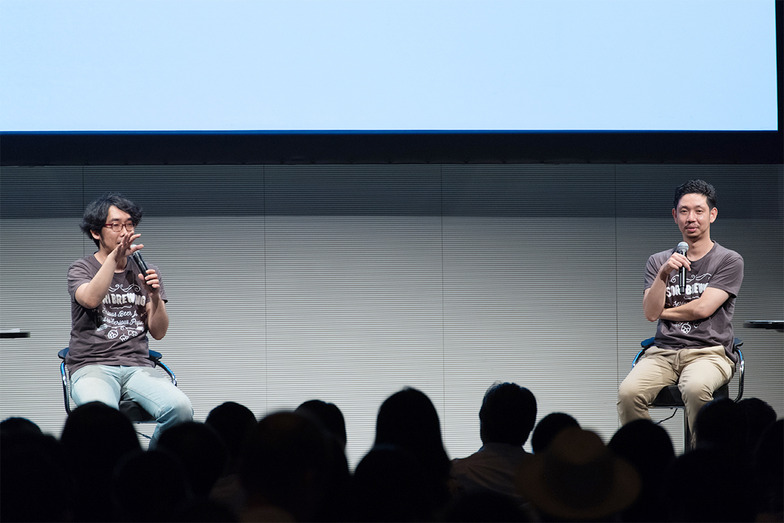
The final session featured a discussion between WIRED Editor-in-Chief Megumi Wakabayashi and Shusaku Hirota of Dentsu Inc., who co-organized this event with Stylus. The two appeared on stage wearing matching T-shirts, and there was a reason for this. Starting this year, Dentsu Inc., WIRED, and H.I.S. launched a new initiative called the "Innovation Tour." This tour, aimed at personnel from domestic new business development departments, visits innovative companies around the world to gain fresh perspectives. The matching T-shirts were purchased locally by the two who accompanied the tour.
Wakabayashi shared that speaking with new business development managers on the tour, he sensed their innovation dilemma. Despite being well-informed about trends and information, they struggle to translate this knowledge into actual products or services. He described this situation as "having apps but no operating system to run them."
Mr. Hirota also revealed that while providing Stylus reports to various companies, he observed many find value in global research reports but struggle to translate that information into new business ventures. He added that while industry-specific conferences abound, "events like this one, which provide a broad overview of the world's direction, are invaluable."
Wakabayashi introduced Hillary Clinton's " Initiative on Technology & Innovation " pledge, which places technology and innovation at the center of policy and outlines directions for education, government, and diplomacy.
In response, Hirota noted that while Japanese companies understand the importance of innovation, the challenge lies in "the lack of mainstream discussions centered on innovation." Indeed, when Hirota introduces Stylus reports, he sometimes encounters the barrier of not knowing which corporate department to approach—meaning there is no dedicated business unit responsible for innovation. The Stylus report also highlighted examples where not only startups but also large corporations collaborate with startups on new initiatives. Citing BMW's concept car as an example, Hirota pointed out that continuing such collaborations makes innovation more likely to emerge.
Mr. Wakabayashi highlighted a current challenge in Japan's new business development: "Because there are no people who can evaluate innovation, even when new ideas emerge, they cannot be advanced." Mr. Hirota referred to this situation as the "Japanese-style innovation dilemma," mentioning the contradiction where, before starting something new, people ask, "Please show me other examples."
In response to such demands, Hirota cited Stylus's stance that "companies should reference innovations from different industry categories." He emphasized that in Japan too, "new combinations, like the automotive industry adopting fashion industry trends, lead to the next innovation," appealing to the audience that Japanese innovation requires "more courage than knowledge."
Comparing it to WIRED's editorial approach, Wakabayashi advised that reading Stylus reports is interesting from the perspective that "the subjects and themes of information differ." Hirota concluded, "Even with examples from other industries, forcing them into your own world creates opportunities. I hope you take away new ideas and inspiration from this event."
Was this article helpful?
Share this article


