Note: This website was automatically translated, so some terms or nuances may not be completely accurate.
 If you understand young people, you can see the future ~ Commemorative Series for the Release of "The Youth Divide" ~ [1/4]
What is this "adult disengagement from youth" happening now?
When you hear "young people are turning away from XX," how many XXs come to mind? Cars, alcohol, cigarettes, and even romance have long been included in this phrase. In any case, the well-crafted phrase "young people are turning away from absolutely everything in the world" seems to have been used to death over the past few years. On the other hand, when you ask the young people themselves,
"It's not that we're turning away; we just never saw those things as being for us in the first place."
Of course, it depends on the thing, but there seems to be a big gap between the adults' sense of crisis—"Young people are turning away from things they should love!"—and the reality.
This phenomenon, where intergenerational dialogue seems to be failing, is the subject of our new book, "The Youth Disengagement," written by the Dentsu Inc. Youth Research Department (Dentsu Wakamon), led by myself, Masahide Yoshida, incorporating our research findings and analysis. In this series, we'll excerpt parts of the book and briefly introduce "Communication Techniques for the Future" aimed at making intergenerational dialogue a little smoother than it is now.
First up: the true nature of the "young people turning away from..." phenomenon.
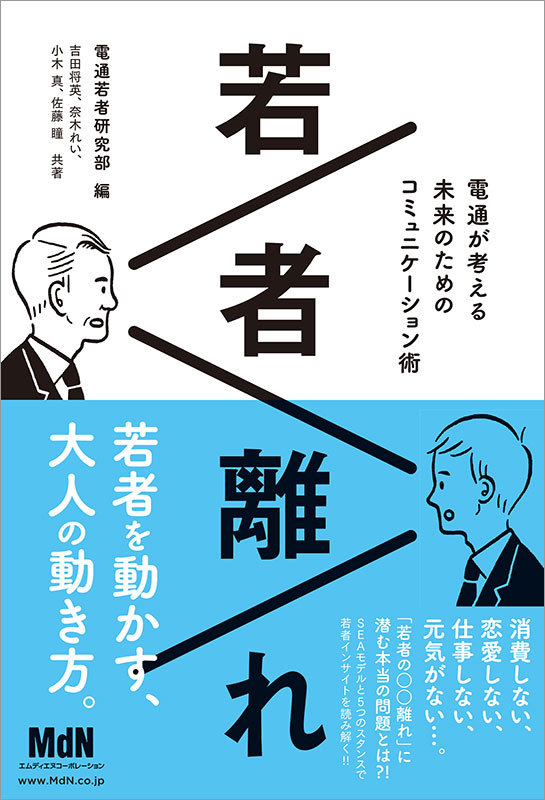
Book details here
"You're the one who's distant, aren't you!?"
As everyone knows, Japan is currently in the midst of a low birthrate and aging society [Figure 1].
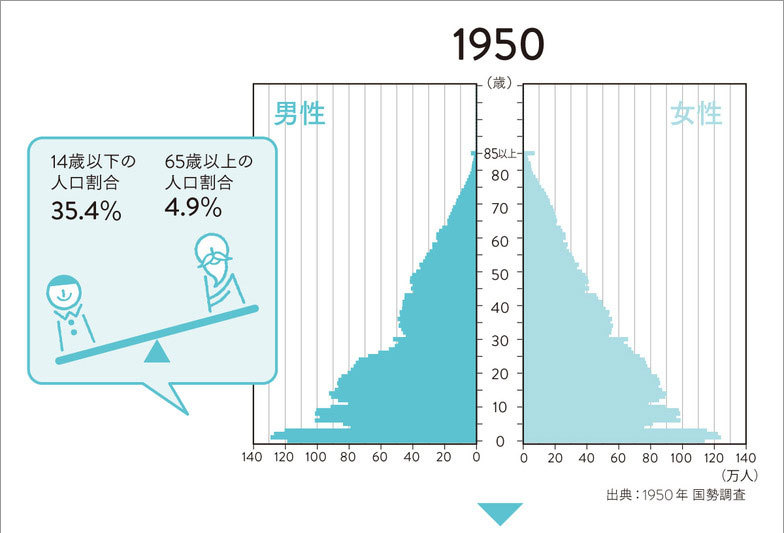
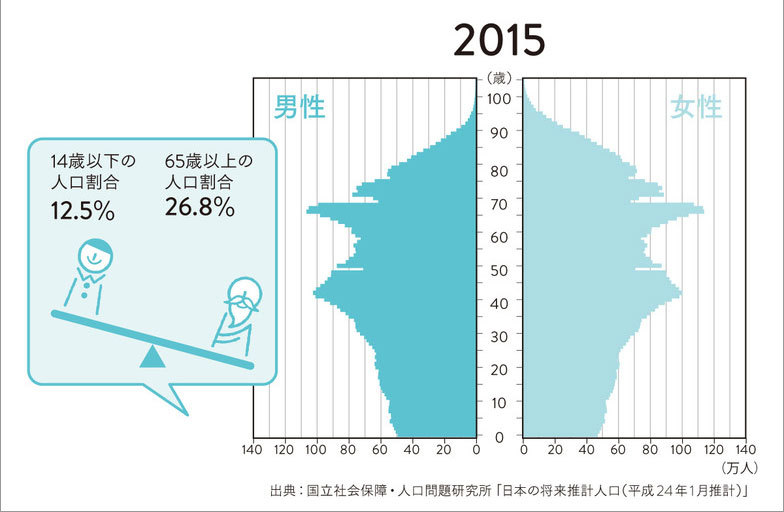
The higher the proportion of young people in society, the greater their influence on societal structures and systems becomes. This represents a state where young people possess a relatively strong "quantitative influence." Conversely, as a society ages and birth rates decline, the "quantitative influence" of young people diminishes.
"Don't bother creating content for young people; you won't get the numbers."
"Even if we can reach young people, their numbers are too small. Prioritize product development for families."
Have you ever heard conversations like this in your organization or team?
Precisely because the sheer volume of young people is diminishing, organizational and management decisions are increasingly made without them in mind. Viewed this way, the true nature of "young people turning away from XX" might actually be the result of society, adults, or organizations and management repeatedly making decisions that distance themselves from young people. This is Wakamon's analysis of the true nature of "young people turning away from XX," encapsulated in the book's title: "(Adults) Turning Away from Young People."
The "quantity influence" and "quality influence" held by young people
"So if 'adults turning away from youth' is the real issue, is that a problem?"
Some might have this reaction. Society and the economy shift based on decisions optimized for the majority. That's not inherently bad. Even if products or services aren't embraced by young people, it seems fine as long as the economy is thriving elsewhere. So, beyond the emotional argument that "young people are pitiful," what are the actual disadvantages for adults and organizations in "drifting away from youth"?
"Organizations where adults are distancing themselves from young people." Putting it into words like this suddenly makes you feel, almost imperceptibly, that this might be an organization with some kind of problem.
To make the problem clearer, I created [Figure 2].
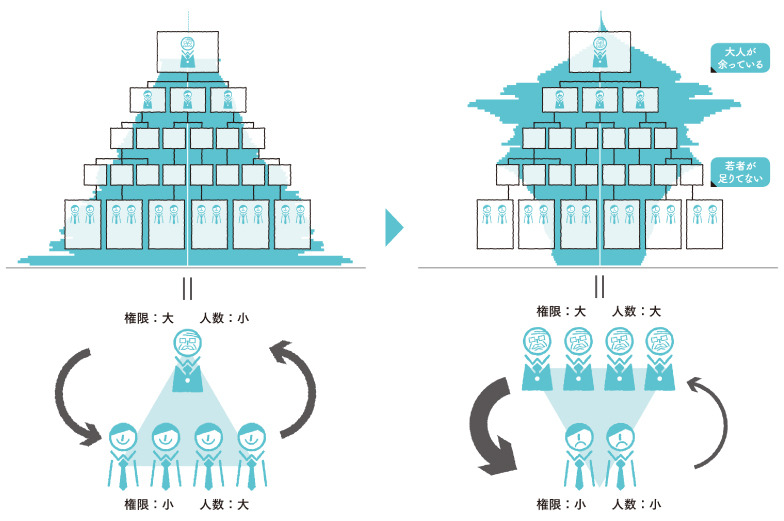
[Figure 2] Intergenerational Power Balance Comparison: Youth-Majority Society vs. Youth-Minority Society
Deeply rooted in Japanese organizations is the ideology of seniority-based hierarchy. While we won't delve into the merits or demerits of this system itself here, it seems to be based on another underlying assumption: an organization structured such that the number of members gradually decreases as they become older. Older members hold greater authority but are fewer in number, while younger members have less authority but are more numerous. This equilibrium likely maintained the organization's vitality.
However, the decline in the "quantitative influence" of young people may have structurally trapped organizations in a state of reduced diversity. This loss prevents organizations from seizing opportunities to make new decisions unconstrained by precedent or custom. In other words, organizations may now be unable to harness another form of influence young people possess: "qualitative influence."
By persistently leaning toward decisions that distance themselves from youth – thinking "We can't get enough young people even if we target them, so let's just give up" – organizations become unable to harness the young people within their ranks or the new ideas emerging from them. This phenomenon may be occurring across various organizations.
The phrase "These days, young people..." is a kind of baptism by fire, spoken by older generations to everyone since time immemorial. Today's adults were told the same thing when they were young, so they should understand that today's youth aren't uniquely special. However, considering that Japan has entered an unprecedented era of low birthrates and an aging society, and the proportion of adults saying "These days, young people..." is only increasing, it's not necessarily the same as in the past.
How can we listen to the "influence of quality"?
We don't want to settle this with simplistic good-versus-evil or binary thinking, like "young people aren't the problem" or "adults should change." What's crucial is for each of us to calmly understand the backgrounds we were raised in and the circumstances we find ourselves in. Then, we must each consider how best to engage with these differences and diversity.
Furthermore, I believe that recognizing the underlying reality—that behind the mass-produced phrases about "young people turning away from XX" lies an invisible bias that organizations and management often fall into, namely "adults turning away from young people"—can increase the likelihood of dialogue that avoids mutual wastefulness.
The book "The Youth Disengagement" delves deeper into the true nature of "young people's disengagement from XX," exploring its causes and the potential phenomena that result. It also examines the value that young people's "qualitative influence" holds for adults and society. Next time, we'll explore what exactly this qualitative influence of young people entails.
Was this article helpful?
Share this article


Newsletter registration is here
We select and publish important news every day
For inquiries about this article
Author
Masahide Yoshida
Dentsu Inc.
Dentsu Inc. Business Design Square
Concept Designer