Note: This website was automatically translated, so some terms or nuances may not be completely accurate.
 Inbound Strategy from a PR Perspective [4/5]
Regional Branding in Inbound Tourism
The Correlation Between "Regional Resources" and "Attractiveness"
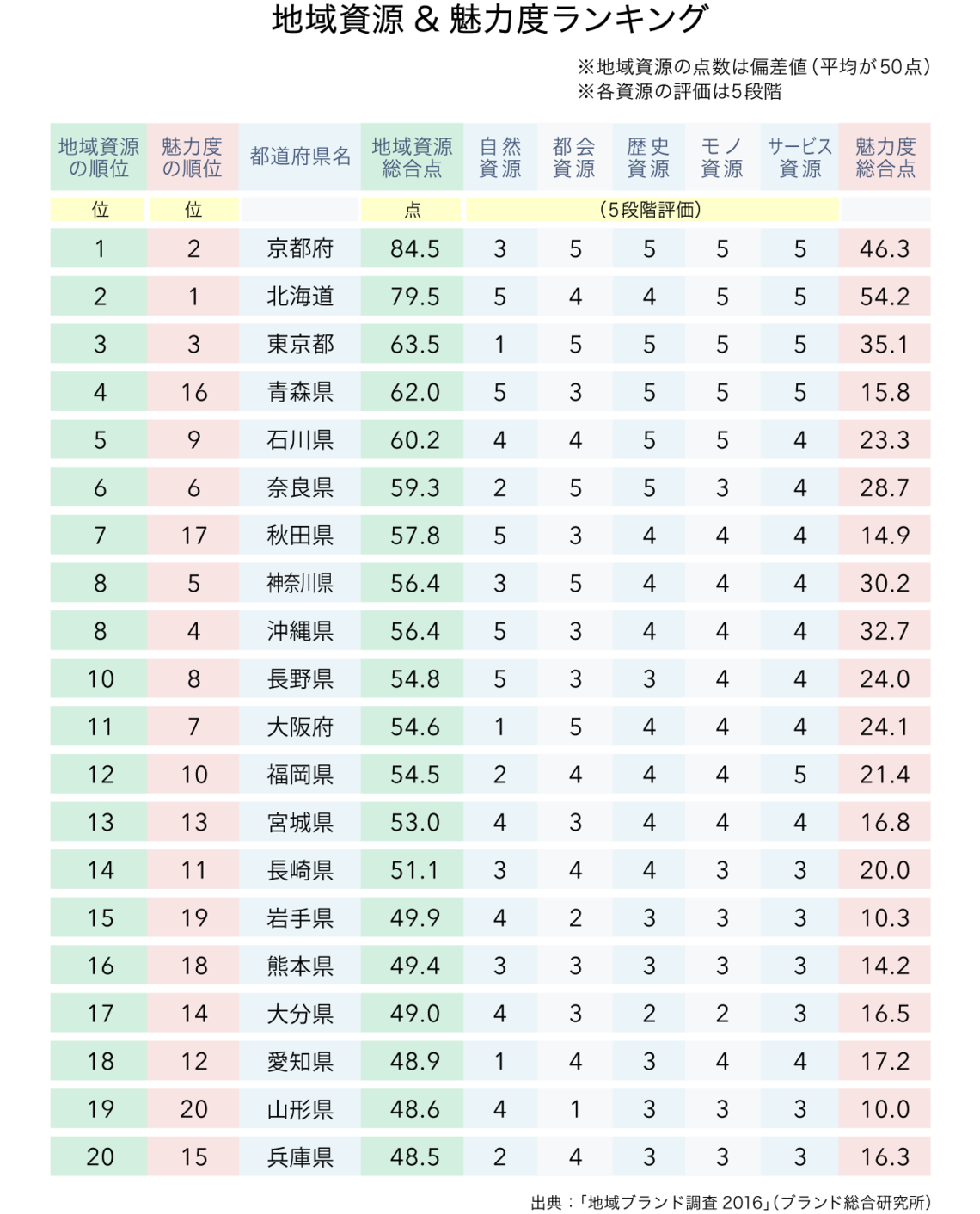
Looking at the 2016 results of the "Regional Brand Survey" conducted by the Brand Research Institute since 2006, we see a correlation between "regional resources" and "attractiveness." Many prefectures ranking high in regional resources also rank high in attractiveness. Though some prefectures show a gap...
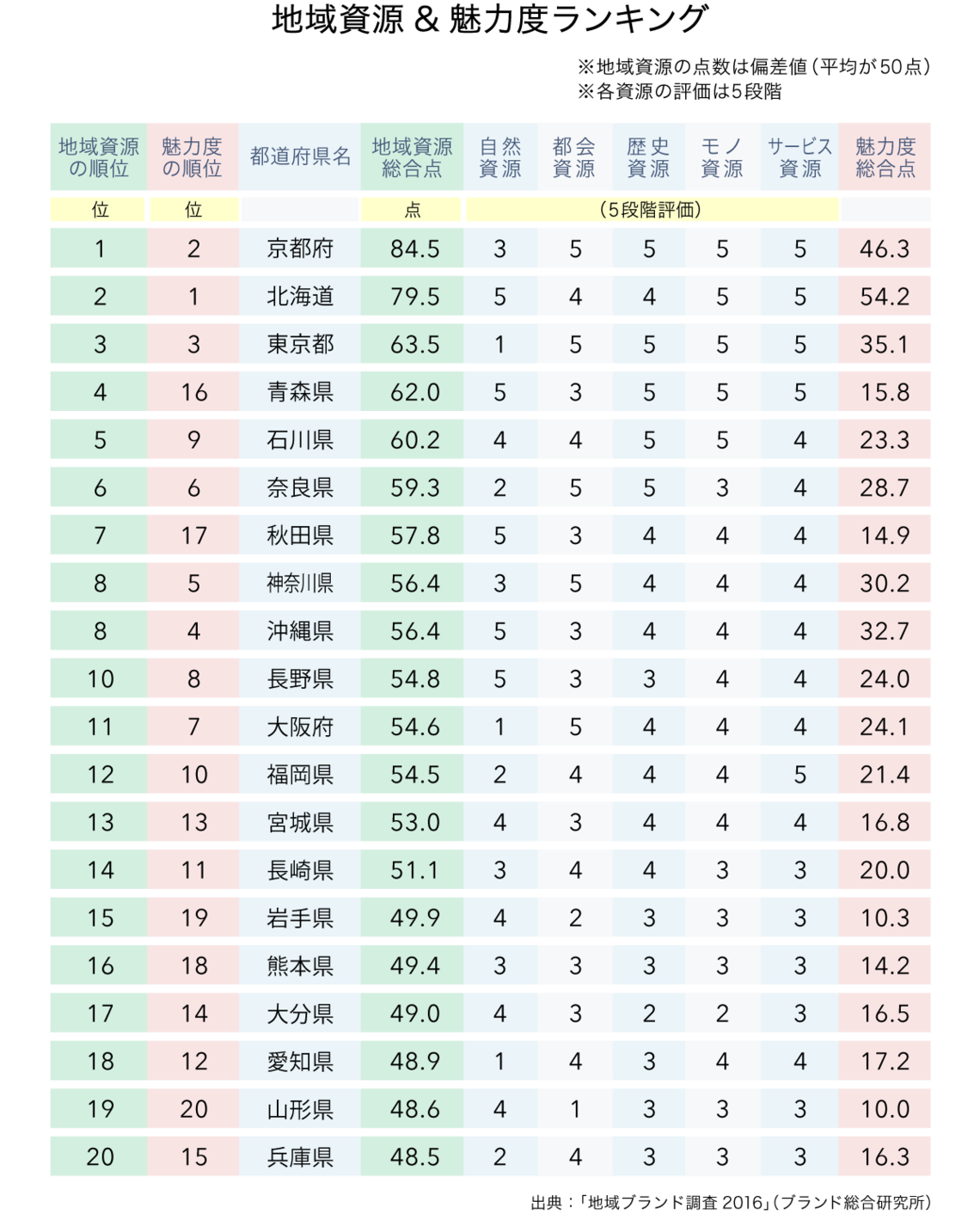
While the "Regional Brand Survey" targets approximately 30,000 domestic consumers, the importance of regional resources is also evident in TripAdvisor's "2016 Ranking of Popular Japanese Tourist Spots Among Foreigners." When considering regional branding for inbound tourism, it is essential to be mindful of the correlation between "regional resources" and "attractiveness."
Regional branding requires an objective "bird's-eye view" from an outsider's perspective
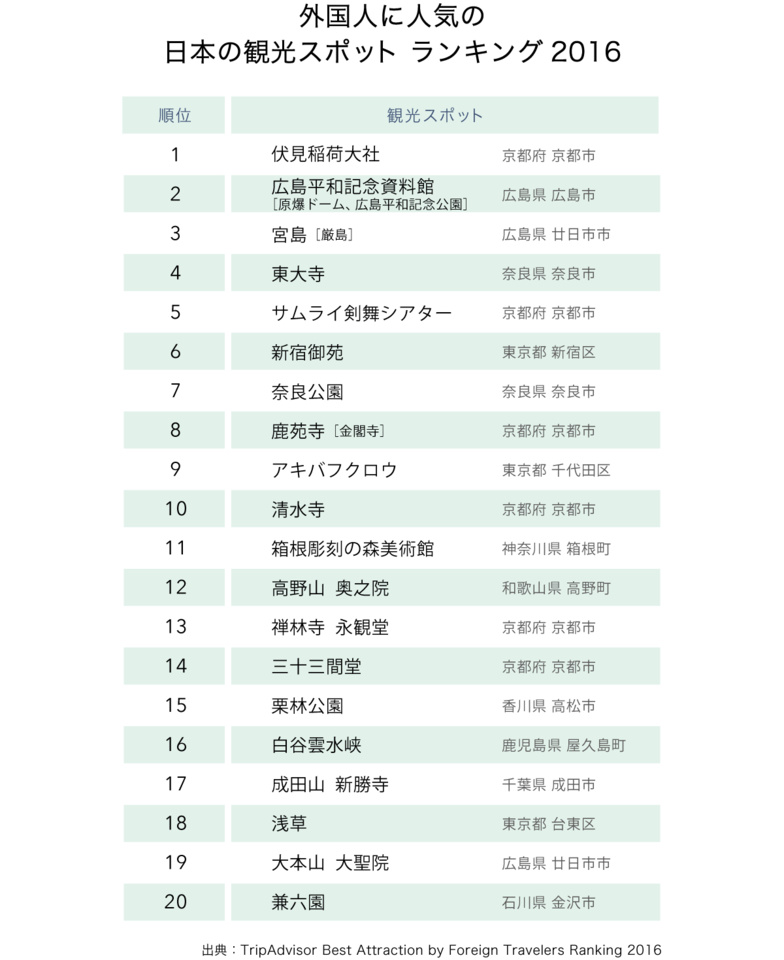
According to the Japan Tourism Agency's "Survey on Consumption Trends of Inbound Tourists," one in two foreign visitors to Japan travels to regions outside the two major metropolitan areas. For foreign tourists visiting only regional areas, their primary activities include "nature/scenic spot tourism" (65%), "hot spring bathing" (50%), "staying at a traditional inn" (47%), and "drinking Japanese sake" (36%). This suggests their interests are expanding from "material consumption" like shopping to experiential "experience consumption" focused on enjoying history, culture, and spiritual healing.
Regional areas possess attractive local resources for foreign tourists visiting Japan. However, to leverage individual local resources and enhance the overall appeal of the region, the concept of regional branding is essential. Establishing a regional brand requires consolidating individual local resources and obtaining an objective evaluation and judgment of the entire set of resources from an outsider's perspective. Through this process of evaluation and judgment, a regional brand is created that maximizes the region's value.
When visiting rural areas, one often hears people modestly say, "There's nothing here. Just people and scenery." However, digging deeper often reveals wonderful historical episodes or interesting content discovered through the lens of culture or sports.
Admittedly, it can be quite difficult for the people within a region alone to reexamine their own area and rediscover its appeal. Even if internal discussions pinpoint hot springs or gourmet food as selling points, it means nothing if inbound foreign tourists don't find them appealing.
In such cases, leveraging the perspective of native speakers from target countries or regions, or the "outside view" of third parties like us whose livelihood is communication, can transform things locals take for granted into golden treasures.
In the book "Inbound Strategy from a PR Perspective" (published last November, authored by Dentsu Inc. Public Relations, Zheng Yan (Dentsu Inc. Public Relations Advisor, Beijing), and Ka Yue (Japan-China Communication Inc.)), we share an episode involving a female reporter from a major Chinese newspaper who visited Hokkaido.
She was from Beijing, where winter temperatures can drop to around minus 10 degrees Celsius. After her reporting trip, the title of the article she wrote upon returning to China was "Hokkaido is Warm." This article was reprinted by various media outlets across China and generated significant buzz.
In Japan, "Hokkaido is cold" is common knowledge. Even something taken for granted by Japanese people can become unexpected when viewed from a different perspective. This is a prime example of the insights gained from an outsider's "view from the outside."
Similar to the recent trend of local government promotional videos, another approach involves extracting individual regional resources and building their appeal from diverse perspectives to support regional marketing and communication.
However, to effectively establish a regional brand for inbound tourism, it is essential to design an information flow structure based on "context building" and "context dissemination." This requires an outsider's perspective to comprehensively survey all regional resources and create information that resonates with the target audience in the intended countries or regions.
Regional brands do not develop overnight. Tactics are certainly important, but communication grounded in this information flow structure—achieved by a third-party "outside perspective" that comprehensively surveys all regional resources—is what sustains regional brands over the medium to long term.
In the next and final installment, we will discuss the essential role PR must play in inbound strategies.
Was this article helpful?
Share this article


Newsletter registration is here
We select and publish important news every day
For inquiries about this article
Back Numbers


Author

Yasuhide Sonou
PR Consulting Dentsu Inc.
Information Distribution Design Bureau
Department Manager