Note: This website was automatically translated, so some terms or nuances may not be completely accurate.
 Why not solve your problems with a good song? [1/2]
The power of song to spread. Does Mom's angry face resemble a shisa?
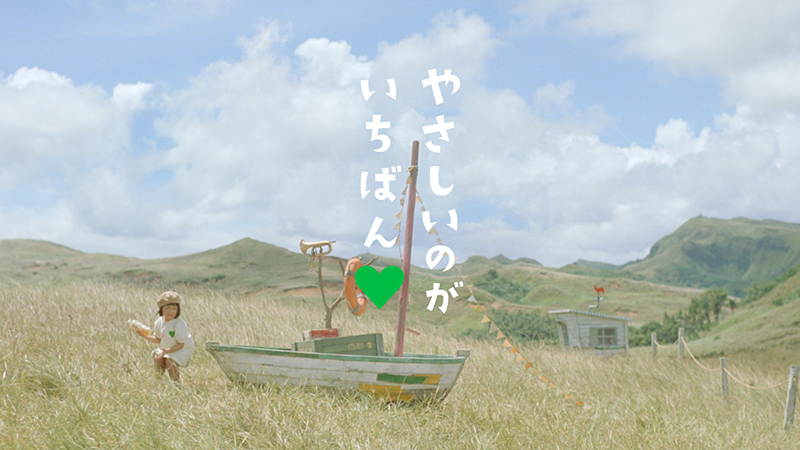
GREEN DA・KA・RA Gentle Barley Tea "Mom's Face" Edition 30 Seconds Nagisa-chan / Suntory
YouTube is here
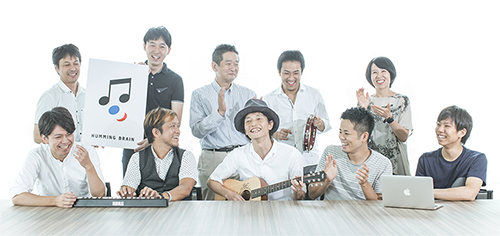
※From the SUNTORY Official Channel Creative Director (CD) Ryuichiro Akamatsu, who handles everything from writing lyrics and composing to performing and singing, has formed an in-house unit called "HUMMING BRAIN." This unit provides clients with a one-stop solution for "solving communication challenges through integrated campaigns centered around song."
We asked Akamatsu why simple "songs" resonate in today's information- and technology-saturated world.
【Table of Contents】
▼The Power of Song to Spread + Evoke Images. When Someone Sings Along, It Becomes a Commercial
▼ We'll teach you how to create songs that everyone hums and spreads!
▼Even "rejected songs" can be put to good use!?
The Power of Song to Spread + Evoke Images. Just Someone Humming Makes It a Commercial
I'm Akamatsu from Humming Brain. Lately, I often get asked this question during interviews:
"In this era demanding sophisticated solutions, why choose a simple song?"
In today's world where high-spec, large-scale visual expressions are the norm, "songs" might seem somehow unarmed, lacking in various ways, or perceived as unremarkable content.
But while songs are indeed simple, they can be incredibly rich and eco-friendly content, depending on how you look at it. One major reason is their " power to spread."
Whether it's video or books, spreading any content requires a playback medium. But a song? All it takes is for someone to hum it, and then someone who hears it sings it somewhere else, spreading and multiplying. The only content that can be played back using just the human body, without any device or location restrictions, is a song.
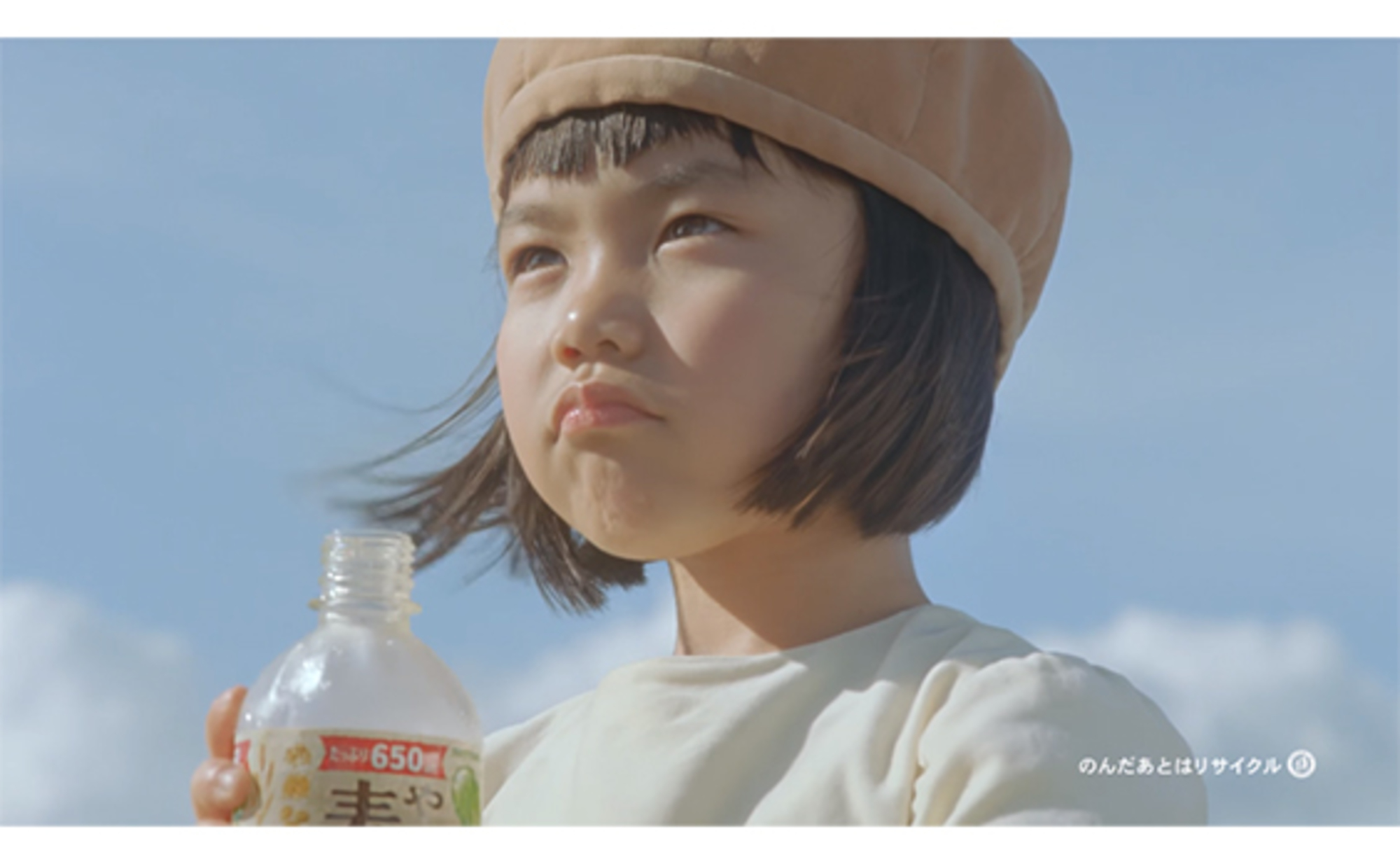
One TV commercial I worked on this year was Suntory's "GREEN DA・KA・RA Gentle Barley Tea" (2017). After this commercial aired, I often passed by parents and children or groups of kids walking down the street humming "Mama's angry face~". This is also the power of song to spread.
What's crucial is that the people humming this song are singing it as "their own song." In other words, when a child sings this song, the "mom whose angry face looks like a Shisa" is the singer's own mother.
In fact, this commercial was created from the start with the intention of spreading as this kind of "parent-child communication." The aim was for it to be "sung" within the communication between many moms and children, or even dads and children, and for that very act to become the branding for "Gentle Barley Tea."
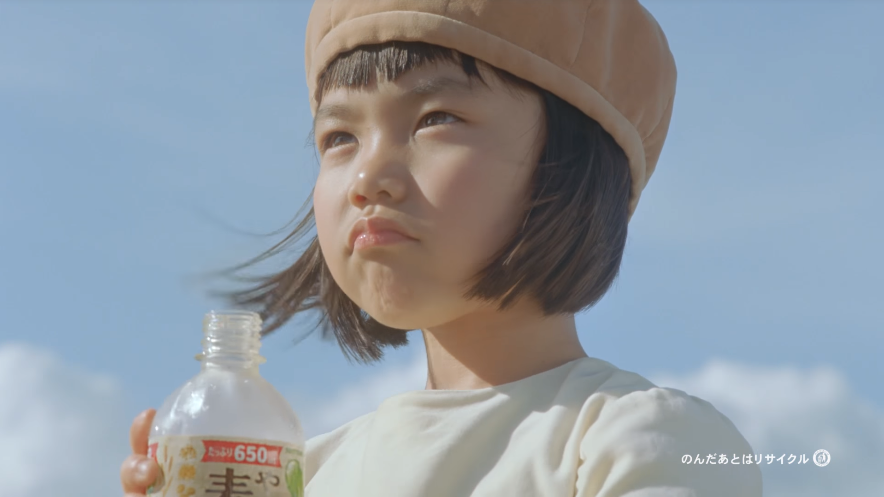
Furthermore, songs possess the power to evoke imagery. Everyone has experienced hearing a certain song and always seeing the same image in their mind's eye.
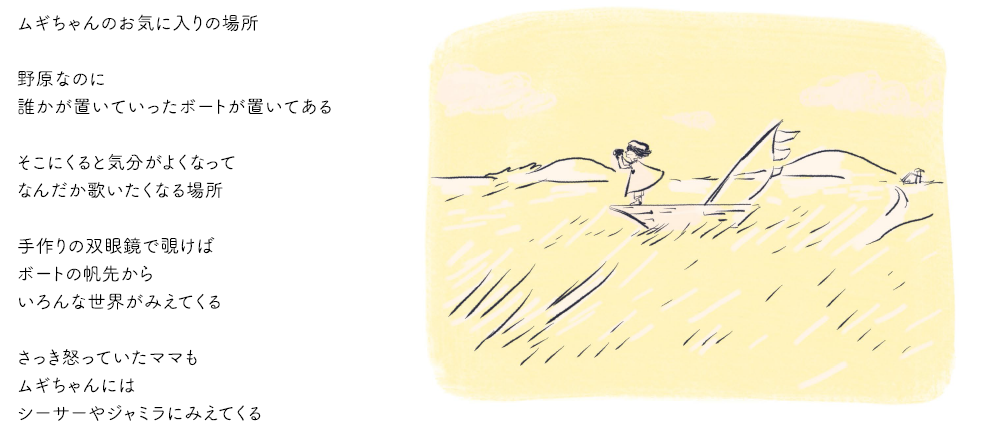
In fact, after seeing the "Gentle Barley Tea" commercial, if you hum "Mama's angry face~," doesn't the image of the girl singing in the commercial (Mugi-chan, aka Nagisa-chan) gulping down barley tea come vividly to mind? Such visual imagery spreads alongside the song.
As an aside, I sometimes sing phrases that suddenly pop into my head a cappella over the phone to share them with staff. That's something only songs can do.
Let me teach you how to create a song everyone will hum and spread!
Let me talk a bit about the composition side. To get kids to sing along, the rhythm and melody can't be too complex, right?
I don't use instruments like guitars or keyboards when composing. Holding an instrument tempts me to use too many chords, modulate keys, and make the song's mood overly complex. Keyboard instruments especially make it easy to add harmony, which can make a song sound good without much effort on the melody itself.
In contrast, when I compose with nothing but my voice, I naturally arrive at simple, powerful melodies that convey meaning even when sung a cappella—melodies children can easily hum along to. If the melody is strong enough, you can later add more complex chords and still maintain its core expressive power.
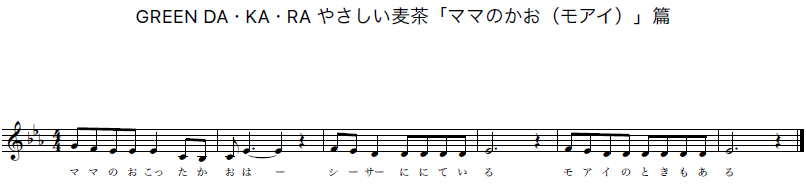
For these reasons, I always record songs that come to me on my smartphone voice recorder and evaluate them based on their duration. As a result, the song "Mama's Face" became a very simple song, featuring only two chords: G and D.
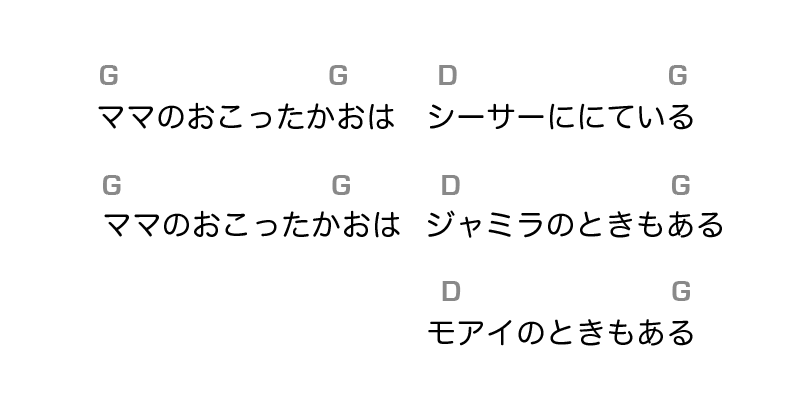
Also, for the lyrics, I was careful to avoid using "dakuon" (voiced consonants). This song has no voiced consonants except for the "ji" in "Jamila". Too many voiced consonants can make words sound "intimidating," which wouldn't fit the image of "gentle barley tea".
Also, for vowels, I focused on using "a" and "o"—sounds that require opening the mouth wide— . I wanted the children to sing comfortably, opening their mouths wide.
Putting "Rejected Songs" to Good Use!?
I've been in charge of the GREEN DA・KA・RA CM series since 2012, consistently developing it with a "song-centric" creative approach. The format involves creating a central song each time and having musicians perform it to footage featuring the Shizuku-chan and Nagisa-chan sisters (who are real sisters).
When preparing for this presentation, I initially proposed two standard musician-sung song concepts with demo tracks. However, during discussions with Suntory, we decided to "keep the song central but change the approach."
Then, while re-consulting with the staff, the idea flowed: "What if we boldly have Nagisa-chan sing herself?" That's how the phrase "Mama's angry face~" was born.
Normally, at this stage, we'd commission a new song from a musician or composer. But my strength lies in being able to directly translate the information I receive as a CD and planner into the music itself.
Anyway, the third proposal (the song) ended up being adopted. Interestingly, Suntory also told us the first rejected song was "really good." It was a song themed around the feelings of parents (adults) watching their child grow up.
"I'll be by your side / Until you grow up"
"I'll be watching over you, until you walk away"
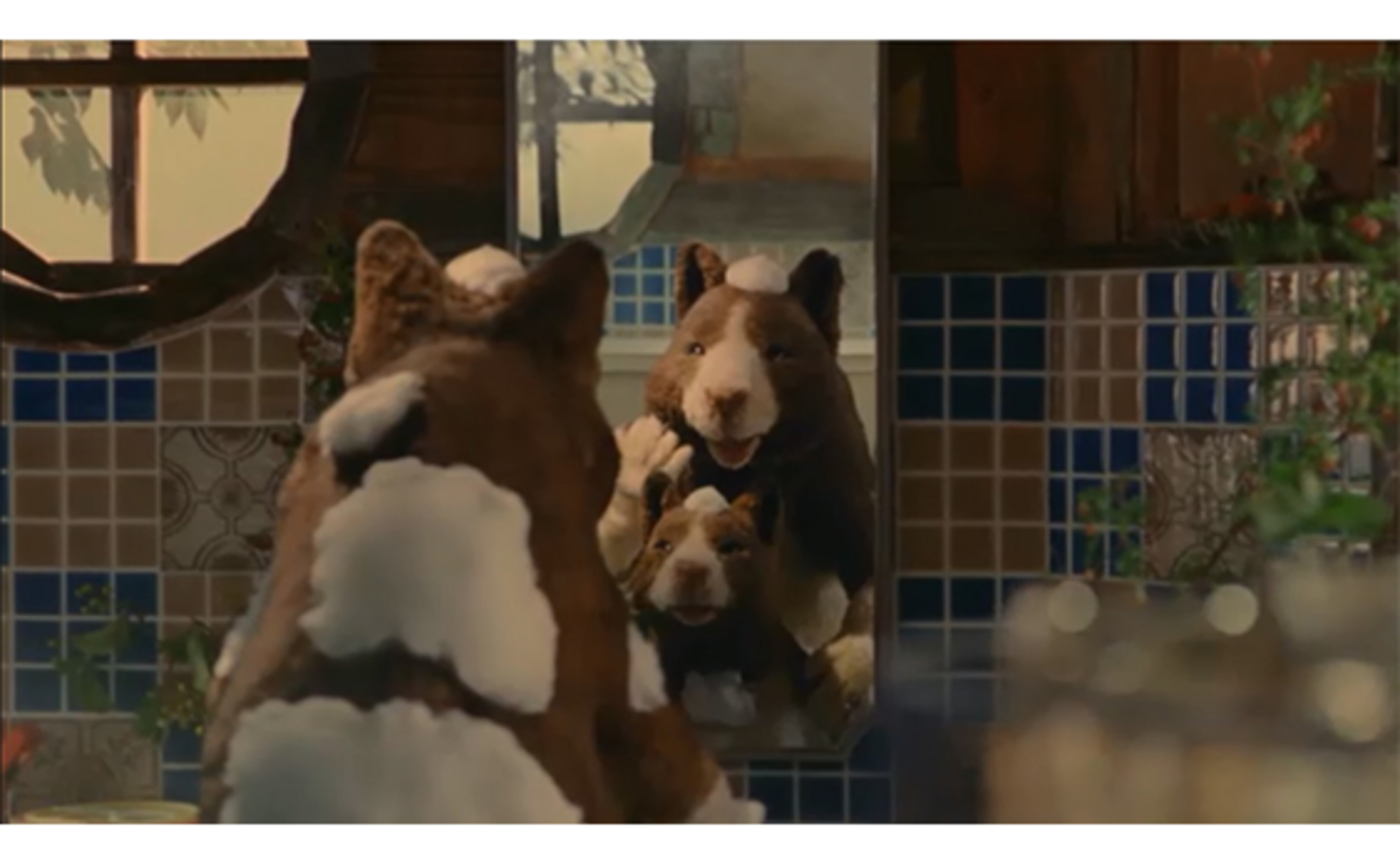
After that, the project progressed smoothly, and we went overseas for the "Mama's Face" edition shoot. While observing Shizuku-chan and Nagisa-chan on set, I came up with the idea to create a "making-of video" using the song above as background music.
I immediately wrote the full-length song during breaks at the hotel. After returning home, I produced the making-of footage synced with that song and presented it as an in-house proposal (a presentation an ad agency voluntarily makes to a client). They responded, "Let's definitely do this," and it was adopted.
GREEN DA・KA・RA Gentle Barley Tea "Mama's Face" Edition Making-of Shizuku-chan Nagisa-chan Suntory
YouTube is here Furthermore, Suntory approached us asking, "Can we create content that contributes more deeply to the GREEN DA・KA・RA brand, centered around this song?" So, we produced a video looking back on the five years since their first CM appearance as a "growth record." Using the rejected song as the core, the story just kept expanding.
GREEN DA・KA・RA Gentle Barley Tea "Summer Growth Album" Shizuku-chan Nagisa-chan Suntory
YouTube is here. When you have these kinds of discussions in official settings—where stakeholders gather for meetings, write proposals, and seek approvals—things tend to get increasingly "rigid." But when the conversation flows on set—"We made this song!" "Sounds great!" "Let's make the full version!"—everyone's passion comes together live, and the work becomes cheerful. I believe this is another power of song.
Next time, I'll discuss "what to sing" for solving communication challenges. I'll also touch on why the lyrics of "Mama's Face" contain absolutely no elements like "deliciousness" or "ingredients" associated with barley tea, and the essential value of solving challenges through the "song-centric" approach.
HUMMING BRAIN: The unit that solves all kinds of challenges through song
http://www.hummingbrain.jp/
A multidisciplinary team of specialists providing one-stop solutions through "song-based" approaches. Centered around Creative Director Ryuichiro Akamatsu, who handles everything from CM planning to music production and performance, the group brings together members with diverse strengths, including Art Directors, Copywriters, and PR Planners. Their common thread? A shared love for songs and music.
Was this article helpful?
Share this article


Newsletter registration is here
We select and publish important news every day
For inquiries about this article
Author
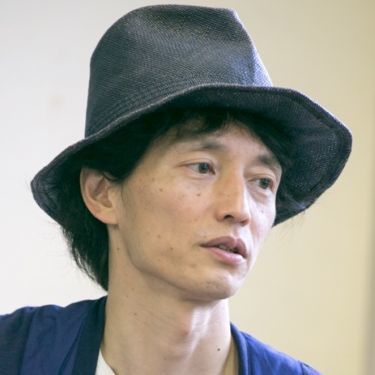
Ryūichirō Akamatsu
Dentsu Inc.
CDC
Creative Director