
Note: This website was automatically translated, so some terms or nuances may not be completely accurate.
 Place branding—it makes you want to create a place! [1/5]
What exactly is "place branding," the key to regional revitalization?
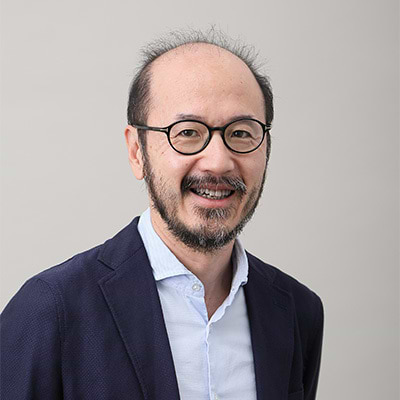
Hiroyasu Wakabayashi
Dentsu Inc.
"Place Branding" is a new concept for regional revitalization. In Japan, terms like "regional brand" and "regional branding" are frequently used, but in these cases, they often refer to "product development," and frequently prove insufficient for solving regional challenges.
What is needed, therefore, is the concept of "branding the place itself." We have developed a Japan-originated, uniquely Japanese Place Branding Method to solve Japan's complex challenges by incorporating geographical insights into the Place Branding theory born overseas.
What is this entirely new approach to place branding, created to resolve the concerns of various domestic regions? Based on my book , Place Branding: From "Region" to "Place" Branding, I will introduce the concepts, methods, and success stories in a five-part serialized column.

Regional revitalization is full of dilemmas!?
Place branding is an approach that involves defining flexible units of place and uniting private companies, government, and citizens to sustainably brand the "place." So, how did I arrive at this new concept of place branding? Let me first explain the background.
Over roughly ten years of confronting regional challenges and working locally, I encountered various problems. Even after meticulous research and creating implementation plans, things often failed to materialize. Or, after struggling to launch a project, it would end quickly without sustainability.
Even when creating brand logos, they often went largely unused, barely surviving as a corner element on posters. It felt like biting sand, time and again. Why wasn't it working? I was frustrated, unable to pinpoint the root cause. It was during this period of frustration that I encountered the concept of "place," as discussed in geography.
Thinking from a "place" perspective, not just "region"
The concept of place gained significant traction in human geography starting in the 1970s. Criticism of impersonal regional development led to a growing movement emphasizing people-centered approaches and valuing the inherent meaning of places.
As diverse people actively assign meaning to a space, a "space of meaning" is carved out, becoming a place. Thus, place came to be defined as a "segmented space of meaning."

Learning this perspective on place gave me the impression that place is human, proactive, creative, and free. Conversely, the term "region" often carries a fixed, uniform impression, with predetermined stakeholders.
Therefore, by reframing it not as a pre-existing "region" but as a "place," I sensed the potential to break free from the constraints of fixed units. It felt like drawing on a map, liberating me from the lingering dilemma of regional revitalization.
Places are born by giving meaning to locations
Now, I'd like to discuss how place is created and the mechanism behind it. Explaining the complex and incidental process of place formation simply is difficult, but drawing on diverse interpretations from past great geographers, I've organized it into the following simple diagram (for the evolution of place studies in geography, see my book Place Branding: From "Region" to "Place" Branding for detailed explanation; those with academic interest may refer to it).

First, there is the abstract space known as location. Someone then assigns meaning to it (sense of place). This act becomes the catalyst for various actors to begin interacting. These actors range from individuals to groups, government bodies, and private companies, differing in both position and capability. As these actors each assign meaning to the place in their own way, diverse content emerges.
Content can be anything: objects, events, people, bases, etc. However, since each element carries some meaning for the place, these multifaceted meanings gradually connect loosely. This process causes the contours of the place (a segmented "space of meaning") to emerge.
In today's era of developed SNS, each piece of content spreads through # (hashtags). This stimulates a renewed "sense of place," creating new opportunities and attracting successive new actors. From there, new content emerges once more.
A place never becomes fixed; it is constantly reorganized and eventually becomes self-sustaining. This is a sketch of how a place comes into being. We have named this dynamic cycle the "Place Branding Cycle."
The difference between a superficial, closed place and a rich, open place
Gaze intently at the "Place Branding Cycle" and let your imagination run wild. If the meaning assigned is superficial, a dull place may emerge. If the actors are only individuals or only the government, there's a risk of creating a closed place with no interaction. This would result in a narrow range and limited variety of generated content, preventing the place's world of meaning from becoming rich.
We also frequently encounter cases where various actors engage in similar meaning-making but operate in isolation. In such situations, creating effective "stages for interaction" can significantly enhance the potential for a better place.
Conversely, when large-scale capital-driven facilities or urban development impose uniform "meaning onto a place," the resulting city often becomes devoid of human agency. The respected human geographer Edward Relph termed this lack of placehood "Placeless-ness." It is crucial to strive to prevent such places from emerging.
As readers contemplate the Place Branding Cycle while imagining various places, you will surely discern certain challenges. And I believe you will also sense that we are part of this cycle—that we can be actors within it.
So, to create more open places, why not step onto the "stage of interaction" and start dancing?
So, have you gained an understanding of this new concept, Place Branding? Many of you are probably thinking, "I get the idea of Place Branding, but how do I actually implement it?" Therefore, in Part 2, we will explore concrete steps and organizational frameworks for practicing Place Branding to create a "Good Place."
Was this article helpful?
Share this article


Newsletter registration is here
We select and publish important news every day
For inquiries about this article
Author
Hiroyasu Wakabayashi
Dentsu Inc.
Solution Creation Center
Creative Director
Promoting the 'Art Circuit' project, which utilizes art in business. Developed the art thinking program "Vision Sketch" and conducts workshops for a wide range of participants, from children to business professionals. Also advancing <a href="http://www.dentsu.co.jp/abic/" target="_blank">the 'Dentsu Inc. abic project'</a> (abic), a branding initiative targeting various regions and locations across Japan. Established Dentsu Inc.'s unique platform consolidating methodologies, practices, and insights related to "place branding."<br> <p></p><br> <主な著書> <br> 2009 "Regional Brand Management" (co-authored, Yuhikaku)<br> 2018 "Place Branding: From Regional to Place Branding" (co-authored, Yuhikaku)<br> 2019: 'Art in Business: The Power of Art That Works for Business' (co-authored, Yuhikaku)<br> 2021: Imagination Becomes a Weapon: An Introduction to "Art Thinking" (PHP Institute)<br>