
Note: This website was automatically translated, so some terms or nuances may not be completely accurate.
The Huge Response: How the Tokyu Ikegami Line's "One-Day Free Ride Day" Came to Be.
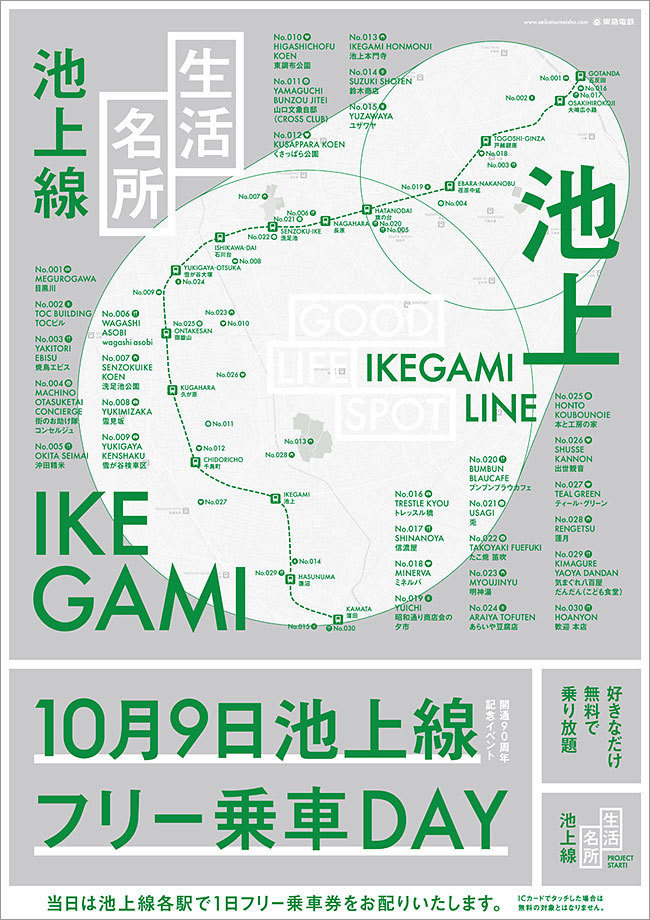
On October 9, 2017, towns along the Tokyu Ikegami Line experienced an unprecedented surge in excitement, so much so that locals exclaimed, "It was like heaven and earth turned upside down." The event was covered across various media, from TV programs to web articles, and even ranked 8th overall on Yahoo! News Trends.
Behind this social phenomenon was a plan to brand the Ikegami Line's "along the line" area as a place unit. In the fourth installment, as the second case study following Setouchi, we examine place branding along the Ikegami Line.
The challenge: low recognition and an ambiguous image
The Tokyu Ikegami Line is a 10.9-kilometer route with 15 stations running between Gotanda and Kamata, served by three-car trains. According to brand research※1, the Ikegami Line had a low recognition rate of 54.3% and an ambiguous image. The line is composed of stations with diverse personalities: the bustling districts of Gotanda and Kamata, the nature-rich Senzokuike, the upscale residential area of Kugahara, the shopping street famous Togoshi Ginza, and the historically rich Ikegami. It lacked a unified image.
Therefore, we set the goal of raising awareness of the Ikegami Line and creating a unified brand image for the entire corridor. We believed this would increase visitors, foster pride among local residents, revitalize the local economy through new store openings, and eventually create a virtuous cycle where the area develops into a desirable place to live.
The brand concept is "Ikegami Line: Where Life Happens."
So, what kind of brand were we aiming for? We visited the area repeatedly, conducted numerous interviews with local stakeholders and residents, and explored the value of this line.
Lines like the Toyoko Line have a "stylish" image, and the Den-en-toshi Line has a "high-end" feel – each seems to share a distinct, shared perception. What about the Ikegami Line? After much discussion, we arrived at the word "comfortable."
The pleasant daily strolls around Senzoku Pond, the convenient and lively shopping streets like Togoshi Ginza, the sense of community where you can stop and chat with neighbors, the scale perfect for exploring by bike or on foot, and the unique, locally rooted shops – all these elements for a comfortable life are condensed in a place just a short distance from the city center.
We felt this was the unique value of this place. Then, from a copywriter's insight—"This town may not have many tourist attractions, but it has plenty of places to live"—the brand copy "Ikegami Line: Places to Live" was born.
Thus, we re-edited the town's assets through this new lens of "Living Landmarks." Rather than a typical, evenly comprehensive introduction to the line, we focused on capturing the "Living Landmarks" through unique perspectives—the streetscapes, people, scenery, shops, festivals, and culture—to embody the overall essence of the area.
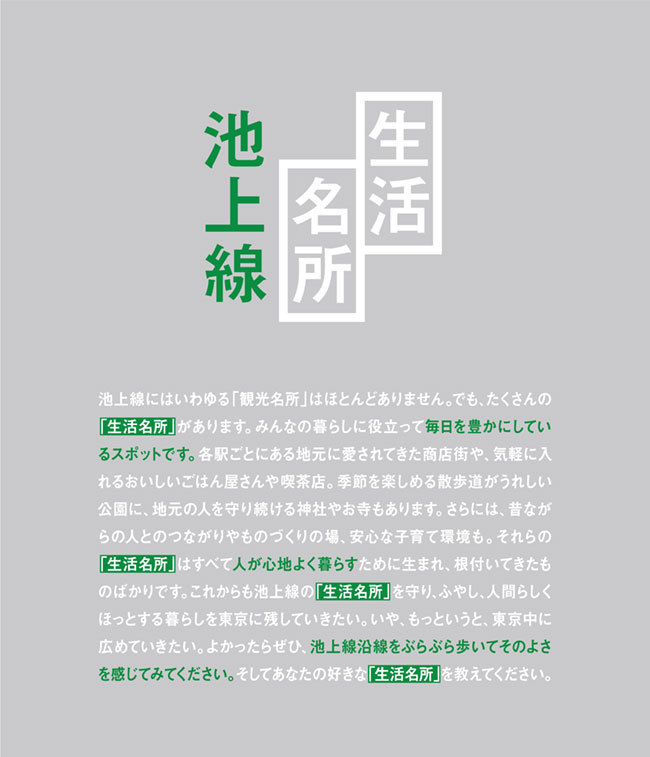
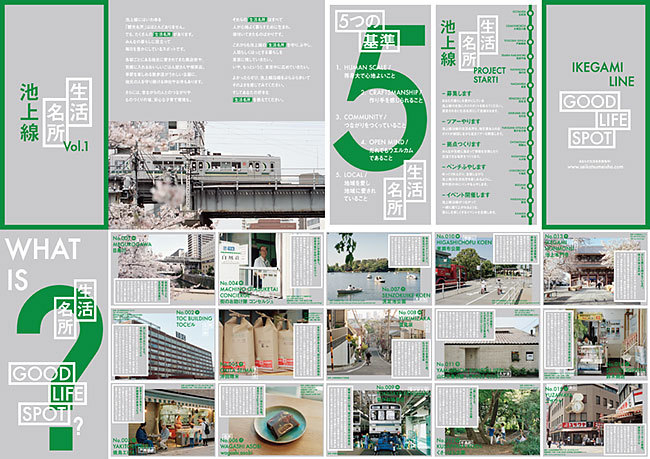
"Lifestyle Landmark" Declaration
With the overall picture of the line now clear, the next step was to make it known to people living in the greater Tokyo area. That's when a planner's offhand remark sparked the next initiative. "Why not just open all the stations for free...?" Initially, the entire team was taken aback by this suggestion. However, everyone began to see its potential as a conversation starter and started navigating the complex adjustments needed to make it happen. The coordination proved extremely difficult, but we successfully overcame the hurdles and announced the plan to the world on September 6th.
Rather than simply announcing "We're offering free rides," we meticulously designed the message based on the PR IMPAKT* theory introduced in Part 2. This design encompassed everything from the challenges identified along the Ikegami Line through our research to the brand concept. We then held a press conference.
As a result, numerous media outlets took interest, news spread across diverse contexts, and the Ikegami Line, previously lacking visibility, became a topic of conversation.
*PR IMPAKT is a program by the Dentsu Group that maximizes the effectiveness of integrated marketing strategies from a PR perspective.
The impact of the "Free Ride Day" exceeded expectations!
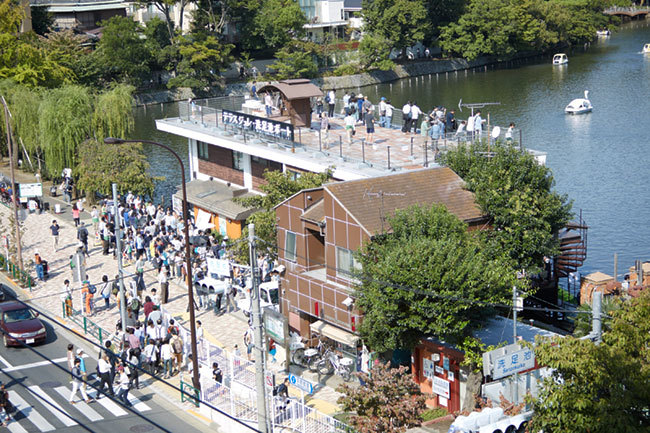
Finally, the day arrived: October 9th. The event kicked off with a ceremony at Kamata Station at 8:00 AM. From early morning, stations like Gotanda and Kamata were packed with visitors. Initiatives created in collaboration with the local community specifically for this day—such as concerts at local landmarks, tours visiting these spots, a lemon sour stall for the Ikegami Line at Togoshi Ginza, free swan boats at Senzoku Pond, and discounts at various shops—sold out immediately. The surprised expressions of local residents were particularly memorable.
According to passenger surveys (Tokyu Corporation data), ridership reached 569,000—approximately 3.7 times the average of 153,000 recorded over the previous three Sports Days. Brand awareness for the Ikegami Line increased by 9.4%, shopping streets bustled everywhere, and the event generated significant economic impact. Initial KPIs included visitor numbers, brand awareness rate, media exposure equivalent cost, and local collaboration count. Every metric significantly exceeded expectations, making this a social project that successfully achieved both branding and generating buzz.
Place Branding Centered on the "Railway Line"
Let's examine this case study through the place branding cycle.
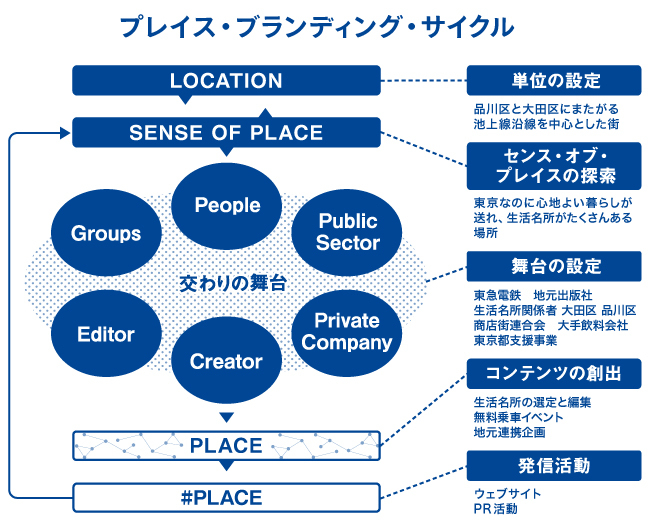
By defining the "railway line" as the place unit and conducting multi-layered research, we successfully encapsulated the place's value in the phrase "lifestyle destination." We then created diverse content by engaging stakeholders including the railway company, the administrations of two wards, local businesses, and editors.
This resulted in news coverage, attracting many visitors and raising awareness while providing experiences unique to the railway line. Moreover, this activity was not a one-off event; it successfully generated local anticipation and built a broad network, laying the groundwork for future ongoing development.
This concludes our look at the "place branding" practice behind last year's much-discussed event. Next time, in the final installment, I'd like to explore with you how we envision the future of place branding, which holds the key to regional revitalization in Japan.
Finally, for those who have read this series and found even a little interest in place branding, I would be delighted if you would read "Place Branding: From 'Region' to 'Place' Branding" (Yuhikaku).
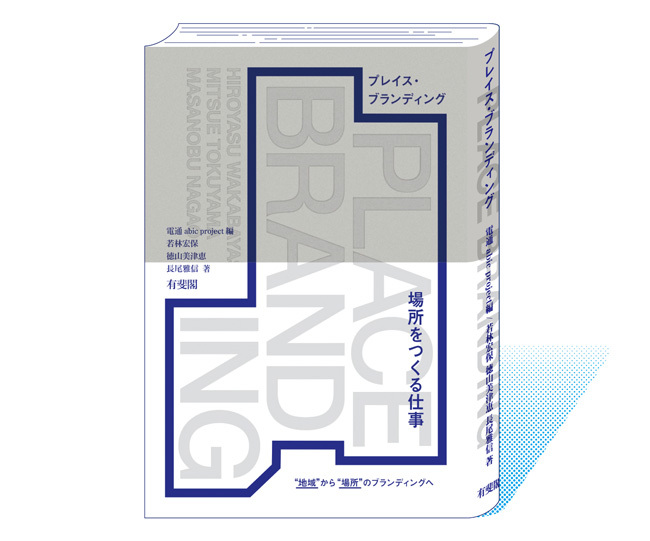
Now on sale! Details here.
※1 [Survey Overview]
■Survey Method
・Internet survey
■Survey Participants
・300 samples of men and women aged 20–49
・Residents within a 30km radius of the Tokyu Ikegami Line and non-residents of the Ikegami Line
・Individuals with relocation intentions (excluding those who are not involved at all in deciding the area when moving)
■Survey Organization
・Dentsu Macromill Insight, Inc.
■Survey Period
・May 17–24, 2017
Was this article helpful?
Share this article


