
Note: This website was automatically translated, so some terms or nuances may not be completely accurate.
 Place branding—it makes you want to create a place! [3/5]
Setouchi is Japan's largest place branding initiative, renowned worldwide!
Hiroyasu Wakabayashi
Dentsu Inc.
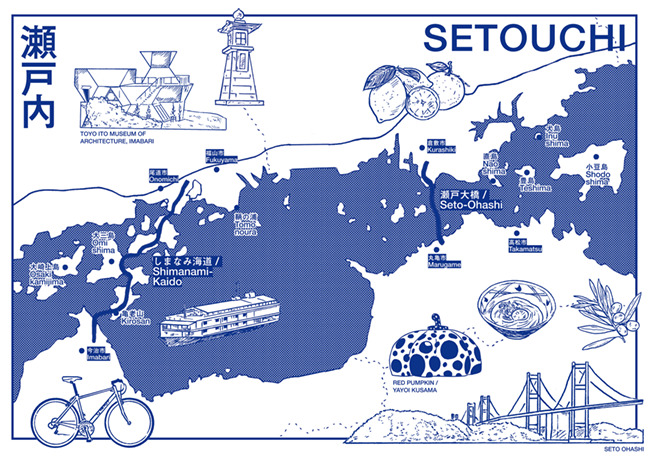
Where I Want to Go Now: Setouchi
In Parts 1 and 2, we discussed the concepts and practices of place branding. In Part 3, we'll explain the recent surge in popularity of the Seto Inland Sea region—one of Japan's largest place units—through the lens of place branding.
Many of you probably consider the Seto Inland Sea a potential travel destination, right? Today, when people think of the Seto Inland Sea, various images come to mind: "art," "cycling," "small islands," "serene seascapes," "lemons," and more.
However, a 2012 survey revealed that many people responded with "I don't really know." Why, then, has the Seto Inland Sea become a place so many people want to visit in just the last few years? Three major initiatives were behind this shift.
Seto Inland Sea Attraction Creation Initiative ①: Islands with Unique Art
One such initiative was Benesse's project on Naoshima. Soichiro Fukutake, who had just become president at the time, began contemplating the true meaning of human happiness upon returning to Okayama, where the company's headquarters were located. This led him to envision Naoshima as a place to explore "living well."
Subsequently, the Benesse House—a fusion of hotel and museum—was built. Starting two years later in 1994, site-specific works of art, experiences unique to that location, began to be created there. It was during this time that Yayoi Kusama's "Pumpkin," now a new symbol of the Seto Inland Sea, was born.
Building on these activities and with the collaboration of Kagawa Prefecture, each time the Setouchi International Art Festival was held after 2010, the number of islands featuring art expanded, evolving into an inland sea dotted with art.
Seto Inland Sea Attraction Creation Activity ②: Cycling Mecca
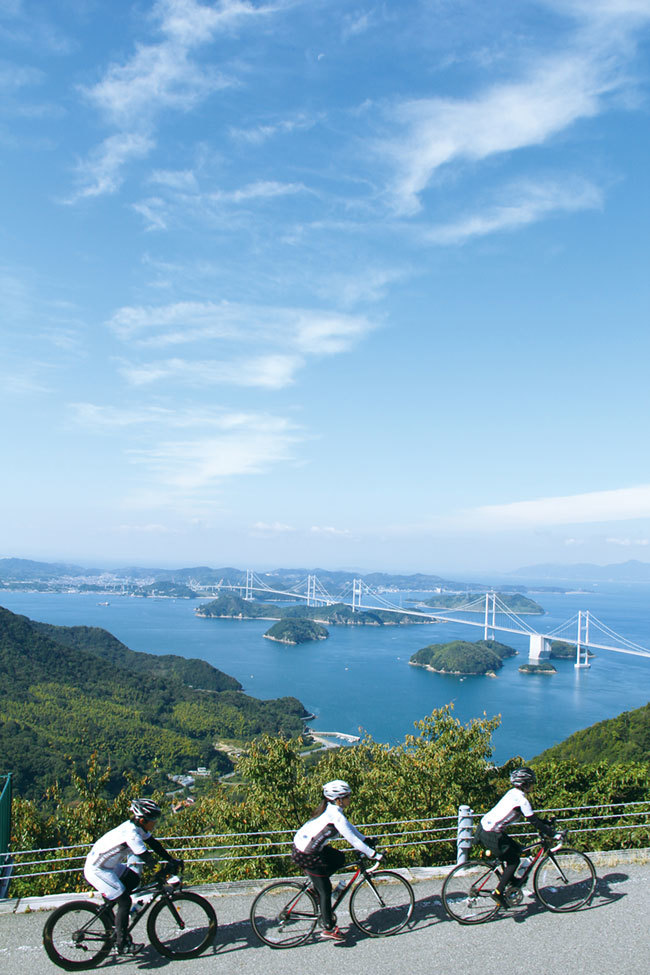
While the art initiatives were primarily concentrated on the eastern side of the Seto Inland Sea (between Okayama and Kagawa), unique efforts also began on the western side (between Hiroshima and Ehime). The catalyst was the activities of local cyclists aiming to establish the "Shimanami Kaido," opened in 1999, as a cycling route.
Although it was realized after various adjustments, initial user numbers struggled to grow. At that very moment, Taiwanese bicycle manufacturer Giant was searching for cycling routes in Japan. Riding the Shimanami Kaido and through Onomichi allowed them to experience the changing scenery of natural landscapes and historic streetscapes, revealing a charm unmatched by other cycling routes.
Thus, Giant became deeply involved with the Shimanami Kaido. Through event support, pop-up shops, and diverse information dissemination, the cycling culture of the Seto Inland Sea spread worldwide.
Activities to Create Seto Inland Sea Appeal ③: Branding the Seto Inland Sea through 7-Prefecture Collaboration
As experiential content like art and cycling emerged, the seven prefectures bordering the Seto Inland Sea (Kagawa, Ehime, Tokushima, Okayama, Hiroshima, Hyogo, Yamaguchi) began working together to promote the Seto Inland Sea as a unified brand.
In 2013, the Seto Inland Sea Brand Promotion Alliance was formed. With private companies participating, numerous Seto Inland Sea brand products, starting with lemons, were created under a unified concept.
Furthermore, by integrating previously fragmented information dissemination activities, the image of the Seto Inland Sea spread both domestically and internationally. In recent years, the tourism marketing organization "Setouchi DMO (Destination Marketing Organization)" was established. Through financing systems supporting tourism businesses, new experiential content such as cruise operations has been created.
What is Place Branding in the Seto Inland Sea?
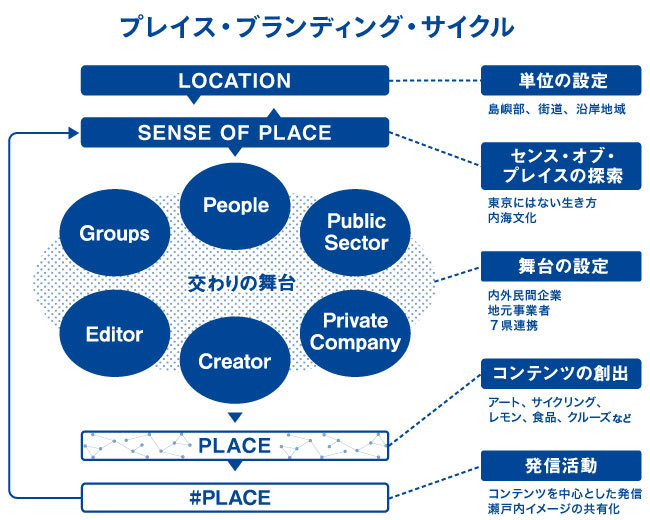
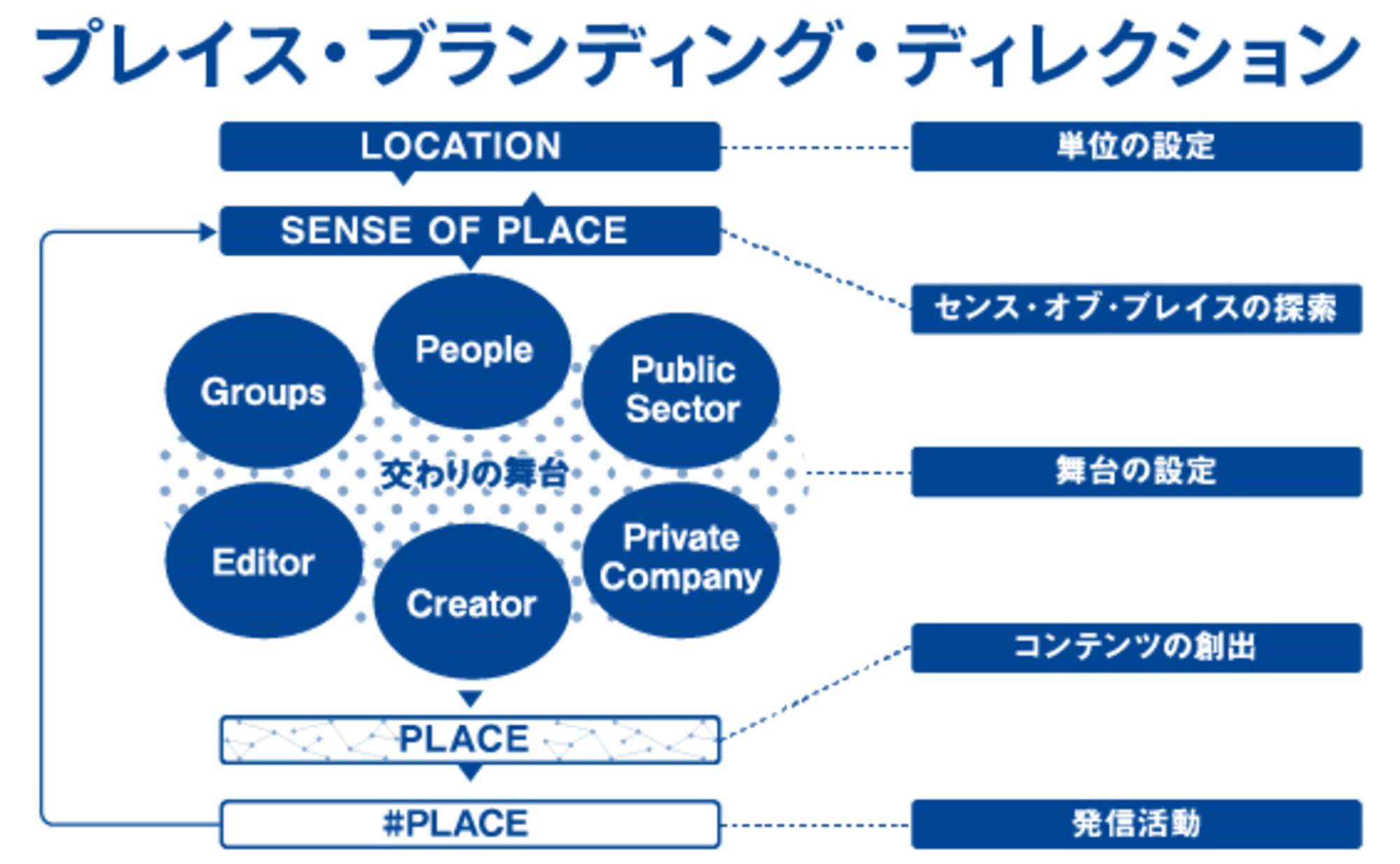
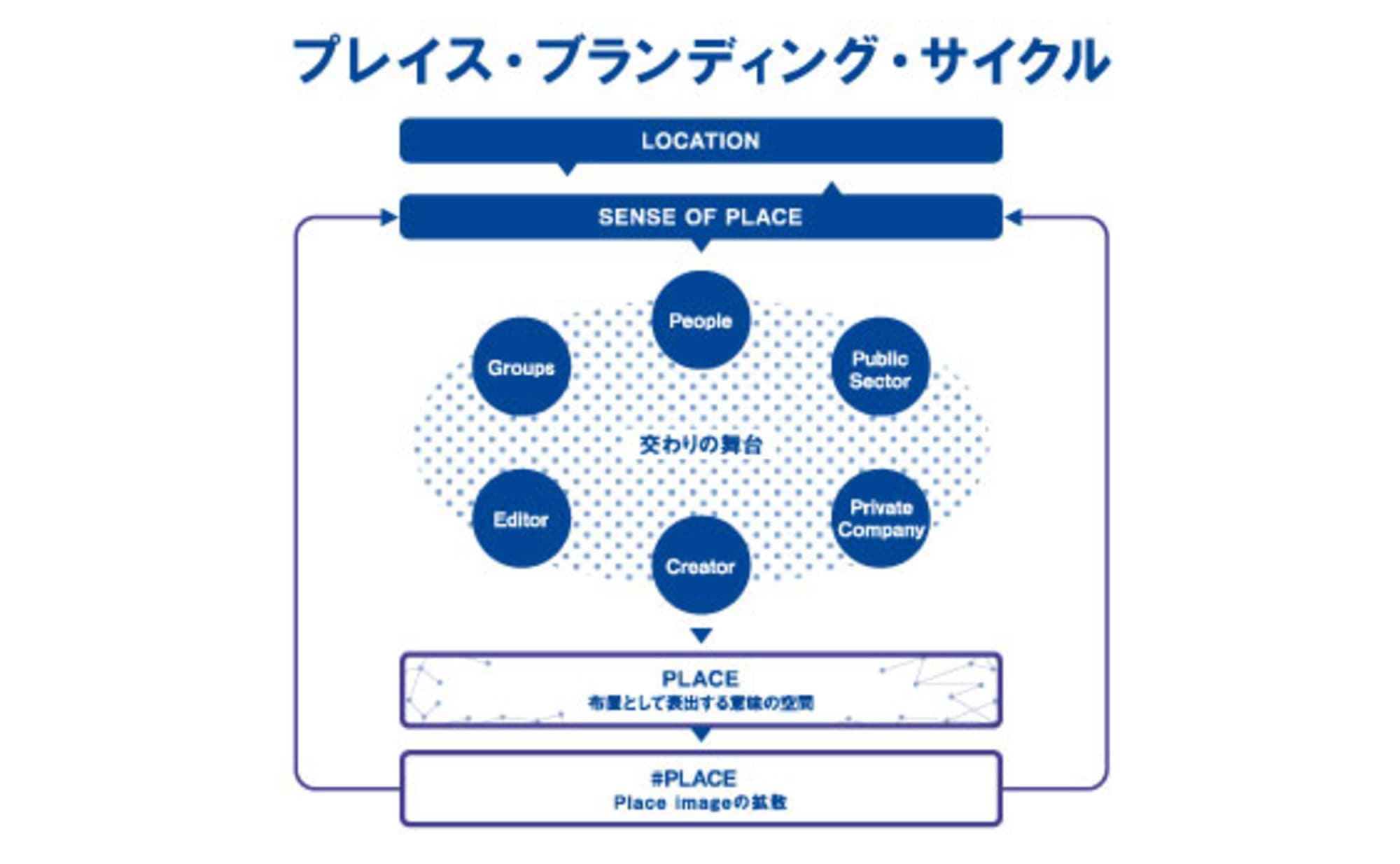
We've briefly reviewed the grand, decade-long branding of the Seto Inland Sea. Now, let's analyze it following the "Place Branding Cycle."
Regarding the scope, the broader "Setouchi" region wasn't the target from the outset. It began by giving meaning to specific places like Naoshima and the Shimanami Kaido.
Later, Kagawa Prefecture launched the Setouchi International Art Festival. Subsequently, collaboration among the seven coastal prefectures gradually brought the broader "Setouchi" unit into focus.
The meaning of "Setouchi" was never superficial. Instead, unique meanings and values specific to Setouchi—such as "a way of life not found in Tokyo" or "a distinctive inland sea culture"—were explored at a deep level and gradually came to be shared.
The actors involved were also diverse. A stage for interaction was created by a wide range of entities, including private companies from both inside and outside the region, government bodies, and citizens. Private companies engaged in various ways: some, like Benesse and Giant, sought to position Setouchi as a place to embody their brand; others used the Setouchi brand for product development; and local banks sought to finance projects within Setouchi.
From these intricately intertwined stages of exchange, diverse content rich with the essence of Setouchi was continuously generated. By disseminating this content not as isolated pieces but as a cohesive whole, "Setouchi" emerged as a vast, multi-layered "space of meaning."
Thus, behind the Setouchi that everyone wants to visit lies a grand narrative woven through the encounters of diverse actors.
For those wishing to learn more about the Setouchi case, we would be delighted if you would read this book: "Place Branding: From Region to 'Place' Branding" (Yuhikaku).
Book now on sale! Details here.
Was this article helpful?
Share this article


Newsletter registration is here
We select and publish important news every day
For inquiries about this article
Back Numbers
Author
Hiroyasu Wakabayashi
Dentsu Inc.
Solution Creation Center
Creative Director
Promoting the 'Art Circuit' project, which utilizes art in business. Developed the art thinking program "Vision Sketch" and conducts workshops for a wide range of participants, from children to business professionals. Also advancing <a href="http://www.dentsu.co.jp/abic/" target="_blank">the 'Dentsu Inc. abic project'</a> (abic), a branding initiative targeting various regions and locations across Japan. Established Dentsu Inc.'s unique platform consolidating methodologies, practices, and insights related to "place branding."<br> <p></p><br> <主な著書> <br> 2009 "Regional Brand Management" (co-authored, Yuhikaku)<br> 2018 "Place Branding: From Regional to Place Branding" (co-authored, Yuhikaku)<br> 2019: 'Art in Business: The Power of Art That Works for Business' (co-authored, Yuhikaku)<br> 2021: Imagination Becomes a Weapon: An Introduction to "Art Thinking" (PHP Institute)<br>