Note: This website was automatically translated, so some terms or nuances may not be completely accurate.
 DMC Lab Selection: A Book for Thinking Ahead [88/88]
The secret to creating experiences that people "can't help but do" lies in communication design.
Why did Super Mario become the world's best-selling game?
Why does Dragon Quest feature the "puff puff" sound?
Why do Tetris blocks fall without pause?
Why do games sometimes feature annoying companions?
Why do protagonists always return to the starting point at the ending?
Those timeless masterpieces that make you lose track of time. They are never the product of chance. They are magically sprinkled with carefully thought-out schemes.
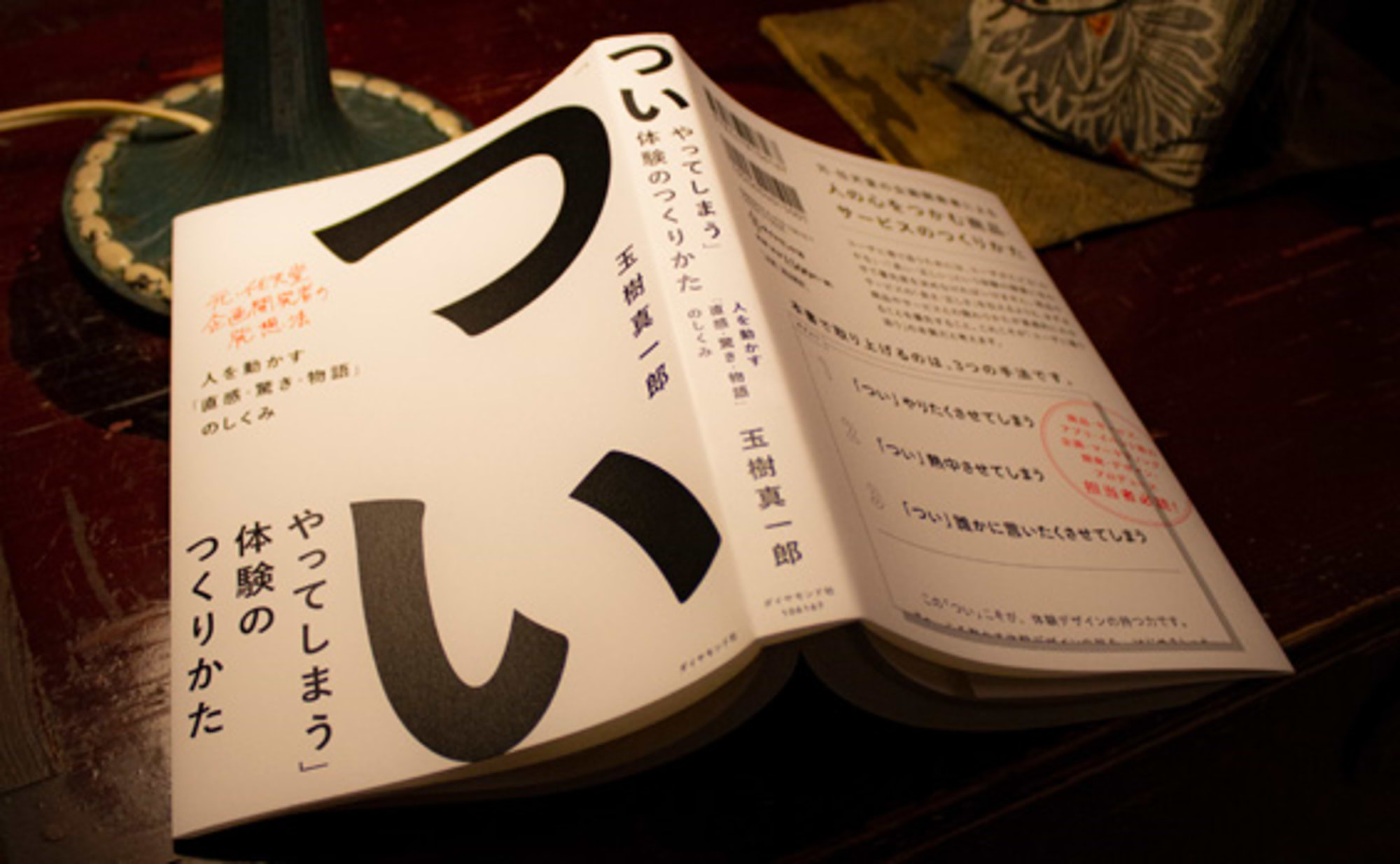
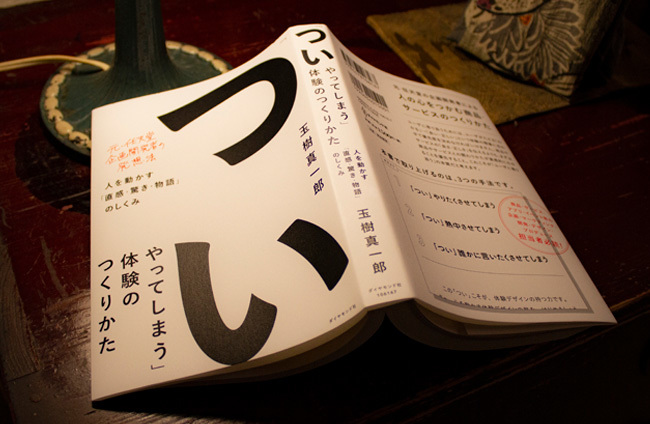
This time, we introduce "How to Create 'Can't Help But Play' Experiences: The Mechanisms of 'Intuition, Surprise, and Story' That Move People" (Diamond Inc.).
Written by Shinichiro Tamaki, formerly of Nintendo, this book unlocks the secrets behind numerous classic games while offering insights into crafting experiences that make people just keep playing.
Why did Super Mario become the world's best-selling game?
The book (and its exploration) begins with this very question. It's a super famous game, even recognized by Guinness.
Answering it outright is too difficult. Immediately, a supplementary question appears:
What do you have to do to win this game? (P.24)
Defeat Bowser? No.
Rescue Princess Peach? No.
There's actually a fundamental rule for winning that you'll learn much earlier. The whole country got caught up in the Rugby World Cup, but you can only really get excited and cheer them on once you know the basic rules like "you can't throw the ball forward" and "scoring happens when the ball touches the ground in the opponent's goal area," right?
So what is the fundamental rule in Mario?
It's "go right."
Too obvious? But why do we know it so instinctively? Super Mario doesn't have the kind of thorough, step-by-step tutorials you find in today's mobile games.
Here lies the "mechanism designed to make you do it" that game designers have built in.
The Art of Designing Experiences ①: Intuitive Design
Think back to the Super Mario game screen.
Mario stands slightly left of center on the screen, facing right.
To the left is a tall mountain, somewhat resembling a wall. Conversely, the right side draws the eye with bright yellow-green grass and pure white clouds.
What's more, the controller in the player's hands clearly has buttons that suggest moving right.
You might not notice these details until they're pointed out, but even a single screen is meticulously crafted to convey fundamental rules.
Hidden within this process of players learning Mario's appeal lies the fundamental equation of intuitive design: "Hypothesis → Trial → Delight."
Hypothesis: Prompting the thought "Maybe I should try ●●?"
↓
Trial: Encouraging "Let's try ●●" and confirming through action
↓
Delight: Rejoicing "My prediction of ●● was right!"
In just a few seconds of gameplay, players experience such profound shifts in their emotions.
People never forget learning gained this way—spontaneously. The same goes for pleasure. Imagining the other person's psychology and skillfully guiding them through design—here lies an important truth.
It's not the game that's fun; it's the experience that's fun.
Players play not because the game itself is fun, but because the experience they intuitively grasp is fun. (P.100)
This is it. Intuitive design doesn't just convey information quickly; it makes things feel fun. Things that are intuitively understandable become inherently enjoyable.
This perfectly captures how I felt when I first touched an iPhone. Without any lengthy explanations, I could immediately master zooming and swiping. And then came that indescribable sense of exhilaration. I believe my emotions were masterfully guided by intuitive design at that moment.
The Art of Designing Experiences ② Surprise Design
But even intuitive design has its weakness: it gets boring. When you repeat it over and over, players inevitably tire of it.
Because when testing a hypothesis, a moment of "anxiety" inevitably arises. Even if fleeting, such negative emotions accumulate over time and eventually cause the user's heart to drift away.
This is where the second technique becomes essential: the design of surprise.
Its role is to dispel fatigue and boredom with the surprise of expectations being defied.
Yes... anyone who's played Dragon Quest remembers that "pafu pafu" moment—it served precisely that purpose. The equation looks like this:
Misunderstanding: Spontaneously forming a mistaken hypothesis like "Maybe I should do ●●?"
↓
Attempt: Spontaneously trying an action like "Let's try ●●"
↓
Astonishment: Spontaneously realizing "●● was wrong!"
While playing thinking "This is an adventure RPG to save the world," you might mistakenly assume, "Given that worldview, nothing deviating from the standard path will happen." But surprises await beyond that.
It's not just the puff-puff. The final boss's speech, the unexpected amusement facility, the jaw-dropping ending, the agonizing choices... Dragon Quest never forgets to deliver all kinds of surprises.
While Dragon Quest is generally praised as "classic and textbook-like," it's actually the complete opposite. A game that relentlessly betrays players with its radical, non-textbook approach—that's the true essence of Dragon Quest. (P.132)
The Art of Designing Experiences ③ Designing Narratives
The question the author poses to readers when discussing this final technique is one that is absolutely essential for advertising agencies and various other business professionals.
Why do people "just have to tell someone"? (P.165)
Enabling users to create their own stories through experiences. That is the essence of this storytelling technique. Specifically, it follows this equation:
↓
↓
Will: Empower players to forge their own destiny through their own will
Through experiences within the game, unique stories emerge within each user. That's precisely why they become memorable. Without memories, people wouldn't feel compelled to share them. The technique for creating memorable experiences—that could be called the design of stories.
This is a different approach from designing intuition that makes people learn without realizing it.
In radio calisthenics, you raise and lower your arms 66 times
This book introduces more detailed tips on designing these stories. Among them, the section on "Growth" is particularly interesting.
This section cites "enabling players to experience growth" as a key purpose of games. Players won't stick with games where they can't feel themselves growing. This means designing an experience where the player increasingly identifies with the game's protagonist.
A wide variety of techniques are involved here, but within the methodology of "Collection and Repetition," I'll introduce an example of "Establishing Rhythm."
Did you know that Radio Calisthenics actually includes 66 arm raises and lowers? Isn't that surprising? That many in such a short routine. If someone suddenly told you to "raise and lower your arms 66 times," you'd tense up and feel reluctant.
You can probably see now that how experiences are crafted isn't just about games.
The True Meaning of "Walking Beside the User"
I really want you to read this book in print. If you're using an e-book, please, please use "full-page view." Understanding deepens with each page turn, of course...
Thank you so much for experiencing this book and making it this far! (P.314)
Yes, experience. This book offers not just knowledge, but a unique reading experience.
From the layout of text and illustrations to the cover design, the occasionally deliberately silly expressions, and even the mechanisms that let readers feel their own growth as they progress...! Not a single page is unintentional. Every minute detail is designed in alignment with the learning this book conveys.
Why is that?
Rather than communicating the "quality or correctness" of a product or service, prioritize making the way users interact with it intuitively clear. This, I believe, is the essence of "being close to the user." (P.99)
We often hear about being close to the user. But how exactly do you do that? Here lies one answer.
"Understanding" leads to "goodness/correctness." That's the user's mindset. We must not ignore this sequence.
In the advertising world, which often tries to broadly proclaim "goodness" or "correctness," shifting to this user-centered approach and focusing on the products and services themselves will become increasingly important going forward.
【Dentsu Inc. Modern Communication Lab】
Was this article helpful?
Share this article


Newsletter registration is here
We select and publish important news every day
For inquiries about this article
Back Numbers


Author

Takuya Fujita
Dentsu Inc.
Creative Planning Division 3