Note: This website was automatically translated, so some terms or nuances may not be completely accurate.
 CARTA and Dentsu Inc.'s Digital Navigation [1/3]
The courage to change when things are going well. Insights on Internet Business from CARTA Chairman Usami
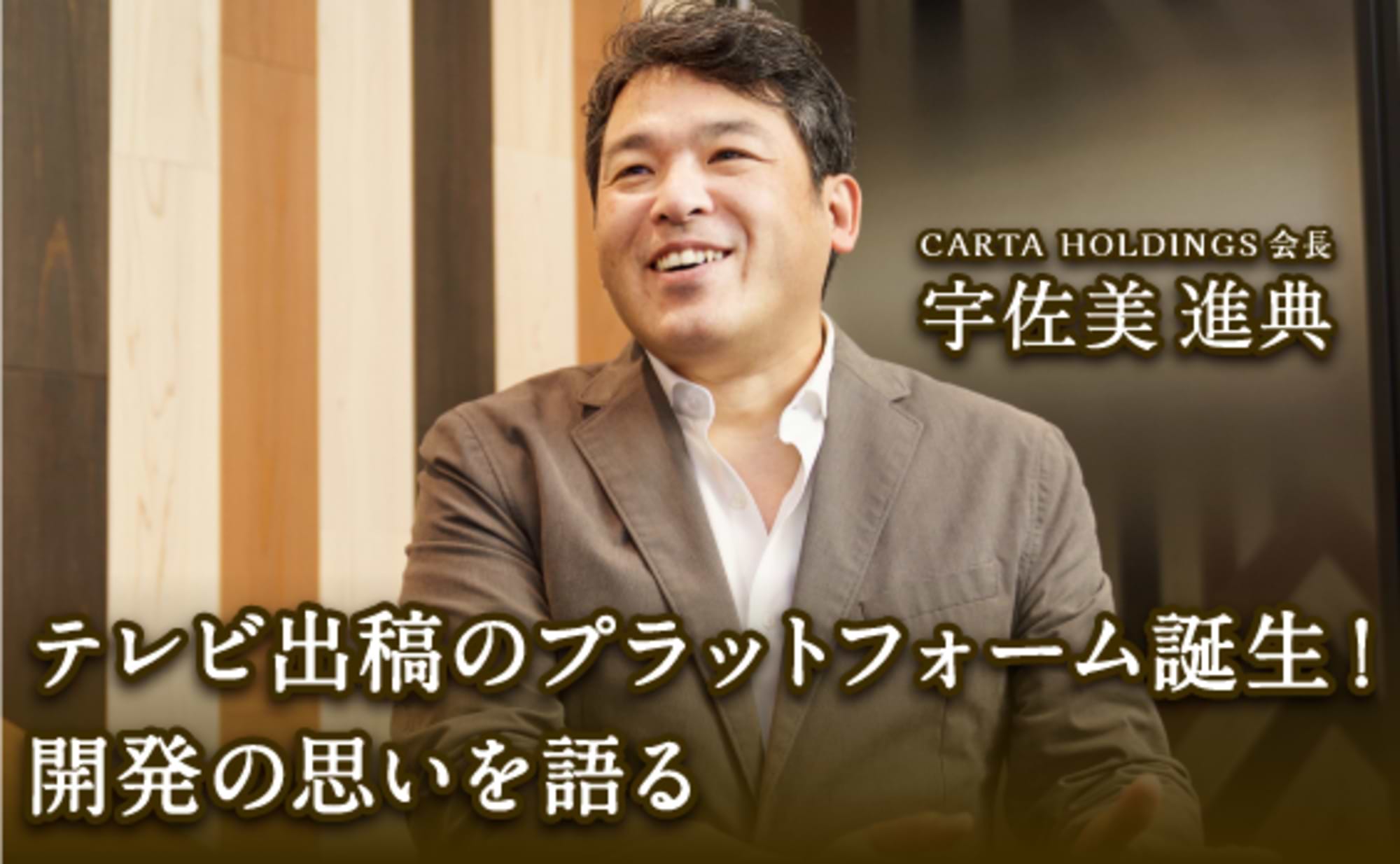
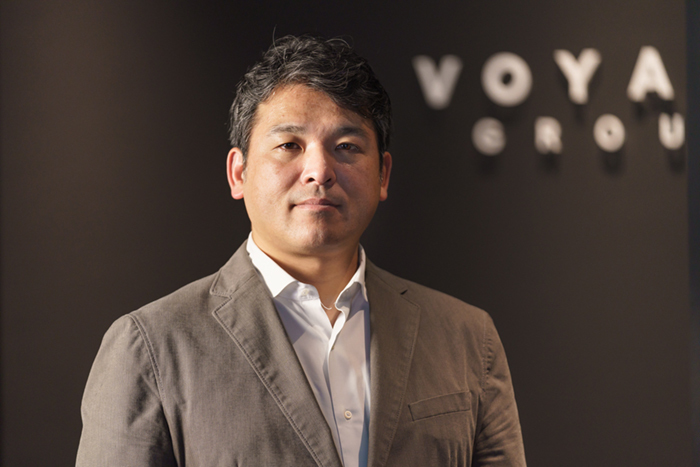
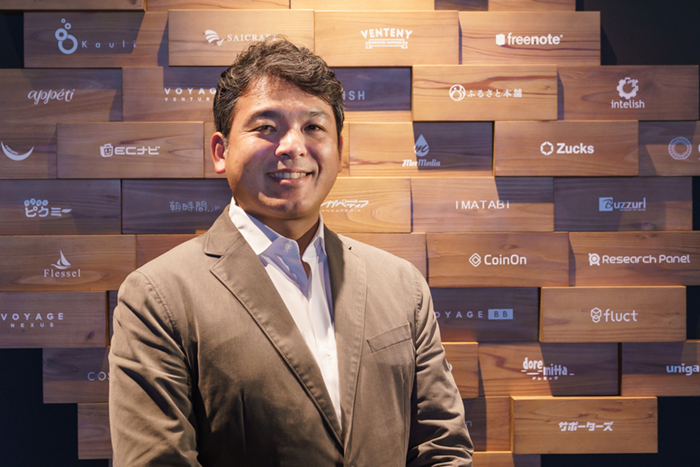
The company expected to accelerate the digital transformation (DX) of the domestic Dentsu Group is CARTA HOLDINGS, INC (hereinafter CARTA), a new company established in 2019. Its Chairman is Mr. Susumu Usami, founder and CEO of VOYAGE GROUP, which handles a wide range of businesses from advertising to media operations.
This series interviews Mr. Usami to answer questions like: What kind of company is CARTA, newly added to the domestic Dentsu Group? And what kind of person is Mr. Usami? We delve into the business philosophy of Mr. Usami, who has literally grown his company alongside the history of the Japanese internet.
From student marriage to employment and career change.
Two entrepreneurial ventures.
Appointment as Director at CyberAgent and MBO.
And listing on the Mothers Market and the Tokyo Stock Exchange First Section.
Mr. Usami, a rare entrepreneur who likens the group's activities to oceanic adventures—starting with the company name VOYAGE (meaning voyage)—what kind of steering has he provided as the "captain" of this digital venture?
<Table of Contents>
▼The View Revealed After Stepping Off Life's "Railroad Tracks"
▼First Startup Failed. Learned Business Succeeds Only with a "Passionate Team"
▼ "Why change things when they're working?"
The view that opened up after stepping off life's "rails"
―Let's trace Chairman Usami's journey chronologically. Starting at the beginning, I'd like to hear about your student days. What vision did you have for your future during your university years?
Usami: I entered university in 1992. It was still an era with lingering traces of the bubble economy, and when I started, I only thought, "I'm going to have a fun university life." Even during high school, I think I lived a pretty typical, fulfilling high school life, enjoying my youth (laughs). I was just an ordinary student, and honestly, I didn't have any clear image of my future career.
But getting married as a student during my freshman year and having a child made me start thinking about how I wanted to live my life. Up until then, the life I vaguely imagined was about "getting into university, landing a good job at a reputable company, and working hard" – basically, how to run as straight as possible along the laid-out tracks. After getting married as a student, it felt like those tracks vanished before my eyes. I resolved that I had no choice but to forge my own path forward.

―As a freshman, your classmates might not have been thinking about their futures yet. Amidst that, you found yourself seriously contemplating how you would live your life.
Usami: Yes. From then on, my university life involved juggling part-time work and childcare. I'd take my child to daycare by bicycle before heading to class. And the early 90s marked the dawn of the internet in Japan. The university had computer rooms where you could access the internet. People around me started launching web design businesses as student ventures. At that point, while I was interested, I felt it wasn't something I could do myself.
―But the idea that entrepreneurship was a path was planted in your mind, right?
Usami: Yes. It was still vague, but I started thinking about building a life by starting my own company and even studied accounting. So, when job hunting, I naively thought that joining a consulting firm would lead to entrepreneurship and give me experience close to management. That's why I joined Tomatsu Consulting (now Deloitte Tohmatsu Consulting).
―When you joined Tohmatsu, did you ever think, "I got a job at a proper company, I'm back on track now"?
Usami: It felt less like "getting back" and more like "ending up back." After working there for a while, I suddenly realized, "I chose to step off the track and live in the jungle, but now I'm back on the track?" It felt strange (laughs). That's when I decided to consciously step off the track again, choose the pathless path, and look for a new job. I ended up staying at Tohmatsu for two years.
―What was the reaction when you decided to change jobs after just two years?
Usami: My new job was at a startup only 3-4 years old, so people from my old company tried to talk me out of it. But my wife said, "Why not? If that's what you want to do." Whether it's marrying while still a student or changing jobs, stepping onto an untrodden path is incredibly scary, right? You don't know what lies ahead. But once you take the plunge and enter the jungle, you find there's actually water there, and you can find food. It's not as risky as it looks from the outside, and I've come to realize there's so much to gain.
―Was the new job something where you could utilize your consulting experience?
Usami: No, not at all (laughs). At Tohmatsu, I worked as a consultant on business improvement and systemization projects for major financial institutions. But my new job was at a small software company. A friend who worked there asked me, "Come join us and handle marketing-related tasks."
It was a company developing software similar to what we now call Adobe Acrobat. On my first day, the president passionately told me, "We want to change the world with this software. It can do this and that." When I asked, "So, who uses this software?" he replied, "Figuring that out is your job." They were operating purely with a product-out mindset, completely missing the "who to sell it to" and "how to sell it" aspects.
I ended up staying at that company for a year. One of the software's core features was licensed from an overseas company, and going to the COMDEX trade show in Las Vegas for those negotiations became the catalyst for my later entrepreneurship. At COMDEX, several American internet companies were exhibiting, and I saw firsthand: "The internet is here in America."
My first startup failed. I learned that business doesn't succeed without a "passionate team."
―So it was right when the US was pioneering and starting to create internet businesses.
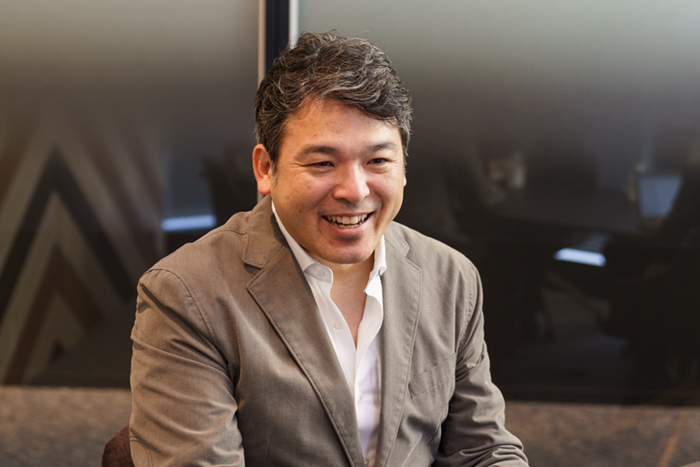
Usami: On the other hand, while our own software didn't sell, we were using XML as a markup language. This led me to think about how XML could be leveraged more for internet business applications. That became the basis for my first startup: an XML-based job search engine business.
―The environment for entrepreneurs back in the 90s must be completely different from today. What were your goals when you started?
Usami: Honestly, I wasn't thinking about the company's long-term future. Back in 1998 when I first started, terms like IPO weren't common yet. Also, at that time, there were almost no independent venture capital firms; it was mostly financial institutions. Raising funds without a track record was difficult. So, I decided to boldly apply for government grants. To commercialize a job search engine, I approached several venture executives to form a consortium. We applied with the proposal, "We will create a service in this new technological field," and secured a grant of about 100 million yen.
But that's when the real trouble began. Since it was structured as a consortium, each participating company initially had a sense of "We'll handle this part because it's our specialty," with a general atmosphere of working together. However, once the actual 100 million yen grant materialized, it turned into "Our company will do this much, so we want this much money" or "We hold the rights to this part." Instead of focusing on how to make the business successful, everyone started scrambling for the immediate money and rights. While we did complete the search engine development itself, we never released the service.
―So your first startup didn't reach the stage of commercializing the service.
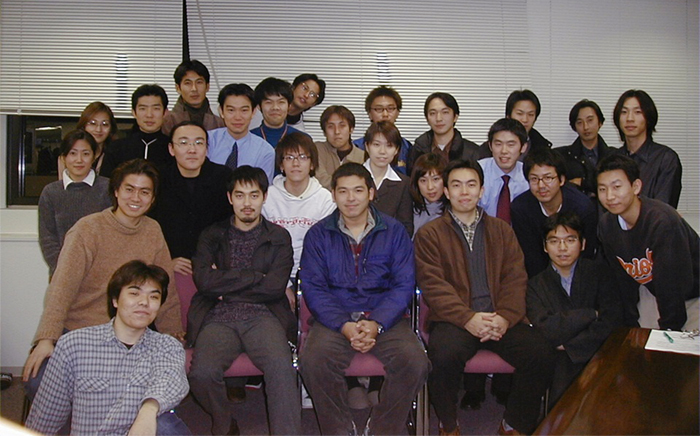
Usami: It was like just building the thing and then stopping. Because of this experience, when I started my next venture, I decided I wanted to build a team with that kind of high energy—a team where everyone works together toward one goal, where everyone thinks about how to achieve that goal, and where the business is built in a state of collective passion. The company I later started with friends was Axiv.com, which later became VOYAGE GROUP.
―So the fact that you couldn't build a team focused on a single goal during your first venture influenced your subsequent management approach. Was there anything you consciously focused on during your second startup?
Usami: Obviously, you can't run a business alone, so building a team with people who have experiences and skills I lack. Also, focusing our business on the internet marketing space. And this time, we clearly decided from the start to aim for a public listing as a clear goal.
"Why change things when they're going well?"

―Many startups tend to focus on one business centered around a single technology or idea. In your case, Usami, was your approach to entrepreneurship more about finding areas poised for growth and planting your flag there?
Usami: Yes, that's right. Honestly, even now, I'm not overly particular about the specifics of the business itself. But when you're going to do something, you want it to be "something amazing," right? I wanted to do something incredible that could change the world. On top of that, I researched fields I was interested in or saw as having growth potential. Back then, I thought, "The internet-based marketing field is going to grow."
That was 1999. If more people started using the internet and buying and selling goods... it was like the American frontier days during the gold rush, where people flocked in, and Levi's succeeded by selling jeans to the miners. If the internet was the modern gold rush, and people were gathering there, I wondered what would be the Levi's of this era. I concluded it would be marketing.
―Indeed, VOYAGE GROUP's current businesses are broadly centered around marketing. The first service launched was the prize contest site "MyID." What led you to decide on a prize contest site?
Usami: Actually, we didn't create it specifically to be a prize site. Our original idea was "a single ID to access all services." Just like how having a Facebook or Google ID lets you sign in to various other companies' services today, we thought, "If you create one ID that lets you use services from many different companies, you wouldn't have to create and manage tons of separate accounts – wouldn't that be convenient?" That's the concept behind it. That's why the service name is "MyID."
But if we asked companies, "Please make your service usable with MyID," they wouldn't see the need to do so. The concept of APIs didn't really exist back then. If MyID had, say, a million users, it would become beneficial for them too. So first, we had to make MyID itself attractive.
So, as supplementary content for MyID, we planned a prize-winning site. The idea was that users could go there to find great internet campaign deals and prize information. We figured that if we could grow the user base that way, we could eventually expand it into a convenient tool that could integrate with other companies' services.
―By the way, what kind of services were mainstream on the internet back then? I don't think you could host rich content like audio or video yet.
Usami: Text-based sites were popular, but back then, when ordinary people bought a PC, they didn't really know what to do first (laughs). In that environment, a prize site was something users could easily share with others—like posting a URL saying, "Enter this contest, and you might win a digital camera!"—so we thought it would be relatively easy to get people to use it.
―I see. While the internet industry rapidly evolved from that era onward, what I find unique about you, Usami, is how you consistently stayed ahead of the curve—actively pivoting businesses and launching diverse new ventures. Why was that possible, especially when many startups fixate on a single business?
Usami: As I mentioned earlier, the core motivation was always, "If I'm going to do something, I want it to be something amazing that changes the world." Put another way, if I could feel that a business could genuinely change society for the better, then the specific nature of that business didn't really matter.
And the internet, being at the cutting edge of technology, was precisely the domain where world-changing things happened one after another. Seeing so many people of my generation, both in Japan and the US, creating services that changed the world and growing their companies was always a huge inspiration.
―Later, as the company grew, it became a consolidated subsidiary of CyberAgent in 2001, and Mr. Usami joined CyberAgent's board of directors. What led to this?
Usami: We were always exploring partnerships with other companies to deliver better services. We received approaches from several companies, including major portal sites, asking us to join forces. We considered them, but ultimately, all proposals involved a complete absorption scheme. After team discussions, we declined them all. It meant we'd become just another media outlet within those companies.
On the other hand, since advertising is the primary revenue source for prize sites, CyberAgent, as an internet-focused advertising company, was one of our clients. Interestingly, we found a strong cultural alignment with CyberAgent. What stood out most was that it's a company filled with people who love "the internet" itself, more than just "advertising." We resonated deeply with their core aspiration: "to create new industries through the internet."
From our perspective, CyberAgent was the company that could help us realize our dream of growing our service ourselves, while also offering strong synergies between our businesses and sharing our values.
―That said, for a while after becoming a subsidiary, Mr. Usami didn't directly engage with CyberAgent itself, continuing to focus solely on the MyID business, right?
Usami: Yes. But around 2002, many competing prize sites emerged, sparking a race to sell ad space as cheaply as possible. Watching this unfold, I felt "The prize site era is nearing its end." In 2004, we completely revamped the site's concept and name, transforming it into "EC Navi," a price comparison site where users earn points through shopping. The following year, we changed the company name to EC Navi as well.
Even though competitors had emerged, we were still among the top-grossing sites in the prize category. So internally, there was resistance: "Why change when we're successful?" However, through my own business experience, I'd come to realize that "the business cycle in the internet industry is only 3 to 4 years." Like dog years, internet businesses move at about ten times the speed of regular businesses. Growth is rapid, but the decline is equally steep.
―I think it's human nature to resist change. In that regard, Mr. Usami, you've consistently played your "next move" early on, haven't you?
Usami: When you only see one peak, you tend to think, "This peak will just keep going forever." So, I thoroughly explained to my employees: "If we don't plan our next move and steer the company in that direction while we're on an upward trend, the company has no future. Waiting until we're in a downturn to think about the next move is painful." I made sure they understood this. Because of this mindset, employees started actively coming up with new business ideas themselves.
<※Next time: We'll hear about CyberAgent, VOYAGE GROUP's distinctive business division system, and the journey from MBO to stock market listing.>
Was this article helpful?
Share this article


Newsletter registration is here
We select and publish important news every day
For inquiries about this article
Author
Shinji Usami
CARTA HOLDINGS, INC
Chairman and CEO