Note: This website was automatically translated, so some terms or nuances may not be completely accurate.
 Kirin and Dentsu Inc.'s Co-Creation Unlocks New Possibilities for "Hop"―INHOP's Challenge [2/2]
Two Startups Take on the Challenge! Community Marketing in the Education Industry

Kenji Kanaya
Tenup Co., Ltd.
Norifumi Sakou
INHOP Co., Ltd.
INHOP operates a D2C Inc. business for supplements and foods utilizing "aged hops" researched and developed by Kirin.
It is a joint venture between Kirin Holdings (hereinafter Kirin) and the Dentsu Group.
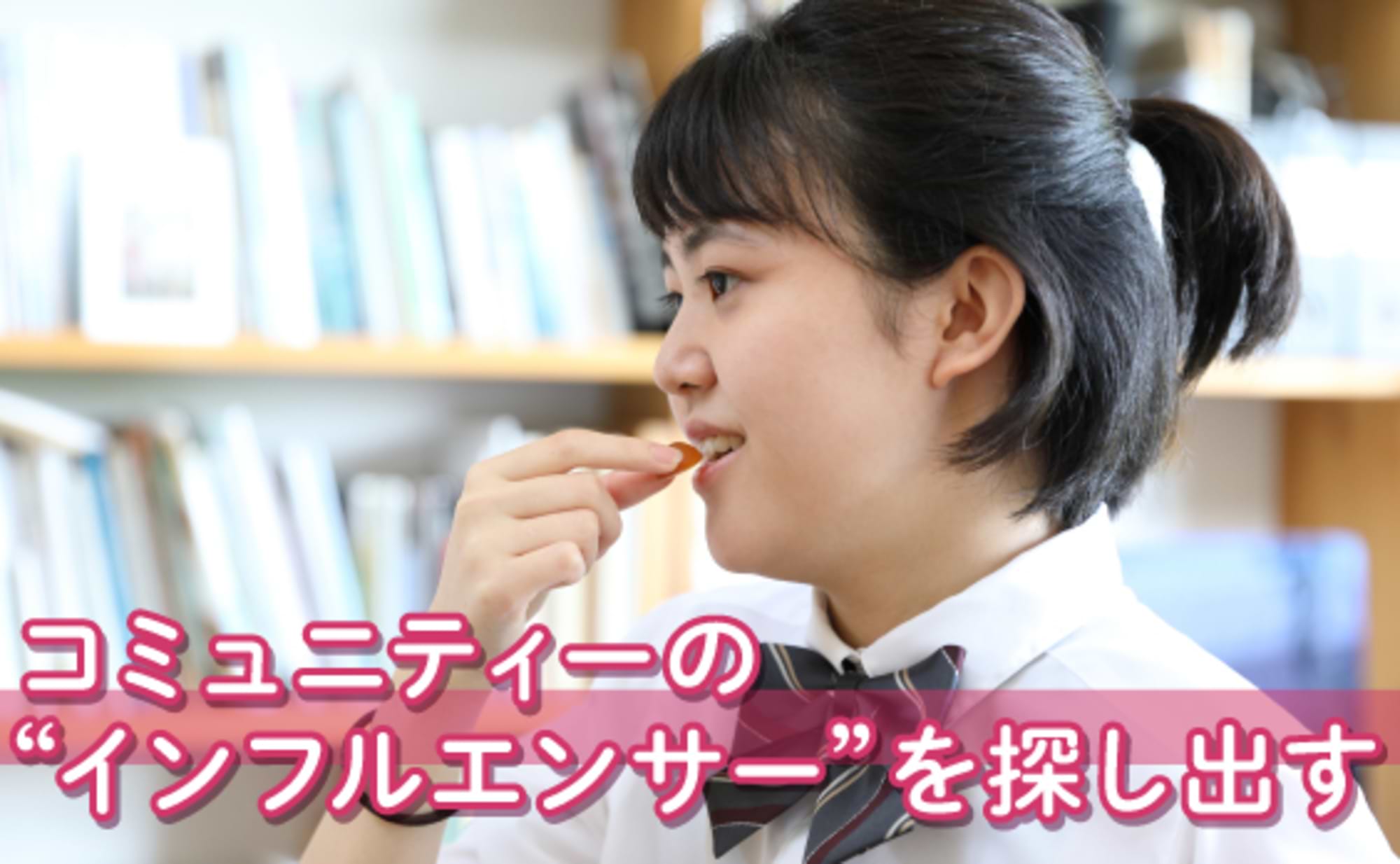
One area the company is currently focusing on is the education industry. It is conducting activities to convey the benefits of aged hops to the "community" of exam takers and their parents.
To further develop this initiative, INHOP has formed a partnership with Tenup, an education-focused venture known for its expertise in community marketing.
This time, Mr. Norifumi Sakou, Creative Director at Dentsu Inc. seconded as an executive to INHOP, and Mr. Takeshi Kanaya, President of Tenup, held a discussion.
They discussed how aged hops can be utilized in the education industry and the key points for successful community marketing within this sector.
<Table of Contents>
▼The "Indisputable, Close Relationship Between Brain and Gut" Discovered by Two Companies Studying Neuroscience
▼Controlling Brain Chemicals to Dramatically Boost Learning Efficiency!?
▼The Key: Finding "Influencers" Who Will Recommend It to End Users
▼Transforming Exams into Fun and Positive Experiences with New Value and Technology
The "Indissoluble, Intricate Relationship Between Brain and Gut" Discovered by Two Companies Engaged in Brain Science
Sakou: As fellow startups, I'd like to ask Mr. Kanaya, a veteran in the education industry and community marketing field, about various things. First, could you tell us again about Tenup's business?
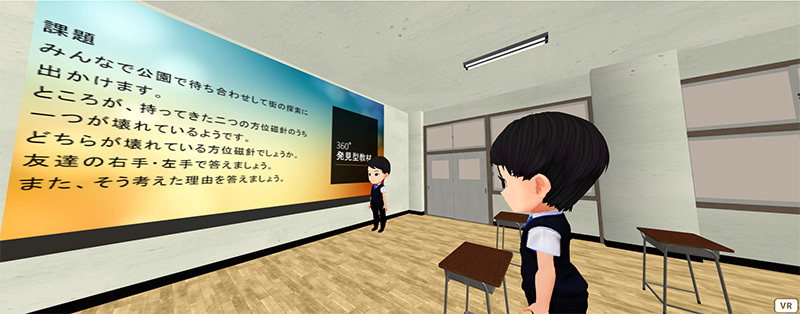
Kanaya: Tenup is a startup developing "BrainTech" using VR/MR/AR. Currently, we focus on developing learning tools for the education industry, such as "VR school," which makes lessons enjoyable in virtual spaces. We are also involved in succession planning and revitalization for cram schools.
Sakou: Why does Tenup focus on the education industry?
Kanaya: We operated cram schools as part of our brain science R&D. The remarkable learning outcomes sparked our interest, leading us to want to delve deeper into education.
For example, neuroscience is well-established in sports, but it's still underutilized in education. Personally, when I was preparing for university entrance exams, I wanted to know "how to study efficiently." By researching neuroscience, I wanted to make that possible.
Sakano: At INHOP, we're also focusing on neuroscience. Recent research shows that the gut perceives "bitterness," sends signals to the brain, and triggers the secretion of the neurotransmitter norepinephrine. This leads to effects like maintaining concentration, improving memory, and reducing brain fatigue.
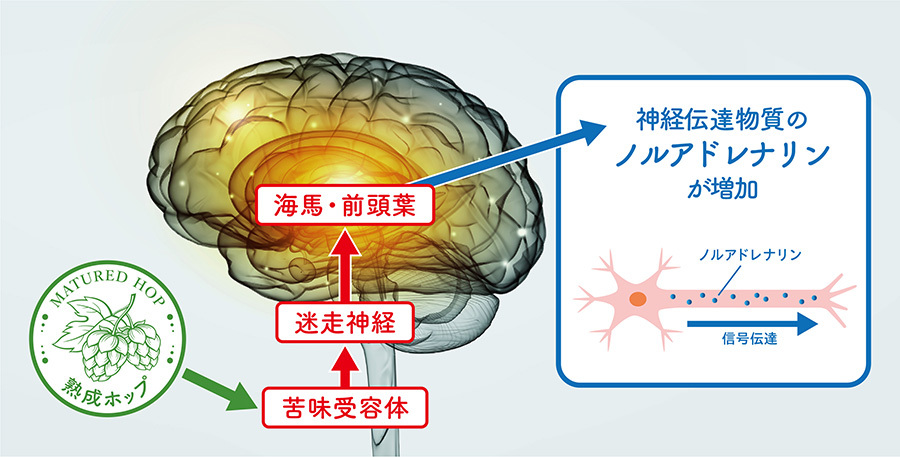
Kanaya: There's also the idea that "brain neurons originate in the gut." As the term "brain-gut axis" suggests, the relationship between the brain and gut is incredibly close; studying the brain inevitably leads you to the gut.
Sakou: That's right. I believe the ingredient "aged hops" can be useful in various fields, but at INHOP, we are currently focusing on
- "Supporting hardworking students, such as those preparing for exams"
- "Maintaining cognitive function in seniors"
- "Supporting those engaged in intellectual work"
- "Sports & Fitness"
First, in the education field, we believe it's crucial to convey accurate information in an engaging way. That's why we consulted Mr. Kanaya, who is a pioneer in this area:
Control brain chemicals and dramatically boost learning efficiency!?
Kanaya: Honestly, when INHOP approached me, I got incredibly excited (laughs).
Sakano: Oh, why is that? (laughs)
Kanaya: Because it was exactly the moment I was exploring ideas for "Learning × Food" based on a neuroscience approach.
Dopamine and adrenaline are brain chemicals that boost motivation and concentration, and methods to stimulate their secretion are being researched. By applying this, we can positively control brain chemicals even in VR.
However, the human brain has a flaw: it can't concentrate for long periods. That's where "breaks" become crucial. Don't people who excel at studying or work actually take quite a few breaks?
Sakou: That's certainly true. Taking breaks at the right times really helps you focus afterward, doesn't it?
Kanaya: Yes. It's about creating rhythm in learning through "tension and relaxation," which can improve efficiency. How does this connect to INHOP? We want users to develop the habit of eating INHOP gummies as a break during study sessions. For example, eating one as a reward after solving 10 problems.
Sakou: I see. That's interesting!
Kanaya: What's more, eating something sweet causes the secretion of endorphins, which makes you feel happy. This feeling of happiness then increases your motivation and concentration as you try to experience it again. I think the combination of learning and INHOP has truly wonderful potential.
The key is to find "influencers" who will recommend it to end users.
Sakou: While aged hops have great potential, on the other hand, hops still have a strong association with beer, and some people even think that "putting hops in your mouth will make you drunk." It's true that some people inevitably feel resistance or anxiety towards new things, so we want to provide accurate information to students and their parents and build a relationship of trust.
That's why the key approach was "community marketing" targeting communities of students and parents. Tenup's services are widely adopted by well-known cram schools, right?
Dentsu Inc. has primarily focused on mass marketing, so we really want to learn the methodology from Mr. Kanaya, who has achieved success with community marketing.
Kanaya: Honestly, I'd rather not share it (laughs). Just kidding (laughs).
Sakou: Thank you (laughs). To share my impression of community marketing: for example, I think most people have never seen a Takarazuka Revue performance, yet the business remains stable and sustainable thanks to a core group of passionate fans. That's the structure of community marketing, right?
So, I feel the key is finding people who genuinely find your product or service fascinating and love it.
Thinking along those lines, at the initial 0→1 stage of spreading the product, "Who will recommend this product?" becomes extremely important. For example, if your target audience is exam students or their parents, a recommendation from a "school teacher" or "cram school instructor" carries credibility, right?
Kanaya: That's exactly the point Mr. Sakou is making! VR is popular among students who actually use it, but if teachers don't think "this is a good thing" in the first place, students won't use it either.
That's why, in developing VR School, we designed a UI that even teachers unfamiliar with IT can easily master.
Sakou: I see. So you lowered the barrier to entry to ensure it wasn't something only highly IT-literate people could use.
Kanaya: Yes. It's really, really simple. And when teachers use our service, they shine. It's like they've gained a new weapon to capture students' hearts, alongside chalk, blackboards, and whiteboards (laughs). In that sense, I think INHOP's products could also become a new weapon for teachers.
Sakawa: If you reward students with gummy candies for their hard work, the teacher becomes a hero, right? And the students will work harder to earn those gummies from the teacher.
Kanaya: Exactly. So in community marketing,
the key is figuring out who within the community to approach to reach your target audience.
is crucial. In the education industry, that person is the "teacher."
Sakawa: While finding end-users directly is important, the key point of community marketing is finding the "influencers" – the people one step before the end-user who will recommend the product to them.
We want to transform exams into something enjoyable and positive through new value and new technology.

Sakou: While INHOP and Tenup's collaboration is still in its early stages, we want to discuss what contributions these two startups can make to society. Mr. Kanaya, what challenges do you currently see in Japan's education industry?
Kanaya: Regarding cram schools, many still rely on outdated, old-school motivational approaches, barely utilizing the rapidly advancing science and technology available today. By leveraging neuroscience and IT, we could significantly improve learning efficiency. The reality is that this potential isn't even widely recognized yet, so our current focus is on raising awareness.
Sakou: Thank you. While I'm new to the education industry, my underlying motivation is the desire to see more happy families.
Exam preparation should be a positive challenge for both children and parents. Yet, once the intensity crosses a certain line, "seriousness" often turns into "stress." I started a business targeting the education industry because I wanted to create a society where parents and children preparing for exams can face the challenge with smiles.
At INHOP, we define entrance exams as a "life challenge." It's an incredibly tough time for both parents and children, but the experiences gained here become lifelong memories. That's precisely why we want to use new technology and new materials to help each person maximize their potential.
We want to create a world where learning becomes enjoyable, where success experiences like "I was able to concentrate" and "I achieved this much" accumulate, boosting self-esteem. That's the world INHOP aims to realize.
Kanaya: Actually, I have another request for INHOP—I want you to make another gummy.
Sakou: What kind of gummy?
Kanaya: A gummy that's even more bitter than the current one. For example, during a paper test, if you pass the score, you eat a sweet gummy; if you fail, you eat a bitter one. By distinguishing between reward and punishment, it creates a rhythm of tension and relaxation, further boosting concentration and motivation.
"100-point gummy" and "fail gummy" – it'd be exciting like a game, right? And importantly, the teacher could become the star of the classroom (laughs).
Sakou: That's interesting!
Kanaya: With cram school lessons, kids are often tired after club activities and can't concentrate. But the moment they find "that space" fun, they show incredible focus. So if we add entertainment elements beyond just eating to INHOP products, I think the students' concentration would be phenomenal.
Sakou: Let's definitely gather students at VR school and try this next time! I want to see the moment the teacher becomes the star (laughs).
Moving forward, we want to keep growing our community of people who find aged hops as exciting as Kanaya-san does, sparking a new movement. We look forward to your continued support!
Kanaya: Likewise!
■INHOP Corporate Site
https://inhop.co.jp
■Aged Hop Research Institute
https://inhop.co.jp/jukusei
■Ten Up Corporate Site
https://www.10up.co.jp/
Was this article helpful?
Share this article


Newsletter registration is here
We select and publish important news every day
For inquiries about this article
Author
Kenji Kanaya
Tenup Co., Ltd.
President and CEO
Norifumi Sakou
INHOP Co., Ltd.
Chief Marketing Officer