
Note: This website was automatically translated, so some terms or nuances may not be completely accurate.
 The Present and Future of Design and Innovation by frog [27/49]
Why do companies need a "design system"?

frog
This article presents content originally published in "Design Mind," a design journal operated by frog, under the supervision of Mr. Noriaki Okada of Dentsu Inc. BX Creative Center.
Many business leaders understand the importance of design. However, achieving continuous innovation based on systematic design and driving business success is extremely difficult.
One of frog's early major successes was the "Snow White Design Language" (*).
When Apple released the Apple IIc, its flagship portable computer, in 1984, it opened new possibilities for design in the computer industry. The Apple IIc became a universally recognized product, embodying Steve Jobs' vision in tangible form.
However, individuals like Jobs are rare. By introducing the Snow White Design Language, Apple as a company gained the ability to consistently deliver systems based on Jobs' unique vision.
At the time, only the most forward-thinking companies that prioritized design understood the value of a design system. Today, any company aiming to deliver cutting-edge products, regardless of size, cannot sustain its business long-term without a design system.
In today's business environment, even leaders skeptical of design's power and focused on practicality recognize that design is essential for capturing customer attention and loyalty through digital products and services.
However, even within companies eager to expand their design departments and rush to implement design operations, there can be fundamental misunderstandings about design systems. A design system embodies an organization's design principles and establishes the foundation for mastering design operations. It transforms the unique capabilities of design into visible, reusable forms within extensive and complex digital environments.
*Snow White Design Language: An industrial design language founded by Hartmut Esslinger, founder of frog, and adopted by Apple in the 1980s. It elevated Apple's global reputation and became one of the defining design trends in the computer industry.
What is a Design System?
A mature design system functions as an ecosystem where assets, tools, people, and processes work together organically.
Leveraging this ecosystem harmonizes diverse products and platforms, providing users with reliability and familiarity while reducing development time and costs for the company.
In the software world, the "front end" refers to the place where users and potential users first experience and understand the value of a product. The primary purpose and value of a design system lies in enabling companies to address the challenging problem of building consistent digital experiences, thereby achieving an exceptional front end.
Foundational Design for Consistent User Experiences
By delivering personalized experiences across every customer touchpoint, companies can drive business success.
To achieve this while minimizing costs requires a systematic digital product accessible across all platforms—web, iOS, Android—tailored to specific users and customer journeys. However, developing additional products or platforms significantly increases operational and coordination costs, stifling innovation.
Investing in a design system avoids the increased costs that arise when different departments within the company pursue development aligned with customer needs. By enabling the system to deliver the experiences customers expect across all channels, it streamlines the development process across each department.
Continuous Product Improvement
Regardless of industry or product, achieving exceptional user experience (UX) requires teamwork. Large-scale enterprises may have hundreds or thousands of developers collaborating to build products and services.
Design systems can streamline collaboration by reducing many of the costs associated with large teams representing diverse departments.
Implementing a design system builds a framework and parameters for consistent experiences, allowing each department to focus on developing features that maximize value for users.
Enhanced cross-departmental collaboration improves product quality and shortens development time. As a result, companies can iterate through testing and improvements to deliver value faster and make better decisions based on data.
How to Build a Design System
No two companies have identical needs or objectives, so there is no one-size-fits-all approach to building a design system.
Design system maturity involves specific phases. While efficient design systems are built considering certain factors applicable to any company, the actual design system is developed based on each company's unique culture and mission, tailored to its specific characteristics.
Design System Maturity Phases
Working with clients has revealed that design system maturity has three distinct phases. Companies aiming to implement their own design system must first determine which phase they are in.
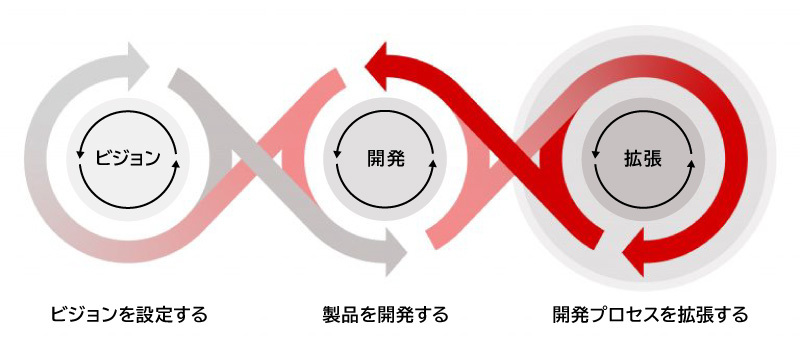
Phase I: Vision (Establishing the Vision)
Phase II: Development (Developing the Product)
Phase III: Scaling (Scaling the Development Process)
Phase I: Vision
For most companies, the first step in building exceptional design is developing exceptional products. In this phase, it is crucial to find solutions to user problems more effectively and efficiently than competitors.
Successfully matching the product to the market can significantly increase consumer demand for the product and deliver business results. Demand serves as a metric for measuring needs and the validity of the design system.
Phase II: Development
Once you've created an exceptional product, you need to "modularize" its UX components. This process of creating the experience forms the foundation of the user interface (UI). You can then repeatedly adjust and implement the UI, like combining Lego blocks, to build new products and experiences.
Once UX modularization is complete, you can "productize" it by integrating the components into existing design and development workflows and optimizing them. Achieving modularization and productization completes the initial design system build.
Phase III: Scaling
In the final phase, various departments—design, product, and development—work together to implement and extend the design system, making it easier for other departments to develop new products and features.
The most efficient companies continuously expand their design systems, considering key elements such as the system's overall purpose, the necessary talent and tools, the processes and structures that connect talent and tools, the organizational culture fostered by the system, and how to measure the system's results.
A System Driving Broad Business Success
When companies effectively leverage this approach, they can integrate business challenges with the design process. Design systems provide "automated" workflows by utilizing modular tools that seamlessly integrate design into the product development lifecycle. They become a comprehensive framework supporting large-scale product design.
However, the design system must evolve alongside product development. By strengthening the entire system through continuous governance processes, in addition to managing quality, value, and versions, companies can establish the design system as a foundation for long-term innovation and success.
This article is also published in the web magazine "AXIS".

Was this article helpful?
Share this article


Newsletter registration is here
We select and publish important news every day
For inquiries about this article
Back Numbers


Author