Note: This website was automatically translated, so some terms or nuances may not be completely accurate.
 Ten people, ten ways of thinking [3/13]
──Is Nagahisa-san actually a bit clumsy?

October 2023. Web Dentsu Inc. marks its 10th anniversary since launch. We'd like to create a special "serialized feature" to celebrate this milestone. We arrived at the theme of "10" people, "10" perspectives, wondering if we could offer wonderful content under this concept. If we were to put it grandly, perhaps it could be called diversity.
When we want to lose ourselves in thought or try to squeeze out ideas, we need our own unique "companions" (indispensable items). For the great detective Sherlock Holmes, that would be his beloved "pipe" and "violin."
This series invites various individuals to share their own "personal companions for thought." We hope you'll enjoy discovering their unexpected sides while pondering "thoughts about thinking."
(Web Dentsu Inc. Editorial Department)
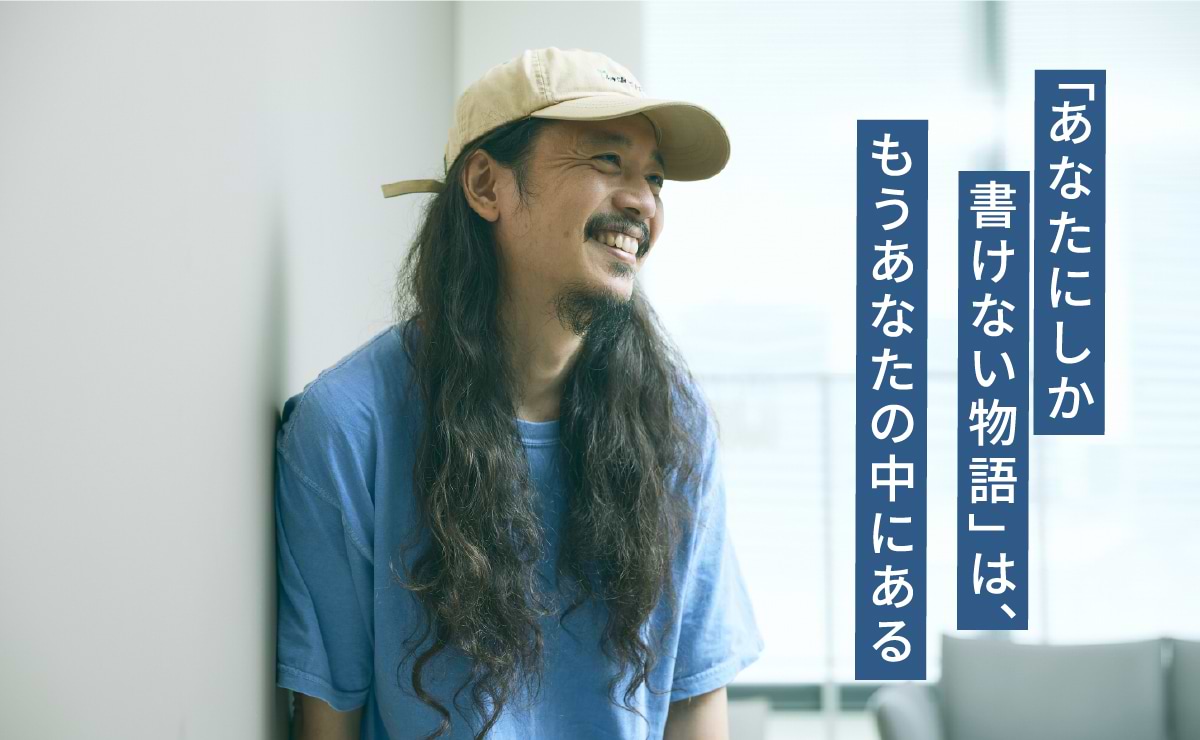
Guest for Part 3: Makoto Nagahisa (Dentsu Inc. Content Business Design Center)
──Mr. Nagahisa, while an employee of Dentsu Inc., has also garnered attention within the industry—indeed, worldwide—as a film director behind works like "And So We Put Goldfish in the Pool" (which won the Short Film Grand Prize at the 2017 Sundance Film Festival, a first for a Japanese filmmaker) and "WE ARE LITTLE ZOMBIES" (his debut feature film released in 2019).
Nagaku: Thank you.
──First, I'd like to ask, "By the way, what have you been doing since 2020?" Because, let's face it, movies are just... long! The runtime is long, the preparation period is long, the production period is long. While that means they can be enjoyed for a long time, I think it's too long to achieve what you might call "corporate employee results" or to get the company to recognize those results.
Nagaku: You're absolutely right. But believe it or not, I've been doing quite a few things outside of film too. For the 50th anniversary of Yukio Mishima's death, I wrote and directed the stage play "Patriotism (Not Dying)". I've also worked on WOWOW TV dramas ("I'm Dead, Man!" starring Yuya Yagira as a ghost, and "FM999" featuring Rie Miyazawa and others acting and singing), as well as music videos. I've also been invited to do advertising, creating commercials like the Gucci ad (which won Bronze at Cannes Lions and Grand Prix at Spikes Asia).
──That's quite a range! Being able to handle so many different things, Nagaku-san must be very versatile.
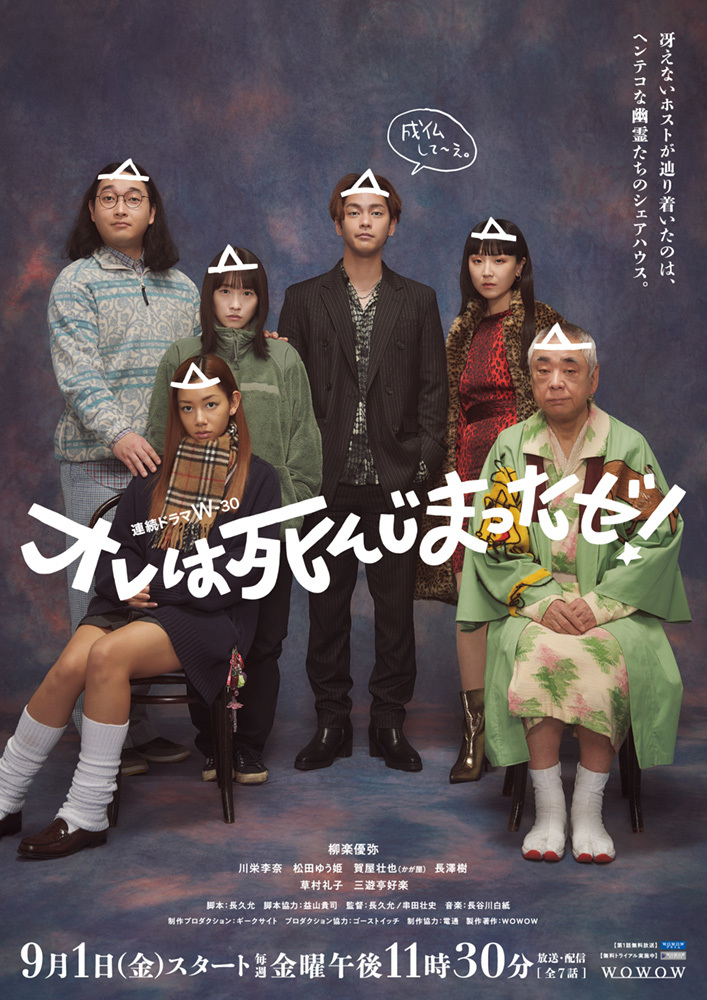
The story of a young host who suddenly dies one morning and spends several months as a ghost.
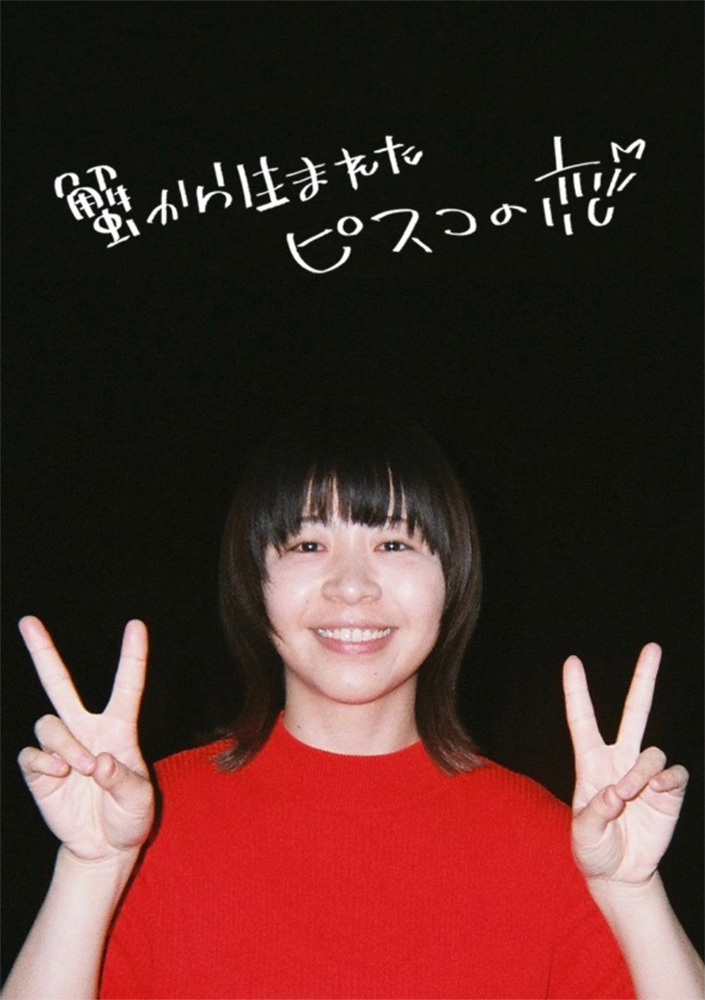
A story about the romance of a girl whose parents are crabs. This short film originated from a project on TV Asahi's "Toge Toge TV." The theme song video can be found here. It has also been nominated for the Sundance Film Festival, held in January 2024.
Nagaku: No, I actually think of myself as a "clumsy person." That is, as someone working in an advertising agency. While I am flexible regarding the media for the content I create, I don't possess the versatility to create anything and everything in terms of content. I strongly feel this clumsiness where I simply cannot tolerate any discrepancy between what I want to convey and the final result.
──Winning awards overseas, starting with Cannes, is truly impressive. From the outside, you don't seem clumsy at all.
Nagaku: No, no. But if you don't create, you won't even be considered for evaluation, so I keep creating. What I think is crucial in making things is the number of approaches you have. You could also call it the breadth of your idea repertoire. Content creation simply can't happen without sponsors providing funding. What I personally find interesting or want to create isn't necessarily what clients or audiences are looking for. Having more approaches means you can propose, "How about this kind of project?"
──Where does that sheer volume of ideas come from?
Nagaku: When I was a rookie commercial planner, I churned out an insane volume of proposals. Back when advertising was my main focus, I struggled with the gap between the message I wanted to convey and what the product needed to communicate. I was probably a pretty useless employee. But I'm grateful that habit of generating massive quantities of ideas stuck with me. Though, to be honest, almost none of the ideas I thought were interesting back then ever got realized.
──I see. That's the clumsiness you mentioned, isn't it?
Nagaku: Exactly. Because I know my own clumsiness, I just write like crazy. And I mean words. That hasn't changed. For example, if I think, "Let's make a 90-minute movie," I'll just write nonstop until I have enough words that reading them aloud would take 90 minutes.
──That's surprising. Looking at your finished works, I always imagined "ideas for visuals and sound must pour down in droves."
Nagaku: I'm not only clumsy, but also easily misunderstood (laughs). It really feels like I just write endlessly to create. I'm bad at meeting people and adapting to them too.
──That's surprising too. Talking to you, I wouldn't have guessed...
Nagaku: Somehow, a person like that ended up working at Dentsu Inc., making videos. So, what can someone like me do? No, no—it's not about what, but I feel driven by a sense of mission that I have to do something!
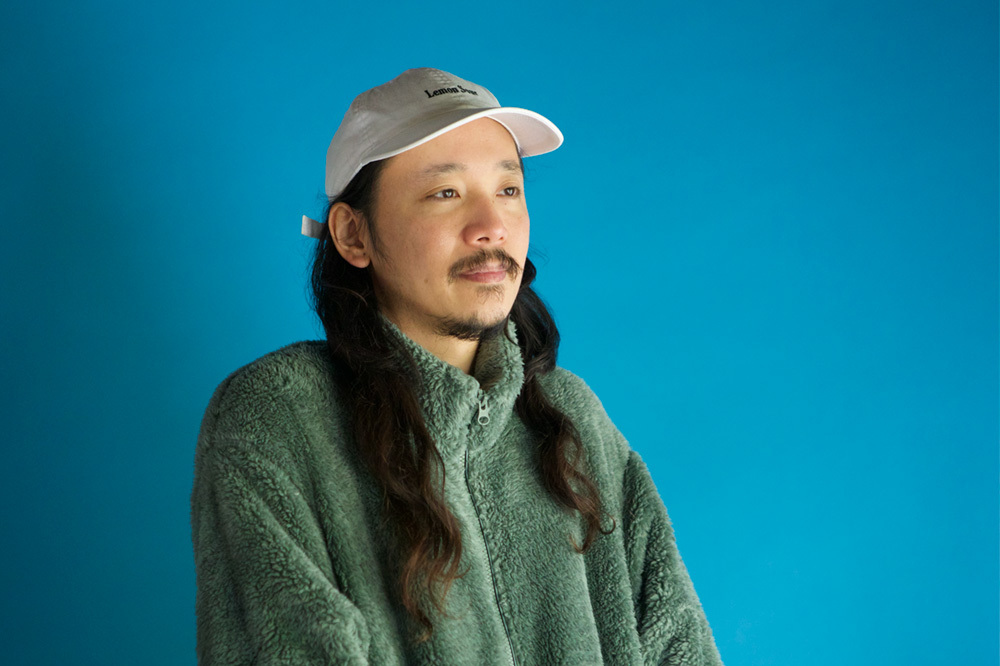
Born in 1984 in Tokyo. In 2017, his directorial work "And So We Put Goldfish in the Pool" won the Grand Prize in the Short Film category at the Sundance Film Festival, the first Japanese filmmaker to do so. His awards include the TCC Newcomer Award, OCC Best Newcomer Award, and Cannes Lions Young Lions Film Medalist, among others. Notable works include the feature films "WE ARE LITTLE ZOMBIES" and "Death Days," the WOWOW original drama "FM999," the GUCCI short film "Kaguya By Gucci," and the music video "FOOL" for Yōbun Gaku. Also active as a screenwriter and stage director. His latest work, the WOWOW original drama "I'm Dead, Man!" (starring Yūya Yagira), is currently airing.
Back issues of Atsushi Nagaku's Web Dentsu Inc. can be searched here.
"Companions for Thought" Its Origin Lies in Surrealism (Masamune Nagaku)
──Before we get into specific examples of "companions for thought," if such companions exist for you, Mr. Nagahisa, what exactly are they?
Nagaku: I mentioned a "sense of mission," but it's not just about doing what a salaryman should do. You know how people feel this kind of vague, indescribable frustration, helplessness, or emptiness? That sense of mission—wanting to somehow scoop up and address those feelings—is important when you're thinking about things. When I say "scoop up," it might sound a bit condescending or self-important, but it's not about "saving" someone. It's more like the meaning of "scoop" when you scoop up water.
──It's like "reaching out a hand" or "picking up" those feelings that are already there.
Nagaku: More than anything, the feeling I want to scoop up is my past self. The past me who was bullied, who couldn't get ahead, but who couldn't do anything about it. So, to save that past self—in this case, it's more like "save"—I just keep writing relentlessly.
──Turning feelings that can't be put into words into words. It's somehow philosophical, or literary.
Nagaku: Exactly. I majored in French literature in college, and there is such a genre in French literature. It's called "Surrealism." Unlike the commonly understood meaning of "surreal," I see it as a discipline that logically pursues sensation. For example, combining the Japanese "a" (あ) with the English "Z" conjures scenes that wouldn't normally arise. Taking it further, what emerges when you add the dakuten (゛) to the eyeball of a penguin in Antarctica? It's about logically approaching something that logical thinking alone can't produce...
──Is this like Nagahisa-style "design thinking"? Writing endlessly just to encounter that "something."
Nagaku: Exactly, like automatic writing. It's almost like being in a trance (laughs). When it becomes a work, it manifests as things like the tip of a soft-serve ice cream suddenly inserted, or a shattering glass. It feels like I'm exploring a surrealism that's a bit closer to reality than usual.
──I'm starting to understand. The secret of Nagaku's work, and the true nature of the "companion to thought." The answer, plain and simple, is the pen!
Nagaku: Well, the pen might be part of it. Oh, I mean the PC. I don't actually use a pen. But the essential companion is something else entirely.
What exactly is Nagahisa's "companion for thought"?
──Then, finally, please tell us about the specific "companion to thought" for you, Nagahisa (it wasn't the pen...).
Nagahisa: Well, it's... "Anger."
──"Anger"?
Nagahisa: For example, to draw it out, I consciously stay sensitive to daily news and everyday events. Like the crowds in Shibuya. Inside a hamburger shop. The eat-in corner at a convenience store. I place myself in that familiar "bustle" I've known since my student days. I stand there or walk around wearing headphones, but without playing any music. Doing this, the indescribable feelings I held in the past well up like a spring. Or they overflow like a flood. To an outsider, I might look like a weirdo (laughs).

──An encounter with my past self, no, with the feelings of my past self... That's something no one else can replicate.
Nagaku: Being in the crowd revives the "anger" I felt back then. It becomes the engine for my thoughts and the rhythm for my output—not just words.
──I understand that completely. Even if someone told me to copy it, I couldn't. In the Shibuya crowd, the breaths of people passing by and the sounds of cars and trains assault you like dissonant notes. But usually, when people think deeply, you imagine a quiet environment calming the mind, right? Like deep, silent contemplation.
Nagaku: Feeling calm is about resetting your emotions or comforting yourself, right? Like having a casual conversation with one of my two daughters. That's important in its own way, but it doesn't make "anger" arise.
──It's more like being satisfied, I suppose.
Nagaku: When you're calm, you feel like you don't need to create anything. But society is underdeveloped, so I feel the need to keep sending messages with genuine "anger," and that's the root of my work. It's two sides of the same coin, but anger, socially or within an organization, is about listening closely to the true feelings of those who are oppressed and want to explode someday. I think that's synonymous with gently leaning into the hearts of minority groups and identifying with them. This connects to what I mentioned earlier about scooping up feelings with nowhere to go.
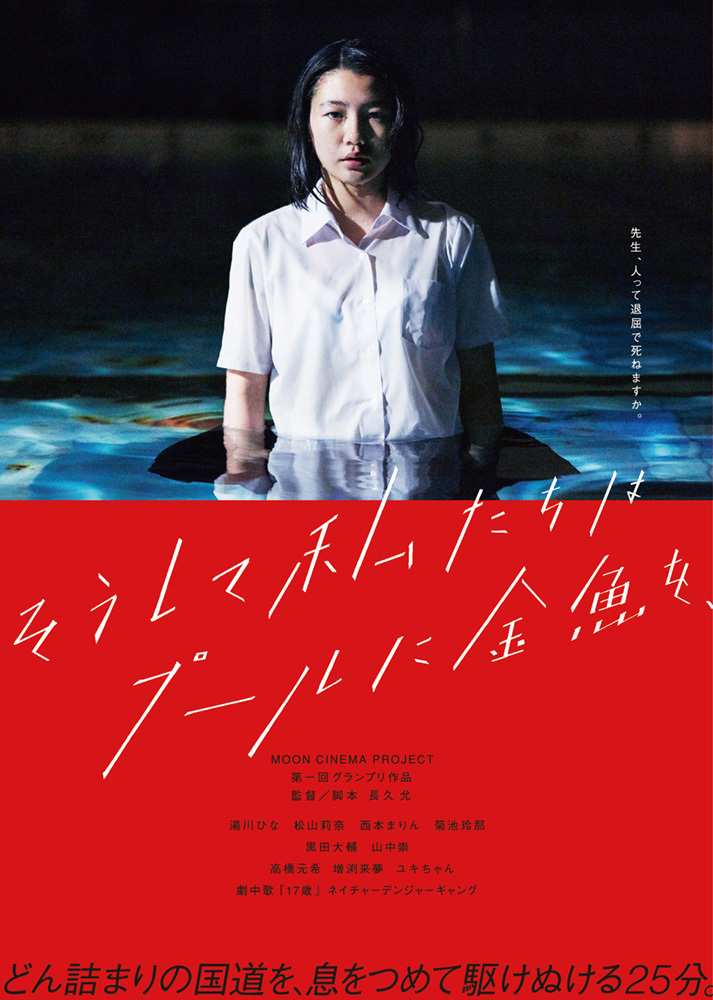
Based on a real incident, it depicts the events leading up to 15-year-old middle schoolers releasing goldfish into a pool. The full film is available on YouTube here.
──I see. Your work, Nagahisa-san, seems wildly unconventional at first glance, yet there's always a sense of "gentle feeling" within it. That's why it creates empathy that transcends generations, gender, and even nationality. It makes people feel like, "This captures exactly how I feel," or "This validates exactly who I am."
Nagaku: I'm glad to hear you say that.
The serialized "Web Dentsu Inc. 10th Anniversary Project" is being released one after another. Please take a look.



Was this article helpful?
Share this article


Newsletter registration is here
We select and publish important news every day
For inquiries about this article
Back Numbers
Author

Naga Hisashi
Dentsu Inc.
Content Business Design Center
film director