Note: This website was automatically translated, so some terms or nuances may not be completely accurate.
 NRF2024: Latest & Cutting-Edge Reports in the Retail & Commerce Sector [7/7]
[Special Edition] The "Now" of Taiwan's Retail and Commerce Scene
This series delivers the latest trends in the retail and commerce scenes of Europe, the US, and ASEAN through NRF reports. Last time, we covered the NRF APAC event held in 2024. As a follow-up [Special Edition], I'd like to provide an overview of the retail and commerce scene in Taiwan, which I visited in November 2024.
Introducing the "Four Ts" Perspective (Transportation, Telecommunications, Currency, Distribution)
It's been a while since the term "platform player" entered common usage. However, while working in marketing communications and sales promotion, I've often wondered: is it truly accurate to equate "that" in Japan solely with the mega-IT companies (the so-called GAFA)?
This is because, while traveling abroad frequently (not just for NRF), I recently realized that regardless of destination, I always meticulously prepare for "specific domains." These are: ① Transportation from the airport to the hotel or other destination; ② Establishing lifelines to prepare for any situation (recently, this means phone calls, messaging, and maps via smartphone); ③ Payment methods to adapt to consumption activities once there; ④ The resulting purchasing behavior.
To put it more succinctly and clearly, these can be summarized as four elements: ① Transportation, ② Communication, ③ Currency, and ④ Distribution. The keyword "4 Ts" (Four Communications), which collectively refers to these, is precisely the "social platform" that Japanese people have been particularly conscious of.
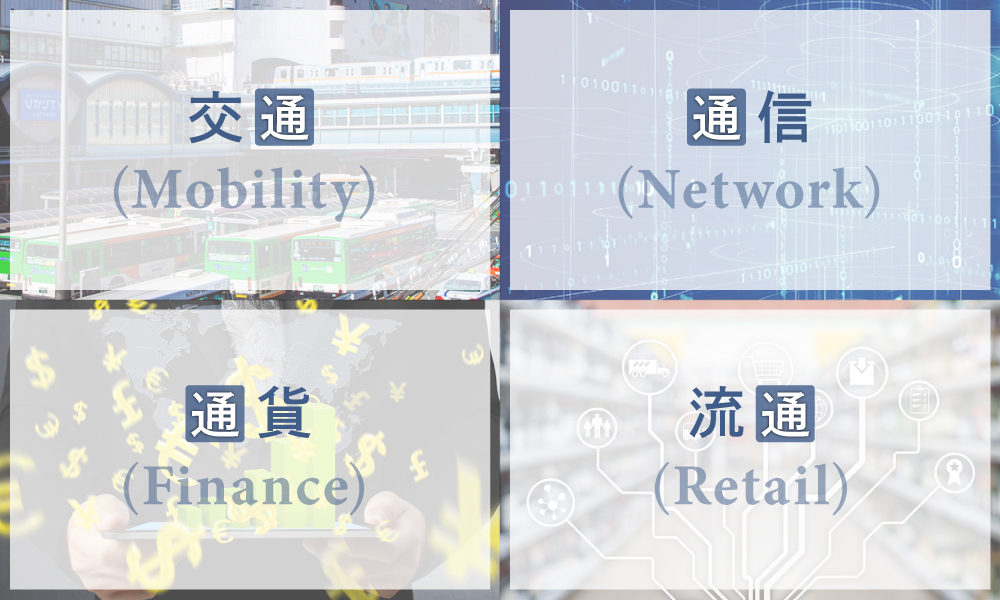
Applying this perspective to the social environment of Taiwan in November, following the NRF APAC event in Singapore in June, we can organize it as follows:
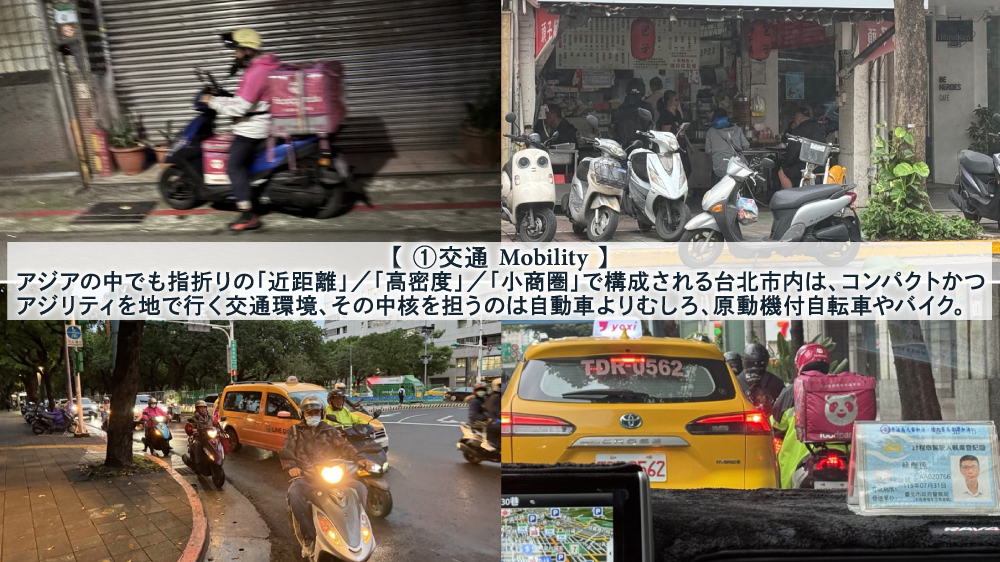
① Transportation: While Uber dominates as a public transport option, motorcycles and mopeds were more prevalent than cars for personal mobility across all age groups. I was startled by how they would roar around corners even on major three-lane boulevards. Perhaps as a counterpoint, I frequently saw Food Panda, which has since withdrawn from Japan.
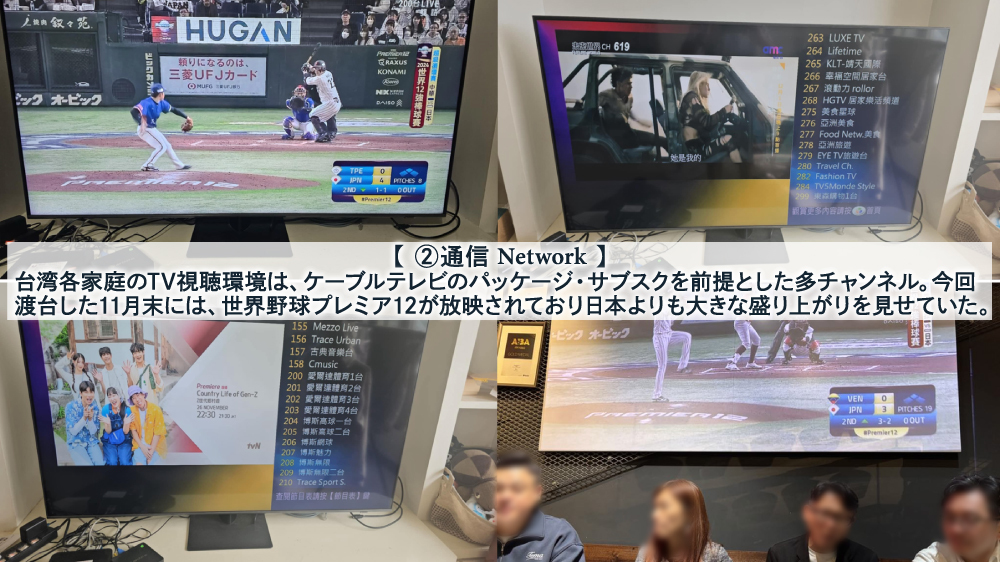
➁ Communications: Contrasting with streetscapes that evoke a nostalgic Showa-era feel, Taiwan boasts advanced internet infrastructure, including mobile networks. Even private homes often feature multi-channel CATV with hundreds of Pay-per-View options. During my late November visit, the World Baseball Premier 12 tournament generated more excitement than in Japan.
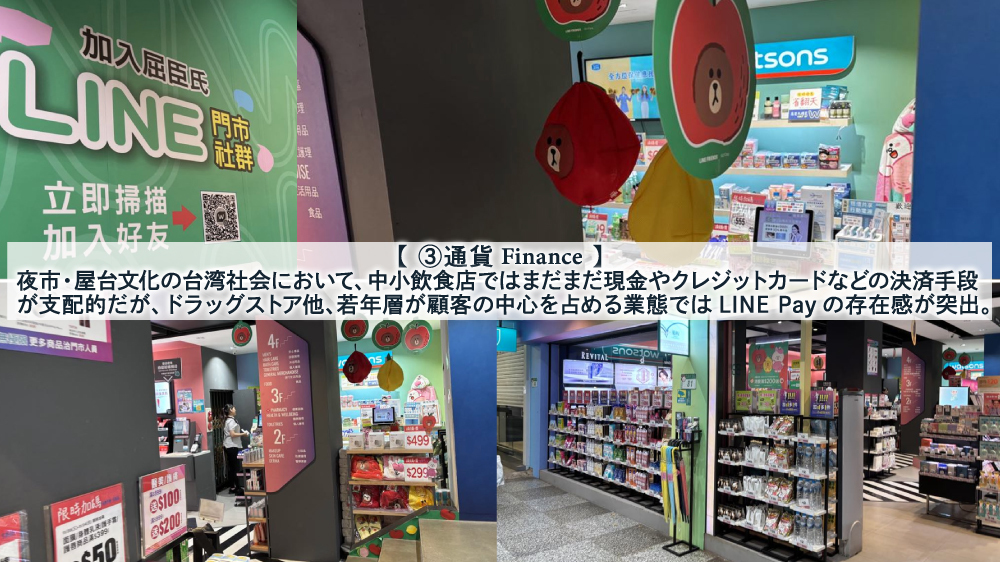
③ Currency: While cash payments are still common at many small and medium-sized eateries packed into the city streets, credit cards are generally accepted. However, they consistently required contactless tap payments rather than insert/swipe methods. Beyond that, LINE Pay demonstrated its strength particularly strongly in stores like drugstores, which have a solid base of younger customers.
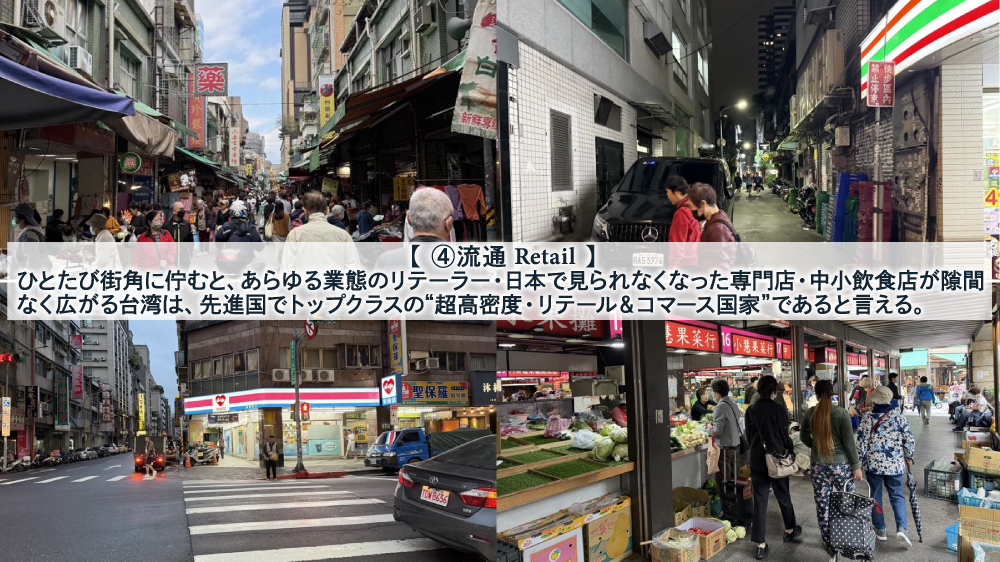
④ Distribution: This sector undoubtedly left the strongest impression of Taiwan. What immediately caught my eye on street corners was the sheer diversity of store formats, products, and services—far exceeding Japan—alongside the daily hustle of people buying and selling. Small, specialized shops stood out, particularly those focused on fresh meat, fish, and vegetables, or restaurants competing on single-item menus.
Considering all this, compared to Singapore as reported earlier, could Taiwan be described as "a top-tier advanced nation, a retail and commerce powerhouse characterized by ultra-high density and overcrowding"?
Representative Taiwanese Retailers
Below, we introduce Taiwan's leading retailers by business format.
(1) Shin Kong Mitsukoshi (DMS)
Established in 1991 through a joint venture between the Shin Kong Group and the Mitsukoshi Group (43.4% stake), opening its first store in Taipei. Combining Mitsukoshi's strengths of "long-established" and "high-end" with an "urban" and "youth-oriented" image, it boasts a broad customer base. It is widely recognized as Taiwan's No. 1 brand and one of the few successful Japanese department store models overseas. 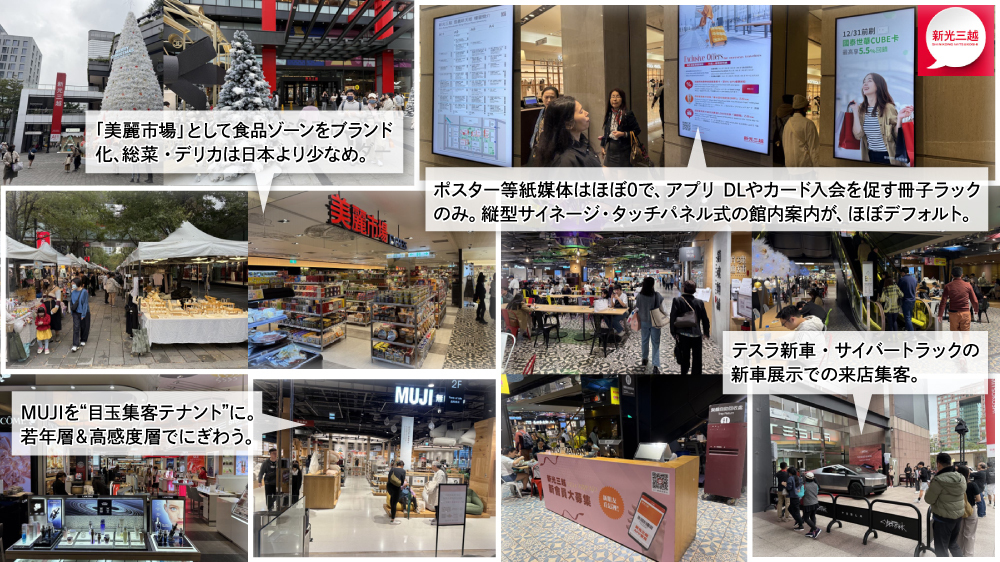
(2) PX Mart (SM)
Founded in 1998, it grew through acquisitions and mergers to become Taiwan's largest retail distributor. A retailer known for prime locations, extensive store networks rivaling CVS, and fair pricing. It continuously improves shopping environments and service quality while actively pursuing retail DX initiatives like apps, payment systems (PX Pay), and online supermarkets (Xiao Shida). 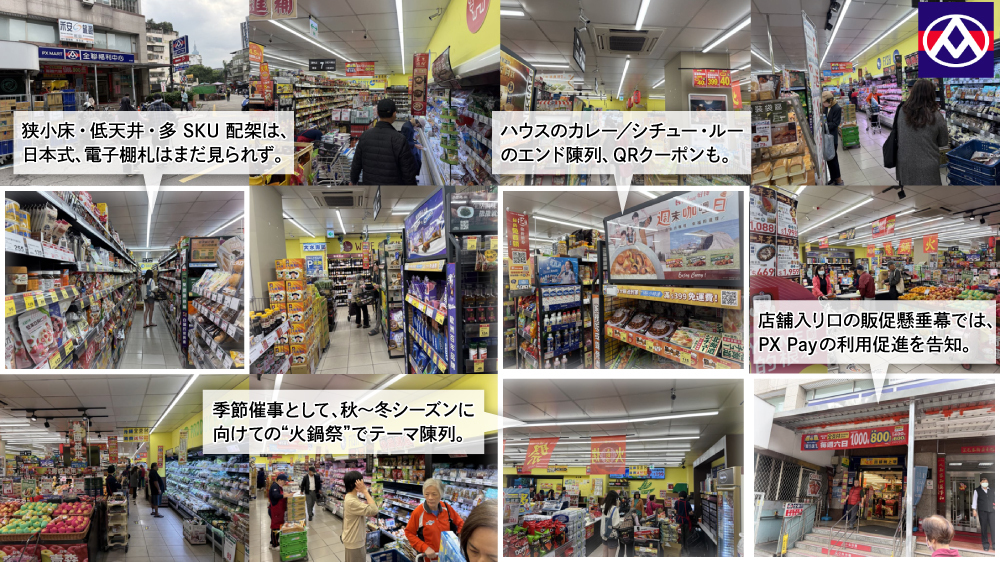
(3) RT-Mart (GMS)
A retail chain that opened its first store in Taoyuan in 1996. As a purely domestic GMS chain with large stores located in suburban areas, it handles a vast number of SKUs spanning clothing, food, and daily necessities. It attracts many customers who drive in from outside its walking catchment area. In July 2022, RT Mart was acquired by PX Mart, creating Taiwan's largest retail distribution company. 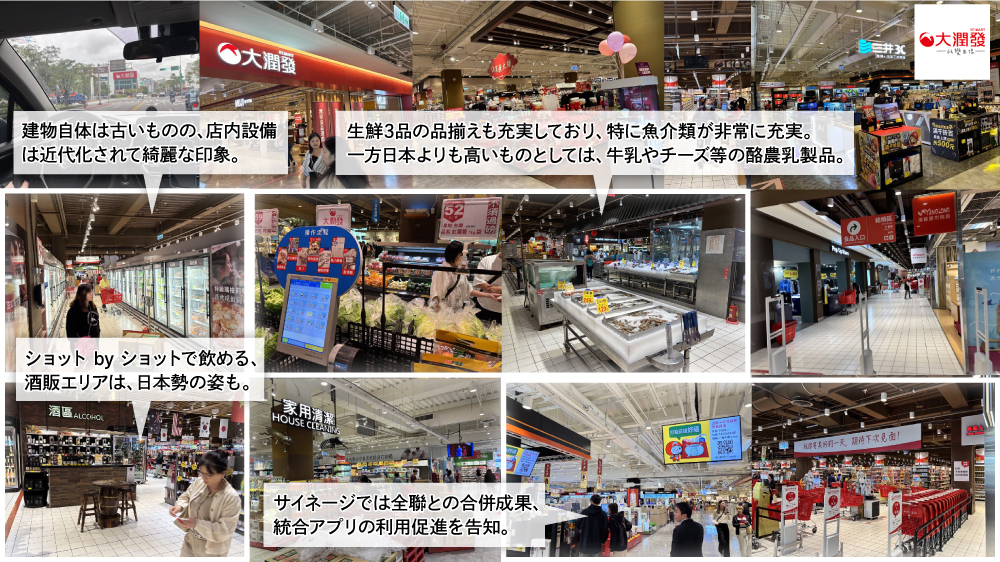
(4) Hi-Life Convenience Store (CVS)
Established in 1989, it is one of Taiwan's four major convenience stores (CVS), alongside Uni-President Supermarket, FamilyMart, and OK Mart, and is the only one not foreign-owned. As of the end of April 2024, it operates 1,602 stores, ranking third in Taiwan. A unique company, it launched its "Coffee Reserve Cup" service using an app in 2017, which evolved into a "pre-pay ~ pick up anytime" service. 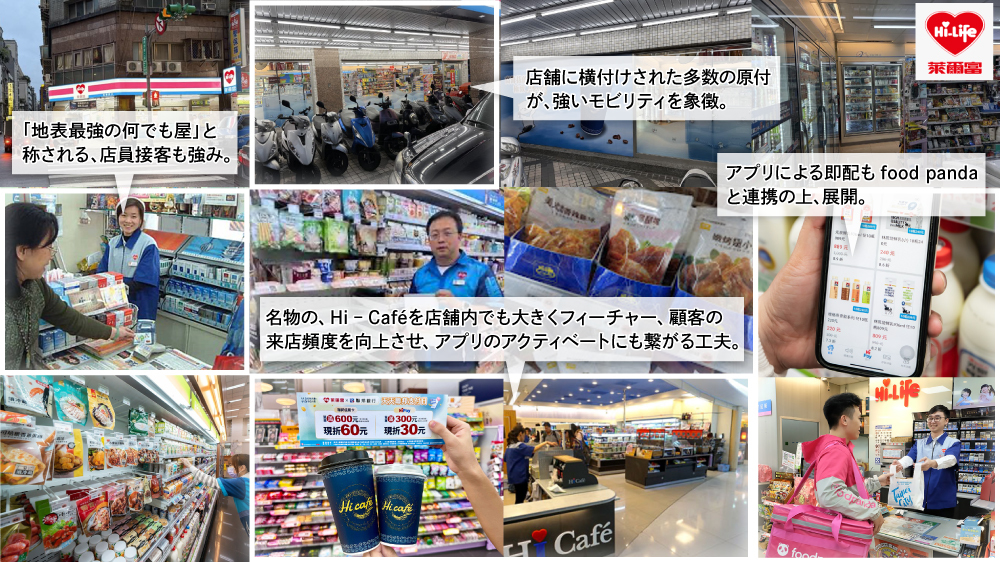
We've overviewed Taiwan's four major retail formats: department stores, supermarkets, GMS, and convenience stores. Below is a chronological breakdown of various retail BX/DX cases observed at the U.S. NRF (coincidentally, after the drastic post-pandemic shift in consumer society), which the author has continuously monitored since 2020, organized by each retail format.
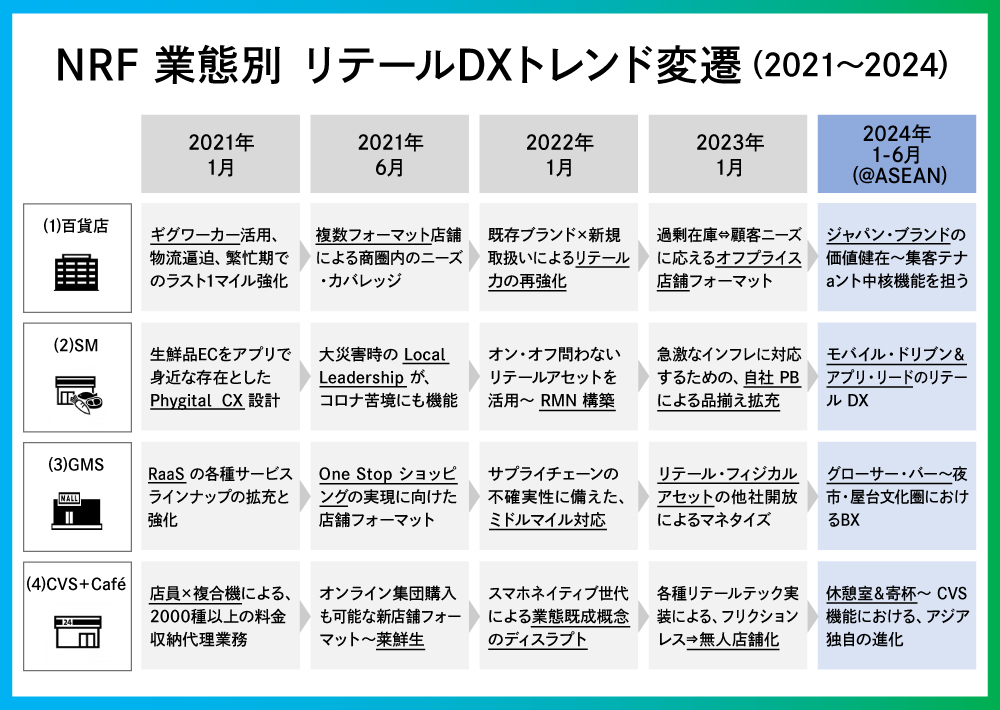
Beyond the above, the retail landscape is vast and diverse, extending to drugstores, cosmetics/beauty, apparel, home centers, electronics retailers, and pet shops. Physical stores hold overwhelming potential, even surpassing e-commerce, serving as the fundamental starting point for everyone involved in marketing and promotion.
This year marks a quarter-century since the start of the 21st century and five years since the pandemic began. The NRF2025 convention will be held in January. Following the U.S., this convention will also be held in Singapore (for the second time) and, for the first time, in France in September. It remains an event we cannot afford to take our eyes off.
Particularly memorable were the words of several members of the Taiwan Dentsu Inc. team: "Taiwan's consumer society structure mirrors Japan's from ten years ago. There's still so much we can learn from Japan's retail and commerce scene. We want to understand it better."
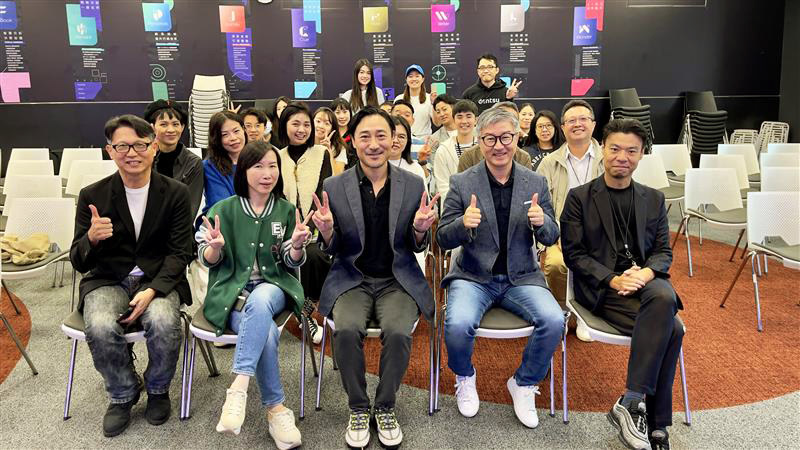
We hope that through these business initiatives within the Dentsu Group, we can showcase globally competitive Japanese—or rather, Asian—retail commerce BX & DX case studies at NRF. With this vision in mind, we will continue to report the latest updates throughout 2025.

Was this article helpful?
Share this article


Newsletter registration is here
We select and publish important news every day
For inquiries about this article
Back Numbers
2024/11/05
Visit APAC, Exhibit NRF! ~We came, we saw, we understood! The Current State of Retail Commerce at NRF APAC and in ASEAN~ (Part 2)
2024/10/24
Visit APAC, Exhibit NRF! ~We Came, We Exhibited, and We Learned! The Current State of Retail Commerce at NRF APAC and in ASEAN~ (Part 1)
Author

Hitoshi Kimura
Dentsu Inc.
Retail Marketing Division
Senior Producer