Note: This website was automatically translated, so some terms or nuances may not be completely accurate.
 NRF2024: Latest & Cutting-Edge Reports in the Retail & Commerce Sector [5/7]
Visit APAC, Exhibit NRF! ~We Came, We Exhibited, and We Learned! The Current State of Retail Commerce at NRF APAC and in ASEAN~ (Part 1)
The NRF Retail's Big Show, the world's largest convention in the retail distribution sector hosted by the National Retail Federation (NRF), is held annually in January. The first-ever APAC edition took place in Singapore from June 11 to 13. How have the cutting-edge trends in retail commerce changed over the past six months, and with the shift in location from the U.S. to Singapore? Continuing from last time, we hear from Hitoshi Kimura, who supports BX and DX initiatives for the retail industry at Dentsu Inc.
Introduction
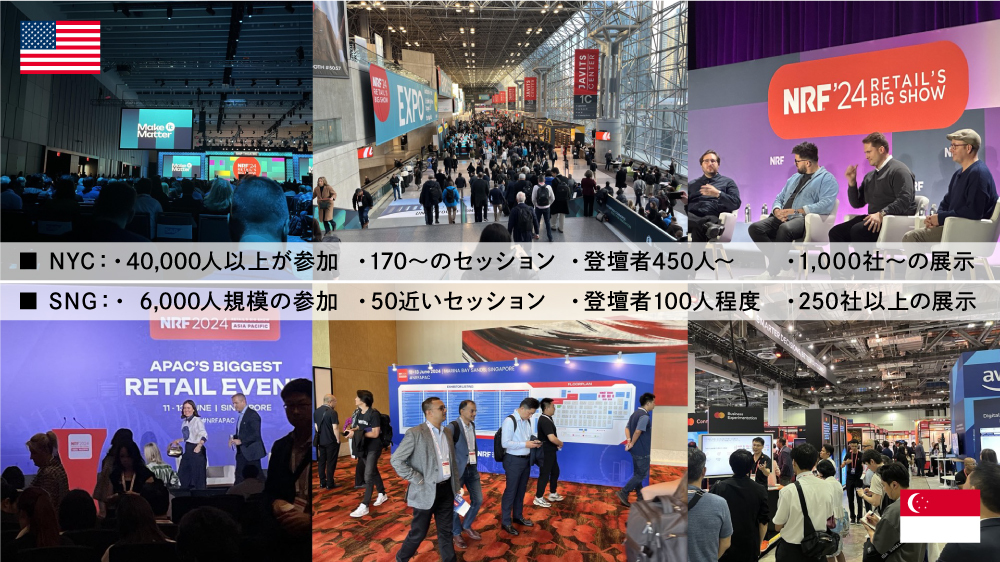
NRF Retail's Big Show APAC 2024 (NRF APAC 2024) attracted approximately 8,600 registrants, with around 5,800 being retail professionals. Breaking it down by country, 56% were from Singapore itself, followed by 8% from Japan. For a first-time event, this indicates significant enthusiasm in Japan as well. On the other hand, while over 90% were from Asia, attendees from the US and Europe combined made up only 4% of the total. In terms of scale, attendance was roughly one-quarter that of the US NRF2024 held earlier in the year.
Nevertheless, it was an optimal opportunity to thoroughly observe the "unique ASEAN retail and commerce scene" and experience "the new post-pandemic consumption paradigm shift outside Japan."
Having observed NRF consistently from pre-COVID to the present, I believe the overall shift in digital technology, data, and the environmental changes/transformations they brought—what we might call "Retail DX"—has progressed through three major steps:
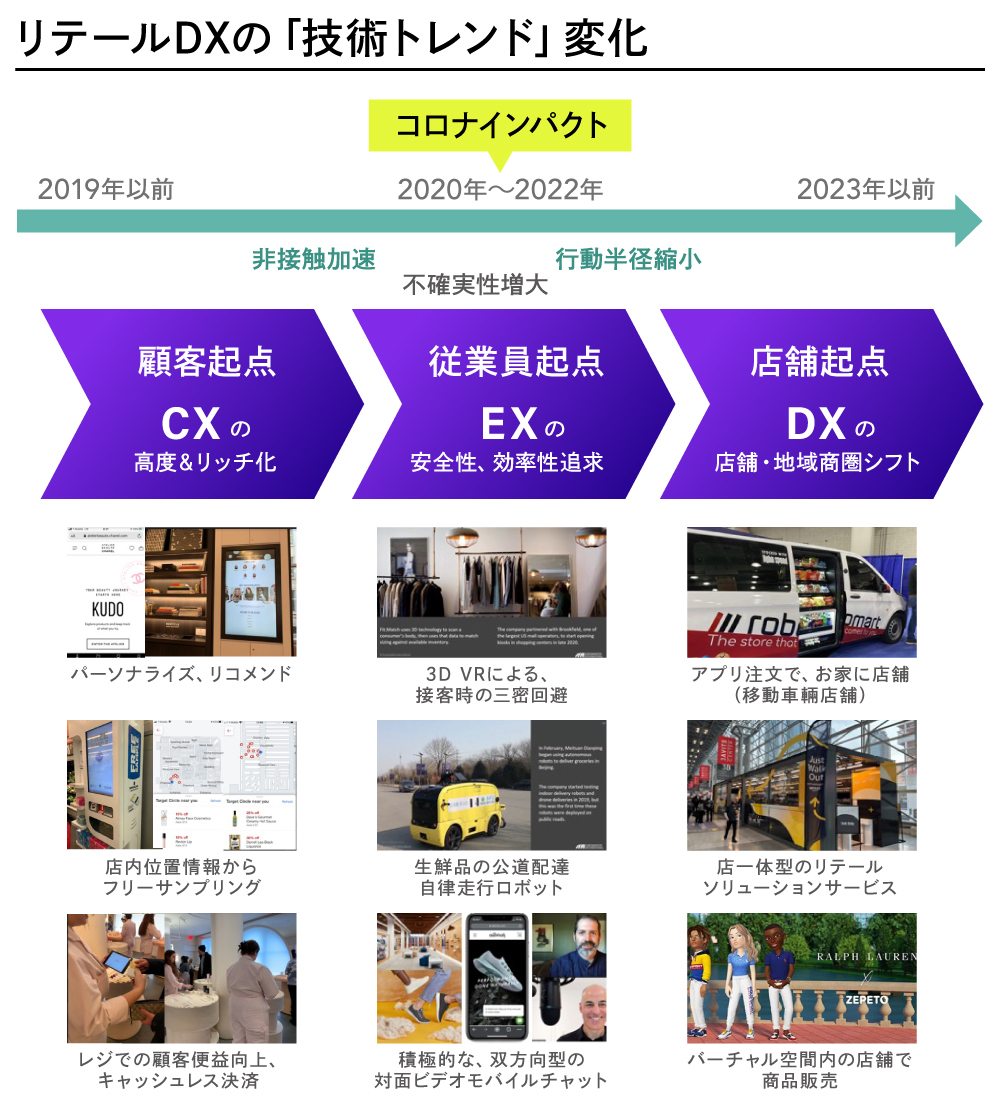
In the pre-pandemic era, when there were no constraints on in-store visits or face-to-face interactions, the key discussion point for retail tech was how to create rich customer experiences (CX) at every touchpoint.
Subsequently, as contactless interactions accelerated due to COVID-19, retail tech shifted focus toward enhancing employee experience (EX) from the perspectives of frontline worker safety and operational efficiency.
From 2023 onward, as the pandemic subsided, retail tech—previously existing as partial, optimized solutions for distinct CX and EX challenges—began integrating around the store as the starting point. This marked the maturation stage of Retail DX.
Positioned along this extended "retail DX narrative spanning the pandemic," this year's NRF APAC can be viewed through three lenses: ① Expo (exhibition content), ② Keynotes (speeches by influential speakers), and ③ Store (physical store visits).
Expo (Exhibition Content)
Here are three symbolic exhibits, along with key retail tech keywords.
① SCM Solution (Blue Yonder / USA)
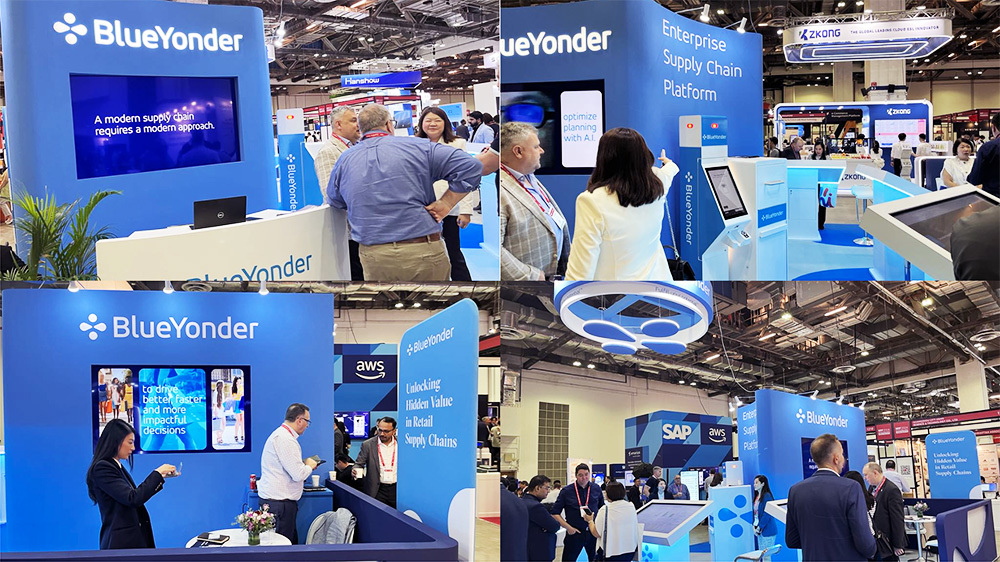
Blue Yonder, acquired by Panasonic Connect in 2021, is a Supply Chain Management (SCM) solutions company. It provides solutions that centrally manage the entire process from order receipt to delivery via a network. The exhibit clearly explained their strengths: AI-driven demand forecasting, optimization between demand (customer-centric) and supply (supplier-centric), and real-time dashboards enabling global collaborative players to operate on a single platform. This was illustrated through collaboration cases with AWS and Microsoft.
② PLM System (Centric Software / USA)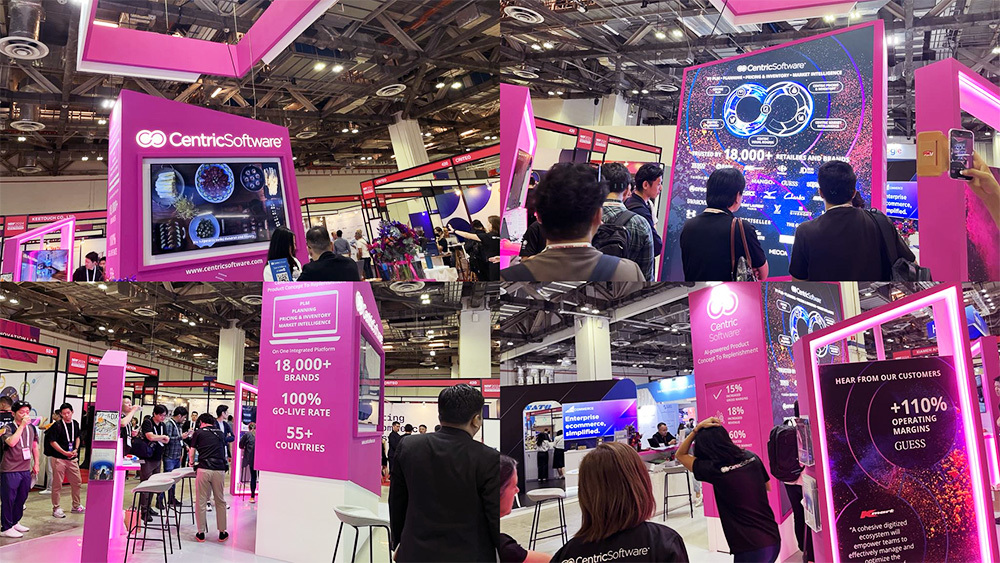
PLM stands for Product Lifecycle Management, referring to systems that manage the entire product lifecycle from planning to disposal. The exhibit introduced five core service modules: Centric PLM™, Centric Planning™, Centric Pricing & Inventory™, Centric Visual Boards™, and Centric Market Intelligence™. The theme was "Choosing Real-Time Retail with AI: Leveraging AI for Retail Planning, Pricing, Inventory Optimization, and PLM to Enhance Profitability, Address Sustainability, and Understand Consumer Needs," aligning with the keynote speech.
③ BIoT (SUNMI Technology / Shanghai)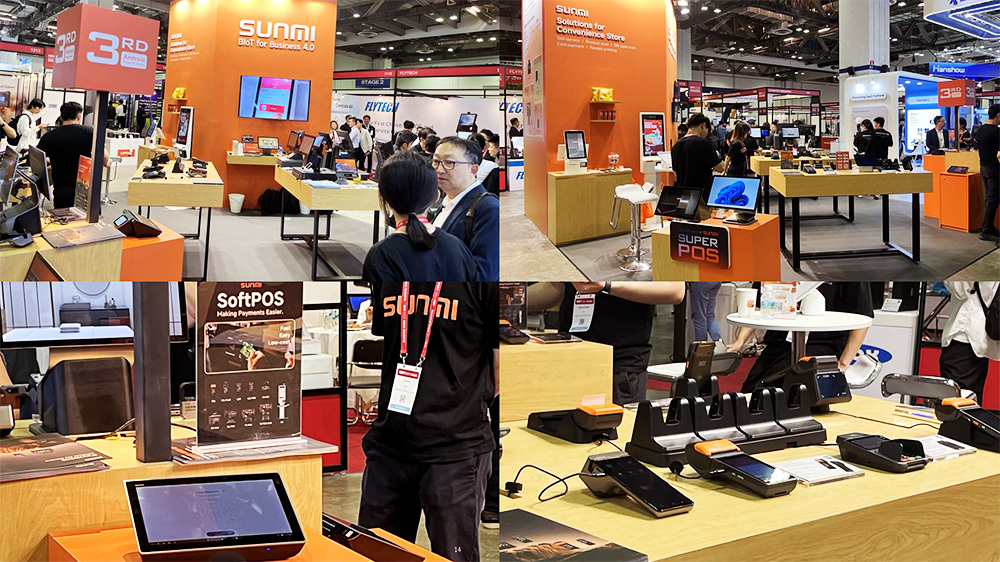
SUNMI Technology is a startup originating from the manufacturing of smart payment terminals, including mobile POS, financial POS, desktop POS, self-service kiosks, and printers. It now advocates a BIoT strategy combining software and hardware to deliver intelligent IoT devices and total solutions. However, what truly drew visitors' attention and crowds at the exhibition was not their overall strategy presentation, but rather their extensive lineup of hardware terminals—spanning from customer touchpoints to employee touchpoints, and from store touchpoints to product touchpoints.
Below is a summary of various solution exhibits, including those beyond the three companies mentioned above.
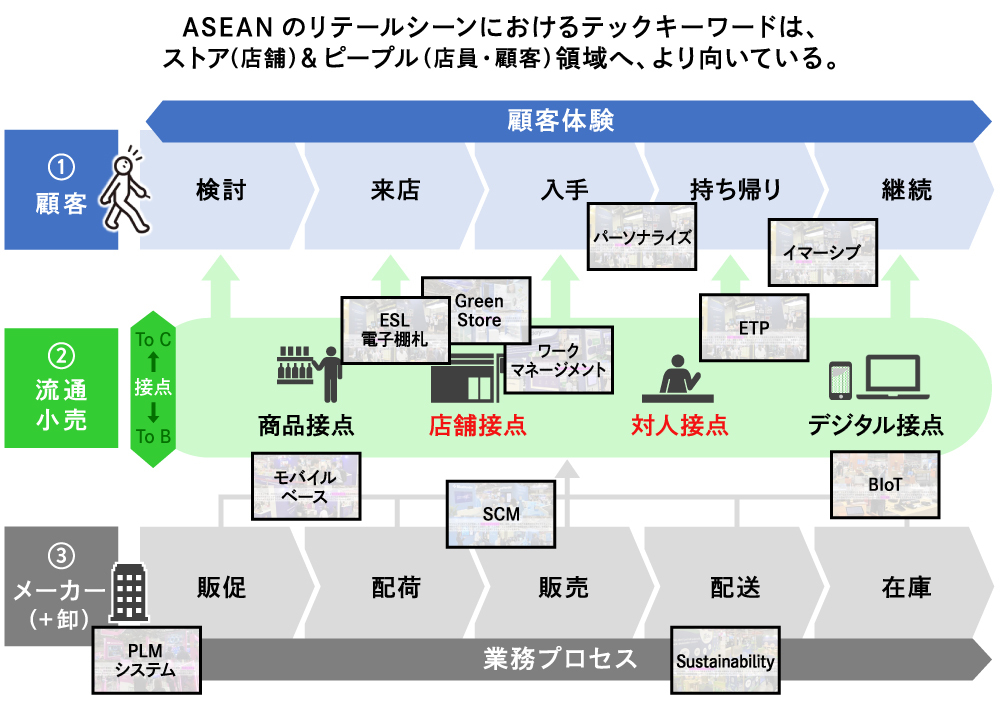
What became apparent from these exhibits across the three distinct areas is that, as mentioned earlier, in ASEAN, efforts remain largely focused on partial optimization within specific domains like stores and people (staff/customers). Solutions have not yet reached the level of holistic optimization that spans chains or crosses different stakeholders.
dentsu Booth Presented by Integrated Domestic and International Team
The Dentsu Group also exhibited at NRF 2024 APAC. For the first time, dentsu Japan companies and sections collaborated with dentsu APAC to form an integrated domestic and international team, leveraging each entity's expertise. We will also introduce the details of this collaboration.
Within dentsu Japan, four main organizations collaborated: the BX/DX Division, Investment Division, Overseas Division, and Data Technology Division. They were joined by co-exhibitors, totaling 10 companies (8 domestic + 2 overseas), making the exhibition possible.
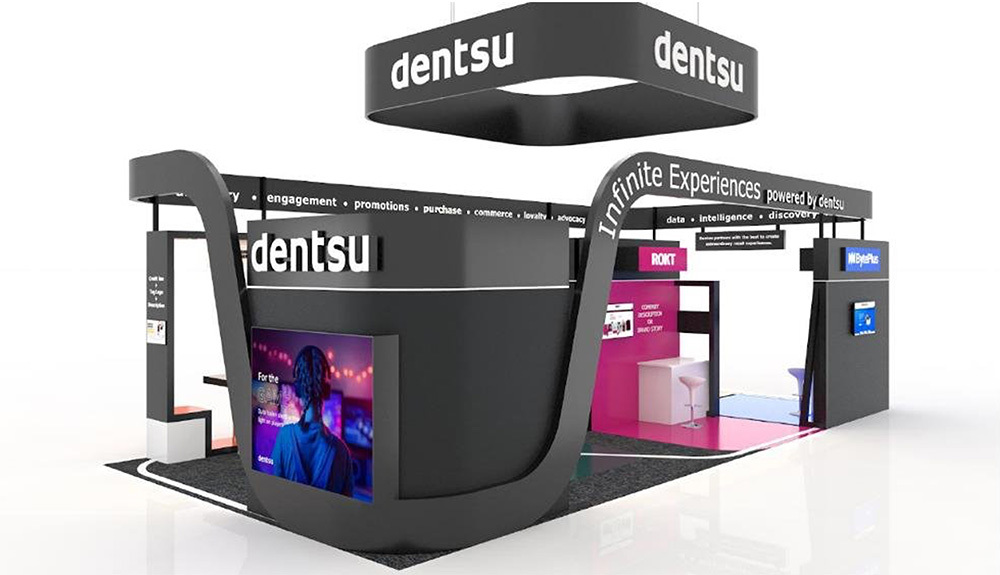
Our exhibition theme was "Infinity Circle." This framework represents a higher-level customer experience achieved by creating a data-driven loop between the "Purchase Cycle" (encounter, consider, experience, purchase) and the "Loyalty Cycle" (engage, belong, thrive, recommend).
The seven participating companies were: ① Canly: Specializing in MEO (Map Engine Optimization) and excelling in DX for chain retail enterprises. ② LMI Group: Offering one-stop services from in-store customer behavior analysis using AI cameras to store renovations aimed at improving marketing ROI. ③ SUSHI TOP MARKETING, which champions token graph marketing for the new Web3.0 era based on user ownership data. ④ unerry, which evolved from a pioneer in beacon solutions to become a leading player in Japan manipulating real-world behavioral big data. ⑤ Rokt, a post-purchase solution that transforms payment completion screens into retail media. ⑥ BytePlus, whose strength lies in hyper-recommendation technology powered by AI, driving the growing presence of Chinese e-commerce. ⑦ GNUS Inc., a Dentsu Group company specializing in CX-driven retail DX, including apps. As described above, each company showcased its services while collectively expressing the "Infinity Circle" concept—looping the purchase cycle and loyalty cycle—through the entire exhibition.
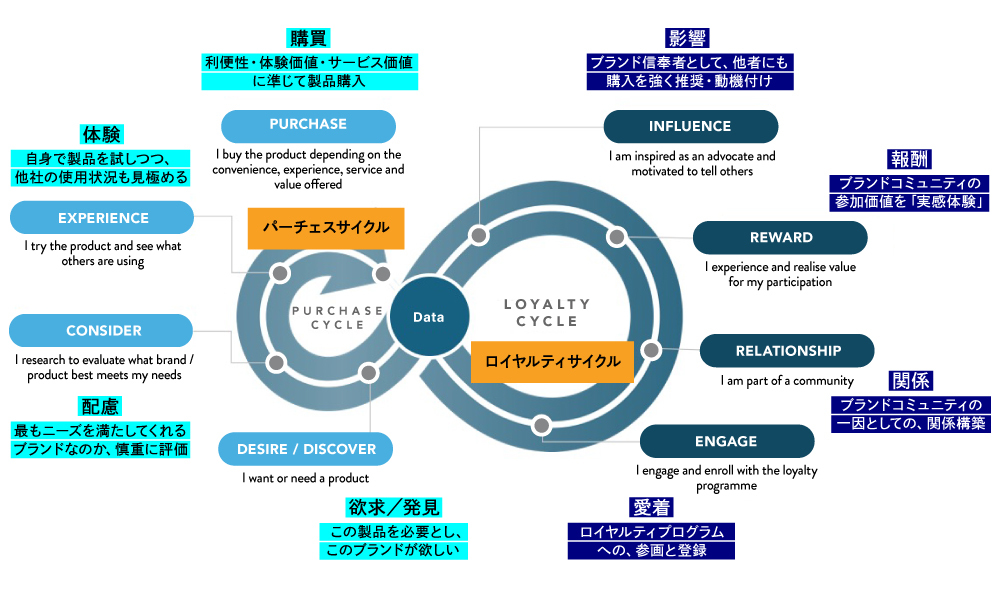
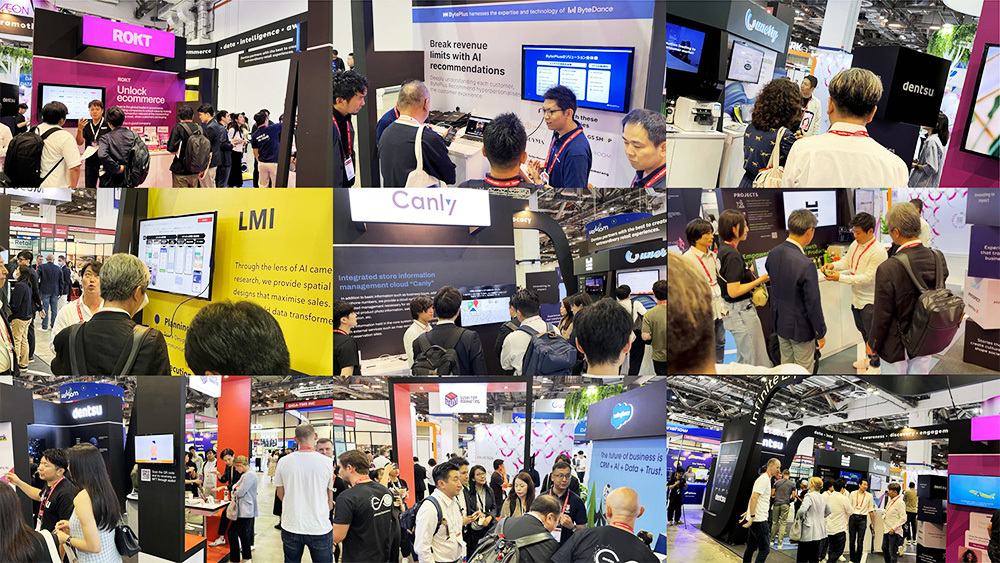
Coincidentally, we exhibited alongside AEON's booth, successfully showcasing a "Japan Presence" in the retail and commerce sector. We attracted significant interest from many visitors, making it one of the busiest areas at the venue.
Comments from the two co-exhibiting companies (Kanri and LMI Group) are also provided below.
LMI Group: Shunsuke Nagai, President and CEO
At our booth, we introduced LMI's ISM Corporation business—which leverages valuable intangible assets called "Real World Data" gathered from our physical stores to provide unique store development—along with the mechanism and implementation cases of our next-generation retail media "AdCoinz®," launched last November.
Allowing me to summarize in my own words, I would like to mention the following four points.
① It was a good opportunity to "rethink retail distribution through NRF." While AI and retail media seemed the main focus of the exhibition, beyond that, I felt LMI has a strong competitive edge in addressing the core question: "② Where are physical stores headed?"
This stems from recognizing that the retail industry is constrained by various preconceptions. LMI's strength lies in using technology and data to scientifically and logically demonstrate these issues and drive concrete improvements. Within this process, "③ Generating Secondary Revenue (by pivoting existing businesses)" occurs, and for our company, AdCoinz represents this.
If we consider this as retail media, wouldn't "④ Hyper-personalization (enhanced by AI)" be key to increasing its value? That's what I believe.
Canly: Taisei Kanda, Business Division Manager
I felt four major trends firsthand: "① Business transformation through AI," "② Realizing customer-centricity," "③ A return to branding," and "④ Accelerating collaboration."
The core premise underlying every presentation was "① + ②" (introducing AI into business enables truly personalized, frictionless customer experiences). Within this evolving landscape, the demand is shifting beyond mere marketing tactics to a fundamental reevaluation and transformation of business models themselves. This raises the question: "How will each business redefine its own value proposition and positioning?" (This relates to point ③).
The messages that "customers now have access to and collect more information, leading them to purchase products at discounted prices, which is putting pressure on retailers" and that "rejuvenating the retailer is crucial" were particularly striking. I interpreted this as suggesting the necessity for retailers to provide new value in order to compete beyond just discounts.
Along the path of creating new added value, collaboration between businesses beyond their own frameworks will accelerate (point ④). This leads to imagining a future where the customer journey expands from "a single company → multiple stakeholders, and ultimately society as a whole." Examples mentioned included supermarkets offering dining experiences and community-focused shopping malls. Experience design premised on collaboration between multiple businesses will likely become central.
In the Japanese market, I believe that "utilizing training data (specifically, collecting high-quality data and managing it holistically)" is a major theme before introducing AI. We will expand our services to contribute in this area.
Just as terms like demand chain, supply chain, and value chain suggest, if we describe pre-COVID marketing as a linear, fixed, and compartmentalized "chain model," then dentsu's "Infinity Circle" – an unbroken, continuous, and perpetually circulating "figure-eight model" – could be called the marketing paradigm shift for the post-COVID era.
Indeed, "the customer's purchasing experience holds infinite possibilities."
The second part will cover perspectives from the keynote (speeches by influential speakers) and store (physical store visits).

Was this article helpful?
Share this article


Newsletter registration is here
We select and publish important news every day
For inquiries about this article
Back Numbers

Author

Hitoshi Kimura
Dentsu Inc.
Retail Marketing Division
Senior Producer