Note: This website was automatically translated, so some terms or nuances may not be completely accurate.
 NRF2024: Latest & Cutting-Edge Reports in the Retail & Commerce Sector [3/7]
Latest U.S. Retail Trends: "Back to Basics with Physical Stores" Emerges as Key Growth Theme
NRF2024: Retail’s Big Show, the world’s largest convention in the retail sector hosted by the National Retail Federation (NRF), which boasts a 113-year history. The three keywords for 2024 are "Begin with Brands," "Start with Stores," and "Play with People." How will traditional retail and marketing change? Mr. Hitoshi Kimura, who supports BX and DX for the retail industry at Dentsu Inc., reports on the latest topics and trends only visible by being on the ground.
*This article is based on content from AdverTimes.
<Table of Contents>
▼Post-COVID America: The "Lifestyle" Coexisting with Physical Stores
▼Start with Stores: Returning to the Essence of the Store
▼The "Lifestyle Retailer" Growing Amid Headwinds by Upholding Founding Principles
▼What Retail Must Deliver Between Three Stakeholders and Three Chains
Post-COVID America: The "Lifestyle" Coexisting with Physical Stores Became Visible
As mentioned in my previous report, the NRF2024 event held January 14-16 revealed three major paradigm shifts signaling the post-COVID era. The first, "Begin with Brands," emerged from Levi's CEO Michel Gass's keynote—marking the resurgence of manufacturers and brands.
The second keyword I'll discuss this time is " Back to Basics: The Store." In New York, now fully post-pandemic, I could once again imagine "life" alongside real, physical stores.
Start with Stores ~ A Return to the Essence of Physical Stores
The Visionary Award 2024, equivalent to the NRF's staple "MVP Retailer Award," was announced during the second day's keynote session. This year, the crown went to Dick's Sporting Goods, the longstanding national chain specializing in sports and athletic goods.
Ed Stack, the company's CEO, emphasized the importance of acting based on their core retail beliefs (emphasizing the importance of following your own heart). A key point he stressed was the importance of customer-centric, experiential store design. This involves significant investment in physical stores – something often avoided by investors focused on shareholder value and in a retail environment heavily shifted from offline to online during the pandemic.
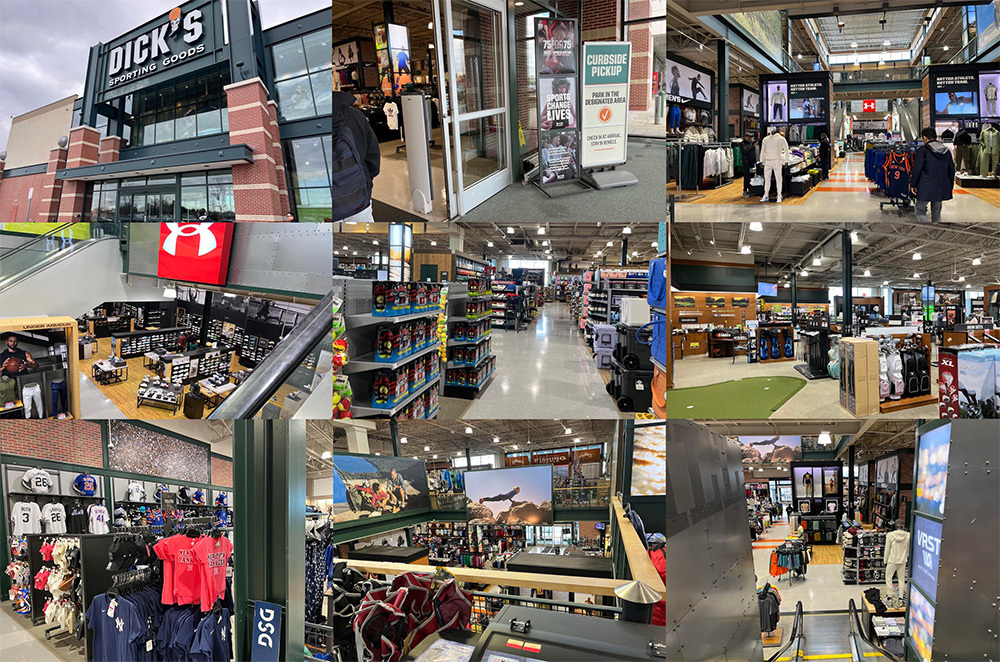
Below, compare two photos of stores within the chain. The top photo (group) shows a typical Dick's Sporting Goods store. You can see its large scale, overwhelming product selection, and standard features like curbside pickup (a service allowing customers to pick up online orders in the store parking lot).
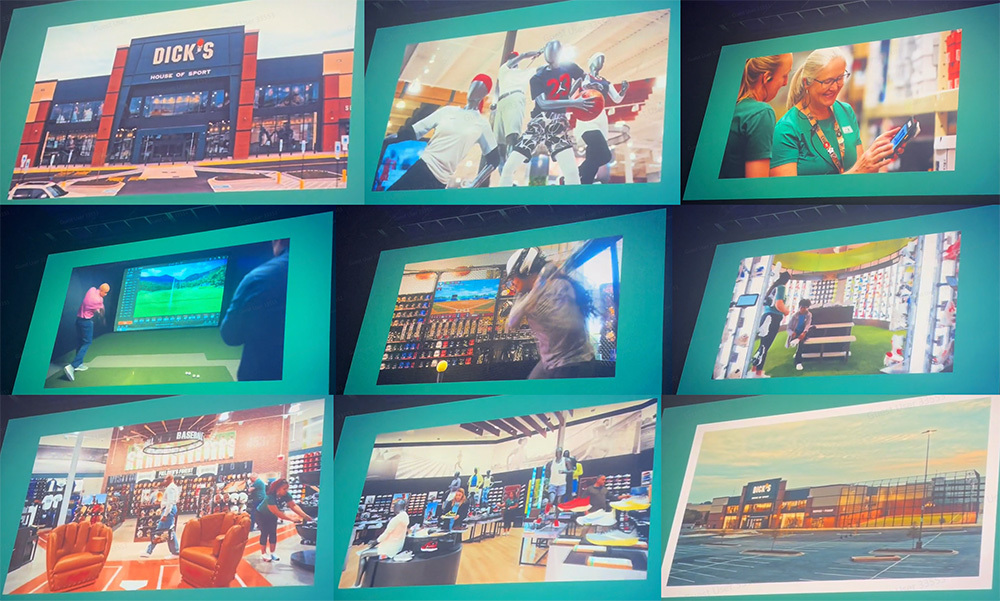
In contrast, the photos (group) below show the new large-scale experiential format, Dick’s House of Sport (12 locations currently open, with plans to add 10 more by 2024). These stores differ significantly from previous formats by investing in large experiential zones like in-store batting cages, golf simulators, and climbing walls, effectively turning them into customer magnets.
Historically, investing in such large-scale experiential zones was often deemed unprofitable at first glance. However, considering Dick's Sporting Goods' selection as an "MVP Retailer," it suggests an era is dawning where building brand value through tangible, experiential elements is essential for retailers—especially those in sporting goods.
This keynote served as a reminder that the field where we "know our customers," "communicate with them," and "gain their support" is the store and the staff within it. Amidst many U.S. retail companies facing the impact of slowing consumer spending due to inflation, it is no exaggeration to call this a unique case study focused entirely on the store, from capital investment to human capital management.
A "lifestyle retailer" that sticks to its founding principles and grows even in headwinds
Additionally, summarizing with "Start with the Store" was Tractor Supply Company CEO Hal Roughton, who took the stage during the Day 3 keynote session. The company has championed its brand slogan "Life Out Here" since before COVID. While this concept remains strong this year, what has significantly changed post-pandemic is the company's interpretation of this purpose.
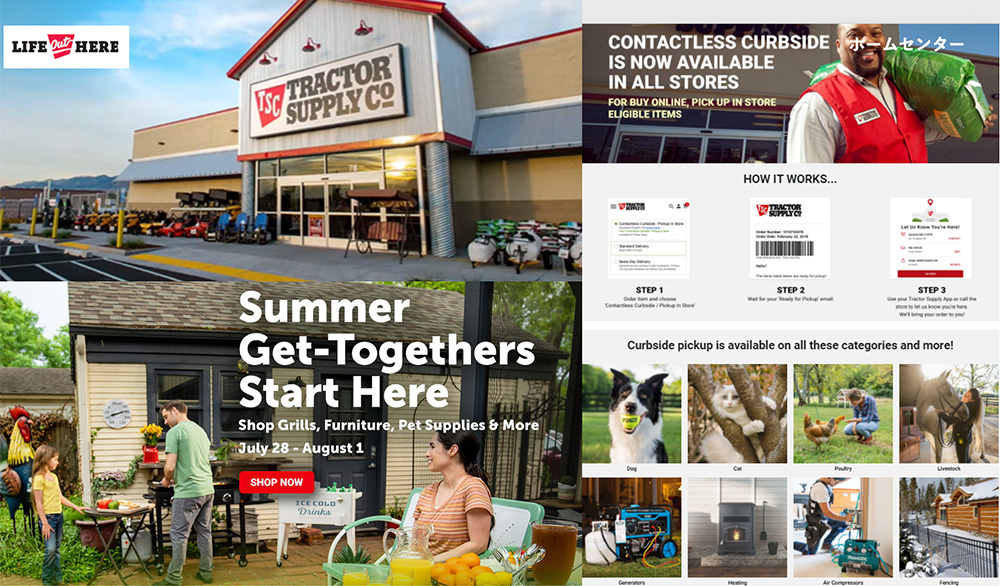
When he took the stage during the 2021 pandemic, his emphasis was on "resilience." Since starting as a catalog seller of farm equipment in rural Tennessee, the company has consistently and carefully tracked shifts in customer needs aligned with the times, pivoting its business scope accordingly.
The Evolution of Tractor Supply Company
① Began catalog sales of agricultural equipment
↓
② Added "livestock feed sales" to its business
↓
③ Added "pet supplies sales" to its business
↓
④ "Outdoor Goods Sales" (Current)
Back then, the appeal was about promoting outdoor living, like "Let's live outside!" But take a look at the homepage top as of 2024.
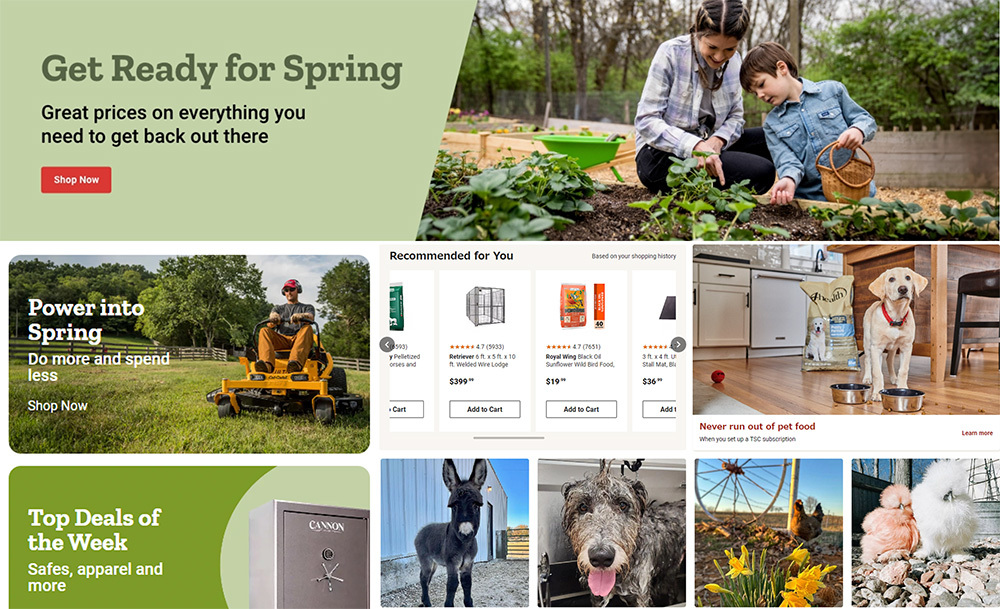
Here, the appeal is the same "Life Out Here" brand slogan, but the context and meaning have shifted to "life there," reflecting the company's stance as a community-focused lifestyle retailer.
He also mentioned examples of store staff assisting a single customer or animal even after hours, and the latest tools like "Hey GURA"※—a generative AI-powered device & communication tool designed to streamline customer interactions among employees.
※GURA: An acronym for Greet the customer, Uncover their needs, Recommend products, Ask for the sale, succinctly representing the company's customer approach.
In this way, by combining the "human touch" seen in communication with store staff with the "tech touch" of AI tools and the like, the company has steadily grown its performance even in an adverse economic environment while maintaining its founding corporate philosophy.
What is required of retail between three stakeholders and three chains
The following is a schematic diagram frequently used by the author.
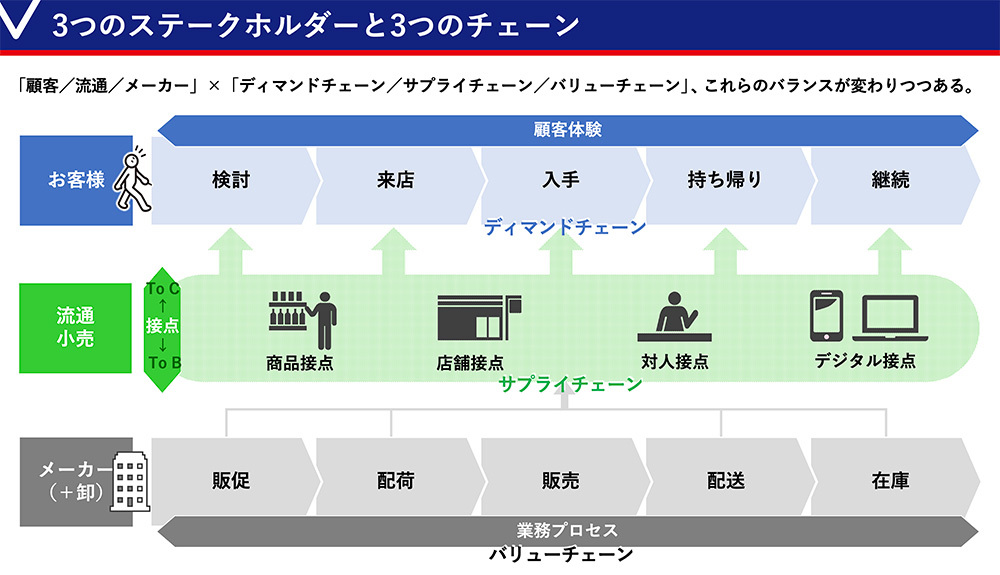
The three stakeholders described here—customers, distributors, and manufacturers (brands)—and the three chains—the demand chain, supply chain, and value chain—represent nothing more than a fixed, linear model that worked when mass marketing was effective, or before the pandemic.
Demand chain requirements evolve with the times, and the supply chain must adapt accordingly. What is required of the distribution/retail sector positioned between them, at times of major societal structural transformation or paradigm shifts, is surely to accurately grasp the context appropriate to the era and to develop communication that positions them as such a brand?
The two companies mentioned earlier are putting this into practice, and I believe this is precisely what resilient retail DX, rooted in the store, looks like. In that sense, at this turning point in the post-pandemic era, new shopping patterns for the post-COVID world will indeed begin right from the store.
So, are manufacturers (and wholesalers) the only players capable of responding to this?
Thinking within the framework of the traditional value chain, perhaps so. But we have already entered an era where brand building can be sufficiently achieved through individual power. All that's needed is a purpose and like-minded allies who share that vision.
Next time, I'd like to explore that spirit further.

Was this article helpful?
Share this article


Newsletter registration is here
We select and publish important news every day
For inquiries about this article
Back Numbers


Author

Hitoshi Kimura
Dentsu Inc.
Retail Marketing Division
Senior Producer