Note: This website was automatically translated, so some terms or nuances may not be completely accurate.
 NRF2024: Latest & Cutting-Edge Reports in the Retail & Commerce Sector [6/7]
Visit APAC, Exhibit NRF! ~We came, we saw, we understood! The Current State of Retail Commerce at NRF APAC and in ASEAN~ (Part 2)
The NRF Retail's Big Show, the world's largest convention in the retail distribution sector hosted by the National Retail Federation (NRF). The first-ever APAC edition was held in Singapore from June 11 to 13. How have the cutting-edge trends in retail commerce changed over the past six months, and with the shift in location from the US to Singapore?
Following Part 1's focus on ① Expo (exhibition content), we now cover ② Keynote (key speaker presentations) and ③ Store (physical store visits).
Keynotes (Notable Speaker Presentations)
In Part 1, we noted that DX in ASEAN retail commerce tends to be limited to physical stores and real people (including both staff and customers), resulting in partial optimization. This same tendency was evident in the keynotes delivered by business leaders operating in the region.
We will introduce "Asia's current position" by touching on aspects of this trend through four representative keynotes. However, we also want to mention here that it was none other than Japanese companies that demonstrated a vision for Retail DX that goes beyond this limited scope.
①OROTON (Jennifer Child, CEO)
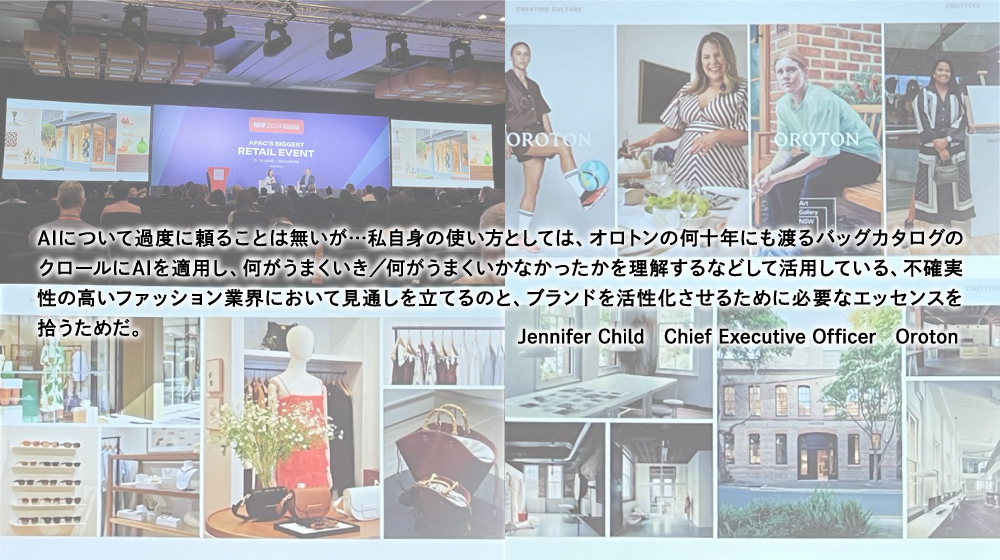
First is OROTON, a luxury brand specializing in leather goods. While perhaps less familiar in Japan, it is an internationally recognized luxury brand originating from Australia with an 80-year history. After going bankrupt in 2017, under the leadership of Jennifer Child, CEO with a consulting background, the brand pursued a revival strategy. Unusually for a luxury brand, this included renting its own products as part of its 'Triple R' strategy: Repair, Re-sell, or Rental. This clearly demonstrates an approach that balances the fast pace unique to the fashion industry with a focus not solely on analytics, but also on creativity.
Particularly noteworthy is its prioritization of growth within its home market of Australia, while also targeting inbound Chinese tourists and the nearby ASEAN markets. This same approach was evident in the keynote presentation by the Thai silk brand Jim Thompson on another day.
They are revitalizing the existing CX by initiating collaborations with cultural icons, such as featuring locally rooted celebrities in advertising and collaborating with local architects on store designs, while also weaving in new store experiences like food and creative activities. The approach involves modernizing flagship stores to serve as spaces where international visitors are drawn as new tourist landmarks, while domestic audiences gain deeper understanding of the brand's history and heritage. This rebranding for the 21st century is driven by a new purpose.
② FairPrice Group (Vipul Chawla, CEO)
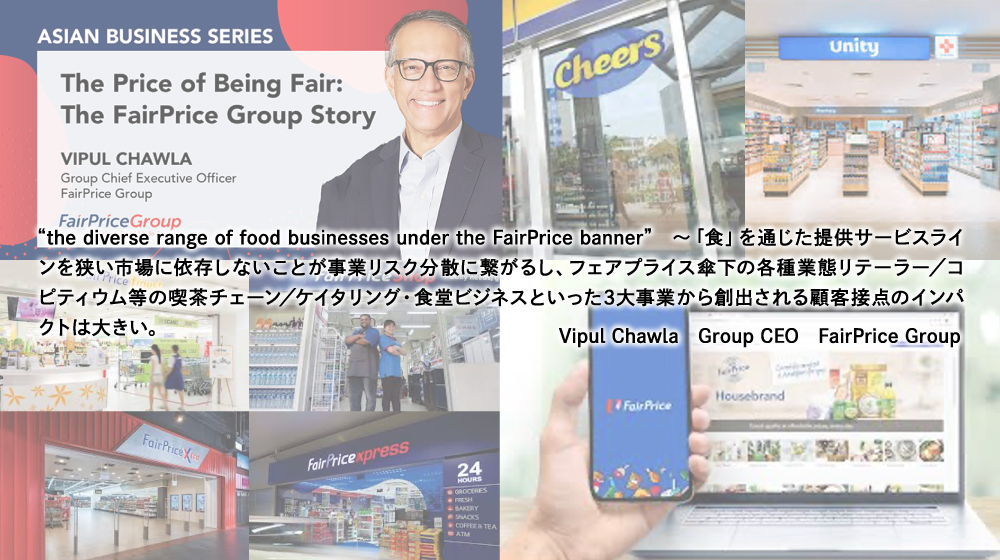
FairPrice Group, Singapore's national retailer, is a conglomerate encompassing numerous food and dining-related businesses beyond its core supermarket operations, including cafes and food centers. CEO Vipul Chawla states, "As Singapore's largest retailer, we leverage technology and data to deepen our understanding of consumer needs, delivering seamless convenience and accessibility that anticipates our customers' shopping habits and preferences. Digitalization underpins our competitiveness, effectiveness, and efficiency as a retail distributor. In recent years, it has been the driving force behind our innovative initiatives to integrate and rebuild all business formats under the group umbrella, in addition to every contact point. Furthermore, we have been particularly challenging ourselves with experiential stores in recent years."
"The diverse range of food businesses under the FairPrice banner"—He understands better than anyone that diversifying service offerings through food, independent of narrow markets, leads to business risk dispersion. He also recognizes the significant business impact generated by customer touchpoints created across these multiple ventures. This insight comes from building a major business here in Singapore, a nation that has achieved remarkable economic development. It may not be an exaggeration to say that FairPrice is the company that best embodies the principle: "Whoever controls food (including restaurants) controls the retail distribution industry."
③Central Retail Corporation (Panchalee Weeratammawat, Chief People Officer)
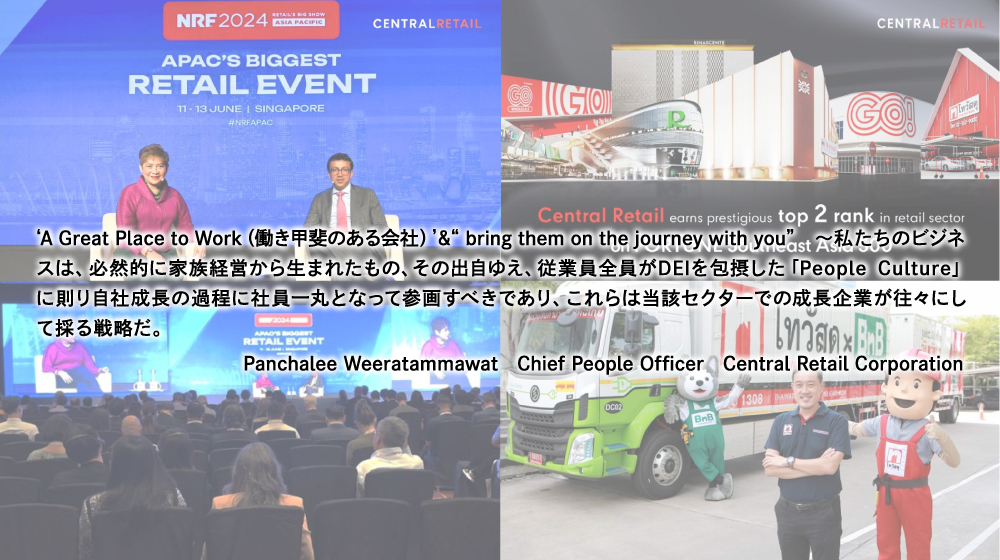
The Thailand-based Central Group is one of Asia's leading retail conglomerates, operating over 1,700 department stores and supermarkets across Vietnam, Italy, and other countries. It also collaborates locally with Japanese companies like FamilyMart.
Chief People Officer Panchalee Weeratammawat advocates for 'A Great Place to Work,' stating, "Our business inherently stems from family management. Therefore, every employee must adhere to a 'People Culture' that embraces DEI, and each individual should participate wholeheartedly in the company's growth process." She places this at the core of the growth strategy. Meanwhile, looking ahead to more multinational overseas expansion, she emphasizes the importance of practicing corporate management guided by two "approaches"—results-oriented and behavior-oriented—while considering three "cultures": organizational culture, ethnic culture, and national culture.
The company's bold declaration of a family-run management style exceeding what was seen in Japanese companies of yesteryear stood out distinctly at the NRF venue, dominated by digital technology, data, and Retail DX. Yet, it was striking how many attendees nodded in agreement and understanding.
④AEON (Vice President Yuki Hanyu and 3 others)
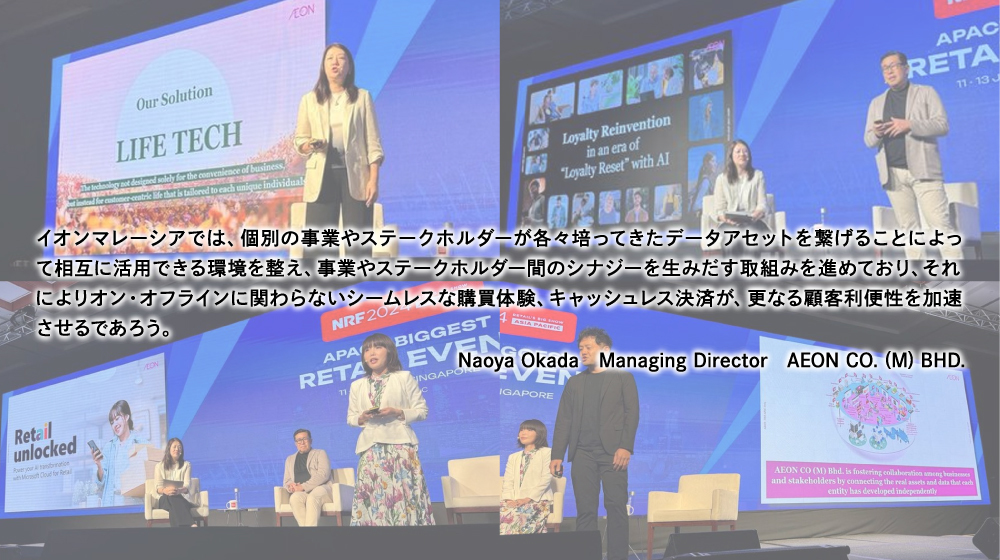
While AEON Group, originating from Japan, has no presence in mainland Singapore, its keynote focused on its expansion across ASEAN countries was arguably a highlight of this session. They emphasized two keywords: "LIFE TECH" and "Warm Colorful Experience." I interpret this as the form retail DX should take: rooted in humanity, supporting employees, and bringing color and warmth to customers' lives. Amidst the prevalence of impersonal terms like "data" and "technology," it was deeply moving for me as an attendee to see this Japan-standard retail DX—which also shines a light on physical [stores] and real [staff]—presented and accepted on an international stage.
Joining Mr. Hanyu on stage, Mr. Naoya Okada, President of AEON Malaysia, added the concept of "place (≈ local community)" to this, introducing a third keyword: "AEON Living-Zone." His remark that "we've become so deeply rooted in the community, often mistaken for a local company, that we've built strong connections with many customers" was also highly memorable.
Mr. Shinji Okuyama from Google and Ms. Tomoko Mikami from Microsoft also joined the discussion, energizing the stage. Mr. Okuyama, using the phrase "An Era of Loyalty Reset," discussed the accelerated complexity and uncertainty of the customer journey in the post-COVID era. Referencing the figure "74%," he explained the risks and opportunities associated with the most frequently used retailer being switched to the next-best brand. Ms. Mikami, alongside Microsoft's vision of "Retail Unlocked," stressed the importance of EX (Employee Experience) in maximizing CX strengths. She argued that DX should aim to create an environment where digitally replaceable tasks shift to automation, allowing focus on maximizing the unique value only humans can deliver.
A common thread emphasized throughout was the evolution of AI as the foundational technology. How will new developments unfold at NRF2025, scheduled for January 12-14, 2025? We will continue to watch closely.
Store (Physical Store Inspection)
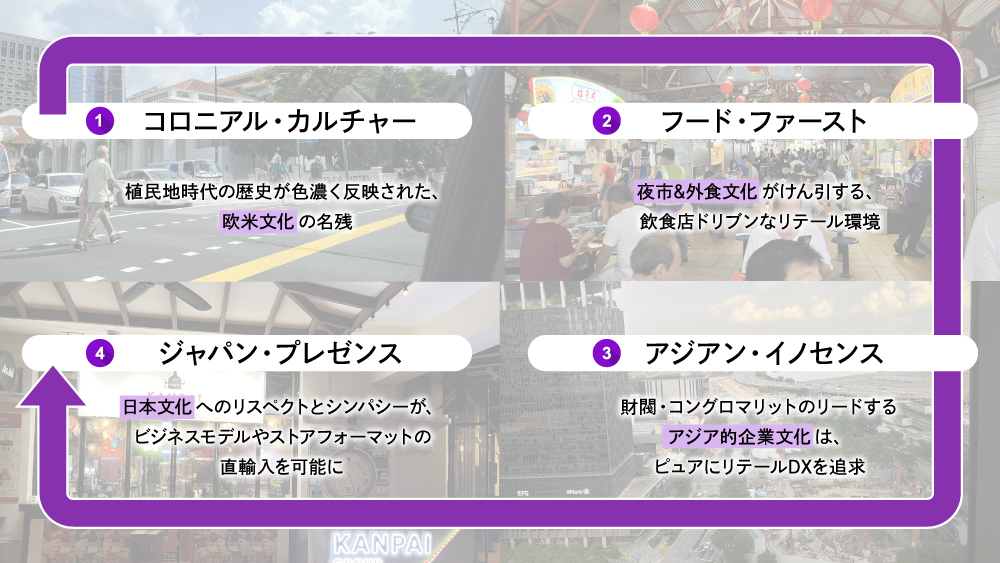
ASEAN possesses a unique culture blending long history, diverse ethnicities, and multiple religions. Consequently, while lacking the sheer volume and scale of New York, Singapore's retail and commerce landscape is remarkably varied. The following diagram provides an overview of this diversity.
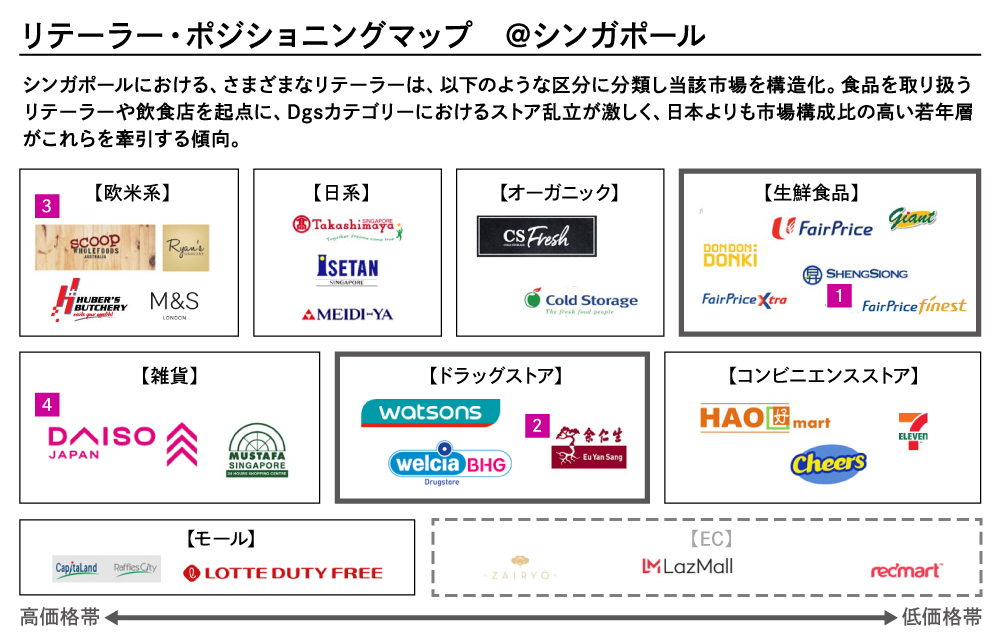
A key characteristic reflects the market structure, where the proportion of young consumers with strong purchasing power is higher than in Japan. This has intensified competition not only in supermarket formats like food and groceries (including restaurants) but also in the drugstore sector focused on beauty and health. From this landscape, we highlight four distinctive retailers.
①FairPrice Finest
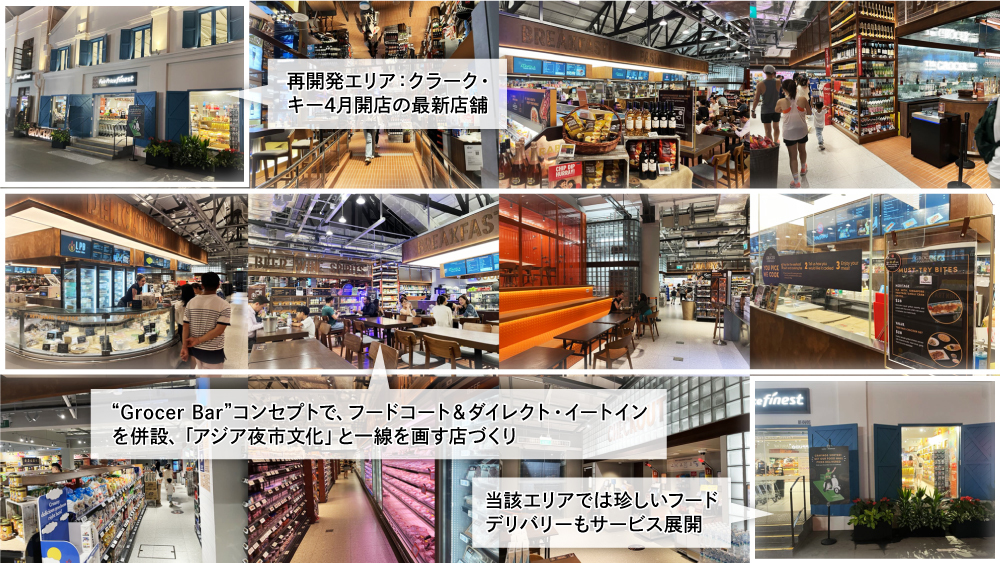
A supermarket chain originating from NTUC (The National Trades Union Congress), an organization similar to Japanese co-ops. It offers higher-quality products compared to other formats. The operating entity, FairPrice Group, opened a new experiential eat-in style store in the Clarke Quay area, known for its night market and dining culture. Designed around the "Grocer Bar" concept, it offers a dining experience distinct from traditional hawker centers, which are clusters of outdoor food stalls.
② Eu Yan Sang
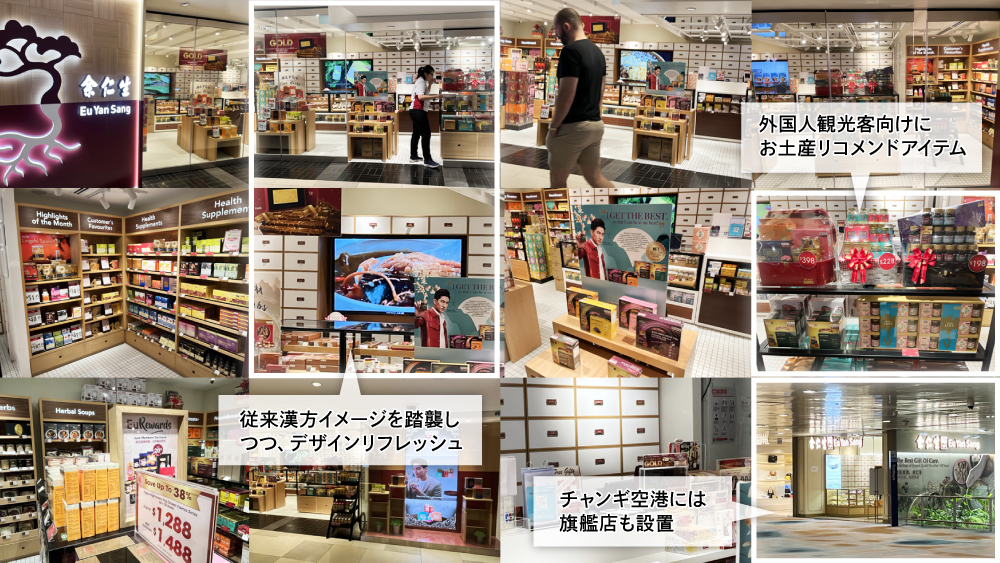
Founded in 1879, Eu Yan Sang is Southeast Asia's largest traditional Chinese medicine manufacturer, operating over 170 stores primarily in Singapore, Hong Kong, and Malaysia. Rohto Pharmaceutical and Mitsui & Co. acquired it in April 2024 through a special purpose company (SPC). Riding the global health trend following the COVID-19 pandemic, they are focusing on disease prevention and expanding product sales. New initiatives are underway, such as incorporating modern design elements while maintaining the traditional brand image.
③SCOOP Wholefoods
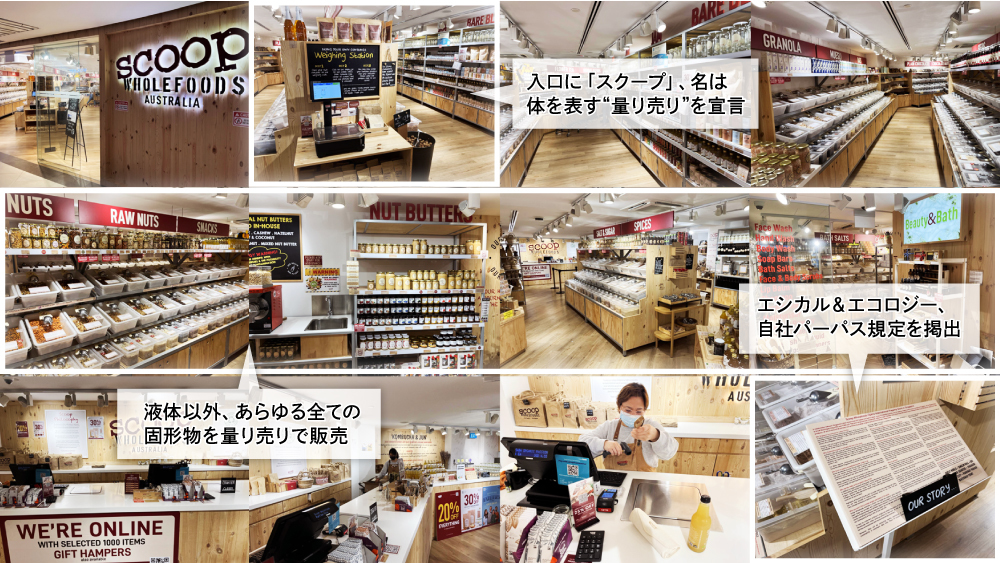
An Australian-born organic bulk food shop that entered Singapore in 2019. All products—organic, gluten-free, vegan—and packaging used in-store are eco-friendly, reflecting a commitment to health and the planet. Despite the market perception that health-conscious products are expensive, it enjoys strong, enduring support by allowing customers to buy exactly what they want, in the exact amount they need, without waste and at a good value. Seeing virtually all solid items (except liquids) sold by weight, one could feel the brand's thorough stance right from the storefront.
④DAISO
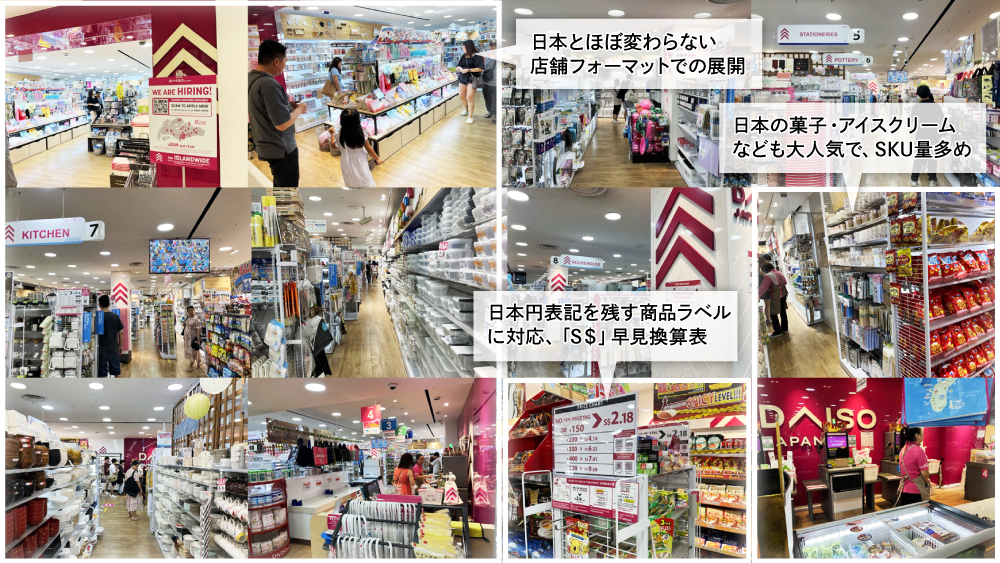
The well-known Japanese-founded 100-yen shop. In May 2022, it launched its first overseas expansion at Jurong Point Mall, simultaneously opening three stores on one floor: the 100-yen shop "DAISO," the 300-yen shop "Standard Products by DAISO," and "THREEPPY." Within Singapore, the Daiso Sangyo brand now operates around 50 stores. The store layout closely mirrors the format found in Japan.
Four Key Points in ASEAN's Retail Commerce Scene
In addition to these four stores, and based on the keynote points from the previous section, we believe the ASEAN retail commerce scene can be discussed through four major points.
1: Colonial Culture
"Tradition vs. Modernity (Balancing a Brand's Past and Future)" Even brands originating in ASEAN have roots in Western cultures. These companies are characterized by holistic, unbiased approaches to both marketing and sales promotions.
2: Food First
"Whoever controls food (and drink) controls retail distribution."
Within the global market, the ASEAN market, including Greater China, embodies this most profoundly. This includes not only online/offline retailers and manufacturer brands but also food service operators.
3: Asian Innocence
"Asia's retail DX advances with social rationality first."
Asia, with its diversity of ethnicity, culture, and religion, and its rich history, tends to have numerous stakeholders. The "conglomerate model driven by zaibatsu" holds a competitive advantage.
4: Japan Presence
"Japan's retail style is directly importable & immediately implementable"
While offering significant opportunities and affinity for ASEAN customers—who represent the majority of the global consumer market—risks of losing out to local players in business negotiations are also evident.
In two parts, we've covered the NRF Retail's Big Show APAC and the emerging trends in ASEAN retail and commerce observed there. The 115th NRF will be held in New York from January 12-14, 2025, and the second NRF APAC will take place in Singapore from June 3-5. We intend to continue our fixed-point, time-series observation of these events to discern the broader trends.

Was this article helpful?
Share this article


Newsletter registration is here
We select and publish important news every day
For inquiries about this article
Back Numbers


Author
Hitoshi Kimura
Dentsu Inc.
Retail Marketing Division
Senior Producer