Note: This website was automatically translated, so some terms or nuances may not be completely accurate.
 Big Data Utilization Methods for Seizing Business Opportunities [2/2]
Will Cars Become Infrastructure? The Future of Mobility Services and the Fate of Data in the Web3 Era
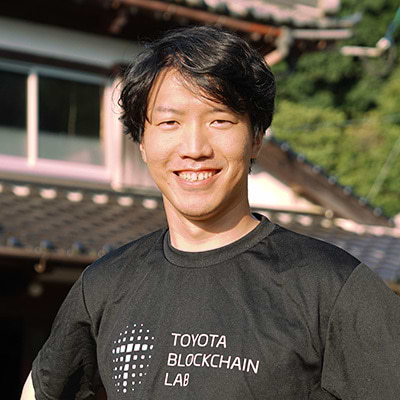
Ryuhei Kishimoto
Toyota Financial Services Corporation

Shintaro Takamatsu
Dentsu Inc.
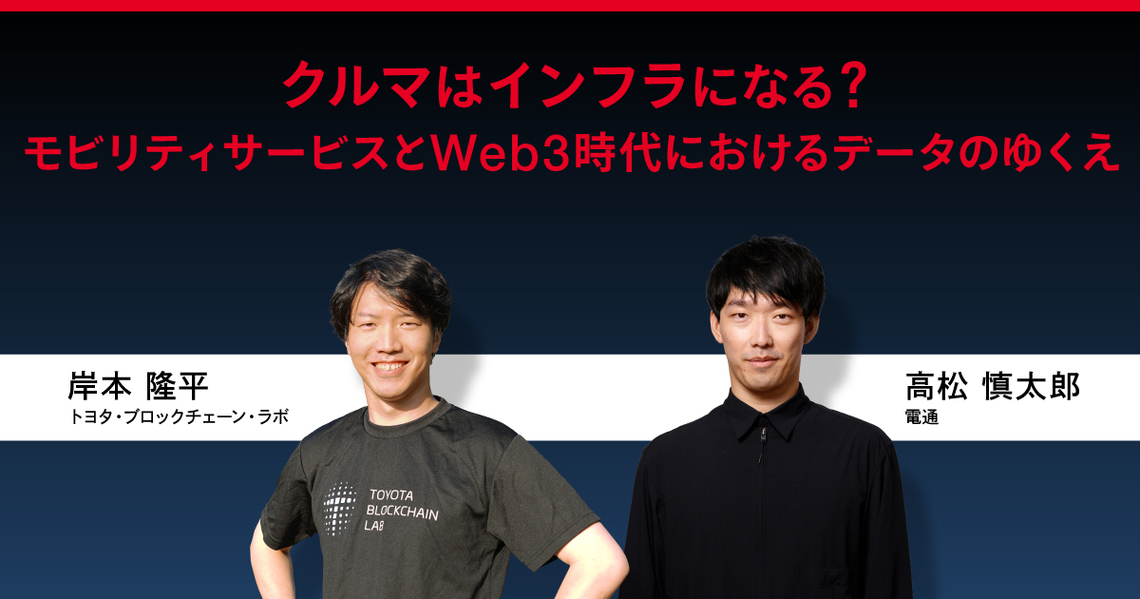
As the automotive industry advances toward "digitalization and service-oriented transformation," what future does Toyota Blockchain Lab envision?
The tech paper " How to Introduce Mobility into the Public Blockchain " published by Toyota Blockchain Lab attracted attention not only from the automotive industry but also from various other sectors.
In this interview, prompted by the tech paper's release, Dentsu Inc.'s Data Marketing Division's Shintaro Takamatsu spoke with guest Ryuhei Kishimoto of Toyota Blockchain Lab about the future of the automotive industry and the transformation brought by Web3 and blockchain.
<Table of Contents>
▼Cars: From "Personal Property" to Society's "Public Goods"
▼User Data Management in Japan Shifts to a "Hybrid Model"
▼Will Web3 Redefine Society and Trust?
Cars: From "Personal Property" to Society's "Public Goods"
Takamatsu: I'm Takamatsu from Dentsu Inc.'s Data Marketing Division. Today, we'll discuss mobility services and data handling, incorporating Web3 concepts, with Mr. Kishimoto from Toyota Blockchain Lab.
Kishimoto: Nice to meet you. Toyota Blockchain Lab (TBL) is a cross-group virtual organization established in 2019 to promote blockchain utilization and share insights within the Toyota Group. While our initial primary use case focused on data traceability in the supply chain, we have recently been actively engaging in the Web3 domain as well, in line with advancements in public blockchain technology and use cases.
Takamatsu: TBL gives the impression of being very active in the Web3 space, such as publishing tech papers. Could you tell us why you are focusing on this area?
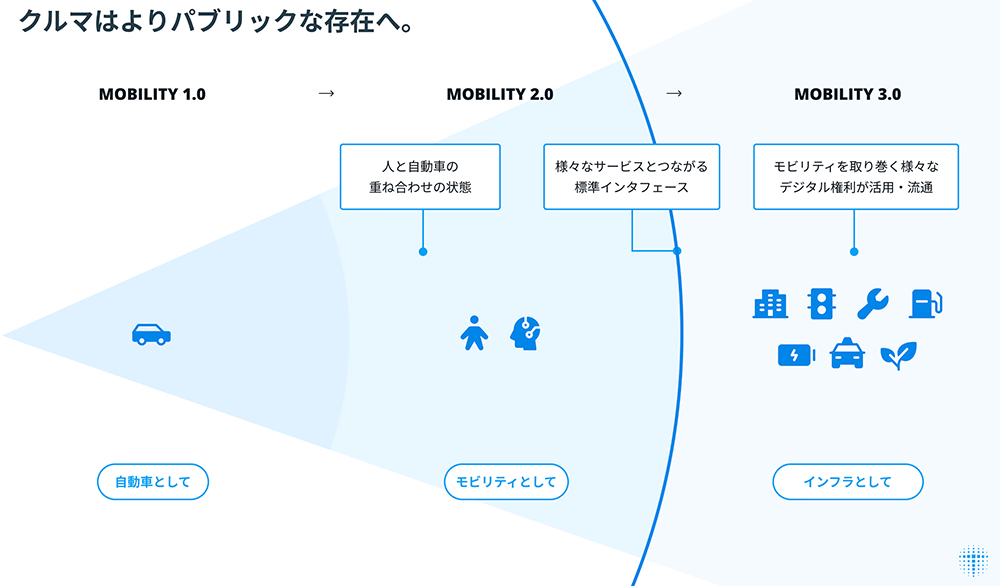
Kishimoto: We have grown by mass-producing and selling automobiles, following the so-called economies of scale. Going forward, it's not just about selling products; the concept of serviceization is becoming particularly important. We are gradually shifting from the traditional concept of "owning" a car towards "using mobility as a service," such as sharing or ride-hailing.
Takamatsu: So service-oriented mobility means it will function as a shared service rather than being a physical possession for each individual. How specifically is this progressing?
Kishimoto: Already, many companies are providing services where cars are "shared" through car-sharing and ride-hailing. In other words, cars are functioning as "mobility services."
Furthermore, as autonomous driving technology advances, the car itself could shift into becoming shared "mobility infrastructure" for society as a whole. This means autonomous vehicles will become networked and utilized.
Takamatsu: It feels like we're gradually approaching an era where self-driving cars, which don't require human operation, will be used purely as a "means of transportation."
Kishimoto: That's right. Cars will become infrastructure for mobility, accessible to anyone whenever needed, more easily than today. However, this represents the ultimate destination of highly advanced autonomous driving. For some time, we'll likely be in a transitional phase where "privately owned cars" and "socially shared cars" coexist.
Takamatsu: I see. So, the understanding is that this will change gradually. You mentioned that as autonomous vehicles become fully service-oriented and mature in the future, they will likely be shared across society. If cars come to be treated as a kind of "public good" in this way, will the very concept of personal car ownership disappear?
Kishimoto: That's the broad direction, I believe. However, even in a society where cars become infrastructure, affluent individuals and car enthusiasts will likely continue to enjoy privately owned vehicles as a hobby. For us, the goal is to focus on diversifying mobility services while coexisting with those who cherish the "joy of driving" and the "pleasure of owning a car."
https://www.toyota-blockchain-lab.org/ja/library/how-to-introduce-mobility-into-the-public-blockchain
User Data Management in Japan Shifts to a "Hybrid Model"
Takamatsu: That's very interesting. Moving on to a topic that leans a bit more toward Web3, I'd like to ask about the management and operation of user data collected as these services advance.
Currently, not just automobiles but everything is becoming digitized and connected to the internet, enabling the collection of vast amounts of user data at various touchpoints. Regarding how user data is utilized, Europe, the US, and China seem to be taking different approaches. How do you think this will develop in Japan?
Kishimoto: As you mentioned, there are significant regional differences in data management. Europe strongly embraces a self-sovereign approach, believing "personal data should be entirely self-managed." In contrast, the US generally follows a policy where "companies manage and maximize data based on market forces." China takes an approach where "the state strongly controls data."
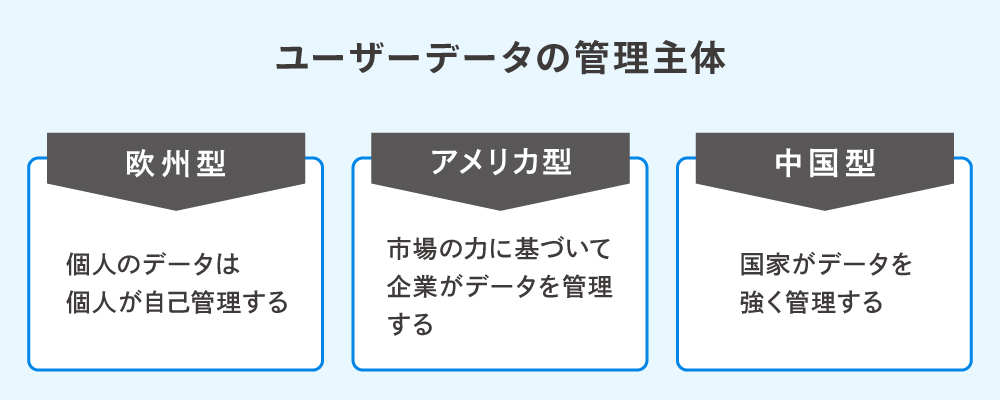
Takamatsu: Which of these three approaches do you think Japan will lean toward?
Kishimoto: I believe Japan will adopt a balanced approach incorporating elements from all three. While a purely self-sovereign approach like Europe's, where individuals fully control their own data, might be challenging, some degree of self-management will likely be possible. Realistically, however, businesses and government will need to manage certain data.
Takamatsu: So in Japan, it will be a "graded management" approach involving various managing entities—users themselves, businesses, local governments, and regions. What do you think is necessary to effectively realize such a data management framework?
Kishimoto: First, it's crucial that users providing data feel they can "trust the managing entities enough to entrust them with their data." This trust must be built not just on the entities' concepts or brand image, but also through concrete incentive mechanisms. Furthermore, mechanisms are needed where data providers aren't merely "suppliers," but can participate in the management process as stakeholders.
Takamatsu: I see. That might also apply to digital advertising. Currently, the incentives users receive for providing data to companies are limited to "service usage" and "ad optimization." By allowing users to participate in the data management process as stakeholders, I believe it could create a new, more satisfying user experience.
I believe the complexity of data management will only increase alongside technological evolution. How do you think the Web3 concept can contribute to solving this?
Kishimoto: Compared to traditional centralized networks, Web3—often discussed as a decentralized network—holds greater value as a "movement" or "narrative" that provides a common foundation and standards transcending national and regional boundaries, rather than as a specific technology.
For example, the concept of a "public blockchain" – a network anyone can openly participate in – provides a "minimum common technical foundation" within the constraints of national and international laws. Establishing such a common foundation is what finally creates the groundwork for individuals and businesses to treat diverse digital data as assets.
However, the rules established and how they are operated on this common foundation are left to the discretion of each country and entity. For digital data to be recognized as an "asset," both wheels are necessary: the "minimum common foundation brought by Web3 technologies like blockchain" and the "legal regulations established by each country and entity."
Takamatsu: I see. The phrase "minimum common technological foundation" is very clear. So, blockchain isn't just a "closed system" for optimizing specific systems; its role as an "ecosystem" connecting different entities and nations is crucial.
Kishimoto: Exactly. Viewing blockchain solely as individual closed systems overlooks its essential value. Rather, its meaning arises when specific systems gain compatibility by functioning as an ecosystem connecting disparate systems.
Furthermore, where people place their trust in which network depends on culture, customs, and psychological factors. Trust is inherently subjective, but this also means there is greater design freedom. And the results of that design can be objectively observed through the "fluidity" of information—that is, "where and what kind of data gathers"— .
Will Web3 redefine society and the nature of trust?
Takamatsu: The idea that fluidity visualizes trust is very intriguing. Until now, discussions about Web3 often seemed overly focused on "decentralization." While decentralization offers advantages like transparency and reliability, the efficiency and responsiveness enabled by centralization cannot be ignored.
Ultimately, the crucial perspective is how to design and utilize these elements according to purpose. The diversity of such designs generates liquidity, which I believe could become a means to visualize forms of trust, rather than merely indicating active trading.
Moreover, this discussion extends beyond mere data markets; I sense its potential to spread across the entire "asset market" where valuable information is treated as an asset.
Kishimoto: Precisely. Brands and narratives in this new era can rely on decentralization, or alternatively, choose to bear the risks of centralization to reduce costs. Depending on the system chosen, liquidity will follow as the market's response.
Takamatsu: Finally, let's return to the perspective of the car. How will the relationship evolve between the service-oriented mobility and the networked society brought by Web3?
Kishimoto: Behind every car on the road lie roads, gas stations, townscapes, repair shops, and local communities—supported by the hands and aspirations of countless people. Cars are, in fact, already "infrastructure for everyone," sustained by the involvement of many in society.
That's precisely why I believe the ideal approach is not to confine this infrastructure within a closed system, but to manage it as an "open network" supported by numerous stakeholders. Blockchain technology could potentially be utilized here. We aim to realize such a natural and sincere mobility network.
Takamatsu: Thank you. I feel that across any industry, building a network involves many considerations—data handling, stakeholders, incentives for participants, and more. Ultimately, to get users to provide their data, a more trustworthy managing entity is required. Thinking this way, Web3's value extends beyond mere technology; it holds the potential to redefine the very foundations of society and the nature of trust itself.
Kishimoto: Yes, I view Web3 as the very foundation for co-creating new frameworks of value and trust. In that sense, I believe what the future demands is not a single platform, but a flexible system that embraces diverse choices.
Takamatsu: Thank you for sharing your valuable insights today.
At Dentsu Inc. web3club, we continue to work alongside clients who wish to implement initiatives in the Web3 space or develop communication strategies and solutions utilizing NFTs and FT. If you've read this article and are interested, please feel free to contact us.
Email: web3club@dentsu.co.jp

Was this article helpful?
Share this article


Newsletter registration is here
We select and publish important news every day
For inquiries about this article
Author
Ryuhei Kishimoto
Toyota Financial Services Corporation
Shintaro Takamatsu
Dentsu Inc.
Data Marketing Center