
Note: This website was automatically translated, so some terms or nuances may not be completely accurate.
 A New Perspective on Pricing. Marketing for Growth with Pricing [2/2]
What to Do? "Pricing" in an Era of Price Increases
With rising costs for raw materials, labor, and more, prices for goods are increasing these days. Consumers have become more price-sensitive and are considering the value of products and services more than ever before.
This article explores contemporary pricing strategies while detailing the background behind the development of Dentsu Inc.'s pricing analysis service " Marketing For Growth With Pricing " (MGP), launched in January 2025.
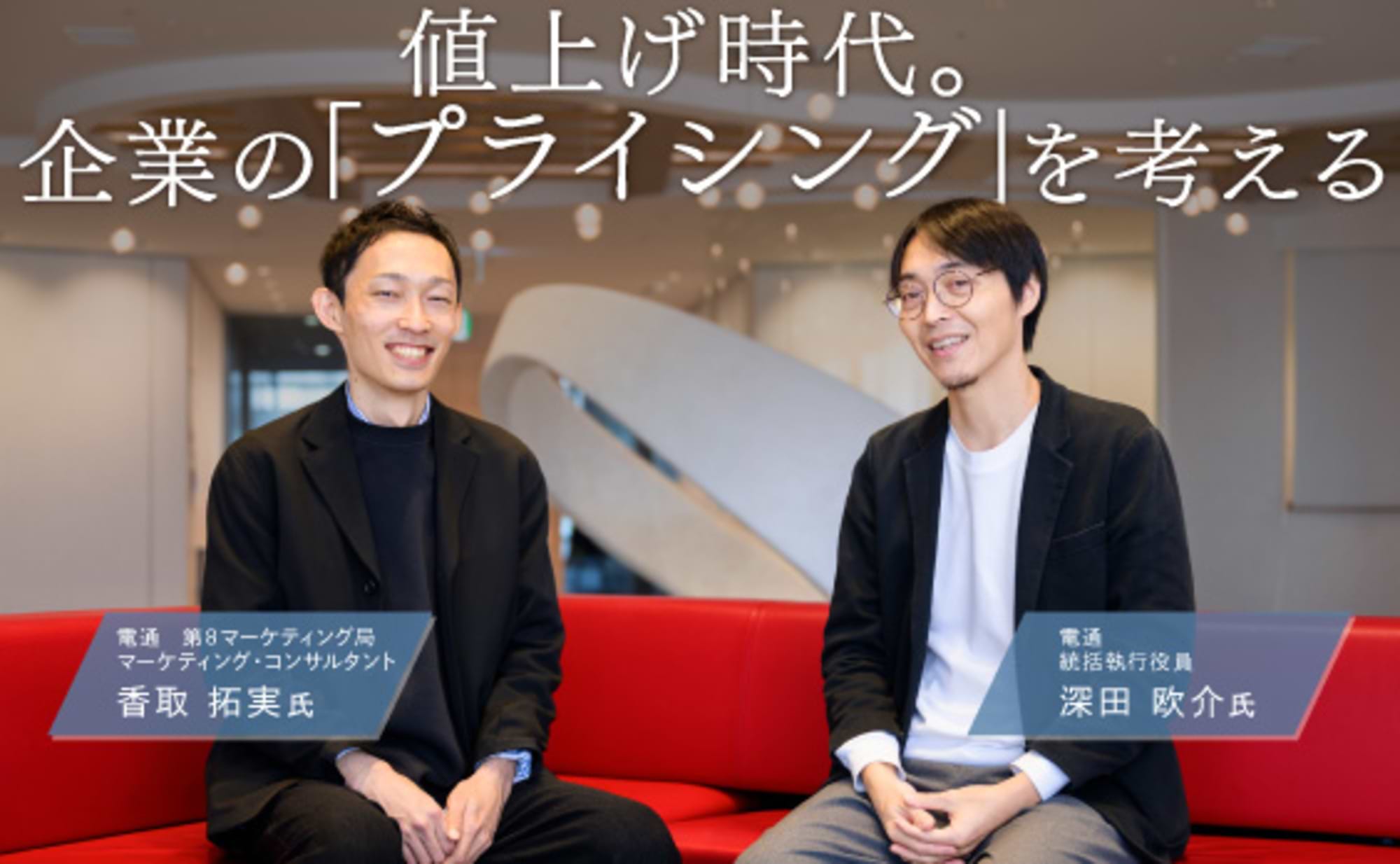
We exchanged views with Dentsu Inc.'s Managing Executive Officer, Mr. Osuke Fukada, who has long been involved in supporting clients' marketing efforts, and Mr. Takumi Katori, a member of the MGP development team. Moving beyond "cost and profit-based pricing," they discuss the pricing support MGP aims to provide: "value-based pricing for products and services."
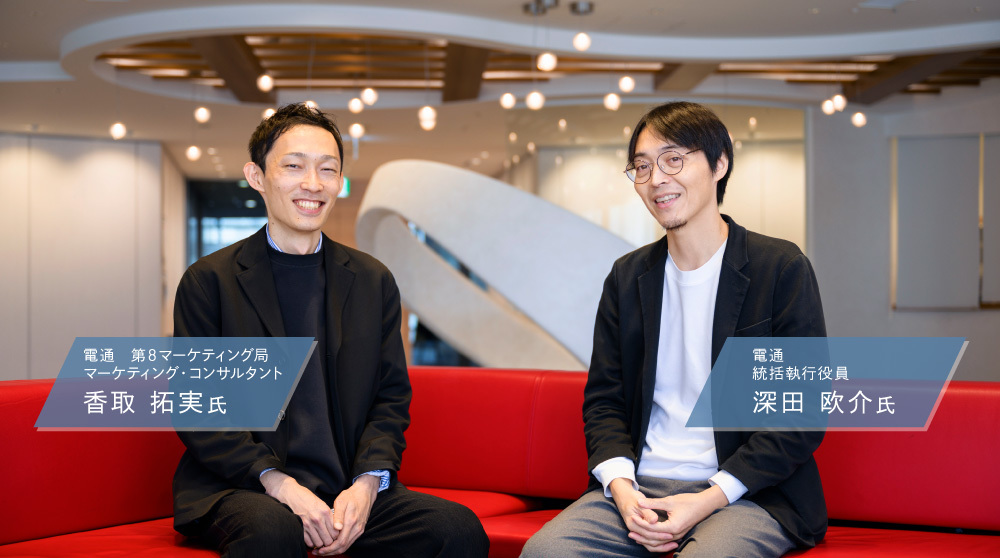
What's Needed Now: "Value-Based Pricing"
Fukada: Before discussing MGP, I'd like to consider the challenges of pricing in today's era. First, Mr. Katori, you were involved in ticket pricing strategy at your previous job at a theme park operator. Could you briefly explain what that pricing strategy entailed?
Katori: My assignment to the marketing section at my previous job coincided with a major shift in theme park ticket pricing. We reviewed the previously uniform ticket prices and introduced a "variable pricing system" for the first time, adjusting prices based on demand.
After the pandemic began, attendance restrictions made it difficult to increase visitor numbers and maximize overall revenue. This heightened the need to optimize revenue per customer. Ticket prices constitute the largest portion of that revenue, and as someone directly involved, I experienced firsthand how they became an even more critical factor for profit generation.
Fukada: How effective was the variable pricing system?
Katori: We adjusted prices for peak, shoulder, and off-peak seasons. We continued to review prices based on societal conditions and the experiential value of attractions, enabling appropriate operations. We recognize this outcome stemmed from meticulous research and analysis addressing various concerns, such as "Can we perform accurate price analysis?" and "Will consumers accept the new pricing?"
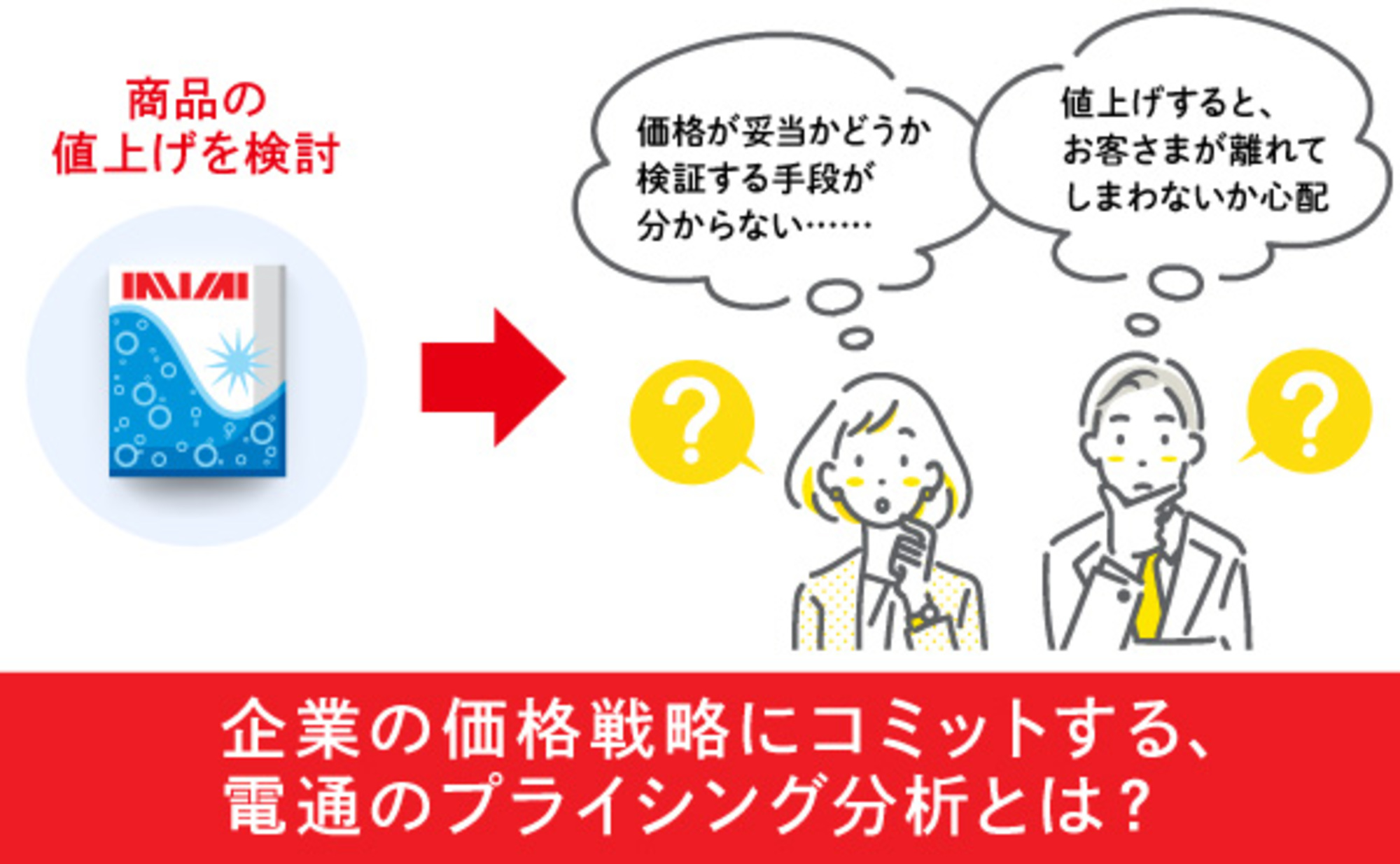
Fukada: I see. More companies are adopting variable pricing, like in entertainment, tourism, and railways. "Price" is one of the four marketing elements (product, price, place, promotion), and right now, every company faces major challenges. Unprecedented cost increases, like rising raw material prices, mean they're grappling with questions like: "How can we raise prices?", "How much is reasonable?", and "Is there a way to avoid raising them?"
Katori: You're absolutely right. In the past, it wasn't uncommon to set prices by simply passing on increased costs. However, today's market is flooded with products and services tailored to consumers' specific, detailed needs. This has led consumers to consider the value of products and services more seriously than ever before. In other words, I strongly feel that "value-based pricing" is becoming increasingly important in corporate marketing.
Fukada: Dentsu Inc. has long supported the marketing activities of various companies. Currently, we are transitioning from being an advertising agency to becoming an Integrated Growth Partner—a partner that broadly supports a company's business growth. In the marketing domain, our focus has traditionally been on promotion support. We wanted to leverage the resources cultivated there for pricing as well. When I heard about the MGP initiative from you, Katori, I thought, "This is it!"
Katori: We conceived MGP because we wanted to go beyond the relatively seller-centric approach to pricing that has been common until now. We wondered if we could help create "comfortable" pricing from a human-centric perspective.
Conducting unprecedented price research: Investigating "the price consumers recall"
Fukada: For Den-tsu News readers, could you briefly recap the key points of Dentsu Inc.'s pricing analysis service, MGP?
Katori:As mentioned in the previous article, there are three main points.
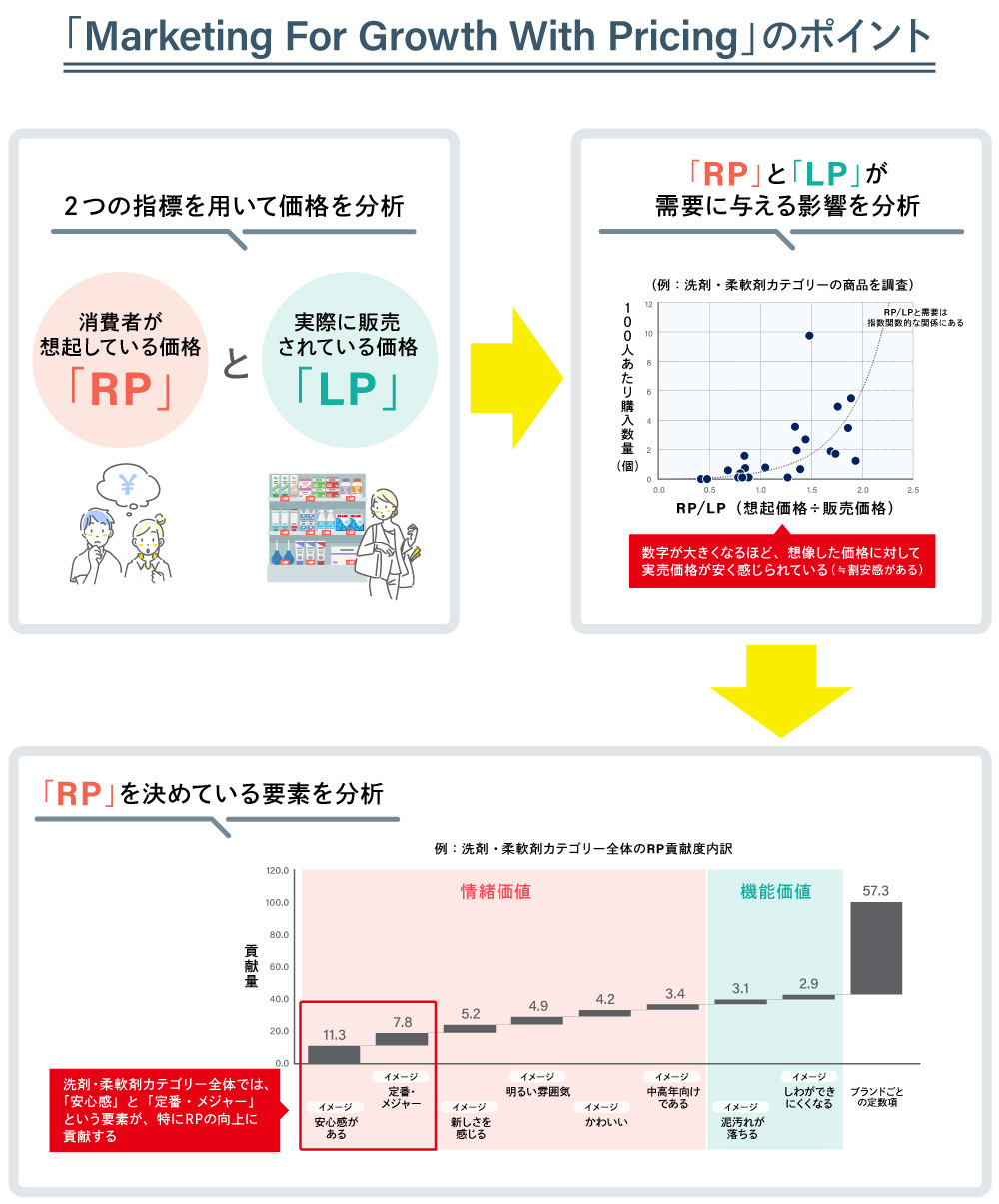
First, it allows comparison of the "Recall Price (RP)"—the price consumers recall—and the "List Price (LP)"—the actual selling price—for individual brands. Visualizing this gap reveals the potential for adjusting your brand's selling price.
Second, by cross-referencing "Recall Price (RP)" with actual purchase data, you can predict how changing the selling price will impact demand and sales.
Third, it visualizes the specific values contributing to the "Recall Price (RP)". Products have "emotional value" and "functional value", which break down into more granular values. Which values consumers strongly perceive differs by brand. We believe clarifying this enables convincing price increases.
Fukada: Focusing on the "price consumers recall (RP)" is a major feature of MGP, isn't it?
Katori: We believe this sets us apart from previous price surveys and analyses. Surveys asking "How much would you pay for this product?" have existed before. However, in today's era of continuous price increases, we anticipated responses like "Of course, cheaper is better," making appropriate price design difficult.
Ultimately, we want to clarify "what value the product's price is tied to." To do that, we felt it necessary to investigate the value consumers perceive the product has and the price they recall. I believe this type of price survey is unprecedented.

Price increases also demand strong communication skills with consumers
Katori: When considering how much to raise our own product prices or designing options like seasonal price changes, comparing with competitors is a crucial factor in decision-making. Relying solely on data from our own research inevitably has limitations. Dentsu Inc. has the infrastructure to survey and analyze prices across many brands within each product category.
Fukada: So you conduct price analysis from a consumer-centric perspective, while also looking at competitors?
Katori: Furthermore, a major feature of MGP is its ability to seamlessly connect analytical results all the way to the communication domain. Looking at the broader market, when companies raise prices, some releases or ads communicate the change to consumers and are accepted, while others are not. Therefore, we must also consider how to execute releases and ads. This requires the ability to understand consumer insights and the planning power to execute appropriate communication.
Fukada: In that regard, Dentsu Inc. possesses resources cultivated over time in the promotion domain as an advertising agency.
Katori: Yes. When consistently executing everything from price analysis to communication with a human-centric approach, Dentsu Inc.'s communication design capabilities should prove valuable.

We want to reduce the number of consumers who don't buy products because of price.
Fukada: Finally, please share your future outlook for MGP.
Katori: Ultimately, our goal is to reduce the number of consumers who cite "price" as a reason not to buy a product or service. When someone doesn't buy because of price, it means they don't perceive the product as having value beyond its price. To prevent this, we want to establish a system enabling value-based pricing. We see the launch of MGP as the start of that effort.
Fukada: At Dentsu Inc., separate from MGP, we're conducting research exploring why certain brands continue to be chosen even in an era of price increases. One answer that emerged was "engagement." Our findings showed a significant difference in churn rates during price increases between consumers who bought primarily for low price versus those who bought because they loved the brand. This led us to conclude: "Let's cultivate brands that continue to be cherished by those who have purchased them once." I strongly feel that engagement profoundly influences the "price in consumers' minds" (RP).
Please also read this article explaining the importance of "engagement":
What Makes a Brand "Chosen Even in Times of Price Increases"? The Case for Engagement Design
Katori: Absolutely. I firmly believe that for products from highly engaged brands, there are definitely customers who won't leave even after a price increase. On the other hand, many companies have likely gone decades without realizing this. To build consumer engagement over the medium to long term and strengthen that foundation, we want to refine MGP's content to support appropriate pricing strategies over the medium to long term, keeping CRM in mind.
Fukada: As we enter the AI era and integrated analysis becomes easier, dynamic pricing based on historical supply and demand data should become more widespread. However, suddenly raising prices could also lead to a complete collapse in sales. Pricing isn't simply a matter of lowering prices when supply increases and raising them when demand rises. To achieve appropriate pricing, we need to holistically analyze the match between supply and demand and advance consulting in a data-driven, AI-driven manner. That might be what lies beyond MGP.
Many companies are currently grappling with pricing driven by high raw material costs. However, as AI becomes more widespread, operational efficiency will steadily improve. This could lead to reduced labor costs. Consequently, as production costs decrease, it might become the norm for product prices to follow suit.
Katori: Considering the various fluctuating factors that will emerge, companies will increasingly face situations where they must confront pricing challenges. We hope MGP can be a valuable support for companies in such times.

Was this article helpful?
Share this article


Newsletter registration is here
We select and publish important news every day
For inquiries about this article
Author
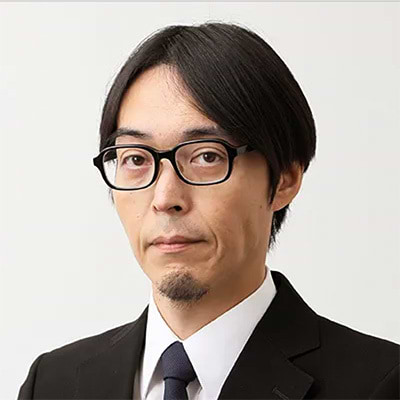
Fukada Ousuke
Dentsu Inc.
Chief Operating Officer
Articles by this person

Takumi Katori
Dentsu Inc.
Marketing Division 8
Marketing Consultant