Note: This website was automatically translated, so some terms or nuances may not be completely accurate.
 【Continued】Local Gurgle [204/208]
Is your "strategy" distorted?
Recommended by a friend who's a company president, I picked up Noriyuki Itami's "The Logic of Business Strategy (5th Edition)" (Nikkei Bunko). I couldn't find it on my bookshelf at home, but I think I've read an older version before, and since it's the first "bunko" edition in the series, I started reading it with a lighthearted attitude. But this turned out to be quite a major undertaking.

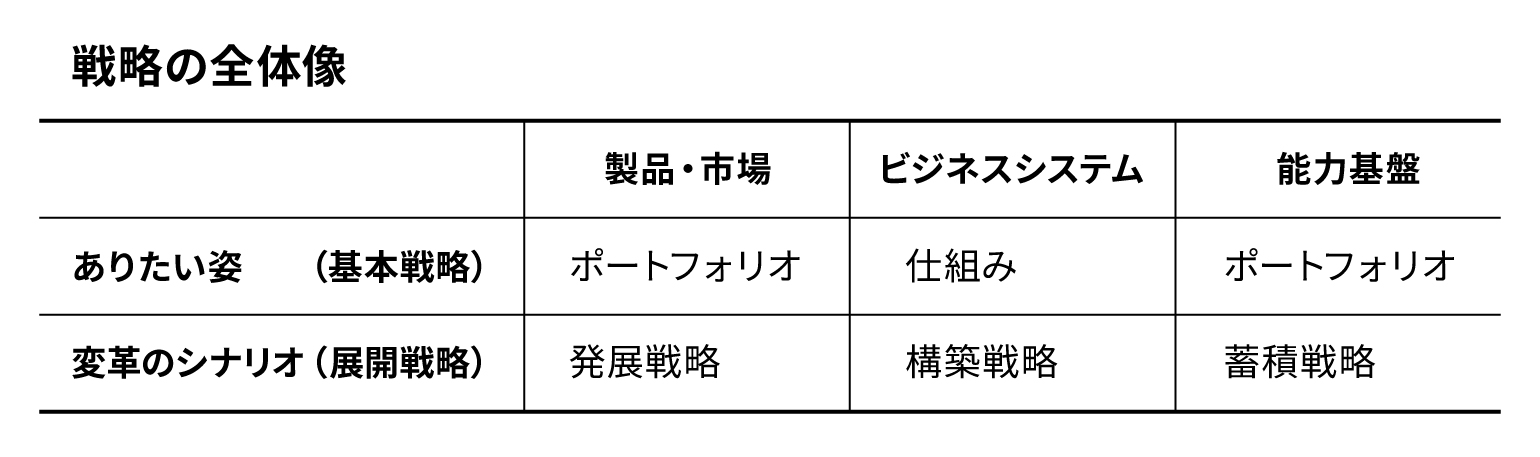
The book begins by organizing the overall picture of "strategy" – the blueprint for business activities – into six cells: "Desired State (Basic Strategy)" and "Transformation Scenario (Deployment Strategy)" concerning three elements: "Product/Market," "Business System," and "Capability Base."
It then organizes and discusses the logic common to successful strategies: (from the market perspective) 1. Customer Fit, 2. Competitor Fit; and (from the internal perspective) 3. Capability Fit, 4. Psychological Fit.
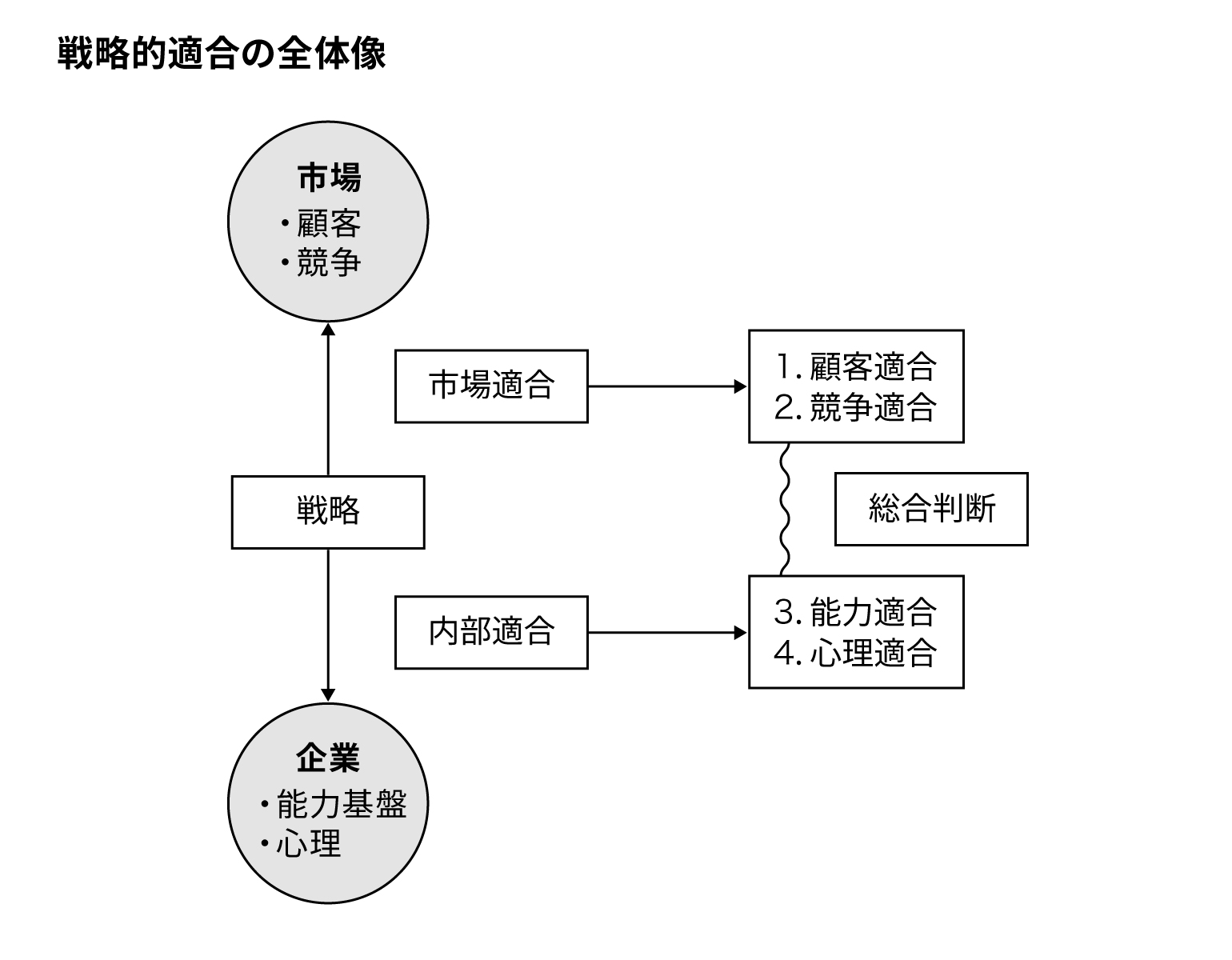
Even just seeing this, one can imagine how comprehensively and meticulously the broad concept of "business strategy" is addressed. Simultaneously, the discussion examines these elements not only from the "economic (money) logic" of simply pursuing profits in the market, but also from the "logic of invisible assets (information)" and the "logic of human psychology (emotion)." This should resonate with practitioners facing daily realities.It depicts the "essence of business strategy" that remains unshaken, regardless of AI advancements or drastic shifts in the competitive environment.
So why did I struggle so much reading this book?
It was certainly not because it was written in a difficult manner. On the contrary, it is written with abundant examples and simple language, likely understandable even to high school students. The reason, I believe, lies in a "distortion" within my own strategic perspective as the reader.
The projects I'm often asked to handle involve revitalizing organizations, particularly long-established companies. In these cases, my primary focus is on "concept creation" (classified in this book as "customer fit") and, through its implementation, "enhancing organizational creativity" (part of "capability fit").
While I also pay attention to "Vision Setting" (part of "Psychological Fit"), unfortunately, it's rare for an organization to possess unique values of its own. Therefore, I prioritize the concept first. Then, once an excellent concept is secured, I proceed with the project by developing the necessary "Business Systems" and "Capability Foundations" according to the new perspective it reveals.
I don't believe this approach itself is problematic. However, perhaps because I've developed a "habit" of prioritizing "customer fit" within this iterative process, when concepts like "competition, capability, and psychology" are discussed in parallel with fit, as in this book, it takes me an unusually long time to grasp them.
On the other hand, by persevering and reading on, I was made aware of many points I might have overlooked in daily life. For instance, the case study of Hon Hai Precision Industry Co., Ltd. (Foxconn), a Taiwanese electronics contract manufacturer, and its success through the strategic construction of a business system called "in-house mold manufacturing" (i.e., "capability fit" not necessarily related to "creation").
I urgently ordered the third edition, which I must have read long ago. Back then, I read it smoothly without any doubt. But perhaps that very ease meant I didn't truly grasp the content.
With all due respect, I believe advertising agency professionals, myself included, tend to focus much of their attention within "business strategy" on "psychological fit" aspects like boosting employee motivation. Precisely for those individuals, I highly recommend this book to help cultivate a broader "holistic view" of management.
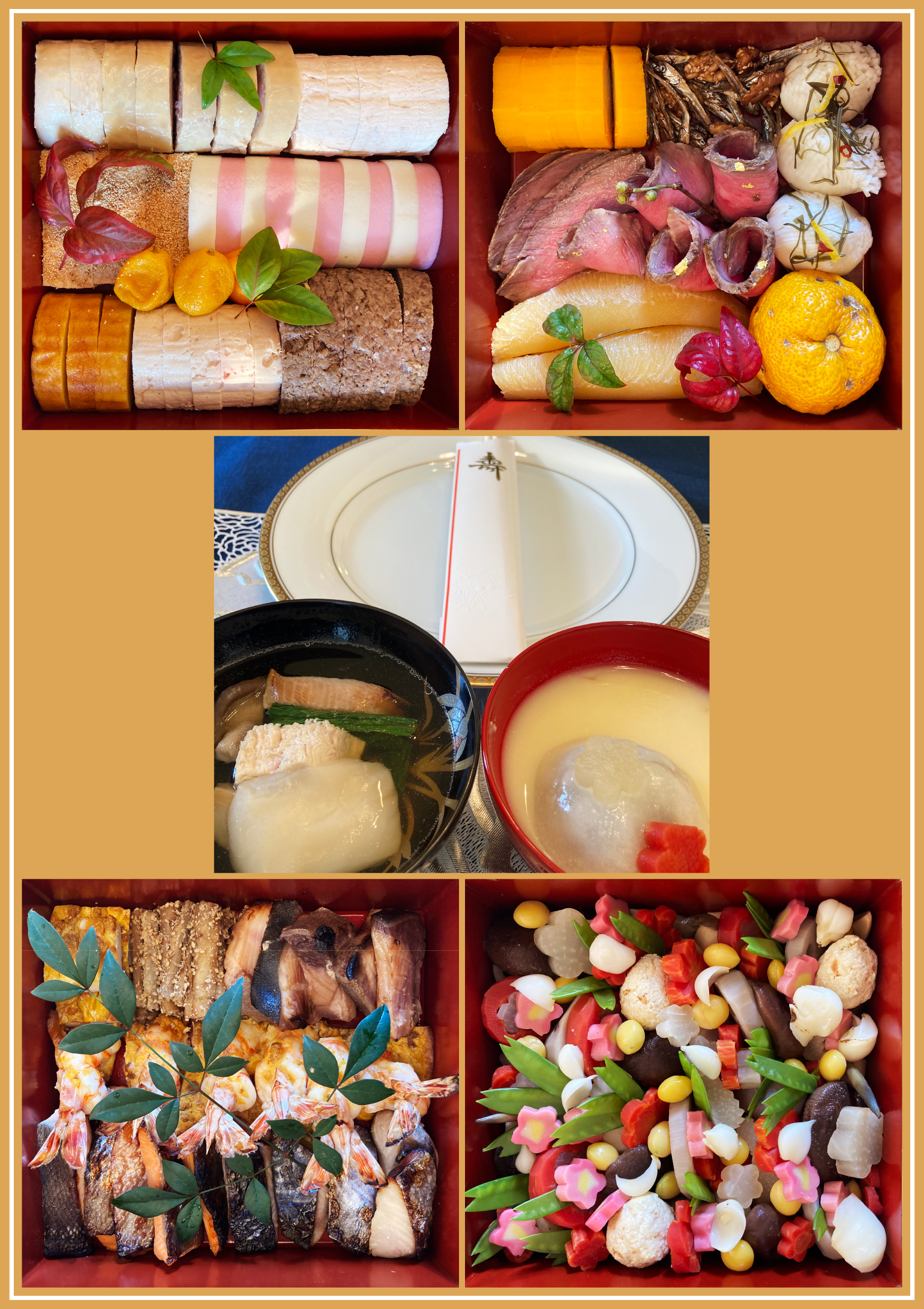
Fortunately, this New Year's, we were able to gather as a family around our usual layered boxed meal.At our everyday meals, I tend to want to assert my own "secret flavors" – fish sauce, oyster sauce, yuzu pepper, and such. But for New Year's osechi, I stick strictly to what my parents taught me (probably). Even the newcomer dish, "sweet bean paste mochi in soup," follows my wife's guidance from Takamatsu exactly. It might be boring, but somehow, the variation in how well it turns out is interesting.
Maybe it's a good chance to reexamine the "quirks" in my own cooking.
Please, help yourself!
 For more on Sōo Yamada's "Indwelling Creators" project, click the logo.  |  |
Was this article helpful?
Share this article


Newsletter registration is here
We select and publish important news every day
For inquiries about this article
Back Numbers

Author

Sōo Yamada
Dentsu Inc.
First CR Planning Bureau
Creative Director