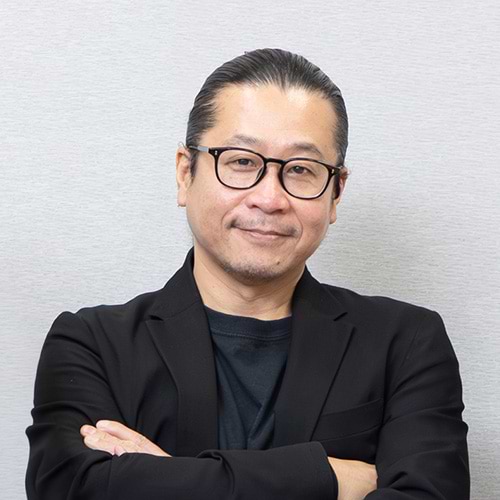
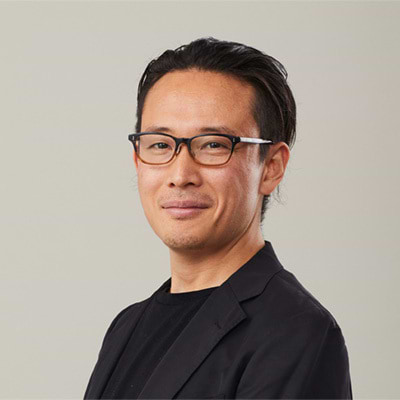
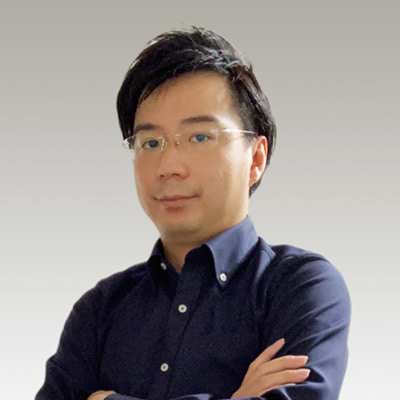
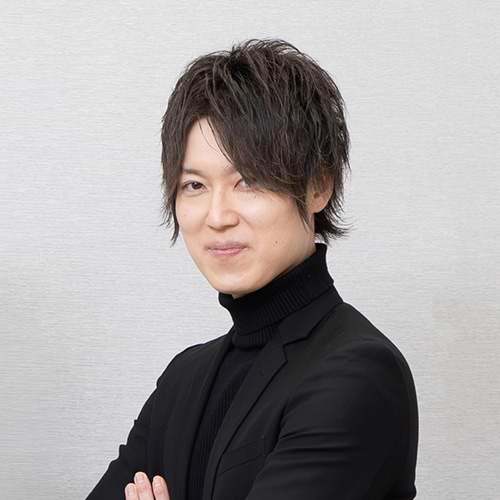
Held on December 6 and 7, 2025, the “YOKOHAMA UNITE Music Festival 2025” (hereinafter “UNITE Music Festival”) was a stage designed to create new connections between music and people, people and people, and companies and people, centered on the theme of a “celebration” for anniversary artists.
This event is part of the <DENTSU Inc. Initiative IP> concept, launched in 2025, with the aim of evolving Dentsu Inc. into a “key player that generates the source of IP and continuously creates value” in the entertainment sector. As a location-based entertainment IP where Dentsu Inc. itself holds the planning, investment, and rights, the “YOKOHAMA UNITE Music Festival” was launched.
The venue was “Yokohama BUNTAI” (hereinafter “BUNTAI”), which opened in 2024 and is operated by Dentsu Inc. The main artists on the first day were Schadaraparr, celebrating their 35th anniversary, and on the second day, Motoharu Sano, marking his 45th anniversary. All tickets were sold out, and the event concluded to great acclaim.
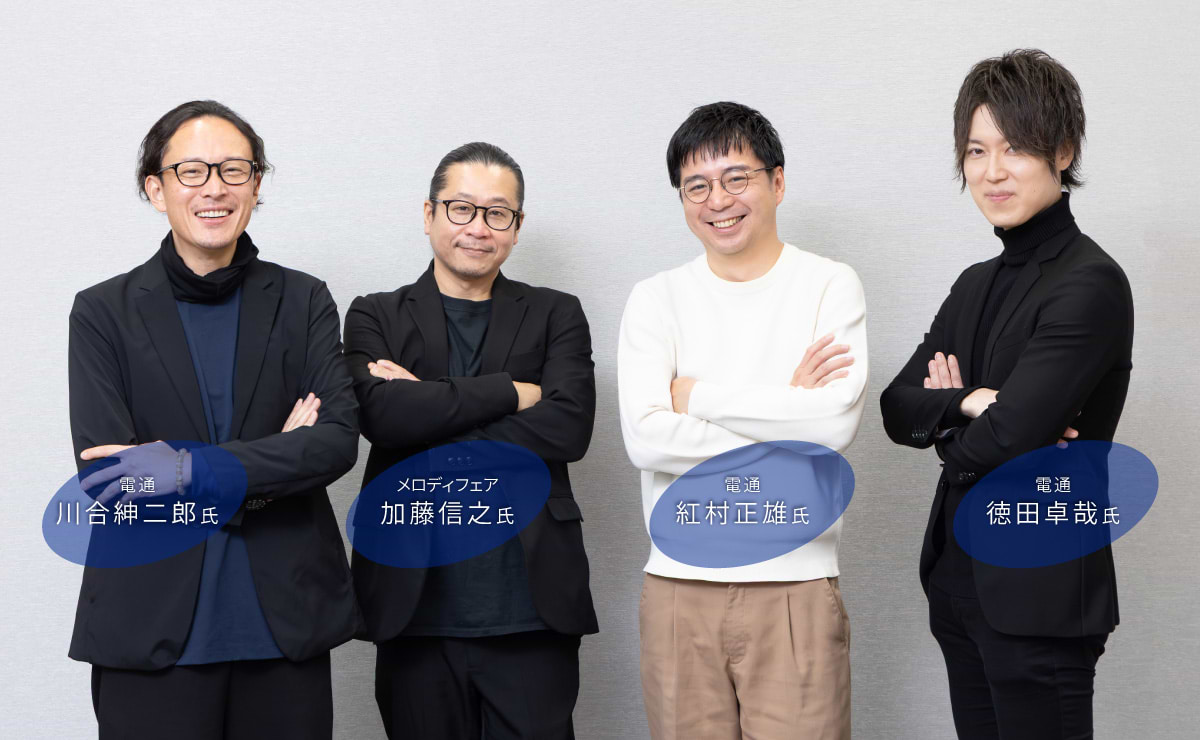
For this edition, we invited Mr. Nobuyuki Kato, President and CEO of Melody Fair—the management agency representing Schadaraparr—to join a roundtable discussion with Shinjiro Kawai, Masao Benimura, and Takuya Tokuda* from Dentsu Inc.'s Entertainment Business Center, who spearheaded this project. They discussed the behind-the-scenes story of the stage created in collaboration with Melody Fair, as well as the significance and uniqueness of Dentsu Inc. taking on music IP projects itself.
*Although the traditional character is the official name, we have standardized the spelling to “徳” due to it being an environment-dependent character.
Aiming to create a “playground” that embodies diverse cultures. An unusual start where we discussed ideas with professional stage producers from the very beginning
──First, please introduce yourselves.
Kato: I’m Kato from Melody Fair. Our company focuses on artist management and also handles various event projects. Schadaraparr, whom we collaborated with on “UNITE Music Festival 2025,” is one of our signed artists.
Kawai: I’m Kawai from the Entertainment Business Center. For this project, I served as the planning and executive producer.
Benimura: As a producer in the Arena Division, I manage venues—such as BUNTAI, which served as the venue for the UNITE Music Festival—where live music events can be held.
Tokuda: As a producer in the Entertainment Business Center, I was responsible for the overall management of the UNITE Music Festival, as well as ticketing, overall promotion, product development, and sponsorship-related matters.
──For the second annual UNITE Music Festival, Schadaraparr appeared as the main artist on the first day. Could you tell us what your goals were in extending this offer?
Kawai: In addition to welcoming an anniversary artist under the theme of “celebration,” we were also mindful that the venue, BUNTAI, was originally the “Yokohama Cultural Gymnasium”—a place that inherently encompasses both “culture” and “athletics.” For the second edition, we wanted to feature an artist who could embody that multifaceted nature of the venue.
The members of Schadaraparr are active not only in music but also in a wide range of creative fields, including writing and visual art. In fact, we held an exhibition of ANI’s work concurrently with this event. We feel they symbolize hip-hop culture—where various cultural elements intersect—and we wanted to express that breadth at the UNITE Music Festival, which is why we extended the invitation.
Shinjiro Kawai, Dentsu Inc., Executive Producer
──What were your impressions when you received the offer?
Kato: Schadaraparr debuted in 1990 with the album “Schadaraparr Daisakusen,” and 2025 marked their 35th anniversary. As a result, our schedule was already set: a 35th-anniversary live show in May and a 30th-anniversary live show in September to celebrate the release of their seminal album “5th WHEEL 2 the COACH.”
We had been discussing with the members from early on that we wanted to wrap up the 35th anniversary year in December with an event featuring guests in true Schadaraparr style. Just then, we were approached by the committee. When I heard about the concept and details of the UNITE Music Festival, everything fell into place, and I was incredibly happy.
──How did the planning proceed?
Kawai: After our appearance was confirmed, I first had dinner with Mr. Kato in Yokohama, and he invited the stage director and lighting crew to join us. Being able to speak openly with everyone involved in the production from the very beginning allowed us to establish a shared understanding that we would “enjoy creating something new together,” which was incredibly important. It felt like we started as a team from the very beginning, rather than just a client-vendor relationship.
I feel that attending live shows in Japan tends to become a one-way experience: “watch the show, buy some merchandise, and go home.” Of course, that has its appeal, but there should be more diverse ways to enjoy it—like having a meal while watching, or relaxing in the same space with friends.For this event, we wanted to expand the sense of a “playground” that Schadaraparr has cultivated over the years into an experience for the entire venue. I was very grateful that we were able to share that vision with everyone on the ground from the very beginning.
Kato: I thought it would be interesting to collaborate with the UNITE Music Festival team—led by Dentsu Inc.—to brainstorm ideas for the stage and programming. Dentsu Inc.’s desire to “try something new” and “deliver more than just a celebration for the anniversary artists” aligned perfectly with our own vision.I thought stage ideas would naturally emerge during meals, and I believed it would be better to have professionals with solid stage production skills join us from the start to discuss and create something engaging together, so I asked the staff to join us as well.
When working with Dentsu Inc. on advertising projects, there’s always a client involved, so there’s a certain level of formality. While securing an advertising deal is certainly a cause for celebration, as an agency, we have to be cautious about how the talent is perceived and what kind of exposure they’ll receive. With the client at the center, I believe Dentsu Inc. is in the position of striking that balance.
However, in this case, since Dentsu Inc. had been involved with BUNTAI from the development stage, it was a setup I’d never experienced before—with Dentsu Inc. serving as the organizer.
I heard that as part of their deliberations on “how to showcase BUNTAI and expand its recognition,” they came up with the idea of “inviting an anniversary artist to celebrate.” The head of BUNTAI, the event producer, and the PR and marketing teams were all from Dentsu Inc.
They make decisions quickly, and since everyone is so experienced, they proposed ideas we hadn’t thought of ourselves, and we were also able to make our own suggestions. Normally, when renting a venue, if you make a proposal, things tend to get stuck with a “We’ll check on that!” response, but it was great that we didn’t have that stress and decisions were made very quickly.
Kawai: That’s very helpful to hear. We aim to become a partner that collaborates with artists to create IP moving forward. That’s precisely why we need to think on the same level as them—not just about staging a performance, but about what kind of experiential value we can create.
Hearing various opinions from the stage manager and the on-site staff there made me realize once again that the UNITE Music Festival must become more than just a “venue for performances”—it must evolve into a space with much broader possibilities. I think it was excellent that we were able to start this project not as representatives of Dentsu Inc. or BUNTAI, but as partners working together to create a single stage.
“Family Seats” where even infants can participate, and an exhibition at the entrance. What kind of project was made possible precisely because the two companies were on the same page?
Mr. Nobuyuki Kato, President and CEO of Melody Fair
──Could you share any particularly memorable moments regarding the exchange of ideas and perspectives during the planning and operation of this event?
Kawai: What particularly stands out to me this time was the “Family Seats” proposed by Mr. Kato. We converted the box seats—which are typically used as VIP seating—so that families, including infants, could use them, and once we actually launched it, the response was tremendous. There were rooms where parents enjoyed the show while carrying their children on their shoulders, and others where children spent their time lying on mats. I think those kinds of scenes are something you rarely see at conventional live concerts.
Kato: For the 10 years starting in 2010, we held concerts every year at the Hibiya Open-Air Concert Hall. During that time, Bose married Fantasista Sakurada. Then they had a child, and I witnessed firsthand how raising a child became the center of their daily lives.
Since many of the concertgoers are close in age to the band members, I imagine they’re in similar situations. However, live music venues and concert halls generally don’t allow entry to children under 3 or elementary school age. Bose suggested, “Is there any way we can change that?” After consulting with the event organizers, we made it possible for children under 3 to attend the Hibiya Open-Air Concert Hall performance. Furthermore, since this inevitably meant people would be bringing strollers, we arranged to store them at the venue reception.
This was a milestone performance—our first solo arena show—and when I heard the venue had box seats, I thought that if we could create an environment where even infants could be brought along, it would make it easier for families to attend.Since the boxed-off spaces wouldn’t significantly interfere with the people sitting next to them, and considering the tradition of the Hibiya Open-Air Concert Hall, this approach felt very much like something Schadaraparr would do. At the same time, I thought it might be a good opportunity to bring back people who wanted to go to a live show but couldn’t make it—those who, in a sense, had a “gap” in their fandom. I was really happy when the family seats sold out early on after tickets went on sale.
Benimura: For the family seats, we brought in mats used for karate from the Yokohama Budokan next door and laid them out so it wouldn’t be a problem if the kids fell asleep. As Mr. Kawai mentioned regarding a “playground,” the goal of the UNITE Music Festival is to create a concert-going culture where everyone can spend their time at the venue enjoying the experience in whatever way they prefer.The BOX seats at BUNTAI were originally designed to accommodate a variety of ways to enjoy the space, such as spending time with family or dining with friends. Then, Mr. Kato suggested a wonderful way to use them, and we were able to see parents and children enjoying themselves together. That was the moment I truly felt glad that we’d created such a great venue.
──Were there any other initiatives unique to this event that took advantage of the facility’s features?
Benimura: The first-floor entrance at BUNTAI is an open, airy space with no particular features.My proposal for this event was to hold an exhibition of works created by ANI. From the venue’s perspective, we anticipated that there would be significant demand for such events during the renovation, so we intentionally designed a spacious, user-friendly area. We’ve established an environment where future BUNTAI users can easily host exhibitions and similar events, and it was a fascinating experience to help create this as both a venue operator and an organizer of the UNITE Music Festival.
Masao Benimura, Dentsu Inc., who also serves as a director of “YOKOHAMA Buntai”
Tokuda: I believe it was highly significant that we were able to work together to shape the content from the very beginning this time. Because we shared our goals and the values we wanted to prioritize at the initial stage, we were able to make consistent decisions not only regarding the event’s content but also on peripheral initiatives such as ticket sales, product development, and sponsorship. I feel this ultimately contributed to the overall quality of the event.
A “Riding the Same Boat” Business Model Born from Risk Management and “On-the-Ground Capabilities”
—Please tell us about the benefits you felt from working with Dentsu Inc.
Kato: The best part of this project was that we discussed risk management right from the start. The music business is highly speculative; no one can predict with certainty whether something will sell. For example, when an artist aims to perform at the Budokan, I think there’s a certain degree of ego involved—a desire to “show the world something spectacular” (laughs). We in management (the agency) love that egoistic side of them, which is why we’re in this business, but from a business perspective, it’s naturally a bit daunting.
This time, being able to discuss risk management before talking about dreams was a major factor; it led to a sense of security and trust. It was also great that you proposed rules from the very beginning regarding which party would assume what level of risk, and that the explanation was very straightforward. Rather than saying, “Let’s go down together,” you presented a vision for anticipating and addressing each risk, including the numerical aspects, which made the process much easier to handle.
──Indeed, to make this viable as a business, I think it’s necessary to design a plan that incorporates realistic risks behind the “dream.” What did Dentsu Inc. focus on to balance these two aspects?
Kawai: What we were strongly conscious of in this project was “being in the same boat.” In other words, even if certain parts didn’t go as planned, we needed to create a business model that both parties could sustain without undue strain. Especially in this case, since we were in the position of launching the IP project ourselves, we believed it was crucial to first thoroughly discuss the risks, rather than focusing solely on dreams and possibilities. On that basis, we aimed to create a new, win-win structure where both sides would reap solid benefits if the project expanded successfully.
Kato: Since Dentsu Inc. also operates BUNTAI, I’m sure there was definitely a calculation that the more buzz the UNITE Music Festival generated, the more it would promote the venue itself. Rather than taking on all the risk for the event alone, they actually had a clear strategy to link it to BUNTAI’s promotion and turn it into a positive for that side as well—and personally, I found that approach incredibly refreshing.
Perhaps because of that, after finalizing the stage layout and guest lineup for the day of the event, we spent the most time on promotional meetings for ticket sales. We couldn’t afford to tarnish the artists’ reputations, so we were desperate—but the Dentsu Inc. team was just as desperate. It was really interesting to have such passionate discussions with them.
While brainstorming promotional ideas, I focused on the fact that people going to the concert might not really have a clear image of what kind of venue BUNTAI—the renovated Yokohama Cultural Gymnasium—actually is. So, I proposed a plan to stream footage of the Schadaraparr members visiting the venue on the official YouTube channel.It served as a location scouting trip for the members and also promoted the venue. On the day of the shoot, Dentsu Inc. even brought in a camera crew and a director to film it properly as a full-fledged program—I was really impressed.
Tokuda: The core principle we valued most for this event was “on-site capability.” Typically, advertising agencies and production committees don’t know much about the actual venue. To prevent that from happening at the UNITE Music Festival, it was crucial for everyone to demonstrate their “on-site capability” within their respective areas.Instead of judging what the person in front of you is responsible for based solely on their job title, we needed to properly understand the staff’s movements, the content, and the structure, and view the situation together. I believed that if we could think about what was necessary, make decisions, and communicate with everyone on that basis, a new IP between Dentsu Inc. and the artists would naturally emerge.
Takuya Tokuda, a producer at Dentsu Inc., was responsible for overall event management, as well as ticketing, overall promotion, and product development.
I believe that being able to engage with people in various roles—including Mr. Kato, the stage director, and the promoters—on-site and align our perspectives was crucial to the event’s success, and I think that’s what allowed us to create such a wonderful stage together.
Kato: As for tickets, thankfully, they were nearly sold out on the first day of sales. The joy of that moment is truly unmatched. We didn’t want the stage featuring the anniversary artists to end in disappointment. Both the management team and Dentsu Inc. shared this sentiment, and the result was the culmination of our collective effort to “do absolutely everything we possibly could together.”
Moving forward, we will continue to develop and expand our original IP toward sustainable business initiatives that serve as “new connection points”
──Now that you’ve completed this new initiative of co-creating a music festival stage, what are your impressions of Dentsu Inc.?
Kato: To be honest, I used to think it was much more common for a company like Dentsu Inc. to organize music events. But in reality, while they might be involved through partial investment or similar means, there were almost no cases where they directly organized or operated the event themselves. Learning that, I realized that perhaps even among agencies and people in the music industry, this fact hasn’t fully sunk in yet. I hope we can get the word out that Dentsu Inc. is creating this kind of IP on its own.
From the venue management perspective, having Dentsu Inc. involved was the biggest highlight of this event. It’s not common for the “director of an arena venue” to personally run an event—and honestly, I think it’s pretty crazy (laughs). This time, things moved very quickly because Mr. Benimura, the general manager, would give an on-the-spot “OK” regarding what we could do on stage and to what extent. That open communication really helped us out.
The theme of the UNITE Music Festival is “celebration.” Everyone created a concept where we invite anniversary artists who have persevered in the high-risk music industry and celebrate them. I think this kind of project itself is a groundbreaking innovation, and I think it’s wonderful that they launched it by weaving in thoughtful touches that only they could have conceived to invite these seasoned guests. On top of that, I think the most amazing thing is that Dentsu Inc. is backing this project and serving as its foundation.
──Could you share what Dentsu Inc. has taken away from this initiative? Also, if you have any thoughts on the future development of the UNITE Music Festival or prospects for new IP development, please let us know.
Kawai: As we take on the challenge of creating our own IP, I was very pleased that Mr. Kato recognized the value of our “IP co-creation” model, which includes risk management. I believe it was precisely because he understood our approach—which we hold dear—of “sharing risks, creating together, and growing the project”—that this became a new arena for artistic challenges.
We intend to apply what we learned from Mr. Kato moving forward, building upon new musical stages and approaches that fans have never seen before. Furthermore, we aim to further accelerate the creation of IP at Dentsu Inc.
Benimura: In arena management, revenue typically comes from hosting sports teams or having artists perform live. However, this time, we took a new approach by becoming the organizers of the event ourselves and generating revenue that way. Through initiatives like this, we want to continue shaping the venue’s unique “character.”By branding the “space” like BUNTAI, we aim to create a cycle that maximizes revenue, including through sponsorships. Thanks to Mr. Kato and all the performers, I believe the UNITE Music Festival became a highly talked-about event, and we definitely want to continue holding it actively in the future.
Tokuda: I believe Dentsu Inc.’s strength lies in our ability to create new “connections” between artists, people, and companies. Precisely because Dentsu Inc. is not affiliated with any specific business entity, we can engage with all stakeholders on an equal footing. Leveraging this position, we aim to connect all manner of things—people to people, people to information, and people to objects—through entertainment. I believe the true significance of this initiative lies in its potential to serve as a catalyst for new connections for management agencies, record labels, and the artists themselves.
Our goal for the future is to increase the frequency of the event. While we have held it once a year so far, we aim to hold it two or three times a year starting in 2026. At the same time, we want to expand the scale of the event. Currently, we are focusing on BUNTAI, but we also want to set another goal of considering even larger venues.
──Finally, if you have any expectations for Dentsu Inc. as it seeks to create new IP in the entertainment industry going forward, please share them with us.
Kato: The music industry’s business model has changed dramatically as streaming has become the central focus. Today, concert revenue and merchandise sales account for a much larger share of revenue than the so-called rights business. In this context, I believe that an increase in initiatives like this one will further revitalize the music industry.
In this industry, while popular artists remain popular for years, new artists come and go. I think it’s especially difficult to sustain a career around the 10- to 20-year mark. I’d really like to see projects featuring artists around their 15th anniversary. Or even younger ones celebrating their 5th anniversary.Over the past two years, the UNITE Music Festival has featured BRAHMAN, Motoharu Sano, and Schadaraparr, so I think it would be great to have younger artists perform next.
It’s truly inspiring to imagine everyone building on this experience, further honing their skills and ideas, and using “anniversaries” as a central theme to create a series of stages at BUNTAI that appeal to the broadest possible audience. Thanks to Dentsu Inc.’s invitation, we were able to realize an arena concert—something we never even imagined—during our anniversary year. I believe the UNITE Music Festival is something that gives us that kind of courage.
Kawai: Thank you. I interpret what Mr. Kato just said as, in other words, “how to create something that isn’t just consumed.” Whether it’s designing risk management in advance or proposing a new win-win model, everything is necessary to make the business sustainable and to build a foundation where stakeholders can continuously generate value.
We don’t want young artists—or those marking milestones like their 10th or 15th anniversaries—to end up as mere fleeting commodities. By partnering with us, we hope to create new connections with the world and provide a sense of security so they can move on to their next challenges. That’s the kind of sustainable event we aim to realize. Looking even further ahead, we hope to go beyond just events and create new IP businesses together with the artists.
■Confirmed for 2026! Click here for details on the July 2026 performance featuring Shikao Suga and ORANGE RANGE “YOKOHAMA UNITE Music Festival 2026”
Representative of the music agency representing Schadaraparr, Cypress Ueno and Roberto Yoshino, Gusokumuzu, Hiroshi Kawabe, CMJK, Sekuyama, and SLY MONGOOSE. The agency focuses on artist management while also organizing events across various genres.
Has participated as a contractor in numerous PFI projects. Has experience ranging from business planning and financing agreements to the practical operations of arenas in numerous projects, including the Ariake Arena management and operation project and the Yokohama Cultural Gymnasium redevelopment project. Served as producer for the “Sayonara Nakano Sunplaza Music Festival,” a music event organized in collaboration with local governments through arena operations. A specialist responsible for all aspects of arena operations, from software to hardware.He concurrently serves as a Director and General Manager at YOKOHAMA Buntai Co., Ltd.
Entertainment Business Center, IP & Business Development Department
Content Business Producer / Business Development Producer
In the music industry, he has consistently handled everything from company-wide strategies to individual IP strategies, driving the creation of new businesses and global expansion. Combining a management perspective with a production perspective, he leads projects from business design through implementation and growth. At Dentsu Inc., he is working to create value through both content business and business development, starting with the creation of original IP.