With the advancement of digitalization, the use of AI in marketing has become commonplace. Many companies now accumulate vast amounts of data—such as customer demographics, purchase histories, and browsing histories—to identify needs and challenges and use this information to better understand their customers.
On the other hand, we often hear about challenges such as, “There’s just too much data, and we don’t know how to use it,” or “We have all this data, but we’re not making the most of it…”
In this article, Emi Nobukuni, Senior AI Planner at Dentsu Macromill Insight, Inc. (hereinafter DMI), and Daigoro Nishimura, General Manager of Marketing Division 6 at Dentsu Inc., will explore key points for using AI to uncover “hidden insights” and offer tips on how to identify compelling insights and transform them into strategic narratives.
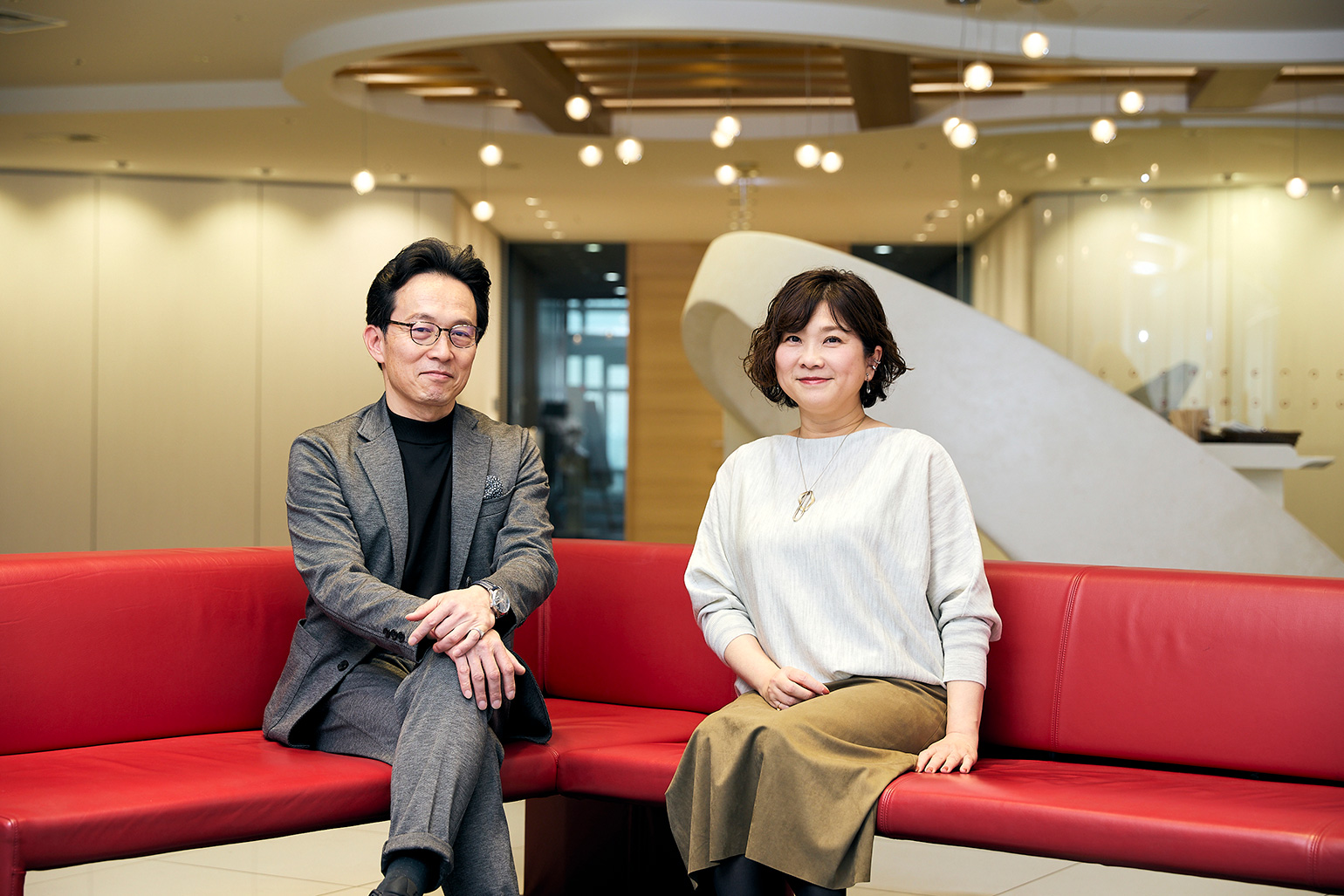
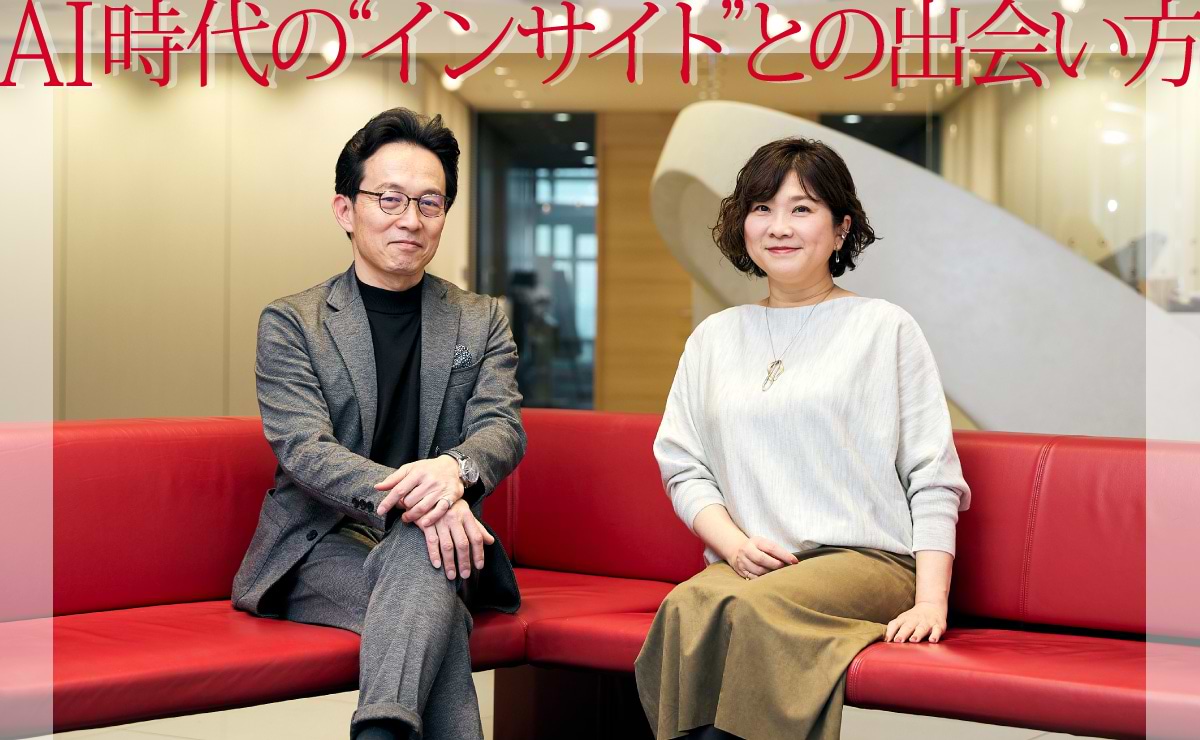
(From left) Daigoro Nishimura of Dentsu Inc., Emi Nobukuni of Dentsu Macromill Insight, Inc.
In many companies, accumulated data is just sitting idle...⁉
──Recently, the term “insight”—referring to consumers’ hidden true feelings and desires—has been used frequently in marketing activities. First, could you tell us about the importance of insights for companies?
Nishimura: First, since the definition and meaning of the term “insight” can vary from person to person, let’s clarify what we mean by it for this discussion. I understand it to be something that can’t be put into words, but makes you think, “Ah, that’s exactly it.” What about you, Nobukuni?
Nobukuni: Defining “insight” is tricky, isn’t it? I feel the same way—I think it’s something that clicks in your mind, like, “Oh, right, that’s exactly it,” once it’s pointed out. Finding insights involves unearthing things that haven’t been put into words, but I also see it as a process of reading the underlying context and interpreting the meaning—asking, “Could this be what it’s really about?”
And regarding the first question: when companies formulate business strategies, the extent to which they can grasp essential insights is a crucial factor.
The business strategy process involves various steps, such as concept development and creative production, but insights serve as the foundation to fall back on when you’re unsure. In other words, they are the driving force behind the business, and I believe the value of insights lies not only in their depth and accuracy but also in their power to move people and organizations.
──So, what are the challenges many companies face in their marketing activities?
Nishimura: With the development of digital infrastructure, many companies are now able to collect and accumulate vast amounts of customer data. However, when it comes to leveraging that data for business growth, I feel that most companies are failing to do so. In other words, the data is essentially sitting idle.
Furthermore, even when data is collected, it often becomes siloed within each business unit, and in many cases, there is a lack of data sharing and integration across departments.
Nobukuni: I think one reason for this lack of utilization is that the volume of data is simply too vast. There is such an overwhelming amount of information that it has become difficult to identify the essential insights within it. Furthermore, I feel that consumer behavior itself has become increasingly diverse, making it even harder to uncover those insights.
Nishimura: The fact that essential insights and necessary information get buried under an overwhelming volume of data is a challenge faced by many companies, isn’t it?
In fact, we very often hear the sentiment that “we have the data, but we aren’t making full use of it.” Recently, when speaking with client representatives, we’re seeing an increasing number of requests to have AI analyze both their company’s data and Dentsu Inc.’s survey data—provided an NDA (Non-Disclosure Agreement) is signed.
Objective insights extracted by AI alone aren’t enough to provide a sense of conviction
—Is it actually possible to discover insights by analyzing massive amounts of data with AI?
Nobukuni: If you feed a massive amount of data into AI and instruct it to “generate insights,” it will extract them. However, whether those are truly essential insights is another matter entirely… Since AI analyzes based on large volumes of data, the insights it produces inevitably tend to be highly objective. But to find essential insights, subjectivity is just as important as objectivity.
—What do you mean by “subjectivity” in the context of insights?
Nobukuni: If insights derived from numerical data and statistics—which reveal common patterns and trends—are considered objective, then subjective insights are those where researchers, marketers, and other humans engage in deep thinking. They delve into individual words, emotions, and behaviors, interpret meaning using the passionate, genuine feelings underlying them, and connect that to business outcomes. Furthermore, since the process of forming these subjective insights is crucial, I believe that, for now, only humans can do this.
Nishimura: So you’re saying that objective insights derived solely from data aren’t enough to produce insights that truly resonate and feel convincing.
Nobukuni: That’s right. By effectively combining the objectivity that AI excels at with the subjectivity that humans can provide, I believe we can get closer to insights that are truly convincing.
The Insight Derivation Process Required in the AI Era
──What is essential for deriving insights that truly resonate?
Nobukuni: Ultimately, the key is how to identify a story that truly resonates. That’s why DMI has developed the “Insight Value Chain.”
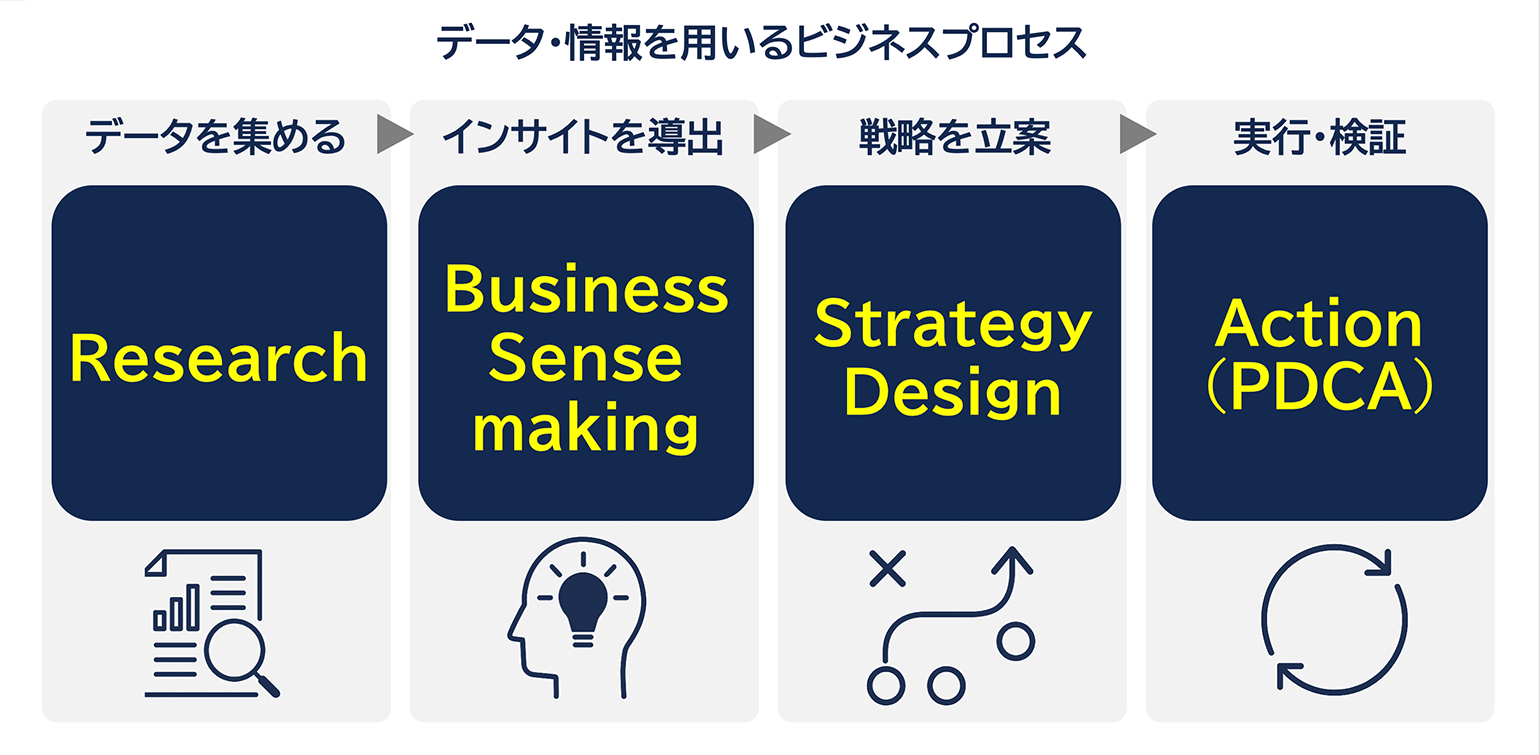
In business processes that use data, the typical flow is: collect data → formulate strategy → execute and validate. However, we have added a process called “Insight Derivation (Business Sensemaking)” between data collection and strategy formulation.
In the insight derivation process, we understand the context behind the data and, based on this, use creative thinking and a strategic perspective to identify insights and derive a story that resonates.
We draw inspiration from the Sense-Making Theory (*) proposed by American organizational psychologist Karl Weick. By applying this framework, we aim to find meaning in vast amounts of data and construct compelling narratives within today’s diverse and uncertain marketing landscape.
In the AI era, where data utilization is indispensable, I believe this process of deriving insights—specifically, the process of deriving these compelling narratives—will become increasingly important.
*Sense-making theory: The process by which people attempt to make sense of and understand complex and ambiguous situations.
What are the possibilities opened up by combining insight derivation with the “People Model”?
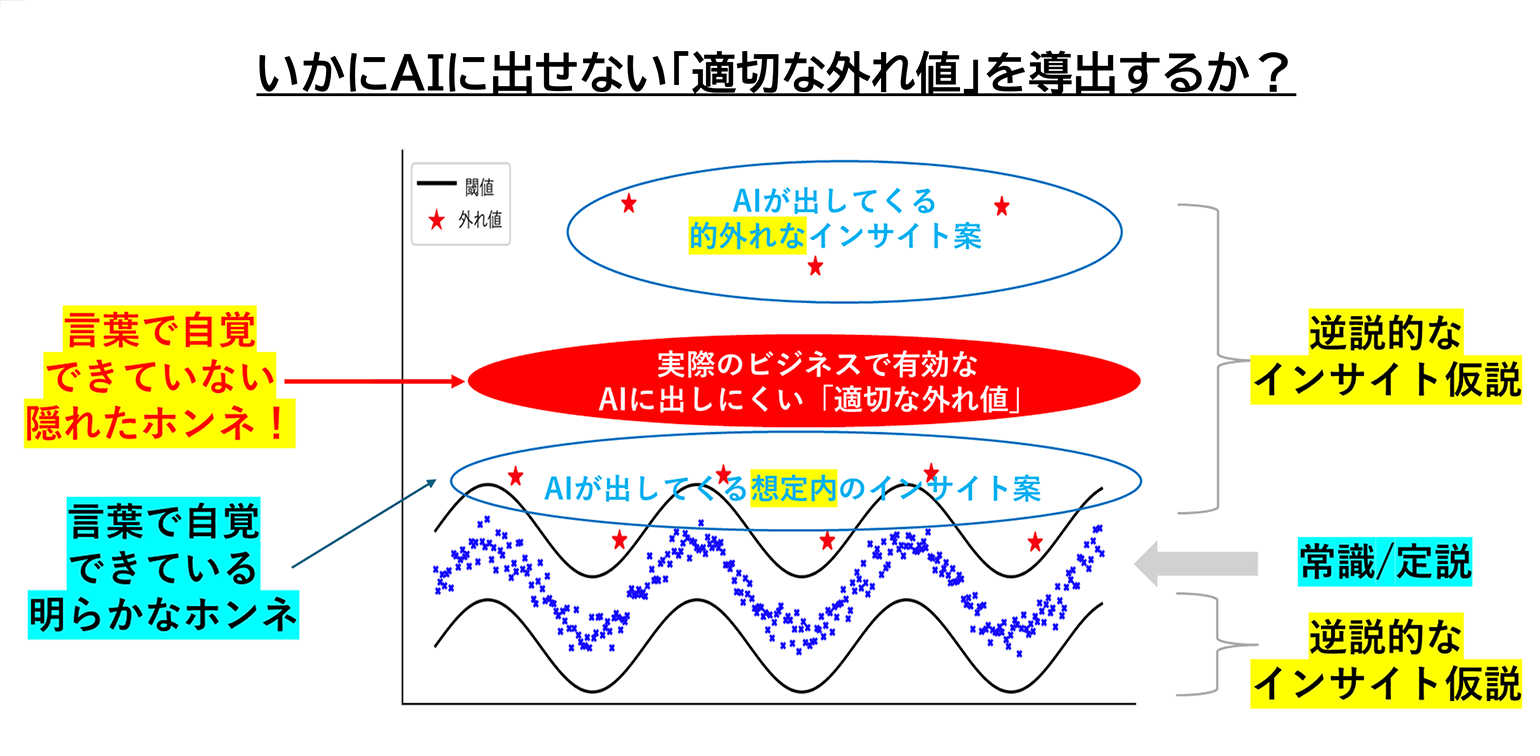
Nishimura: In the insight derivation process, when developing strategic narratives, we place great importance on what we call “appropriate outliers.” As Mr. Nobukuni mentioned earlier, insights extracted by AI tend to be highly objective. However, since the analysis is inevitably based on training data, the results often fall within the range that humans can predict. There’s not much of a “surprise” factor there, so to speak…
For example, we can instruct the AI to generate ideas that humans wouldn’t think of, but if we overdo it, we end up with insights that are so wildly off-base they’re impossible to comprehend.
“Appropriate outliers” lie somewhere between the insights the AI generates that fall within expectations and those that are completely off the mark. I actually believe that hidden, true feelings—insights that we aren’t consciously aware of in words—may lie precisely in that space.
Nobukuni: It’s the kind of insight that feels both revelatory and actionable. However, since this “appropriate outlier” is difficult for AI alone to identify, the way we frame questions for the AI to analyze becomes quite important. For example, we feed the AI a sense of unease regarding the insights it generates—questions like, “Is that really true?” or “Isn’t the real truth somewhere else?”—and then dig deeper into the results.What’s crucial is the process where humans firmly grasp that sense of unease or intuition that “something might be there,” and then repeatedly “question” the AI while using it.
I believe that by developing strategic narratives based on the insights discovered through these appropriate outliers, we can create ideas and initiatives with greater precision.
──At Dentsu Inc., development is underway on “People Model,” an AI technology that enables hypothetical quantitative research. When addressing corporate challenges, what kinds of initiatives become possible by using AI technologies like “People Model” to derive insights?
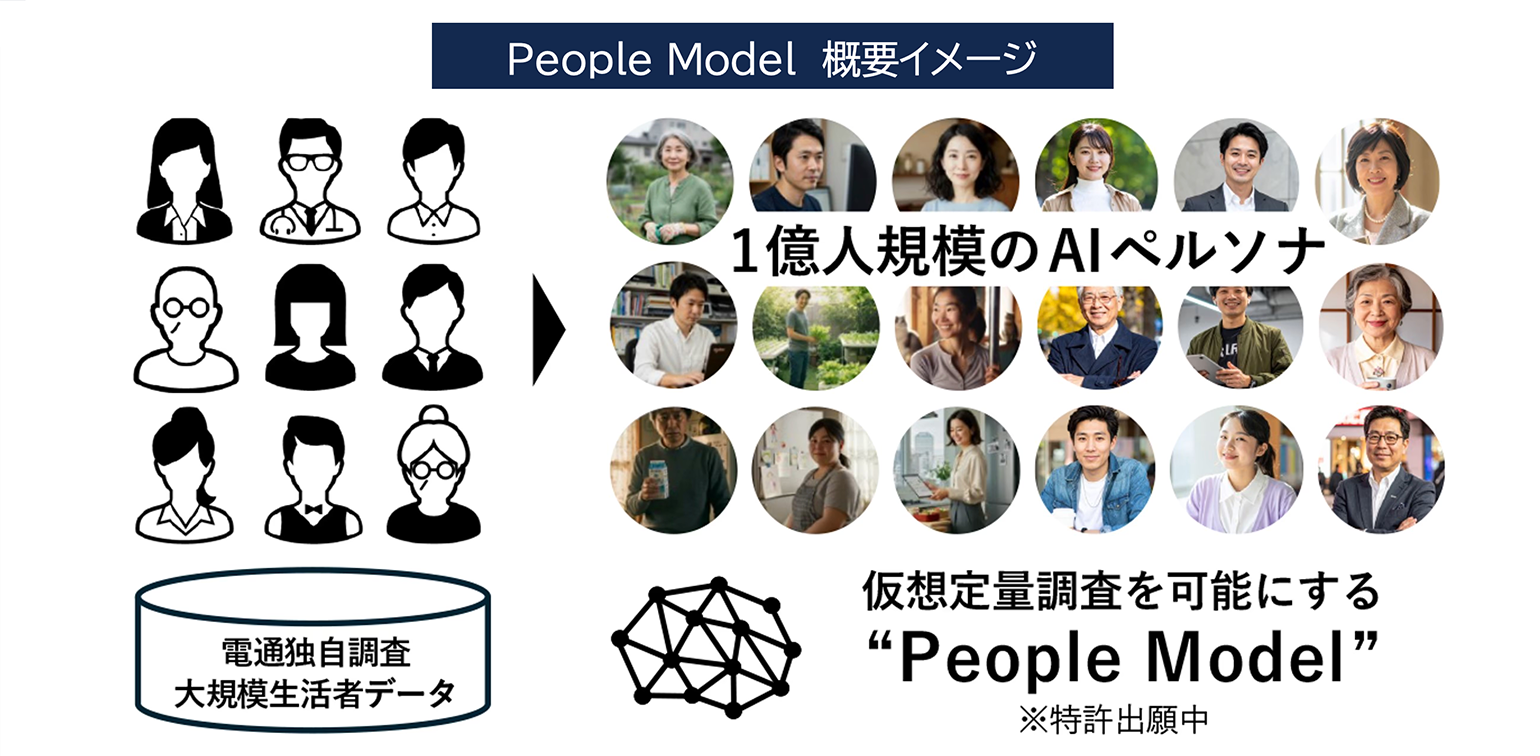
Nishimura: “People Model” is a technology that statistically analyzes Dentsu Inc.’s proprietary large-scale consumer data—comprising 150,000 individuals—and generates AI personas on a scale of 100 million people by extrapolating those patterns to match Japan’s demographic composition. This makes it possible to replicate “people” and “markets” within the AI.
When we apply this AI technology to insight generation, it enables us to run simulations on the AI platform before implementing strategies based on those insights.
For example, by asking a virtual user base of 100 million people, “If Brand X implemented this initiative, would your willingness to purchase increase?” you can conduct a preliminary simulation to estimate what percentage of people are likely to take action.
After running several simulation scenarios, you can implement the initiative that appears most likely to succeed.
When brands or manufacturers decide to launch a campaign, it requires a significant budget. Companies typically review proposals to determine whether the cost is justified, but simply including information such as “Based on preliminary simulations, we expect this level of sales growth” adds objectivity and makes the decision-making process easier.
Once the initiative is actually implemented, you can verify its results by comparing them with the pre-simulation, making it easier to reflect on the campaign. Since the verification results are also accumulated as data, this leads to increased accuracy when cycling through the next initiative. By continuously running this PDCA cycle, the speed from deriving insights to strategizing and execution increases, enabling the implementation of efficient and highly accurate initiatives.
Although "People Model" is not yet officially launched, we are developing it with this implementation in mind, and within Dentsu Inc., it has begun to be used on a small scale under the name "People Research" (as of March 2026).
Collaborative Sessions for Insight Discovery in the AI Era
──Do you feel there have been changes in recent years regarding how companies utilize insights?
Nobukuni: I feel that there has been an increase in the number of companies seeking to grasp and delve deeper into consumer insights compared to the past. In fact, we are receiving more inquiries asking, “How can we find insights?”
In response to these needs, DMI established a dedicated department called the Insight Activation Office and created a new role called the i-Planner.
We established the i-Planner role because we felt it was necessary to work closely with clients—not just to conduct various types of research and produce reports, but to actively link those insights to business decision-making and strategy.
i-Planners specialize in deriving insights from the various information obtained through research and data, and connecting those insights to business decisions and initiatives. They play a role dedicated to insights, supporting the business growth of companies.
While the use of AI is essential for data collection and analysis, getting to the essence of insights still requires going to the field and listening to people’s raw voices. Even if respondents don’t voice their thoughts, much can be gleaned from their expressions and gestures, allowing us to pick up on any sense of discomfort or unease.
While we continue to value this on-the-ground perspective, we’ve recently seen a significant increase in “co-creation sessions” where we collaborate closely with our client companies.
Nishimura: Workshops with client companies have definitely increased. I feel the demand has grown even more since AI started being utilized.
We receive many requests for sessions where we use AI to create numerous personas, then discuss them with the client’s representatives to delve deeper into insights and develop action plans.
Nobukuni: This is also one of the methods for discovering proactive insights that we mentioned earlier. By engaging in serious discussions together to uncover insights, the desire to make these people happy through our own products and services becomes stronger. I also feel that this leads to improved employee motivation and engagement. I believe these synergistic effects are one of the reasons why the demand for these workshop sessions is growing.
──Finally, could you tell us about the strengths and future prospects of both Dentsu Inc. and DMI?
Nishimura: Dentsu Inc.’s strength lies in our ability to provide support with both speed and quality through the use of AI. In AI technology development, the greater the volume of data used for feedback, the higher the quality of the AI’s output. Our possession of large-scale consumer data—which allows us to leverage information on 150,000 people—is a major strength that no other company possesses. Furthermore, we have years of experience supporting the marketing efforts of numerous client companies. Building on that experience, we aim to contribute to our clients’ business growth by achieving both speed and quality in our use of AI.
Nobukuni: Since we specialize in marketing research, we excel at providing factual information and data to back up our proposals. The accuracy and reliability of this data are crucial for deriving insights, and I believe this is where research firms truly shine.
Also, regarding our experience, I feel that our skill in recognizing and drawing out the unspoken, true feelings of survey respondents can be applied to sessions with client companies as well. In that context, carefully drawing out the thoughts that clients themselves cannot easily put into words, shaping them together, and crafting them into a compelling story that empowers them to move their business forward with confidence—I believe that is the crucial role I-Planner will be called upon to play in the future.
Nishimura: Dentsu Inc. and DMI have already collaborated on numerous projects as partners in the marketing field. Generally, Dentsu Inc. handles overall planning while DMI handles research, but there are times when our roles and tasks overlap. We call this “crossing boundaries.” For example, suppose there is an insight extracted from a research report prepared by DMI. If we, on the planning side, have identified an insight from the big picture of the project, we can engage in fruitful discussions by crossing those boundaries.
We believe the ideal relationship is one where we continue to engage in this kind of interaction, thereby enhancing the value we each bring to the table. We believe that this cumulative effort will improve the quality of our insights, which in turn will lead to higher-quality proposals for our clients.
Nobukuni: That’s right. I hope that, as partners, we can continue to enhance each other’s value and effectively meet our clients’ needs.
Drawing on my experience as a researcher, I extract essential insights from real-world facts regarding consumers, clients, and society, linking them to business strategy and solution development to support management decision-making. I also place great importance on the process of constructing and synthesizing narratives that stakeholders can truly understand and accept, and I practice planning that bridges diverse perspectives. I serve as a director of the Japan Marketing Association.
With experience spanning over 15 sectors—including travel, automobiles, telecommunications, daily necessities, pharmaceuticals, housing, apparel, energy, manufacturing, mail-order, home appliances, commercial facilities, and beverages—he has managed projects for more than 50 companies in total. As an integrated planner, he excels at leading teams to craft end-to-end narratives. He is also an AI facilitator and SDGs consultant.