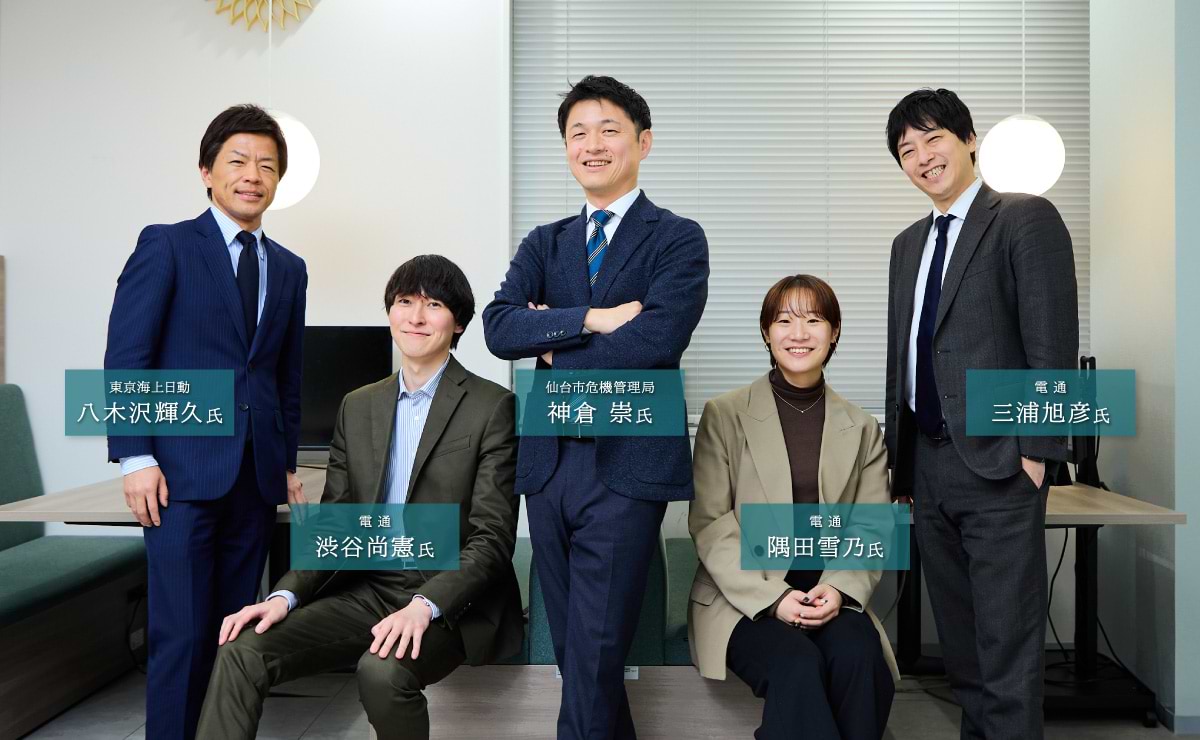
Ten companies, including Tokio Marine & Nichido and The 77 Bank, which have signed comprehensive partnership agreements with Sendai City, have joined “Xross Innovation BOSAI.” Dentsu Inc., together with Sendai City and Tokio Marine & Nichido, will be responsible for the consortium’s operations.
Led by Sendai City, “Xross Innovation BOSAI” was launched through a partnership between Tokio Marine & Nichido and the Dentsu Group.
Launched in August 2025, it is a co-creation consortium where wisdom and actions derived from diverse experiences—spanning fields, generations, regions, and national borders—intersect (“X”) to generate new value.
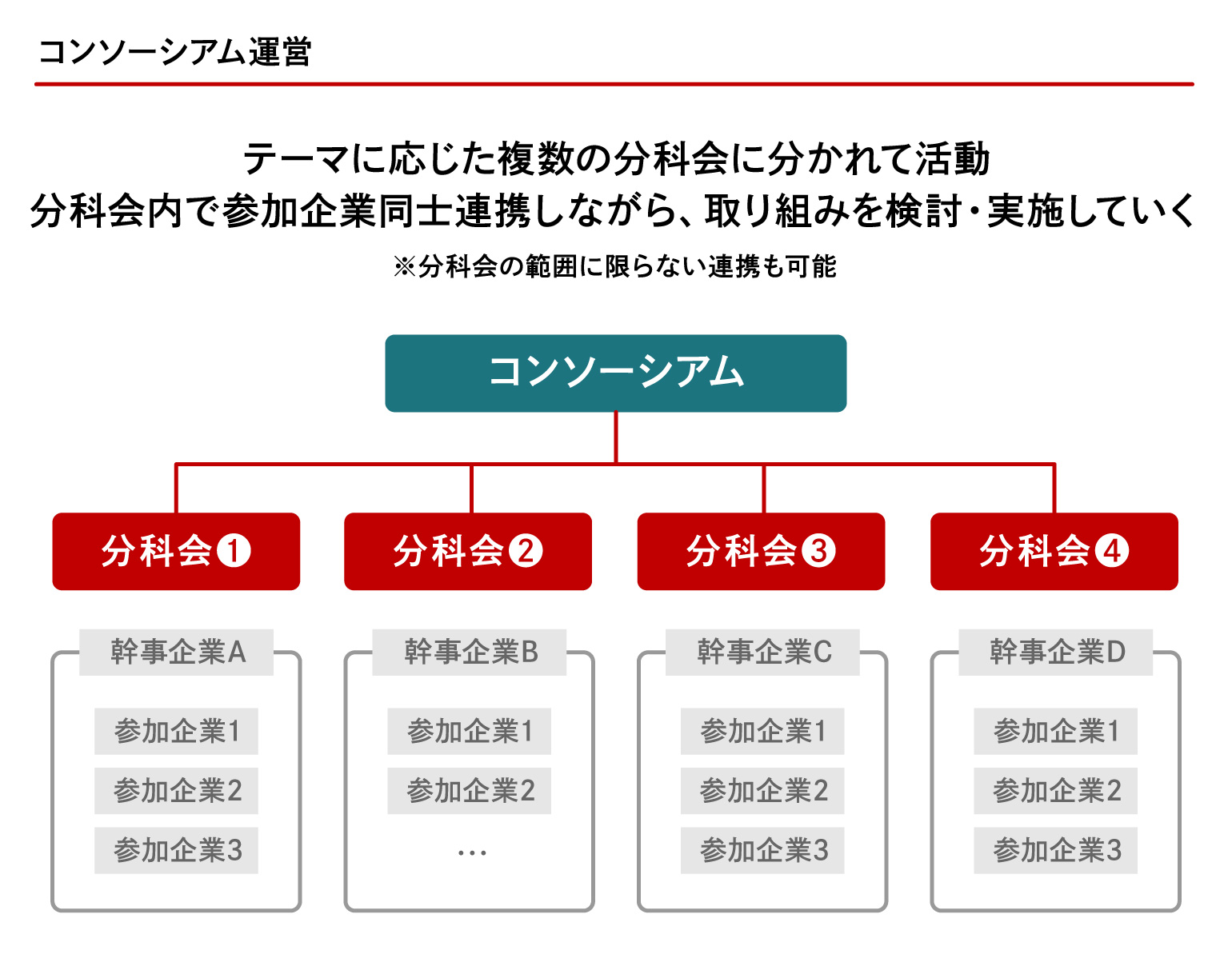
This consortium aims to leverage the expertise and business foundations of its many participating stakeholders to create numerous initiatives that contribute to regional disaster prevention and mitigation. Another key feature is the establishment of subcommittees for each theme, where companies collaborate to advance concrete initiatives.
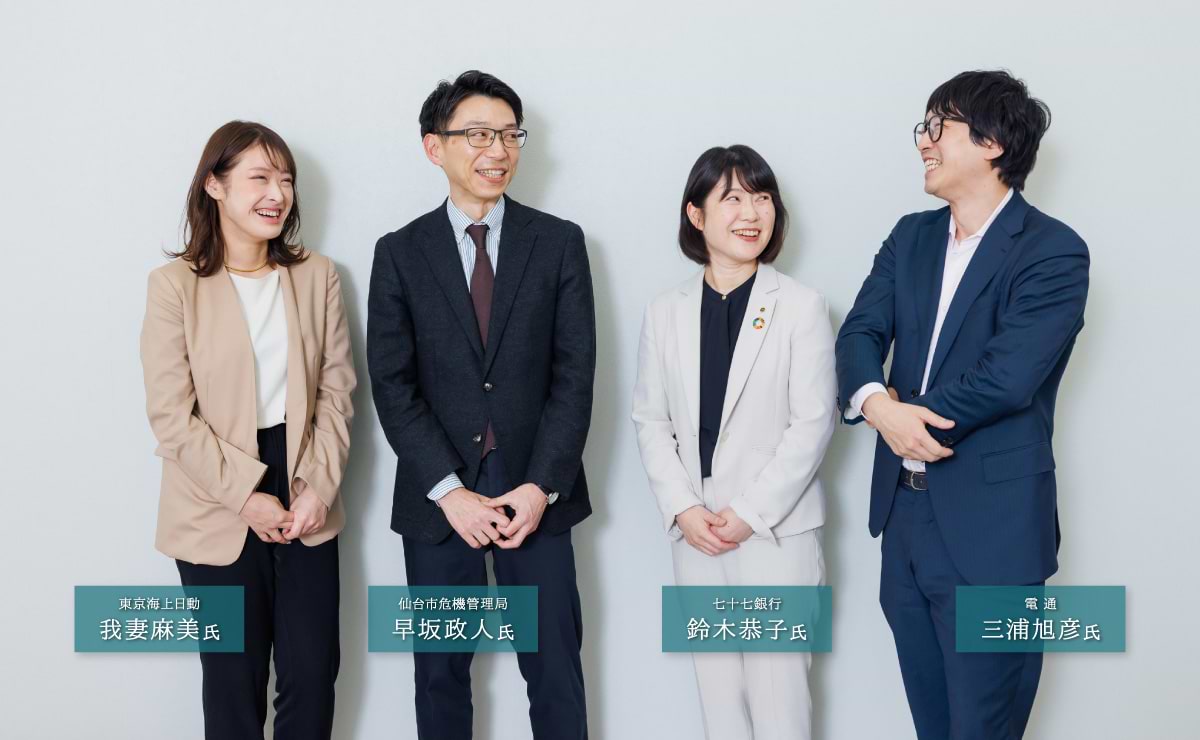
In this article, we focus on the initiatives of the subcommittees, which play a central role in the consortium’s operations. How can we shift disaster prevention and mitigation efforts—which have traditionally been led by the government—to a corporate-led model, and build a local community where businesses and residents actively participate as stakeholders? Representatives from Sendai City, which leads the operations of “Xross Innovation BOSAI,” along with The 77 Bank (the subcommittee’s secretariat), Tokio Marine & Nichido, and Dentsu Inc.—four organizations in total—discussed mechanisms for integrating disaster prevention with the circular economy.
In this series, we will explore the significance and potential of industry, academia, government, finance, and the public working together to solve local social issues, as well as offer insights for promoting B2B2S (Business to Business to Society) initiatives.
Leveraging a Strong Customer Base to Raise Corporate Disaster Preparedness Awareness
Miura (Dentsu Inc.): Today, I’d like to delve deeper into Subcommittee 3, which is organized and managed by The 77 Bank. First, could you tell us about the background behind The 77 Bank’s participation in “Xross Innovation BOSAI”?
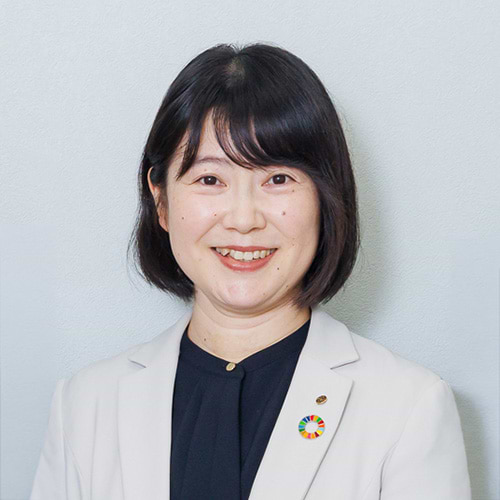
Mr. Suzuki, The 77 Bank
Suzuki (The 77 Bank): In September 2019, our bank signed a comprehensive partnership agreement with the City of Sendai, establishing a partnership based on collaboration and cooperation across a wide range of fields. Against this backdrop, we decided to participate in “Xross Innovation BOSAI” to address regional challenges.This consortium represents a very novel initiative even on a global scale, and we see great potential in the concept of companies pooling their assets to tackle regional challenges. We also hoped to gain valuable insights through our participation.
Furthermore, our bank has the strength of a solid customer base centered in the Tohoku region and Sendai City. We believe we can leverage this network to play a role in raising disaster prevention awareness and deepening disaster prevention knowledge among local companies.
Hayasaka (Sendai City): As the City of Sendai, we felt reassured that The 77 Bank—a bank with a long history and deep trust from local businesses—would participate as a partner. I believe the mere fact that “The 77 Bank is participating” serves as a major boost for the companies joining the subcommittees.
Miura (Dentsu Inc.): In particular, Subcommittee 3, which 77 Bank chairs, has adopted the theme of “Mainstreaming Disaster Prevention and Regional Economic Circulation.” Given that 77 Bank is a pillar of the region and has connections with a wide range of companies, its leadership is likely to be a major strength in promoting regional economic circulation.
Tokio Marine & Nichido is also participating in this subcommittee. How do you typically collaborate with other companies to advance these initiatives?
Azuma (Tokio Marine & Nichido / hereinafter Tokai): While the subcommittee is primarily managed by the organizing bank, The 77 Bank, our company is also involved in its operations as a member of the secretariat and as one of the participating companies.Currently, we hold regular meetings every two weeks. In addition to 77 Bank and our company, six or seven other companies participate, and we brainstorm ideas for initiatives and collaborations that contribute to regional disaster prevention and mitigation. It’s impressive to see such lively exchanges of opinions at every meeting.
What is the significance of approaching disaster prevention and mitigation from a B2B perspective?
Miura (Dentsu Inc.): What kind of initiatives is Subcommittee 3 undertaking?
Suzuki (The 77 Bank): As I mentioned earlier, our strength lies in our connections with corporate executives. In this subcommittee, we aim to spread awareness of disaster prevention and mitigation throughout the entire local community through a B2B approach that leverages the networks and specialized expertise of participating companies.
For example, formulating a BCP (Business Continuity Plan) (*) is a key priority for companies seeking to maintain business continuity. During the process of developing and reviewing a BCP, companies face various management challenges, such as insurance, cash flow, building seismic resistance, infrastructure, and data (network environments).
By instilling an awareness of disaster prevention and mitigation among local companies and helping them address these management challenges, we ultimately contribute to improving their management capabilities. We believe that, in the long run, this will become a driving force for the regional economy.
*BCP (Business Continuity Plan): A set of policies and action plans designed to ensure that a company can continue critical operations and resume them quickly even during disasters such as earthquakes or heavy rains.
Miura (Dentsu Inc.): I see. So the idea is to enhance corporate management capabilities from the perspective of disaster prevention and mitigation, and thereby contribute to the circulation of the local economy.
"Xross Innovation BOSAI" aims to contribute to disaster prevention and mitigation by combining the values (strengths and assets) of participating companies to create various innovations. At the same time, through participation in the consortium, we hope to make this an initiative where participating companies can bring to life what they wish to achieve within their core businesses.Within the consortium, we refer to the goals companies wish to achieve in their core businesses as the “ego” of participating companies. As Dentsu Inc., the consortium operator, we are strongly committed to promoting a balance between achieving disaster prevention and mitigation and realizing the “ego” of participating companies. What is the “ego” that The 77 Bank wishes to realize?
Suzuki (77 Bank): Ultimately, it is about enhancing the business capabilities of our local clients. Solving their management challenges ultimately leads to the expansion of our own proposal and problem-solving capabilities. We believe that by linking disaster prevention as a central theme to solving all kinds of challenges—such as supporting BCP development, proposing insurance solutions, providing funding, and promoting digital transformation—we can help the local economy thrive.
Linking Corporate “Ego” to Problem Solving to Create New “Co-creation”
Agatsuma (Tokai): At our company, this consortium initiative has served as a catalyst for a new collaboration with The 77 Bank. As an insurance company, we have maintained daily contact with businesses and provided insights and products related to disaster risks and preparedness. However, our challenge moving forward was to extend these efforts beyond our existing network to reach a broader range of companies.Through our partnership with The 77 Bank, we have established a framework where bank employees introduce our group’s solutions to their corporate clients. This has created new points of contact with companies we had previously been unable to reach. As a result, we feel that new business opportunities centered on disaster prevention and mitigation are expanding.
Tokio Marine & Nichido, Mr. Azuma
Suzuki (The 77 Bank): Solving the management challenges faced by our client companies and helping them enhance their management capabilities is our bank’s “ego,” but ultimately, this leads to revitalizing the local economy. The fact that this is a win-win for everyone is what makes this a new initiative, isn’t it?
Miura (Dentsu Inc.): It’s interesting that “self-interest” has become a keyword for innovation. The process of mutually fulfilling each other’s “self-interest” leads to co-creation, which in turn contributes to solving social issues. From Sendai City’s perspective, how do you view the fact that new collaborations are emerging among participating businesses?
Hayasaka (Sendai City): Until now, the disaster prevention sector has often been viewed as something driven by the government. In particular, when companies engage in disaster prevention, they often perceive it as a significant cost burden that doesn’t easily translate into business opportunities, so it frequently remains limited to CSR activities. However, the fact that businesses are collaborating and working together as one to tackle disaster prevention and mitigation, starting from the connections made within the consortium, feels like an unprecedented form of co-creation.
Furthermore, rethinking disaster prevention from a B2B perspective, as we are doing now, also helps realize Sendai City’s own “vision.”
The city has been carrying out various initiatives day by day, driven by the desire to foster a mindset of proactive disaster preparedness among citizens through these activities. Since we maintain regular contact with local organizations such as neighborhood associations and social welfare councils, as well as educational institutions, we have achieved some success in reaching out to the elderly and children. On the other hand, we have not been able to adequately reach the working-age population, primarily those in their 20s to 50s.
So, how can we foster disaster preparedness awareness among the working-age population and encourage them to prepare at home? This is where we are pinning our hopes on a process that involves raising disaster preparedness awareness within companies and, through these efforts, fostering a shift in mindset among each and every employee.
Miura (Dentsu Inc.): So, by raising the overall level of disaster preparedness awareness within companies, we aim to instill that awareness in employees as well.
Hayasaka (Sendai City): Even when formulating BCPs, the preparedness of individual employees in their own homes is a perspective that is often overlooked. Through the activities of the subcommittee focused on B2B initiatives, we hope to foster a new level of disaster preparedness awareness unlike anything seen before.
This reflects Sendai City’s own perspective—one might even call it our “self-interest”—but for companies as well, disaster preparedness initiatives and outreach to employees contribute to enhancing corporate value. We hope that these shared perspectives from each stakeholder will converge and, as a result, spread throughout society in a meaningful way.
Spreading disaster preparedness awareness from businesses to households. What role is expected of the subcommittee moving forward?
Miura (Dentsu Inc.): Could you share any specific ideas you’d like to pursue in Subcommittee 3 moving forward?
Suzuki (The 77 Bank): In the immediate future, we plan to strengthen our connections with local customers and our information dissemination efforts, while exploring new initiatives that leverage the specialized expertise and networks of the companies participating in the subcommittee. Our vision is to further advance the creation of a foundation for innovation through idea generation and collaboration with other companies.
Also, as Mr. Hayasaka mentioned, we believe disaster preparedness measures at home are crucial. In addition to raising awareness about disaster prevention and mitigation through our daily operations, we’d like to devise ways to help people feel more connected to disaster preparedness in their personal lives after they return home.
Miura (Dentsu Inc.): As a disaster prevention and mitigation advisor who also appears in the media, could you share your thoughts on how to spread disaster prevention awareness from companies to households?
Mr. Hayasaka, Sendai City Crisis Management Bureau
Hayasaka (Sendai City): Until now, the primary approach to disaster prevention and mitigation has been to reach “from children to families” through school education. I believe that if we can also reach “from employees to families” through corporate employee training, we can further raise disaster preparedness awareness within households.
If government-led awareness campaigns targeting “children to families” and corporate initiatives targeting “employees to families” can work together in a two-way partnership, the preparedness of families and individuals will evolve into something of higher quality.
Ultimately, disaster prevention and mitigation will become second nature to society as a whole, and disaster resilience will naturally increase through the actions of each individual citizen—even without intervention from the government or corporations. That is the kind of self-sustaining local community we aim to build.
Shifting the Balance Between “Cooperation and Competition”: From Japan to the World
Miura (Dentsu Inc.): Finally, could you share what you hope to achieve through the consortium’s initiatives?
Mr. Miura (Dentsu Inc.)
Suzuki (The 77 Bank): I believe that strongly promoting Sendai as a city dedicated to disaster prevention will lead to an enhancement of the region’s brand value. Being resilient to disasters and providing a safe working environment are major factors for companies and the younger generation when choosing a city. We intend to continue working to build a foundation that will make many people think, “I want to choose Sendai” as a place to start a business or expand operations.
Azuma (Tokai): We do not view disaster prevention as merely a matter of property and casualty insurance; rather, we aspire to be a partner that continues to deliver innovative solutions to the challenges and risks faced by businesses and local communities. Starting with our contributions to local companies, we aim to become a trusted and reliable presence in the field of disaster prevention and mitigation, and we intend to expand these efforts throughout the region and, ultimately, to society as a whole.
On a personal note, I am truly delighted to see the circle of co-creation expanding, regardless of scale. Through the subcommittee, we have developed close relationships with various companies. Moving forward, I hope to continue creating new value and opportunities for co-creation by sharing our respective strengths and challenges, transcending the boundaries of industry and role.
Hayasaka (Sendai City): I truly feel that what The 77 Bank and Tokio Marine & Nichido are pursuing aligns with “mainstreaming disaster risk reduction”—one of the principles of the Sendai Framework for Disaster Risk Reduction adopted by the United Nations. This approach involves not treating disaster prevention and mitigation as special initiatives, but rather embedding them in society so that they are naturally incorporated into daily life and work, becoming an integral and natural part of our daily activities.
As the City of Sendai, we also place great importance on this principle and aim to realize a daily life where disaster prevention is naturally integrated into society as a whole. We look forward to continuing to advance various initiatives together with all of you.
Looking further ahead, Sendai is a government-designated city that experienced the Great East Japan Earthquake. I feel that, going forward, we will be called upon more than ever to not merely treat that experience as a lesson, but to leverage it as a strength.
Through the co-creation efforts of this consortium, I hope that Sendai’s economic foundation will grow into something we can proudly present to the world as a “disaster-resilient city.” I look forward to working with all of you to shape this unique future for Sendai.
Miura (Dentsu Inc.): Thank you all very much. Listening to your remarks today, I felt that having “ego” at the center of this open innovation consortium is generating various chemical reactions and accelerating collaboration between businesses and the government.
Global competition is intensifying, and Japan is facing the structural challenge of a declining population. Amidst this, the “line between cooperation and competition” is undoubtedly shifting.Even in areas where we used to compete within the same industry, the question now is: to what extent should we solidify a foundation of “cooperation,” and how can we then leverage individual strengths through “competition” to elevate the overall strength of the region and Japan? This consortium is precisely the venue to raise that “line of cooperation” to a new level and redefine the standards for a new era.
It is precisely because we have regional cornerstones like The 77 Bank that all networks can connect and maximize the region’s competitiveness. We will link this Sendai-born “disaster prevention through co-creation” model to a business ecosystem that leads Japan and the world. I look forward to continuing to drive this major challenge forward together with all of you.
Joined the company in April 1998. Served as Head of the Diversity Promotion Office in the Human Resources Department in September 2019; Branch Manager of the Mori-Sekinoshita Branch and Yuriage Branch in June 2021; and Director and Head of Head Office Sales at 77 Securities Co., Ltd. in June 2023. Assumed current position in June 2024. Works to address challenges related to regional revitalization in the Tohoku and Miyagi regions.
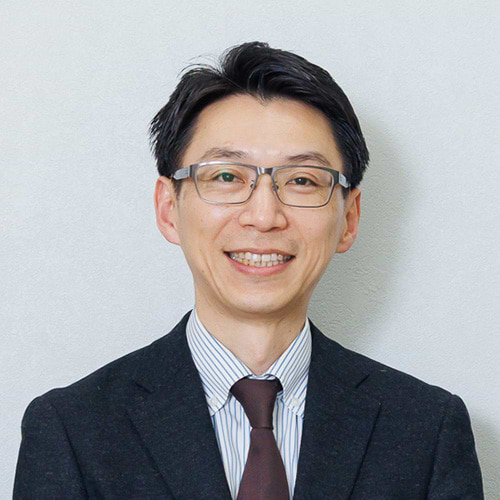
Masato Hayasaka
Sendai City Crisis Management Bureau
Disaster Prevention and Mitigation Division, Disaster Mitigation Promotion Section
Chair
Sendai City Disaster Prevention and Mitigation Advisor / Sendai Fire Department Officer
Drawing on his on-site experience as a firefighter in disaster response and disaster prevention instruction, he provides advice on disaster prevention and mitigation measures tailored to local characteristics and is involved in human resource development. He practices disaster prevention education that connects children, families, and the community, working to build a society where disaster prevention is integrated into everyday life.
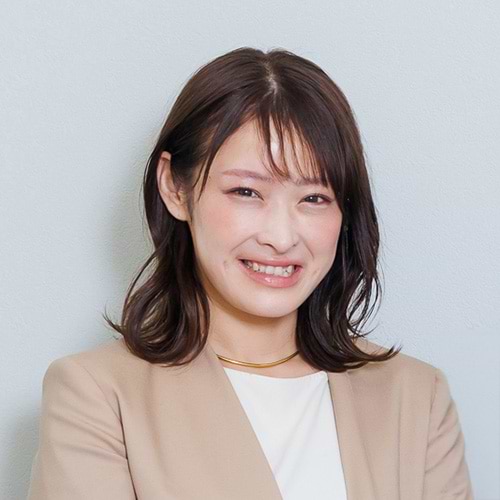
Asami Azuma
Tokio Marine & Nichido Fire Insurance Co., Ltd.
Sendai Branch, Market Strategy Team
Based in Sendai, I am primarily responsible for collaborating with local governments and am involved in initiatives aimed at solving regional challenges.
Leveraging the risk management expertise I gained at an insurance company and my local connections, I participate in the planning and operation of “Xross Innovation BOSAI.” While exchanging ideas with a diverse range of stakeholders, I am exploring ways of co-creation that can contribute, even in a small way, to improving regional sustainability and resilience.
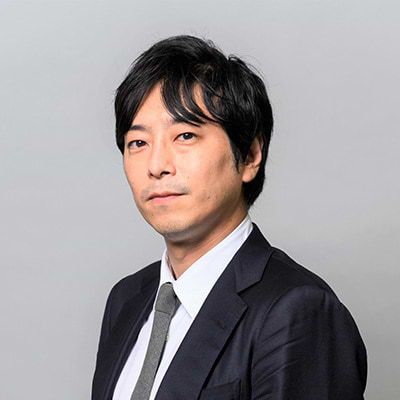
Miura Teruhiko
Dentsu Inc.
Business Transformation Division 1
Group Innovation Director / Group Integrated Producer
Supporting business growth from conceptualizing transformation to launch and execution. Taking a challenge-first approach without limiting domains, engaged in consulting and production across diverse fields: product/service development, marketing strategy formulation, CR development, and operational reform. In this rapidly changing world, my purpose is to work hand-in-hand with client partners—worrying, thinking, solving problems together, and finally raising a celebratory toast. Hints for creating "the ultimate customer experience" PLAZMA 15 Speaker / Manager of Hitotsubashi University's "Ideas Lab to Make the World a Little More Interesting" / Other

 The Power of Co-Creation to Revolutionize Disaster Preparedness—A Sendai-Based Project Shaping the World's Future— [2/2]