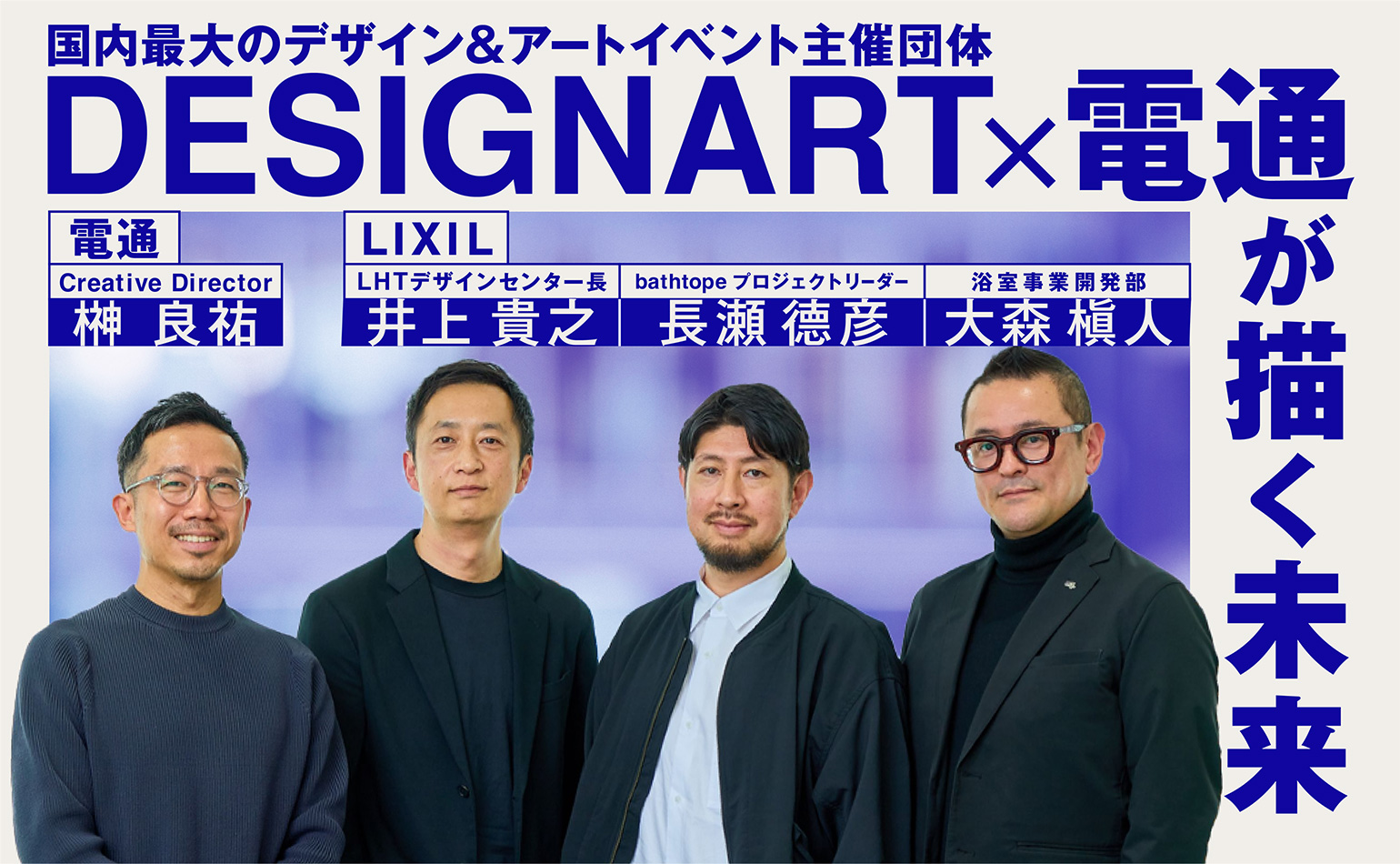
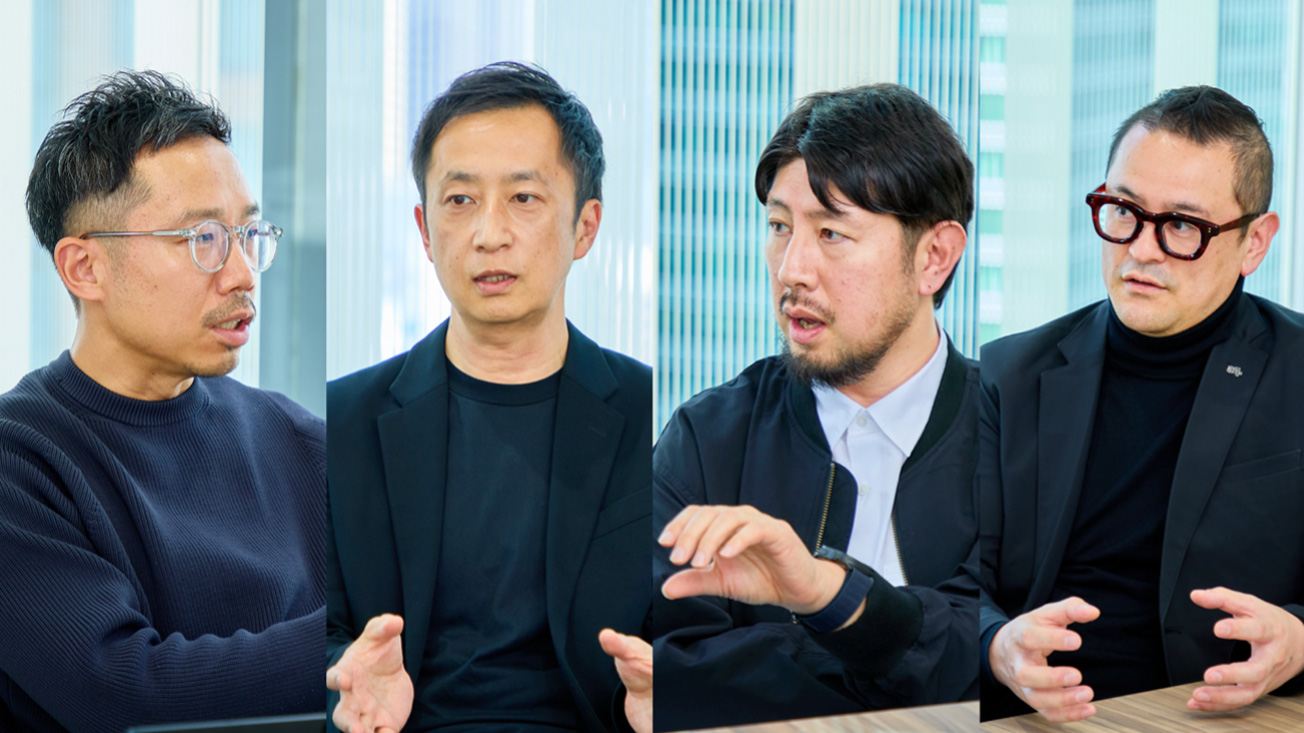
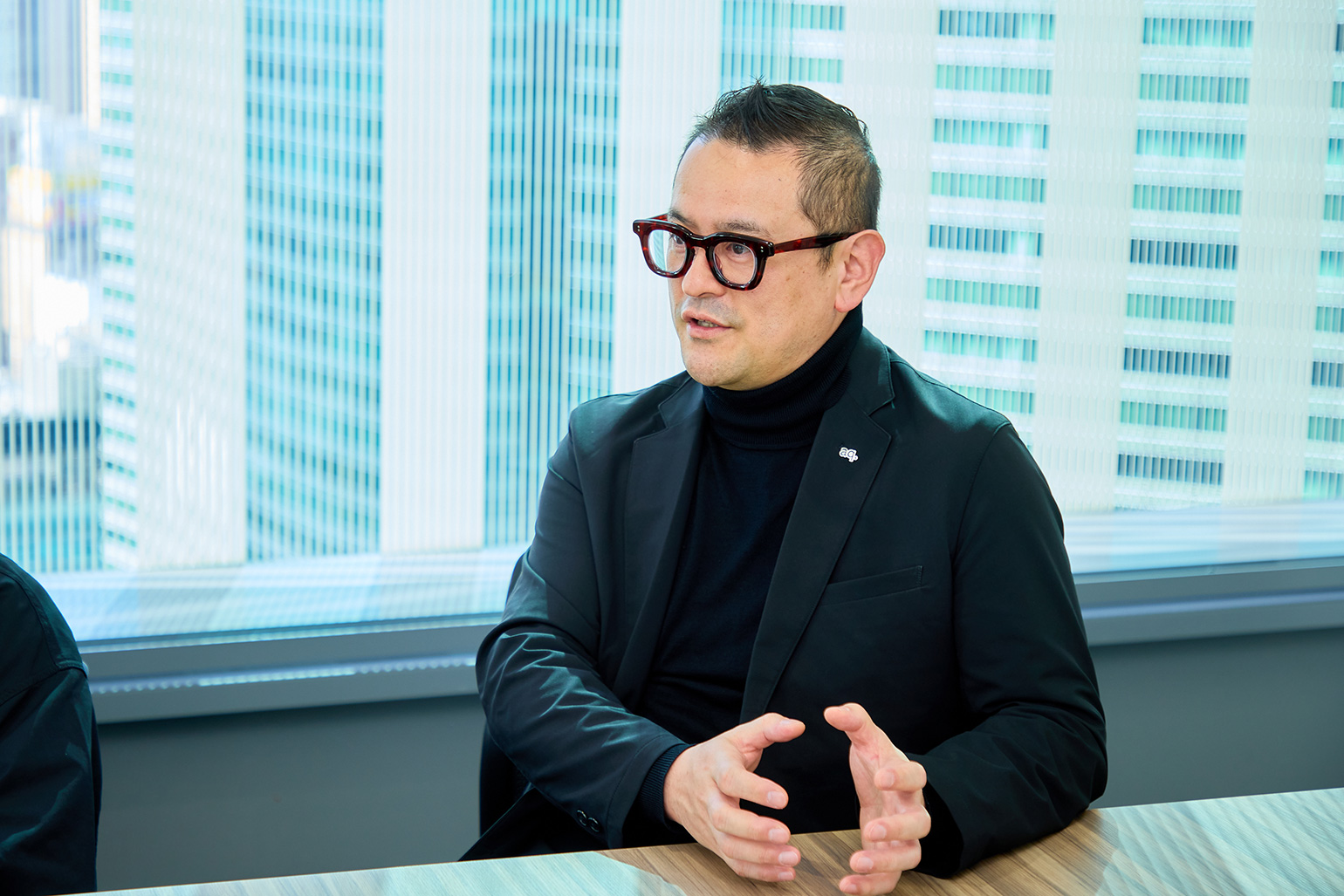
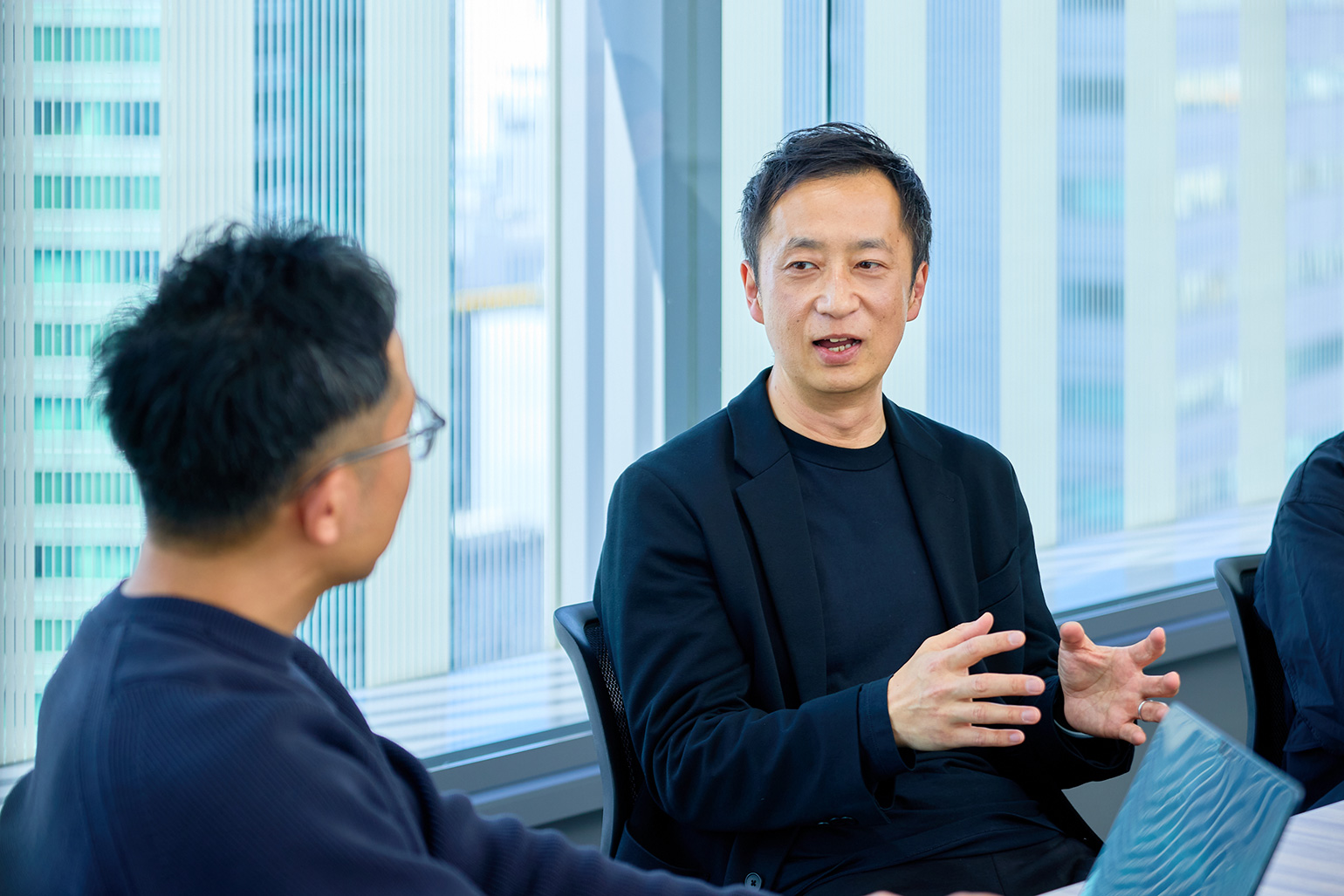
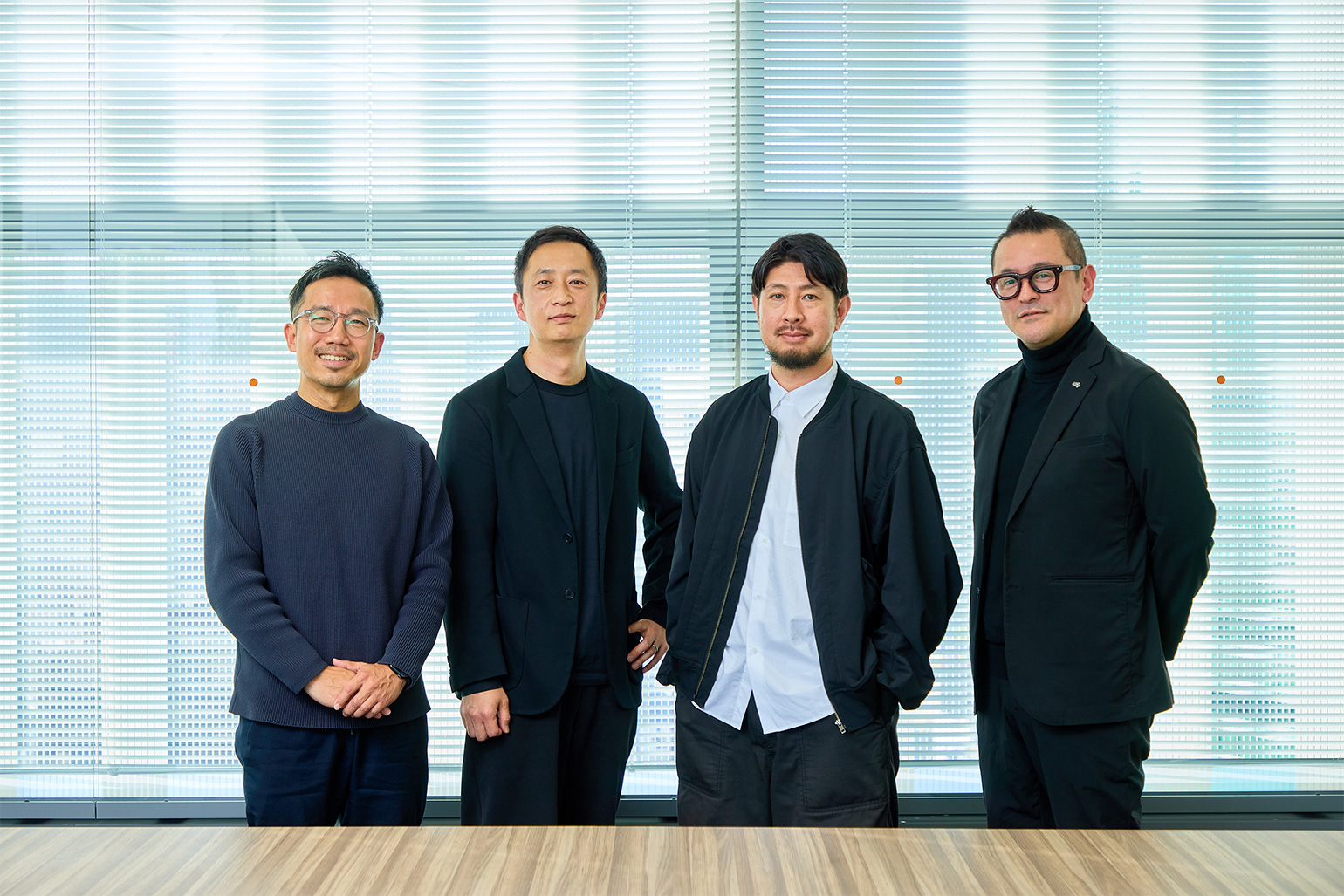
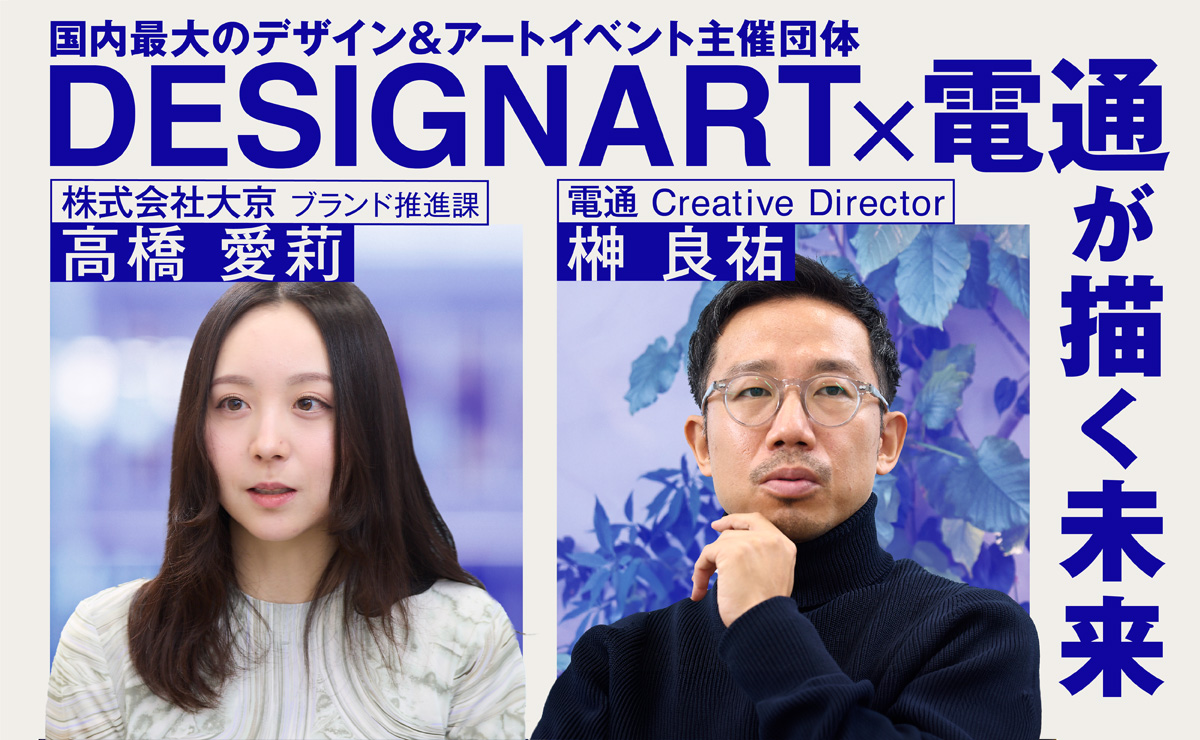
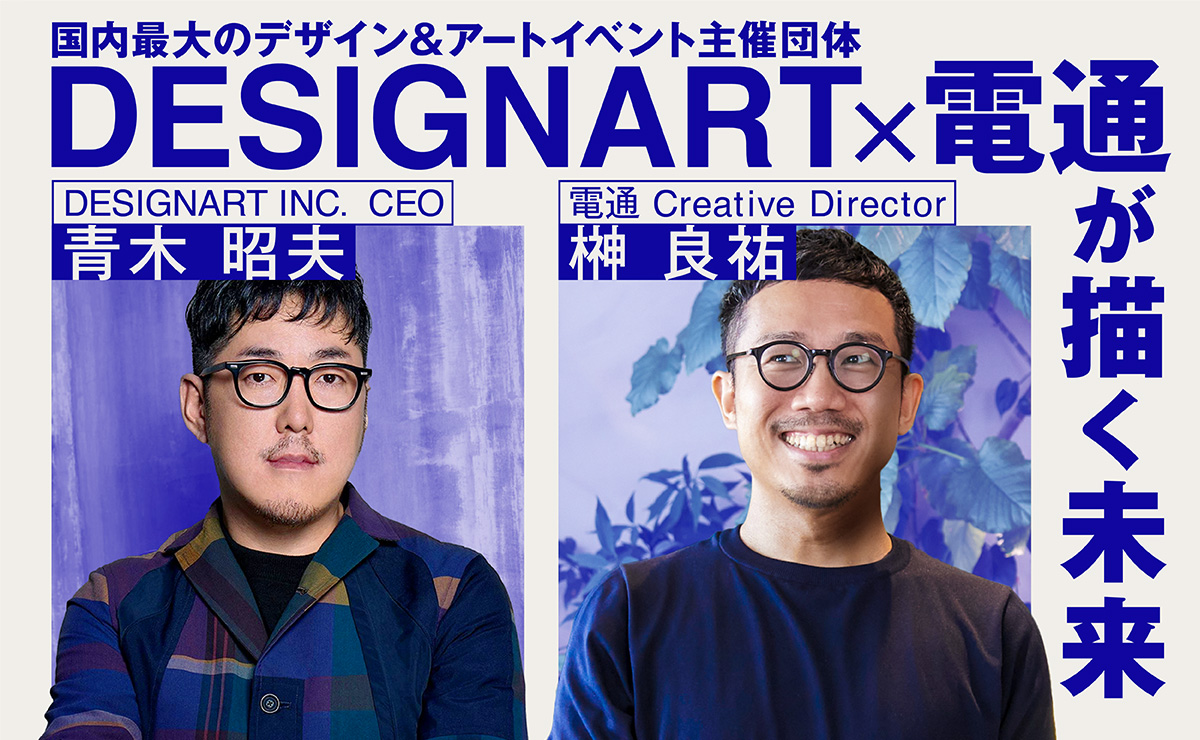
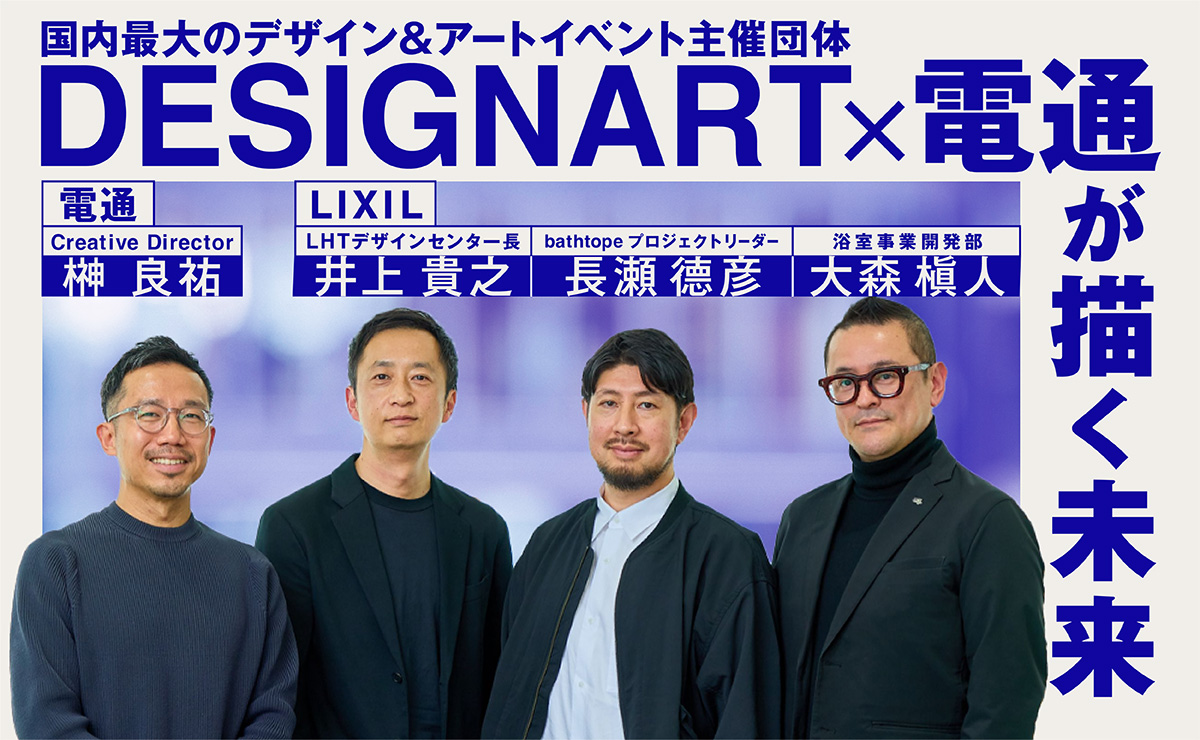
LIXIL, a manufacturer of housing equipment and building materials, has exhibited at DESIGNART TOKYO three times to date. In each instance, rather than simply unveiling new products, the company has consistently presented works that pose the question to society: “What should the homes of the future look like?” Why does LIXIL continue to unveil innovative new products and concept exhibits at DESIGNART TOKYO?Dentsu Inc. Creative Director Ryosuke Sakaki spoke with three LIXIL representatives: Takayuki Inoue, Head of the LHT Design Center; Tokuhiko Nagase, bathtope Project Leader; and Makito Omori, who leads the “aq.” custom bath brand in the Bathroom Business Development Department.
DESIGNART TOKYO is a design and art festival that launched in 2017 and attracts a total of approximately 250,000 visitors. Talented creators from diverse fields—including interior design, art, fashion, technology, and food—gather from around the world to hold exhibitions at various locations throughout Tokyo. The festival’s grand concept is “INTO THE EMOTIONS ~The Gateway to Emotion~.”
――LIXIL has exhibited new products and concepts at DESIGNART TOKYO three times so far. Is this a company known for such innovative initiatives?
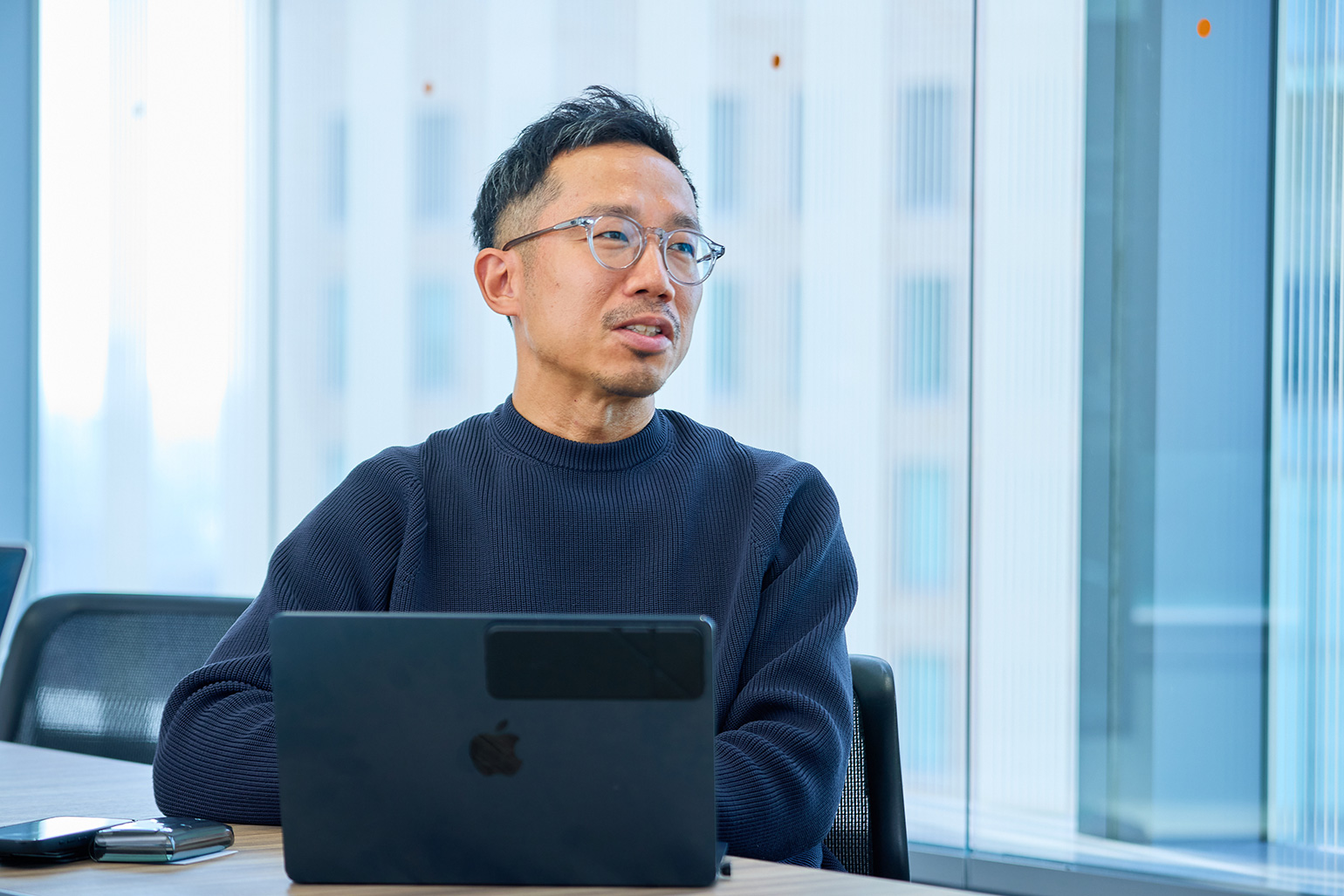
LIXIL’s Nagase: LIXIL is rooted in a concept called the “3-Box Theory.” The first box contains our “current strengths,” the second box contains the “elements we should discard” from those strengths, and the third box contains “future new businesses.” The idea is that if we don’t keep creating the third box, the first box will eventually become commoditized.Since our president, Seto, comes from an entrepreneurial background, I believe there is a very strong company-wide focus on “creating the future”—which corresponds to the third box.
What we’ve been doing at DESIGNART TOKYO falls squarely within the realm of this third box, and I believe it’s closely tied to design. When it comes to new challenges, the company provides us with significant autonomy and a supportive environment that encourages us to “go for it.”
Dentsu Inc. Sakaki: That’s a fantastic environment. In large corporations, even when you try to do something new, you inevitably face questions about consistency with existing businesses and short-term profitability. But LIXIL has properly set aside room for experimentation aimed at the future. I believe that’s what has enabled the continuous output from DESIGNART TOKYO.
“I didn’t realize LIXIL had a design center.”
—Could you tell us the background behind your decision to exhibit at DESIGNART TOKYO?
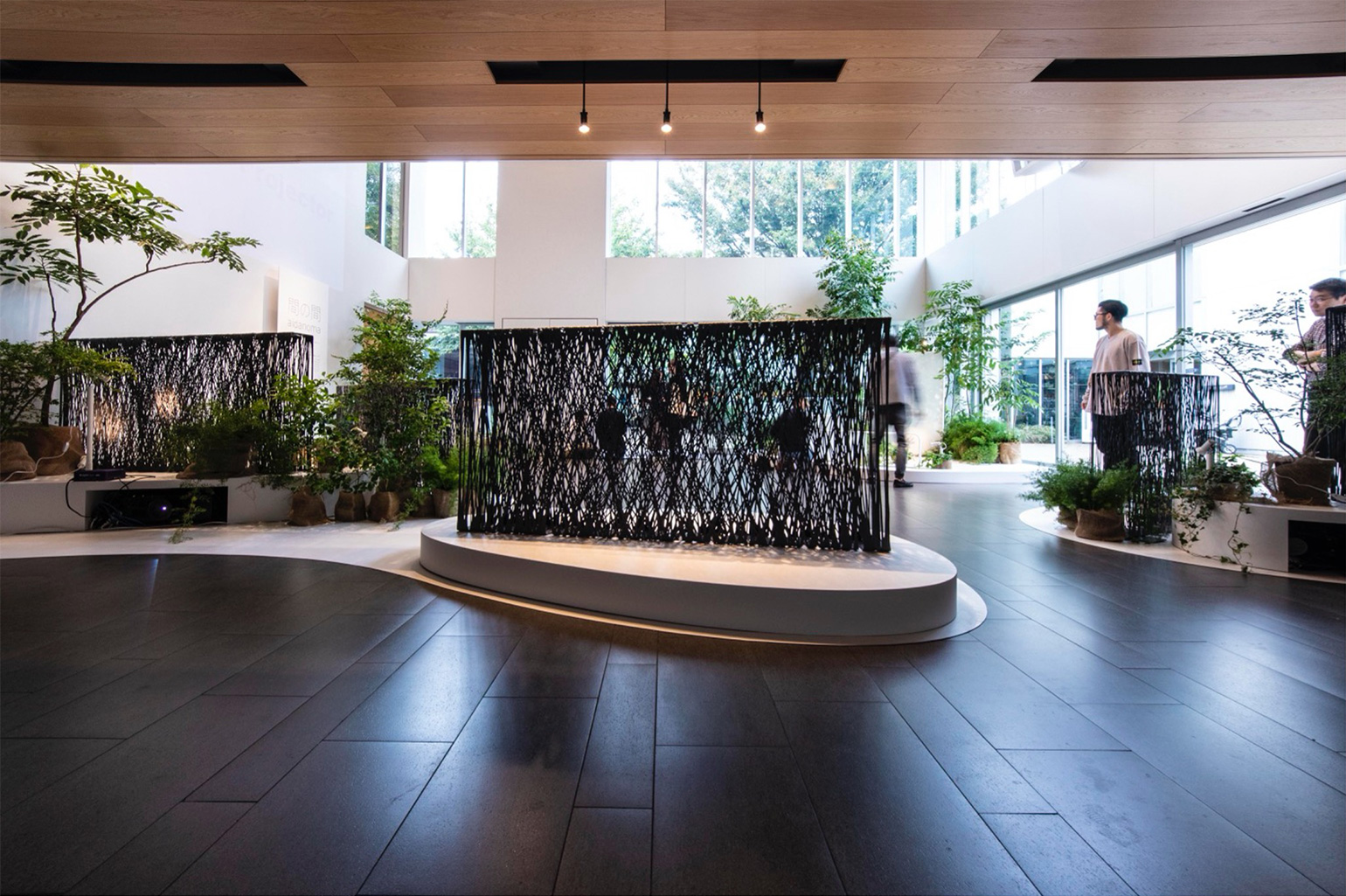
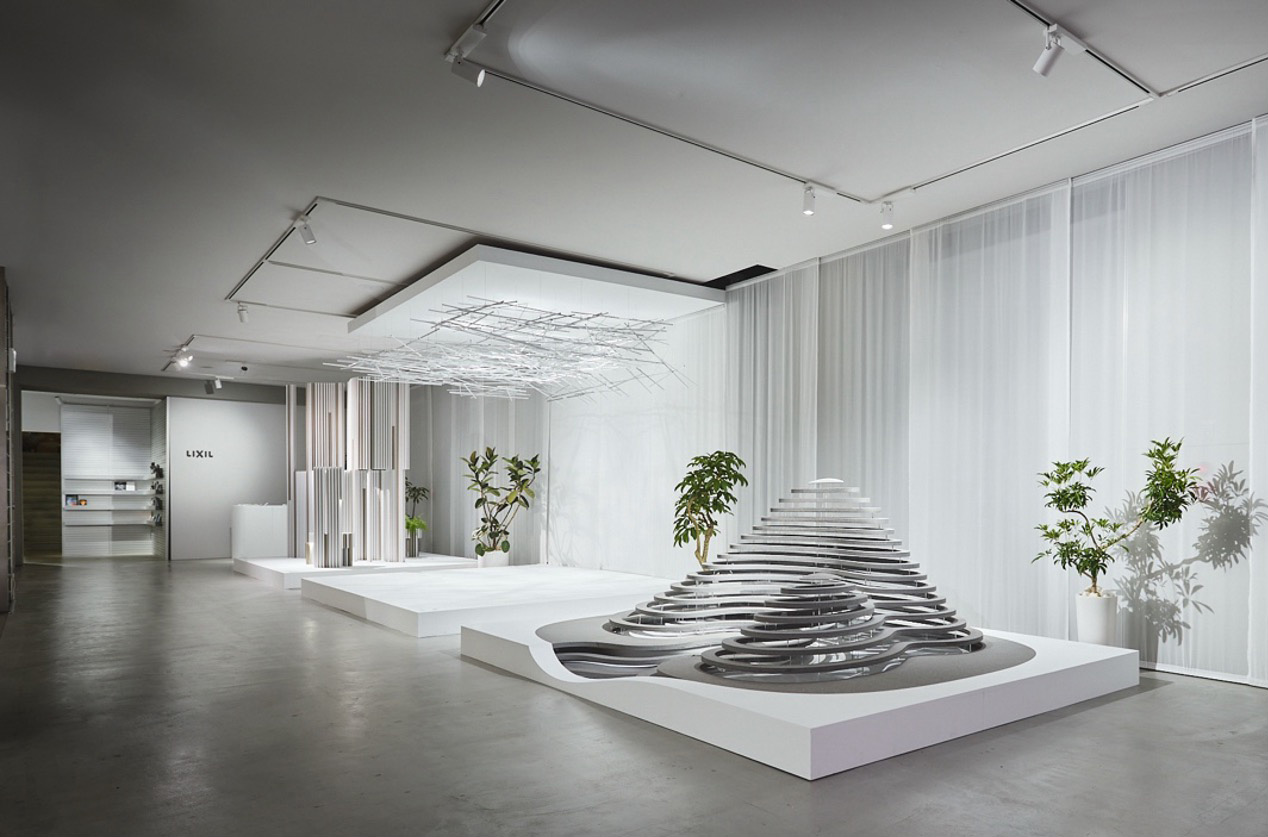
LIXIL Inoue: When we first exhibited, it started with the strong conviction of a single designer. We wanted to present concept work using carbon materials—which we were developing internally—to the outside world and see what kind of response we’d get. So, at DESIGNART TOKYO 2019, we unveiled “Aida no Ma” (The Space Between).
“Aida no Ma” was an exhibition born from a fundamental reexamination of how spaces are divided. Using elements like fences that allow light and wind to pass through, we proposed a new relationship between spaces—one where light, shadow, and atmosphere are felt, creating a comfortable resonance between them.
To be honest, when I first heard about DESIGNART TOKYO, I was quite anxious. Since I had a strong image of it being a venue where creators and art took center stage, I wondered, “Is it really okay for a residential building materials manufacturer like us to participate?”
However, when I considered our desire to share our new technologies and innovative ideas with the broader design industry, I felt this was actually a perfect fit. As a result, my initial concerns gave way to a growing sense of anticipation—I began to think, “Maybe we can really get our message across here.”
――How did it feel after actually exhibiting?
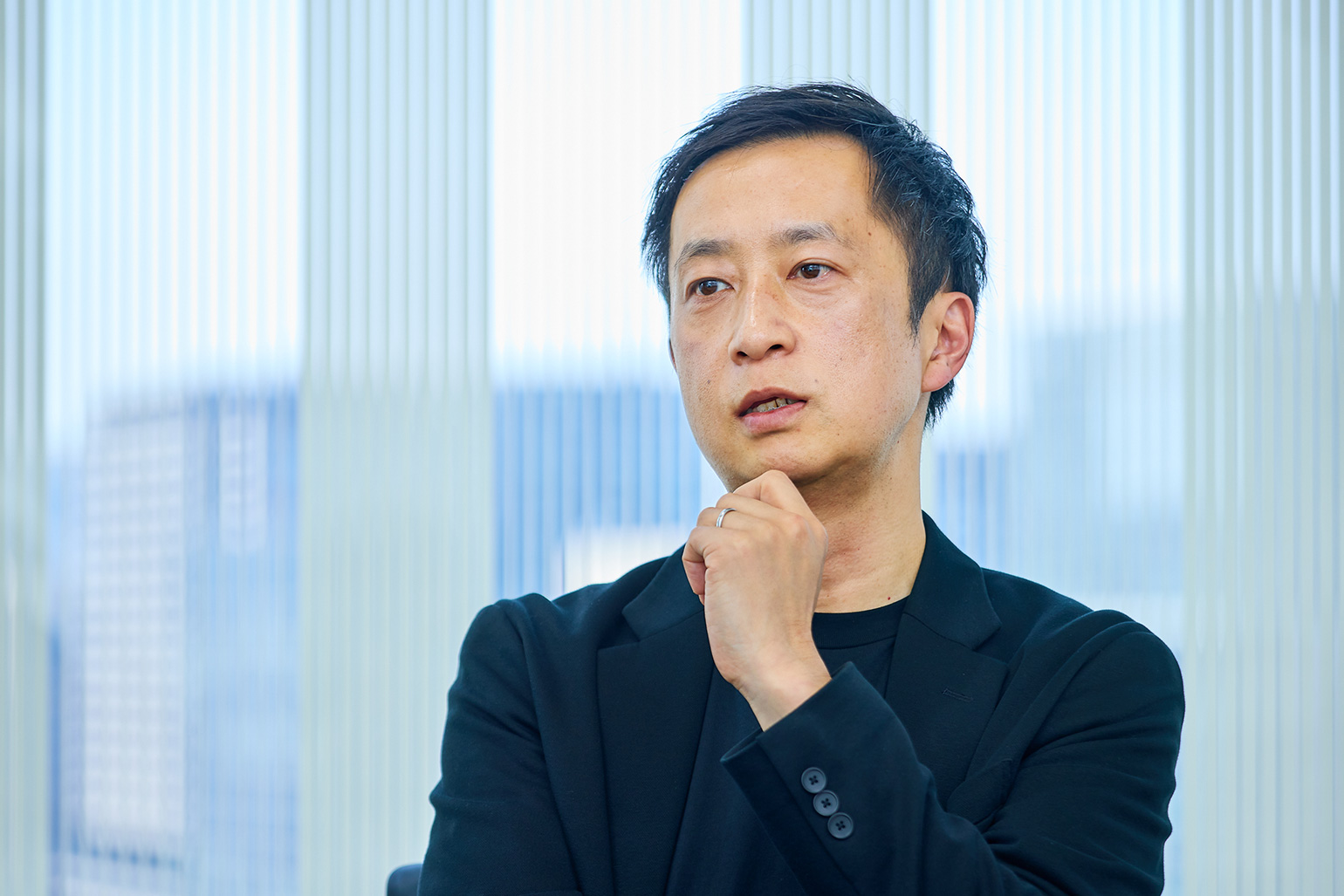
LIXIL Inoue: Since it was a highly conceptual exhibition that differed significantly from existing LIXIL products, I felt we were able to successfully convey a new image of LIXIL to the world. Following “Ma no Ma,” when we held the “Mui ni Mura” exhibition in 2025, I was particularly struck by a customer who remarked, “I didn’t know LIXIL had a design center.”
“Mui ni Mura” was a project that sought to deconstruct and reconstruct conventional notions of space by introducing the concept of “mura” (mottling) to transcend spatial uniformity and standardization. It involved reexamining the essence of the elements that make up a space and extracting value from them.
LIXIL has a strong public image as a provider of housing fixtures and building materials, so perhaps people didn’t really associate the company with design.To be honest, when I first heard someone say, “I didn’t realize LIXIL had a design center,” I didn’t feel very good about it. But that person added at the end, “It’s really wonderful.” They said, “I thought you were just a company that sold products straight off the factory floor, but I see you’re thinking this way. I’m looking forward to what comes next.” I received many comments like that, though the wording varied. I could feel that the way people viewed us had clearly changed.
Actually, I heard the phrase “I didn’t realize LIXIL had a design center” from someone else about ten years ago as well. Ever since then, I’ve always wanted people to eventually think of us as “LIXIL of Design.” Through our efforts at DESIGNART TOKYO, I feel like we’re gradually making that vision a reality.
Dentsu Inc. Sakaki: I believe that in today’s world, the importance of communicating a company’s philosophy through conceptual design is growing.As technology and functionality become commoditized, communicating what a company wants to create in the future and what aesthetic values it holds can lead people to feel, “I like this brand” or “I have high hopes for this company.” I believe we’re entering an era where this accumulation of such sentiments leads to purchases and investments. Listening to what you’ve said, I get the sense that within LIXIL itself, there has been a growing awareness of the need to communicate the brand’s aesthetic values.
LIXIL Inoue: I truly believe that’s the case. Take windows, for example. Honestly, at first glance, you can’t tell which company made them. But if you look at the details, you’ll see we’ve actually put a lot of thought into them. I believe that those differences—our passion and attention to detail—ultimately translate into empathy and trust in the brand. That’s precisely why I think we must go beyond simply selling products; we need to communicate the philosophy and aesthetic sensibilities behind them.
The exhibition venue serves as a starting point for new sales approaches
――In 2024, you exhibited “bathtope” at DESIGNART TOKYO as an innovative product embodying the brand’s philosophy. How did this come about?
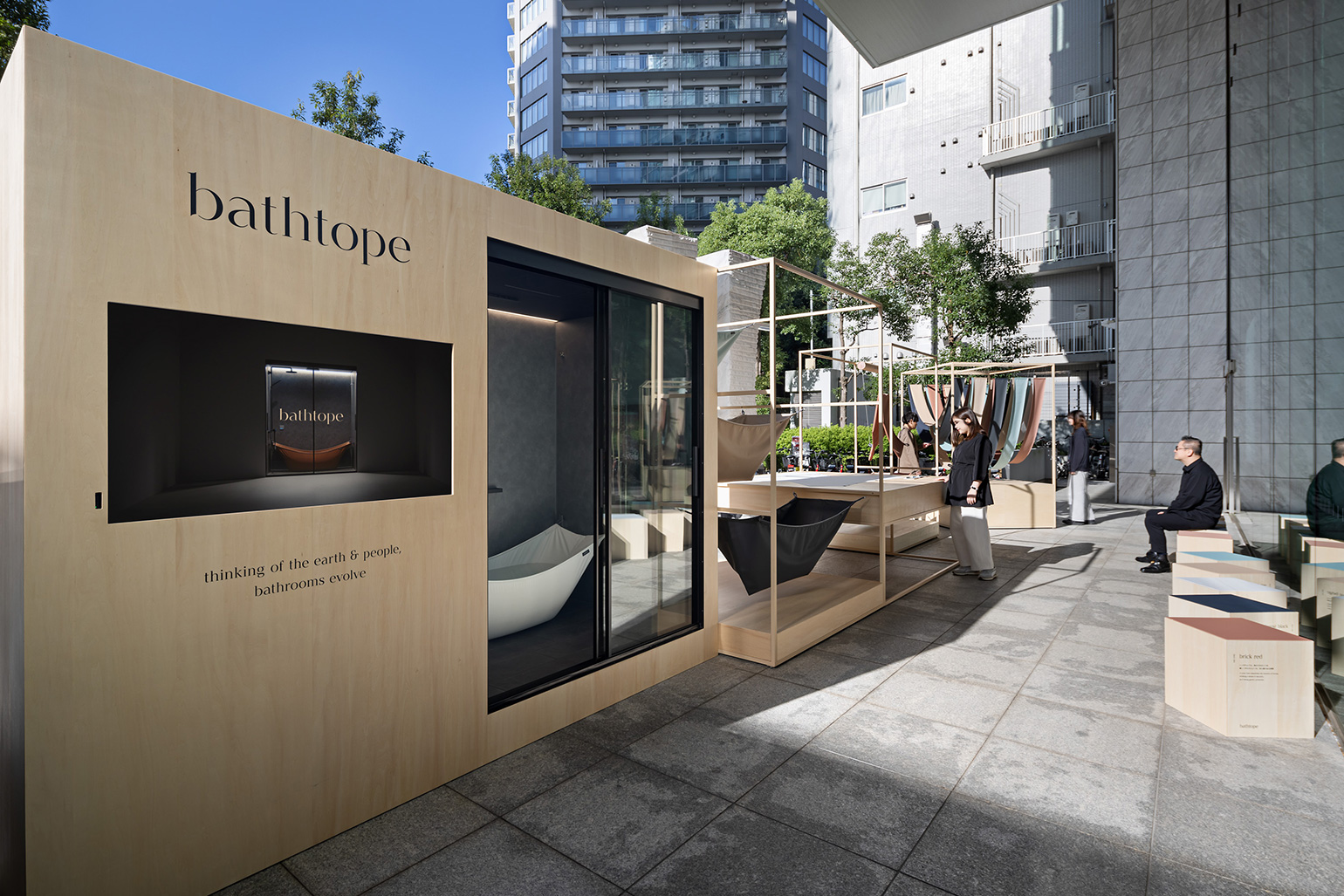
Nagase, LIXIL: “bathtope” is an idea that won the Grand Prize in LIXIL’s internal open call program, “Mirai BOX.” At LIXIL, we are committed to fostering innovation, and in 2021, we launched “Mirai BOX” to solicit business ideas for the future. Among the entries, a concept I submitted together with our design team was selected to move forward with commercialization.
photo by Nakasa & Partners “bathtope” is a new category of product positioned somewhere between a bathroom and a shower room, allowing users to enjoy a spacious experience even in compact bathroom spaces by removing the fabric bathtub. It offers efficiency with a shower on busy days and a luxurious bathing experience enveloped in warm water on days off.
The inspiration behind the idea was simple. A bathroom is a space that’s used for only a very short time—at most an hour or so—out of the entire day, isn’t it? So, we wondered if there was a way to get people to use their bathrooms for longer periods of time. Couldn’t it become a space used more freely—for enjoying hobbies or holding online meetings? That’s when we realized that if the bathtub could be removed, the space could be repurposed for other uses, and the act of attaching and detaching the bathtub would serve as a catalyst for making bathing habits more flexible.
On busy weekdays, you could just take a shower and prioritize efficiency, while on days off or when you have time, you could enjoy the “luxury of being enveloped in a fabric bath” with the same sense of freedom as going out for sunbathing or camping. That’s the new bathing habit we proposed.
――Please tell us the purpose behind unveiling the new product “bathtope” at DESIGNART TOKYO.
LIXIL Nagase: Regarding “bathtope,” we explicitly utilized DESIGNART TOKYO as a “platform for new product launches.” We invited members of the media from the outset, anticipating that the buzz would spread via social media afterward.Unlike our previous B2B business, this time we were operating in a B2C context, and we wanted customers to think, “I want this.” To achieve that, we needed an impactful exhibition, carefully crafted language to convey the product’s intrinsic value, and unique, sophisticated visuals. So we reached out to Dentsu Inc., shared our vision with them, had them actually bathe in the prototype, and ultimately, they supported us every step of the way—from naming “bathtope” to producing the promotional video.
As a result, the exhibition was highly effective. It was featured in multiple media outlets, and that positive response directly led to new orders. Furthermore, we saw concrete results, such as “bathtope” being adopted for a condominium renovation project through an architect who had seen the exhibition. We are definitely seeing an increase in inquiries from channels different from those we’ve used in the past.
Dentsu Inc. Sakaki: So, rather than following the traditional sales funnel of serving customers in a showroom, you created a new point of contact with customers at DESIGNART TOKYO and used it as the starting point for a new sales approach, correct?
LIXIL Omori: Yes. In the building materials business up until now, the approach has mainly involved asking distributors, agents, and contractors, “We’ve developed this product, so please use it.” But that approach lacks the customer’s own desire—the feeling of “I want this.” We wanted to change that structure.We wanted to create a situation where customers would say, “I absolutely want this in my home,” or “Even if it’s a bit of a challenge to fit the shape of my house, I want this.” Of course, we haven’t fully achieved that yet, but as a starting point, DESIGNART TOKYO was a very meaningful venue.
――As we worked together on the launch of bathtope, what value did you find in Dentsu Inc.’s support?
LIXIL Nagase: The best part was being able to refine the language together—the copy, the naming, and so on. We’d rarely discussed a single product name so thoroughly before, and while it seemed like we were debating the name, I think we were actually discussing the very nature of the product itself. The strength of the name “bathtope,” which we ultimately settled on, held tremendous significance for this project.
Dentsu Inc. Sakaki: From Dentsu Inc.’s perspective, rather than simply coming up with a name, we focused on carefully drawing out the underlying challenges and aspirations that hadn’t yet been articulated. What exactly felt off about existing bathtubs? What kind of future did people want to create? As we delved into these intuitive aspects, we found connections to consumer insights like the “bathtub cancellation trend” that was gaining traction at the time.
From there, we were able to develop a comprehensive strategy—from crafting the message “Baths should be freer,” to determining which media channels would resonate most effectively, what kind of video content would spread easily, and what words would capture the public’s attention. During the product development phase, we translate the unspoken sentiments within the company; during the launch phase, we transform them into a form that reaches society. I believe this role as a translator is the value that Dentsu Inc. can provide.
The secret to success is never losing sight of the goal
――Finally, could you share a message for companies considering exhibiting at DESIGNART TOKYO in the future?
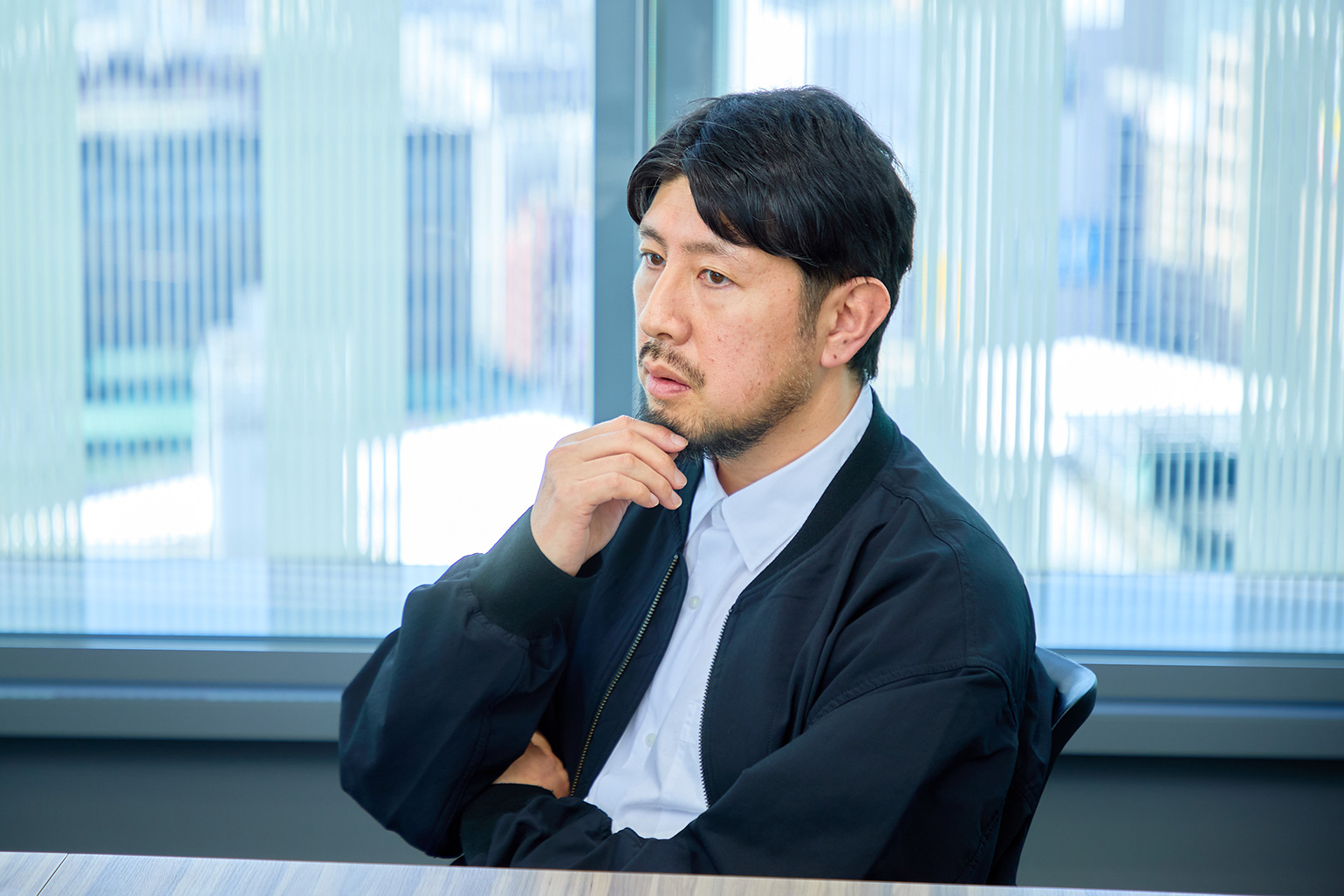
LIXIL Nagase: I think the appeal of DESIGNART TOKYO lies in the fact that, within an atmosphere where individual artists present their work, companies can also freely convey their messages without feeling the need to put on airs. In fact, I believe what LIXIL has done at DESIGNART TOKYO so far has been quite extreme in both directions. One approach involves exhibitions that showcase the attitudes of companies and designers, such as “Aida no Ma” (The Space Between) and “Mui ni Mura” (Spots of Idleness).The other has been exhibitions like “bathtope,” designed to broadly present new concepts and the potential of products to the world. As a venue where we can freely express both of these approaches, I feel that DESIGNART TOKYO is truly a place of great depth.
LIXIL Omori: At overseas trade shows, we inevitably carry the weight of the LIXIL brand, so we can’t afford to fail, and we have to present a fairly solid vision of the future. But at DESIGNART TOKYO, we can participate on a per-project basis or as a corporate brand. We can explore the approach that best suits us at any level of the company. Furthermore, I believe it’s effective for recruitment as well.We’ve even had students who came for internships tell us, “I saw your work at DESIGNART TOKYO and became interested.”
LIXIL Inoue: As we’ve discussed, exhibiting at DESIGNART TOKYO offers a variety of benefits. That’s precisely why I think it’s important to have a clear purpose for exhibiting. Why are we exhibiting? What do we want to convey? Having that core focus ensures our exhibition content stays on track. And to make sure we don’t lose sight of that purpose, it’s reassuring to have partners like Dentsu Inc. by our side, supporting us every step of the way.
Dentsu Inc. Sakaki: I believe DESIGNART TOKYO is a platform that allows companies to engage with society in a wide range of ways—from exploring unformed questions to announcing new products. It doesn’t matter if it stems from the passion of a single employee, like at LIXIL, or if it’s part of a corporate branding initiative. If your company has a vision or technology you’d like to share with the world, please feel free to reach out to us for a consultation.
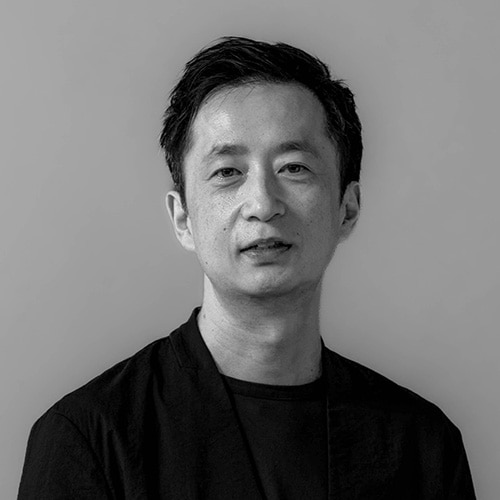
Joined LIXIL Corporation in 2015. After serving as a leader for housing products at the LHT Design Center, she is currently the Center Director there. She promotes activities to shape new living experiences from both the perspectives of design practice—spanning technology devices, daily necessities, and living spaces—and design management within the organization.
Tokuhiko Nagase
LIXIL Corporation
bathtope Project Leader
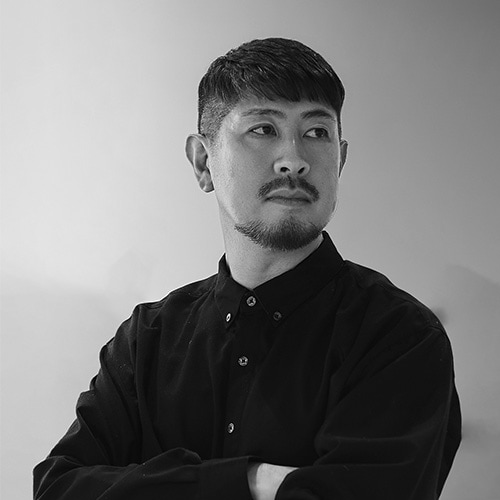
Joined LIXIL Corporation in 2008. Has held various roles in the planning and design of plumbing products.In 2021, she received the Good Design Award BEST 100 for “SPAGE,” the first unit bath to win the award. She led the innovation theme “bathtope,” winning the iF Design Award, Red Dot Design Award, and German Design Award GOLD, as well as the Nikkei Excellent Products and Services Award (Trend Category) in 2025. She is driving the creation of a new residential culture through design.
Makito Omori
LIXIL Corporation
Bathroom Business Development Department, aq. Business Promotion Group
aq. Project Manager
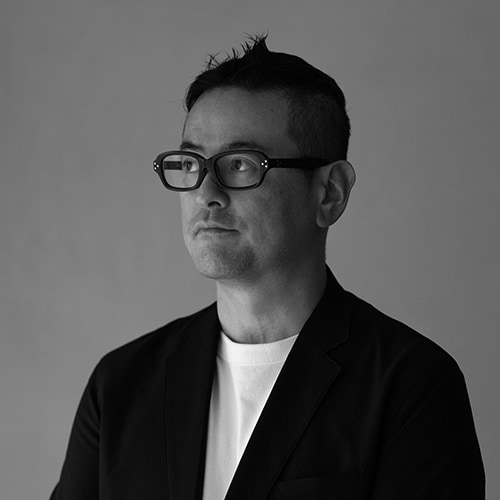
Joined the company in 2010 after working at an architectural firm. She is responsible for new product planning and promotion, focusing primarily on bathroom products. Since 2022, she has led the planning and promotion of innovative new products such as “bathtope” and the custom bathroom line “aq.” She is spearheading the creation of new business opportunities within LIXIL’s Bathroom Business Division.
Sakaki Ryosuke
Dentsu Inc.
クリエイティブ・ディレクター
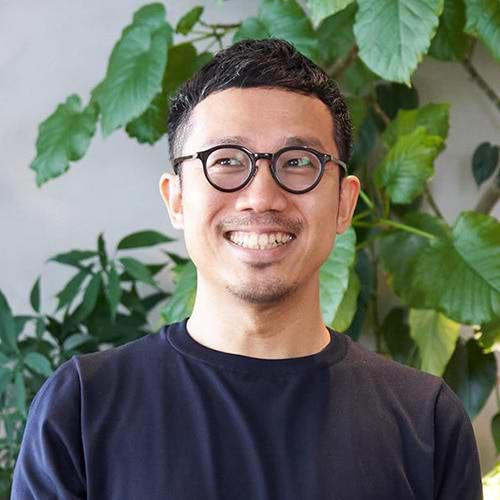
Joined Dentsu Inc. as an art director. Handled advertising campaigns for a diverse range of companies. Currently, centered on the concept of “designing a company’s potential for leapfrog growth,” he connects companies with global creators—such as architects and artists—to practice brand design that generates new value. Founder of OPEN MEALS and Future Vision Studio. Part-time lecturer at the University of Tokyo. Recipient of numerous domestic and international awards, including the Good Design Gold Award and the iF Design Award.

 The Future Envisioned by DESIGNART × Dentsu Inc. [3/3]