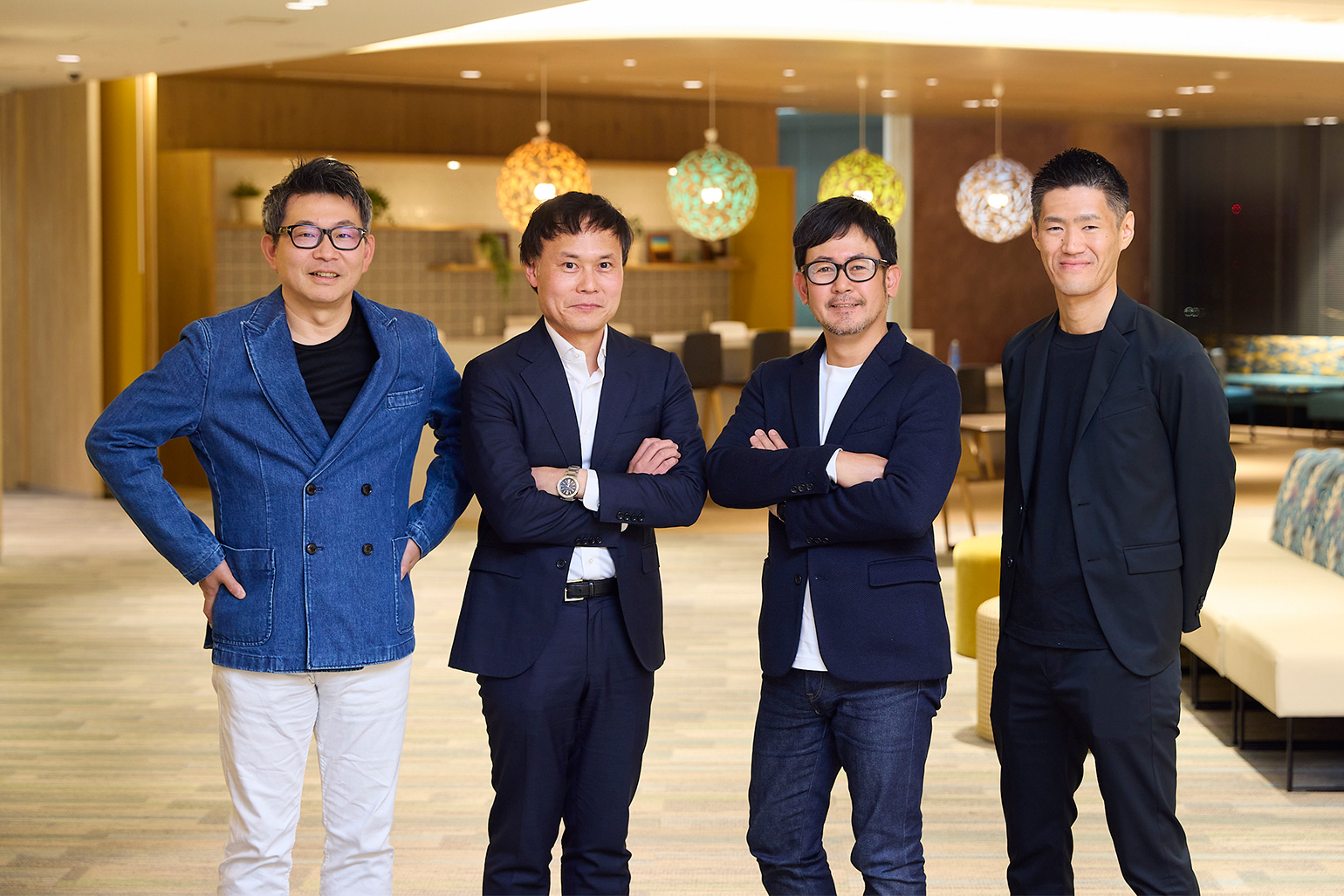
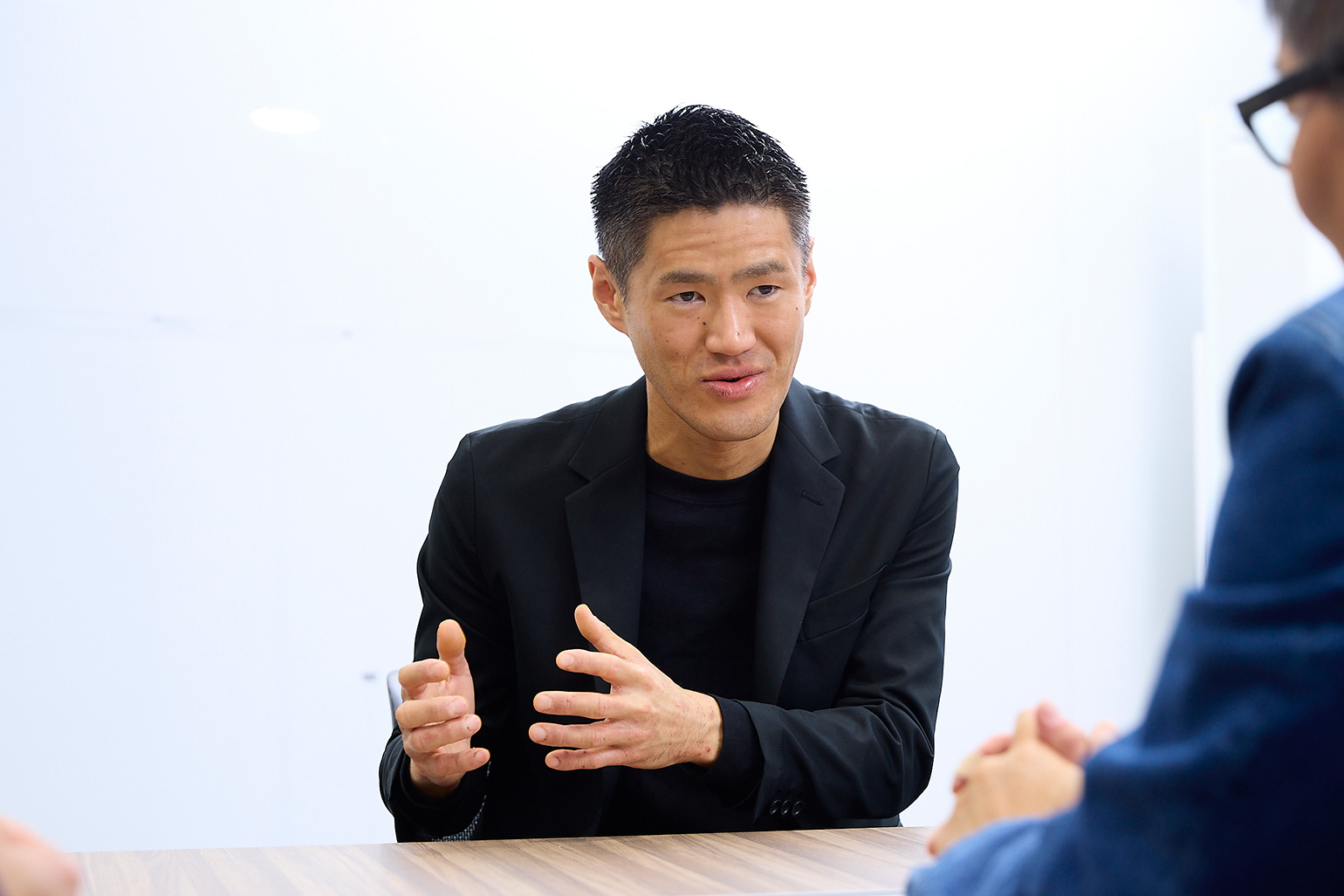
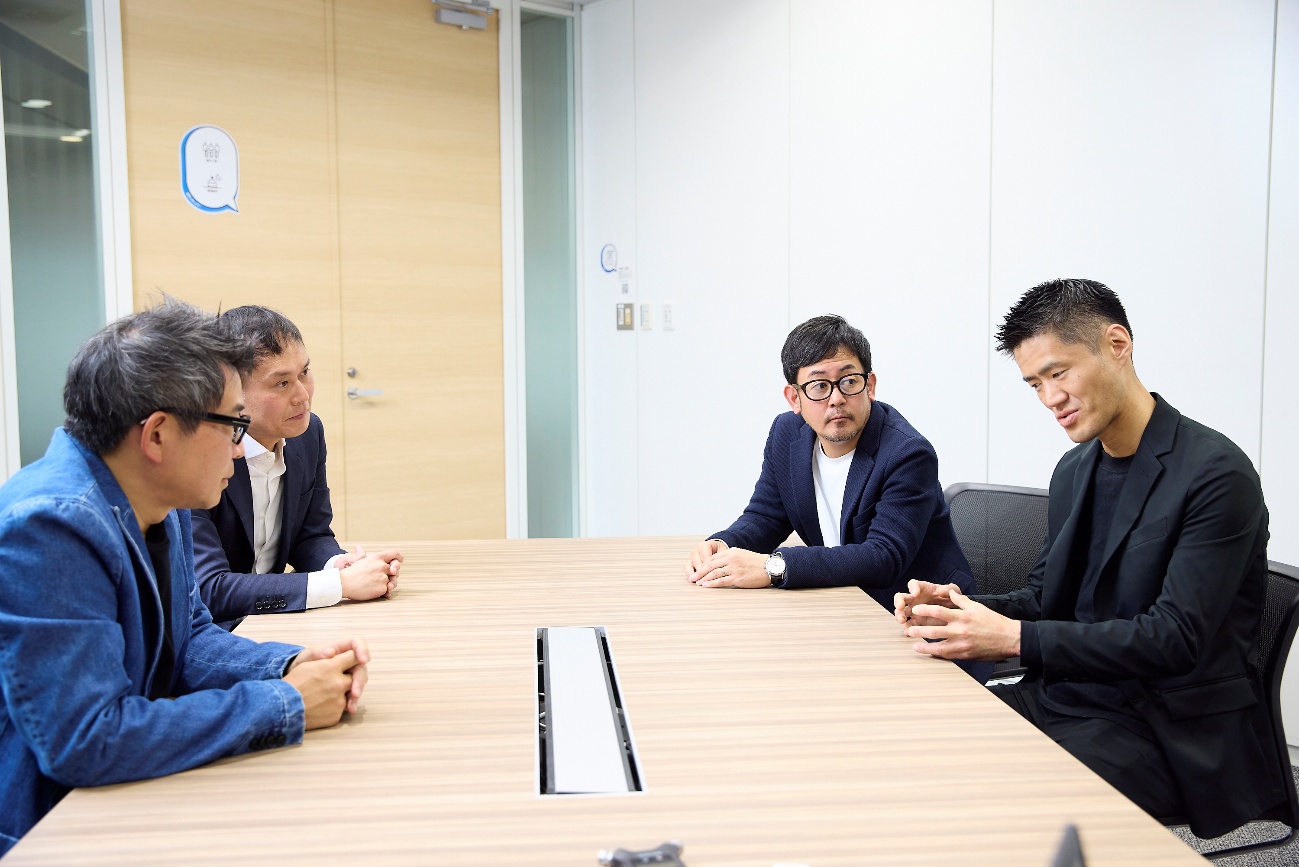
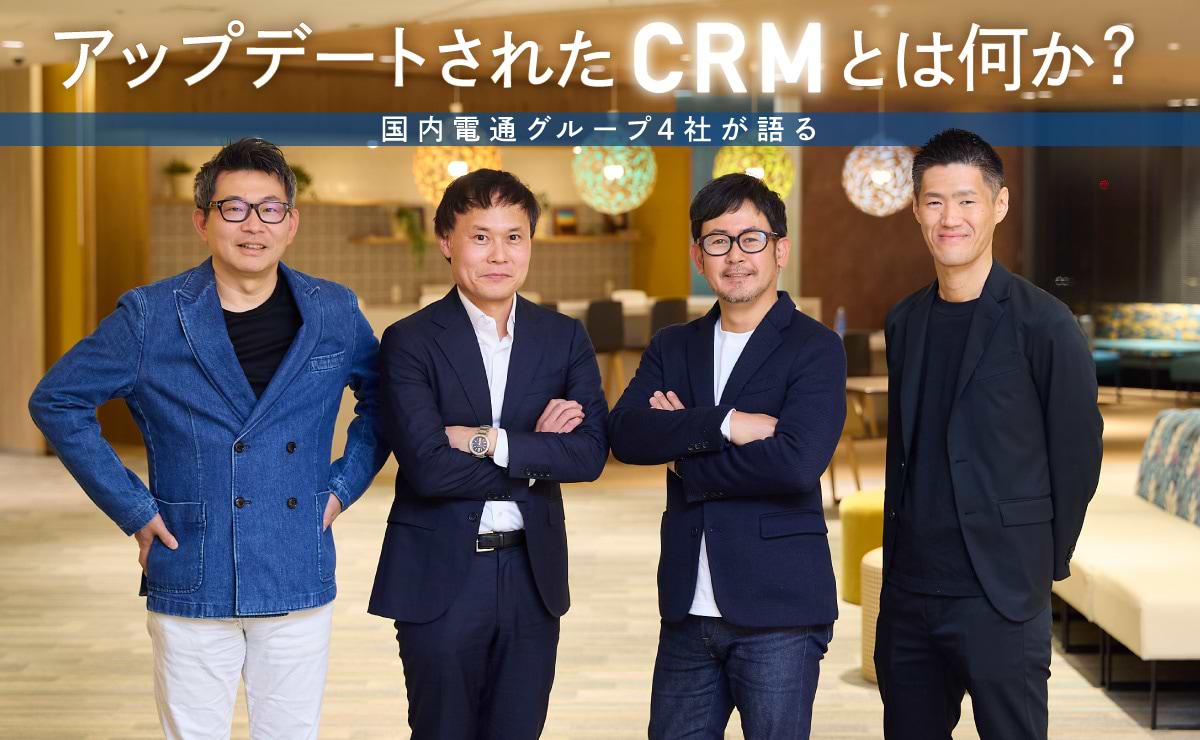
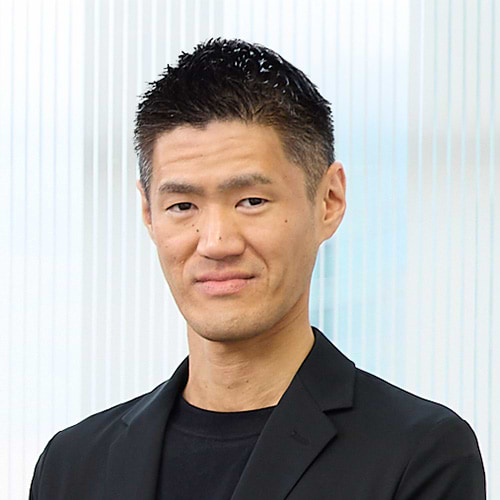
(From left) Tsuyoshi Miyashita of Dentsu Consulting Inc., Masanobu Yoshikai of DENTSU SOKEN INC., Naotaka Sugio of Dentsu Digital Inc., and Tsuyoshi Ono of Dentsu Inc.
In today’s world, where digitalization—led by AI—is advancing at an ever-increasing pace, is it sufficient to maintain business and organizational structures as they are?
Four companies—Dentsu Inc., Dentsu Digital Inc., Dentsu Consulting Inc., and DENTSU SOKEN INC.—offer “Biz CRM For Growth,” a service that uses CRM (Customer Relationship Management) as a starting point to support not only customer experience but also business and organizational transformation. They propose making “CRM a management priority.”
For this session, we held a roundtable discussion with representatives from each of the four companies. They discussed the challenges facing modern businesses and potential solutions from a CRM perspective.
What Is the Biggest Barrier to Making CRM a Management Priority?
Tsuyoshi Miyashita, Dentsu Consulting Inc. With over 30 years of consulting experience at several major full-service consulting firms, he specializes in CRM, where he is involved in a wide range of activities, from cross-industry strategy development and business process design to system implementation.
Miyashita: The theme of this roundtable discussion is “What role will CRM play in the future?” I’d also like to introduce the types of CRM support that the four companies within the Dentsu Group can provide.
We have invited members from each of the four companies involved in “Biz CRM For Growth.” Could you please briefly introduce yourselves?
Ono: I’m Ono from Dentsu Inc.’s Business Transformation Division 2. I provide end-to-end support for corporate transformation, ranging from strategic areas such as formulating corporate mission, vision, and values, as well as mid-term management plans, to building service growth and operations driven by digital transformation (DX).
In “Biz CRM For Growth,” I’m responsible for overseeing the entire team and designing the optimal approach that leverages each company’s strengths.
Yoshikai: I’m Yoshikai from the Consulting Division at DENTSU SOKEN INC. DENTSU SOKEN INC. is a company with strengths in IT and system development, primarily functioning as a systems integrator (SIer). Within “Biz CRM For Growth,” I am primarily responsible for system development and consulting.
Sugio: I’m Sugio from the Data & Engagement Division at Dentsu Digital Inc. Dentsu Digital Inc. provides comprehensive support in the field of digital marketing. Within “Biz CRM For Growth,” we focus on “Customer Experience Management (CXM),” including the planning, environment building, and execution of data-driven marketing strategies.
Miyashita: In our previous article, I spoke with Professor Akutsu from Hitotsubashi University’s Graduate School about the hypothesis that “CRM is becoming a management agenda.” The driving force behind this is the rapid evolution of AI.
In my conversation with Professor Akutsu, we confirmed that two perspectives are necessary: a “bird’s-eye view that comprehensively captures the relationship between AI and humans,” and a “flexible judgment perspective that adapts to daily technological advancements.”
We also discussed how, precisely because operations are being updated through the use of AI at each customer touchpoint—such as marketing, sales, and service—a “redesign of the overall customer experience” is necessary. Furthermore, our discussion touched on how the source of a company’s differentiation lies in the “analysis and utilization of data generated at customer touchpoints.”
In summary, this means that “companies seeking to enhance customer data through AI are required to make even more effective use of company-wide CRM.” In other words, the need to “make CRM a management priority” is the background that led us to launch “Biz CRM For Growth.”
Mr. Yoshikai of DENTSU SOKEN INC., you are regularly involved in building corporate CRM environments. From the perspective of making CRM a management priority, where do you see the current challenges with CRM?
Yoshikai: I believe many companies face challenges with “company-wide data integration.” This may be the biggest barrier to making CRM a management priority. Data integration is essential for utilizing CRM across departments and applying it to management decision-making. We need to first break down the “siloed” data utilization systems that exist within each department.
On the other hand, there are cases where the introduction of AI technology actually exacerbates this “siloing.” If AI-driven individual optimization proceeds without sufficient data integration across departments, it can actually move us further away from overall optimization, making cross-departmental integration even more difficult.
"I don’t know where to start!" Challenges Compounded by AI
Masanobu Yoshikai of DENTSU SOKEN INC. At DENTSU SOKEN INC., he primarily supports CX strategies and the transformation of customer touchpoints, focusing on the marketing and CRM domains. He also promotes the development of new businesses and services by leveraging a design-driven approach.
Miyashita: That said, I imagine integrating the vast amounts of data accumulated by each department is a highly challenging task. What kind of approach would be effective in addressing these challenges?
Yoshikai: One option is to implement a data integration and utilization platform, such as a CDP (Customer Data Platform). At DENTSU SOKEN INC., we offer “DendroBium,” a data integration and utilization platform service that enables cross-functional analysis using AI. Such services are effective for leveraging the diverse data held by each department and can contribute to marketing and business decision-making.
However, simply implementing a system is not enough. Even with a system in place, if operational rules and governance are not established simultaneously, the valuable data cannot be fully utilized. For example, common internal definitions for KPIs are also necessary.
A foundation for data integration, analysis, and utilization, coupled with the establishment of operational rules and governance. Only when these two elements work in tandem can “making CRM a management priority” be realized.
Miyashita: What are your thoughts on this, Mr. Sugio of Dentsu Digital Inc., who is heavily involved in data analysis and utilization?
Sugio: To add to what Mr. Yoshikai said, systems like CRM, MA (Marketing Automation), and CDP are not something you simply implement and then forget about; it is becoming increasingly important to continuously improve them based on actual results. In my interactions with Dentsu Digital Inc.’s clients, I get the impression that many companies have these systems in place but are not yet utilizing them to their full potential.
Furthermore, the advent of AI has greatly expanded the possibilities for data analysis, automation of initiatives, and advanced capabilities. On the other hand, precisely because the number of options has increased, deciding what to use and how to use it has become more complex than before. That is why I believe it is crucial not to treat system implementation as a one-time event, but to continuously review and improve them in line with AI advancements and actual results.
Miyashita: So, you’re saying that on top of the existing issue of “siloed” data—where each department handled its own separate data—the wave of rapid AI evolution has led to individual optimization of data usage across departments, resulting in increased complexity.
Mr. Ono from Dentsu Inc., what are your thoughts on the challenges clients are facing?
Ono: Many of the clients who consult with Dentsu Inc. are indeed grappling with this very “complexity.” While there is a strong recognition of the need for transformation, various challenges—such as organizational structure and data utilization practices—exist simultaneously, making it difficult in many cases to determine exactly where to begin.
Furthermore, with the addition of AI adoption—an unavoidable agenda—the range of issues to consider has expanded even further, making it harder than ever to organize and prioritize these challenges, wouldn’t you agree?
Sugio: At Dentsu Digital Inc., we’re seeing an increase in similar inquiries. Recently, in particular, many clients have expressed a sense of urgency—feeling that “we must do something”—after hearing that competitors or companies in other industries are moving forward with AI adoption or implementing new systems.
However, in reality, even companies that appear to be progressing very smoothly from the outside often face internal challenges such as fragmented data, underutilized systems, or uncertainty about how to integrate AI into their operations and customer experience.
In other words, even companies that appear to be leading the way are actually grappling with quite complex internal challenges and going through a process of trial and error.
The Strength of Our Four-Company Structure: Staying Close to Client Challenges
Naotaka Sugio of Dentsu Digital Inc. He aims to drive marketing DX through data analysis, utilization, and hands-on support. In the CXM domain, he works tirelessly as a business analyst to strengthen customer engagement.
Miyashita: Your comments have helped me clarify the current situation. I believe that companies cannot begin to make CRM a corporate priority unless they first gain a clearer understanding of their own challenges.
We—the four companies under Dentsu Japan—offer “Biz CRM for Growth,” a service that supports business and organizational transformation from a CRM perspective to address these challenges. From here, I’d like to discuss the specific types of support we can provide.
In the past, each of the four companies has received consultations from clients regarding CRM implementation and provided solutions. I’d like to delve into what we can achieve by bringing all four companies together.
Ono: My vision is for our four companies to serve as a sort of “family doctor” for our clients. Since we view CRM as a management agenda, our approach is not to provide CRM support for specific departmental issues, but rather to take a broad view of the entire business and provide ongoing, collaborative support.
Within this framework, we will provide comprehensive support that simultaneously redesigns “the customer’s end-to-end experience” and “organizational silos.” The strength of this team lies in our combined capabilities—the synergy of the four firms’ distinct areas of expertise, spanning the entire business lifecycle from upstream to downstream.
Miyashita: The expression “family doctor” might make it easier to visualize. We sometimes liken our consulting work to being a “corporate doctor,” but I believe Dentsu Consulting Inc. primarily handles the “diagnosis” part. Our role is to identify where the issues lie and propose the optimal treatment plan to the client. This is where Dentsu Consulting Inc.’s ability to uncover the root causes of problems comes into play.
DENTSU SOKEN INC. and Dentsu Digital Inc. are responsible for the “treatment” based on the diagnosis. They apply their respective expertise to actually treat the patient’s challenges. I believe that building systems and implementing concrete measures constitute the treatment. As for our ongoing support, please imagine it as accompanying a professional athlete through injury treatment, rehabilitation, and training after full recovery.
Dentsu Inc.’s role is that of a “hospital director” who oversees and monitors multiple patients and doctors from a bird’s-eye view. We serve as the final decision-maker in projects. Does this differ from your image of the process?
Yoshikai: I share that view. However, rather than each company fulfilling a fixed role at a fixed time, I envision us intervening as needed throughout the entire process. Instead of each company addressing the patient’s challenges individually, we approach “the patient as a whole” as a team.
Sugio: When it comes to CRM implementation and data integration, I believe other system integrators and consulting firms besides dentsu Japan offer similar services. Within that landscape, our strength at dentsu Japan lies in our deep understanding of our clients and their brands.
Other SI firms or consulting firms could likely build a CRM system on their own. However, CRM design varies significantly depending on the kind of relationship a brand wants to build with its customers. By leveraging the insights we’ve gained from addressing the marketing challenges and customer touchpoints of numerous clients, we’re uniquely positioned to determine the optimal CRM design.
Miyashita: In other words, you have the capability to provide truly tailored support. When it comes to the unique value of dentsu Japan, I believe a significant part lies in our “accompaniment support”—which I liken to “rehab and subsequent training.”
Once the “treatment” of CRM design is complete, the question becomes: how do we operate it moving forward? This goes beyond mere rehabilitation—which focuses on “curing” negative issues—to provide value that builds upon the core corporate values cultivated through branding, continuously accumulating positive outcomes.
That is the very foundation of our proposal for making CRM a management priority. Although we call it “Biz CRM For Growth,” I believe that CRM is merely the entry point, and its true essence lies in “Biz Client For Growth.”
Ono: You’re absolutely right. That’s precisely why, when supporting clients, we believe it’s crucial to go beyond merely “solving problems.” Instead, we work backward from the client’s vision and growth trajectory to provide support from a long-term perspective.
“Business language” is also evolving in the AI era
Takeshi Ono of Dentsu Inc. He supports corporate transformation in the BX and DX domains. Working closely with client executive management, he provides end-to-end support from strategy formulation through execution.
Miyashita: Now, let’s hear your thoughts on the crucial question: “How will companies change if CRM becomes a management priority?”
Ono: One key change is in project management. In the past, CRM projects—while varying in specific approaches—generally followed a so-called “waterfall” model, where requirements were finalized in advance and progress was made in stages.
However, with the advancement of AI and data utilization today, the optimal strategies are constantly evolving based on data gathered from customer touchpoints. Therefore, rather than treating requirements as absolute, we need to improve the accuracy and speed of decision-making based on customer data.
Miyashita: If the structure of project management changes, the qualities required of leaders will likely change as well.
Ono: That’s right. For example, we’ll likely need something akin to the “courage” to adapt project requirements flexibly. In other words, it’s about whether we can properly question and adjust a plan even after it’s been decided. You could even call that strong leadership.
Yoshikai: From a CRM perspective, I anticipate that the approach to increasing LTV—a key performance indicator—will change. This is driven by factors such as market contraction due to population decline and the limits on spending per customer. Furthermore, I believe that traditional cross-selling and upselling strategies are becoming less effective, and we are beginning to see the limits of maximizing customer value through a single company alone.
Consequently, it is becoming increasingly important to expand our very understanding of LTV and adopt a so-called “ecosystem” approach—one that broadens relationships based on customers’ real lives, rather than limiting them to transactions confined to the company and the customer.
Miyashita: For example, when a consumer purchases a car, there are various related actions that follow, such as going on a trip or taking out insurance. Is my understanding correct that we need a perspective that designs with these broader implications in mind?
Sugio: I agree. Going forward, I believe it’s crucial to expand the value we provide beyond the purchase of our products or services to include those “adjacent areas.” To achieve this, we must move beyond operating in isolation and instead collaborate with companies in different sectors to co-create new customer experiences.
Customer data is indispensable in this process. If we can effectively utilize the customer data held by each client company, we can provide broader value. Furthermore, if a company’s internal data is integrated across the entire organization, it becomes easier to foster collaboration with external partners.
The CRM we propose is not merely a customer management system; it is an initiative focused on how to place customer data at the center of the business and use it to drive business growth and create new value. That is precisely why we believe it is so significant to view CRM as a key part of the management agenda.
Miyashita: So, we need to broaden the range of options available to improve LTV. Listening to everyone today has reaffirmed my belief that we’ve entered an era where both we and our clients must “update” the definitions of the various terms and concepts we’ve used up until now.
In particular, the concept of CRM must no longer be treated as something confined to the sales department; we need to adopt a broader perspective. Regardless of industry, we are entering an era where the relationship with each individual customer is becoming the core of business.
By implementing CRM solutions tailored to our clients’ diverse challenges, we hope to contribute through “Biz CRM For Growth.”
アクセンチュア、IBM、デロイト トーマツ コンサルティングを経て現職。30年以上のコンサルティング経験を有する。前職ではCRM組織を立ち上げ、執行役員/組織責任者として10年連続成長をけん引。その後、Deloitte Digital Japan Lead、CMO、スポーツビジネスグループリード、デロイト トーマツ デザイン メタ・マニエラ代表執行役等を担当。専門のCRM領域は、業界横断的に戦略立案、業務設計、システム導入まで幅広く従事。また、CRM、デジタルの知見を生かした社会課題解決、地方創生、エンターテインメント、スポーツビジネスなど新たな価値創造も推進。
Consulting Division, Enterprise Unit, Marketing Strategy Department
General Manager / Director
He has long provided support for corporate marketing and customer relationship challenges. At DENTSU SOKEN INC., he is in charge of CX strategy and service design. In CX strategy, he formulates strategies, drives operational transformation, and establishes DX policies for customer touchpoint areas such as marketing and sales. In service design, he utilizes design approaches and business model concepts to support the development of new businesses and services.
Data & Engagement Division, Engagement Strategy Division 1
General Manager
Since 2005, he has been involved in launching large-scale owned media, web services, and e-commerce systems. With a strength in UI/UX design, he has extensive experience ranging from strategy formulation to service development, business process design, and the implementation of various solutions. After serving as a product manager at a startup, he joined Dentsu Digital Inc. in 2018. As a business analyst in the CXM field, he is dedicated to strengthening engagement between brands and users.
Second Business Transformation Bureau, Transformation Partner Division 2
After handling retail and education clients in the Sales Division, he has been engaged in consulting work in the BX and DX fields since 2019. Leveraging “data-driven strategy formulation” and “integrated support from concept to execution in the digital domain,” he works across BX and DX to support service development, customer experience design, and operational transformation aimed at business growth.

 Thinking with the Right Brain and Left Brain: The Future of Advertising Agencies and Consulting Firms [13/13]