At the Dentsu Group’s local offices around the world, proposals rooted in consumer insights and co-creation with local and Japanese companies take place every day. In this series, we introduce regional market characteristics and tips for Japanese companies looking to expand, through the perspectives of global expatriates leading business in various locations.
This installment focuses on India, a country with the world’s largest population of over 1.4 billion people and projected GDP growth of over 7% for fiscal year 2025. Our guest is Akifumi Miyahara of dentsu X India, one of the key organizers of the Japanese anime event “Mela! Mela! Anime Japan!!” in this globally watched market. He shared his insights on the potential of Japanese content IP and key points for Japanese companies entering the Indian market.
With colleagues from dentsu India. Akifumi Miyahara is in the center
Supporting a Wide Range of Companies in India: Japanese, Local, and Global
──First, please introduce yourself. What kind of work do you do at Dentsu Inc. India?
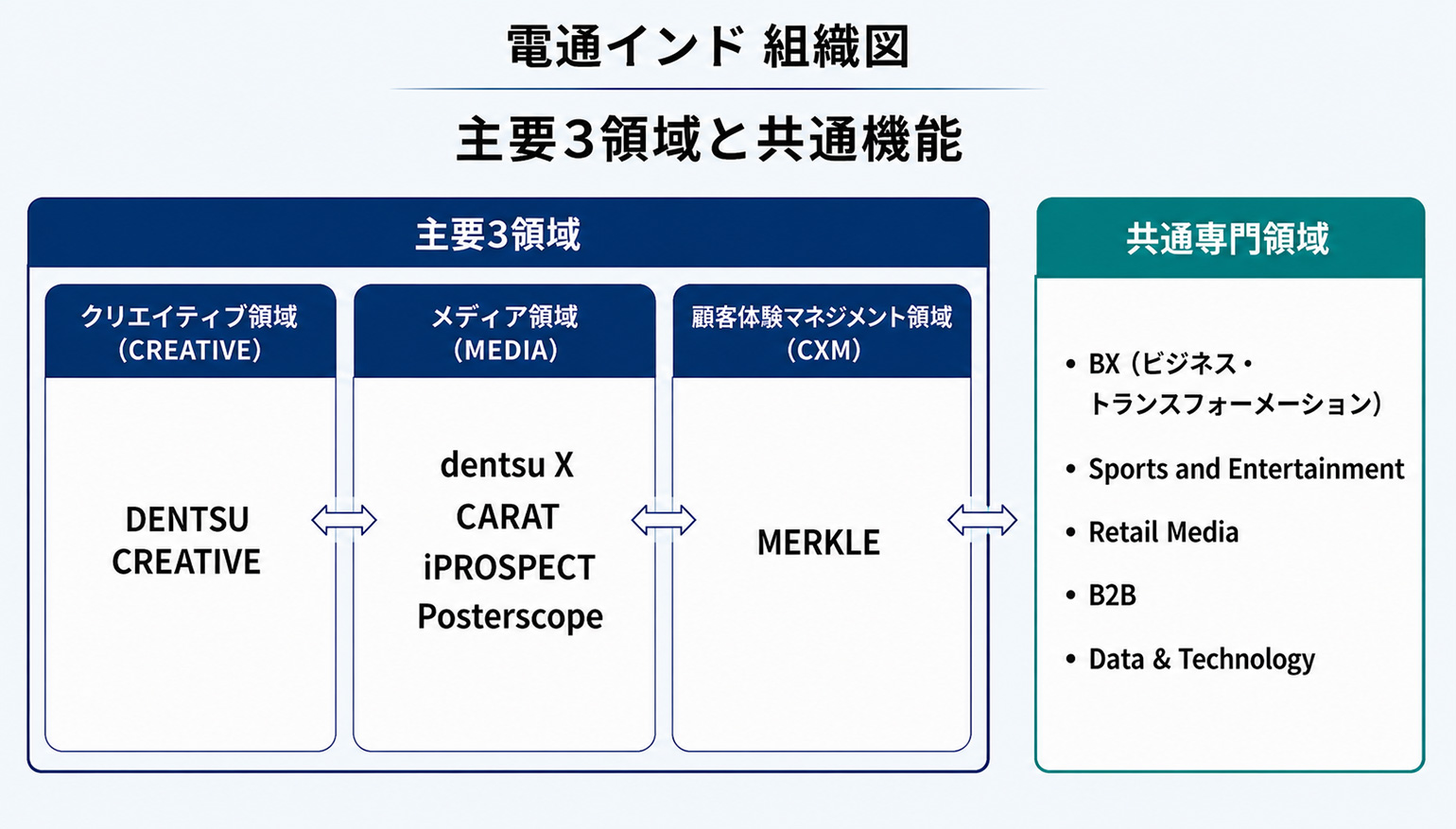
Miyahara: Dentsu India is one of the leading agency groups, with 3,500 employees. Headquartered in Mumbai, we have offices in over 10 cities. Dentsu India comprises several group companies. I serve as Client President at “dentsu X India,” one of its media agencies.
My responsibilities fall into two main categories. The first is supporting Japanese companies across various industries, with a focus on media and content-related sectors. The second involves the Indian market operations of “Dentsu Sports & Entertainment,” a Dentsu Group-wide initiative launched in 2025 ( press release here ), where I oversee the IP business for Japanese anime and content.
──What kinds of clients does Dentsu Inc. India support?
Miyahara: We support a wide range of companies, from Japanese firms to local and global enterprises. The industries we serve are diverse, including automotive, hygiene products, beverages, precision machinery, and semiconductor manufacturers.
—What kinds of Japanese companies have entered the Indian market?
Miyahara: In the past, we saw many manufacturing companies in sectors such as automobiles, motorcycles, and durable goods, as well as ODA-related companies like railways. Recently, FMCG (Fast Moving Consumer Goods) companies and service industry firms have also been entering the market.
As of October 2024, there are 1,434 Japanese companies operating in India. According to a report by JETRO (Japan External Trade Organization), over 70% of these companies are profitable, which is a very high figure. In the manufacturing sector, more than 80% are profitable, and I understand that many companies are conducting robust business operations.
──What makes India attractive as a business market?
Miyahara: The CAGR (Compound Annual Growth Rate) from 2024 to 2033 is projected to be over 6%, and India is expected to see the highest growth in the world. The average age of the Indian population is 28, which is very young, resulting in a population pyramid with a broad base. Furthermore, it is said that by 2030, the middle-income class will account for one in every two households.Since the younger generation will become the core of consumption in the future, not only Japanese companies but also local companies are exploring strategies and communication methods targeted at young people.
In fact, I was stationed in India from 2010 to 2012, and this is my second assignment there. I currently live in Delhi, the capital of India.When I returned to India in 2022 for the first time in 10 years, I witnessed firsthand the modernization of buildings and the rapid development of infrastructure. It used to be said that anyone visiting on business would inevitably get sick, but I was surprised to see how much hygiene standards had improved. Along with rapid economic growth, India is changing at a dizzying pace.
The popularity of Japanese anime in India has grown amid the COVID-19 pandemic
—I understand you launched Dentsu Inc. Sports & Entertainment’s operations in the Indian market in 2025. Could you tell us about the characteristics of the anime market in India?
Miyahara: In India, there is a culture of watching anime from a young age, and Japanese anime series such as “Doraemon,” “Crayon Shin-chan,” and “Pokémon” have been particularly popular. Since these shows are broadcast in local languages, many people don’t realize they are Japanese anime until they become adults.
On the other hand, even those who were familiar with anime as children tend to stop watching it as they get older. There is a strong emphasis on studying hard, graduating from a good university, and securing a job at a reputable company, so the perception that “anime is for children” is deeply ingrained.
Despite this prevailing attitude, it is estimated that there are approximately 120 million anime fans in India, including casual viewers. One reason for the growing number of anime fans is the widespread adoption of online services and video streaming platforms during the COVID-19 pandemic, which has significantly increased opportunities to watch anime. Additionally, I believe there was potential for demand to grow based on people’s childhood experiences of enjoying anime.
During the pandemic, people turned to content on paid video streaming platforms such as Netflix, Amazon Prime, and Crunchyroll, which specializes in anime.In India, where television is pay-to-view, a culture of paying to watch programs was already well-established, which made the adoption of the aforementioned paid platforms a smooth transition. Furthermore, subscription fees are among the lowest in the world; combined with this low pricing, the number of viewers has increased, and it is believed that awareness of anime has expanded rapidly.
Furthermore, the use of mobile devices such as smartphones, computers, and tablets is widespread among young people in India. 650 million people own mobile devices, and the rollout of 5G is progressing steadily. Even with daily data usage of 1.5 GB, monthly costs are as low as about 500 yen, and these extremely low communication costs are also driving the adoption of video streaming services.
Furthermore, there are numerous “anime clubs”—communities formed by anime fans—throughout India. These clubs are scattered across the country, with over 200 said to exist, ranging in size from small to large. Anime fans tend to gather information within these communities and attend anime events.
──How popular is Japanese anime?
Miyahara: While anime from other countries, such as Disney, is also available, Japanese anime is overwhelmingly popular. For example, on anime platforms like Crunchyroll, Japanese anime dominates the top of the rankings.
A major factor behind the widespread acceptance of Japanese anime is the proliferation of platforms that enable simultaneous global streaming. Furthermore, with the advancement of translations into local languages, distribution outside of Japanese- has become possible. In India, English is widely used, particularly in urban areas, so real-time information can also be accessed in English. I believe this backdrop has created the ideal environment for enjoying Japanese anime.
Visualizing the Potential of Japanese Anime at “Mela! Mela! Anime Japan!!”
──Next, I’d like to ask about “Mela! Mela! Anime Japan!!,” an event that Dentsu Inc. helped plan and organize. What kind of event is it?
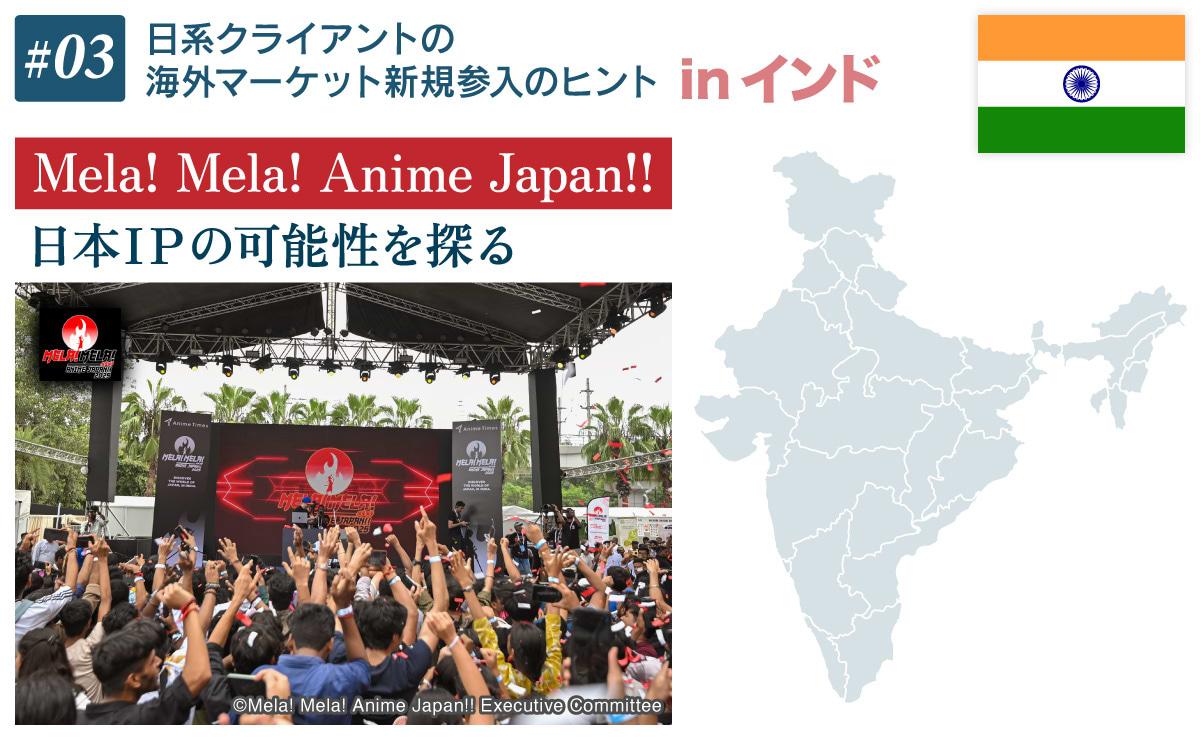
Miyahara: “Mela! Mela! Anime Japan!!” is an event designed to convey the appeal of Japanese culture—including anime—as well as Japanese products and services to the people of India. It has been held for two consecutive years in 2024 and 2025, with a wide range of companies participating, including content-related firms, travel agencies, food companies, and manufacturers of automobiles and stationery.
In 2025, we offered a diverse program featuring anime and manga exhibitions, sales of content-related merchandise, a cosplay contest, live performances by Japanese anime song singers, and film screenings, and we also held a B2B business matching event for the content industry.
──Could you tell us how Dentsu Inc. became involved with “Mela! Mela! Anime Japan!!”?
Miyahara: In India, it’s not common to see anime characters depicted on street signs or collaboration products displayed in stores, as is the case in Japan. I had long been considering how to leverage Japanese content IP for business purposes and had even made proposals to Japanese companies. However, at that time, Bollywood actors, cricket players, and influencers were much more well-known, and collaborations with such figures were the norm.
On the other hand, thanks to the proliferation of video streaming platforms and the like, awareness of Japanese anime was gradually growing. When working with local partner companies, I increasingly found myself being asked about various Japanese works, such as “Demon Slayer,” “Naruto,” “One Piece,” and “Attack on Titan.”I have also been consulted by IP holders, such as Japanese publishers, regarding the Indian market. As Dentsu Inc., we were exploring ways to create opportunities for these companies to expand their business operations.
“Mela! Mela! Anime Japan!!” was conceived within the community I had built in India, sparked by discussions such as, “Could we visualize the potential of Japanese anime?” and “Why not organize an anime event?” This community included Japanese expatriates working for Japanese companies in India, as well as representatives from the Japanese Embassy in India.
Dentsu Inc. had previously managed the Japan-India Diplomatic Relations Anniversary events held every five years in India, and our event management capabilities had been well-regarded. Given this background, we were entrusted with the planning and management of the event.
──Did you encounter any challenges while planning and managing the event?
Miyahara: There had been no precedent in India for a large-scale event centered on Japanese anime. To organize “Mela! Mela! Anime Japan!!,” expatriates from Japanese companies formed an executive committee. I was one of the volunteers who came together to get the project started, and Dentsu Inc. joined as a supporting partner.It was also very significant that the Embassy of Japan agreed to cooperate with us. Since the organizing committee was a group of volunteers, we struggled to secure sponsorship funds for the event. We asked organizations like the Japan Chamber of Commerce and Industry in India to help raise funds and promote the event.
“Mela! Mela! Anime Japan!!” began with the desire to “visualize the potential of Japanese anime,” but there were other objectives as well. As I mentioned earlier, there is a strong perception in India that “anime is something children watch.” However, anime is a culture; it shouldn’t be just for children, but for a wide range of people in society.Furthermore, since anime is created by original authors, creators, and the many staff members working at animation studios, it also has a business aspect related to employment. If anime culture takes root in India, there is potential for it to develop as an industry. We wanted to convey these points to the government as well.
Scene from an in-house event (Diwali)
──What kind of response did you get from hosting “Mela! Mela! Anime Japan!!”?
Miyahara: We held the first event in 2024, with approximately 50 IP-related companies participating, including 8 IP holders.We held the second event in 2025. To attract more IP holders, we partnered with Dentsu Inc.’s Entertainment Business Center (EBC) to promote “Mela! Mela! Anime Japan!!” to various broadcasters and IP holders. As a result, the number of IP holders and IP-related exhibitors—including those collaborating with IP—rose to 19, more than double the number from the first event.
Both events were held in New Delhi. While the first event drew approximately 47,000 visitors, attendance for the second event increased significantly to over 60,000. The venue saw an increase in cosplayers and visitors who don’t usually watch anime, creating an even more lively atmosphere than the previous year.
We felt that awareness of the event was growing, and we were encouraged by the sense that a wide range of people enjoyed the event. “Mela! Mela! Anime Japan!!” also became a hot topic among anime clubs in cities other than New Delhi.
Although we are still feeling our way through some aspects after holding two events, we were able to achieve our initial goal of “visualizing the potential of anime,” and I believe the number of companies considering “trying something using anime” has likely increased.
──Please tell us about the unique strengths of Dentsu Inc. India that became apparent through “Mela! Mela! Anime Japan!!.”
Miyahara: Dentsu Inc. has built relationships with various IP holders and companies over the years. We also have a proven track record of planning and managing numerous events. I believe we were able to deliver a high-quality event by leveraging the knowledge we’ve cultivated through these experiences.
At the same time, I believe we were able to contribute in terms of “ensuring quality.” At events in India, there are cases where IP isn’t handled properly—such as unauthorized use of characters from a work, or even cramming various characters onto a single poster. To create an authentic experience that people could truly enjoy, we made a concerted effort to clearly explain the proper use of IP to our local partners and ensure they understood it. As a result, I’m proud to say we were able to execute the event with Japanese-level quality.
With the stage performers and members of the organizing committee for Mela! Mela! Anime Japan!! 2025
In India’s rapidly changing market, “Mini Dentsu Inc.” supports the successful expansion of Japanese companies
──Please tell us about Dentsu Inc. India’s future outlook.
Miyahara: I’d like to spread Japanese culture, including anime, throughout India. For example, if we can realize “collaborations between characters and products”—something that has become commonplace in Japan—I believe it will lead to purchasing behavior where people buy products because they like the characters. Through such collaborations, by integrating anime into daily life, I want to expand the enjoyment of anime beyond just watching it.
Beyond anime, we also aim to further support Japanese companies entering the Indian market. Recently, we’ve seen an increase in the service sector entering the market, and we’ve been receiving consultations regarding this. Additionally, e-commerce is developing within India, and more companies are entering the market. As India’s “Mini Dentsu Inc.,” we want to provide multifaceted support—starting with our expertise in communication—to companies across various industries.
──Finally, could you share a message for Japanese companies considering expanding into India?
Miyahara: India is a vast country with over 1.4 billion people living across 28 states. Some states have populations rivaling Japan’s total population. With 22 official languages—and reportedly over 780 languages when dialects are included—the country boasts tremendous diversity in both its people and culture. Furthermore, India is currently experiencing a phase of remarkable economic growth, driven by the rapid spread of mobile communications and rising incomes, making it a country where consumer trends and market dynamics are constantly evolving.
To build a successful model in India, a country rich in diversity and change, it is necessary to seek the optimal solution through repeated trial and error. Dentsu India can provide extensive support in this process. Many employees within the Dentsu Group in Japan have experience working in India, so if you contact us as your first point of contact when considering business in India, we believe we can be of great assistance.
After joining the television division, he has been in charge of overseas business since 2003. He served his first assignment in India from 2010 to 2012, and upon his return, he was involved in business production both domestically and internationally. He was reassigned to India in 2022 and currently serves as Client President at dentsu X India, overseeing media business for Japanese clients, as well as managing the Japan IP division at Dentsu Inc. Sports & Entertainment India.

 Hints for Japanese Clients Entering New Overseas Markets [3/3]