Dentsu Live Inc. is Japan’s largest company specializing in event spaces. It plans and operates a wide variety of events—both in-person and virtual—and also handles spatial design.
This series focuses on Dentsu Live Inc.’s “Business Transformation (BX) through Experience Design.” We explore the potential of repositioning the event business—which is currently often viewed merely as “promotion”—as one approach to BX and leveraging it accordingly.
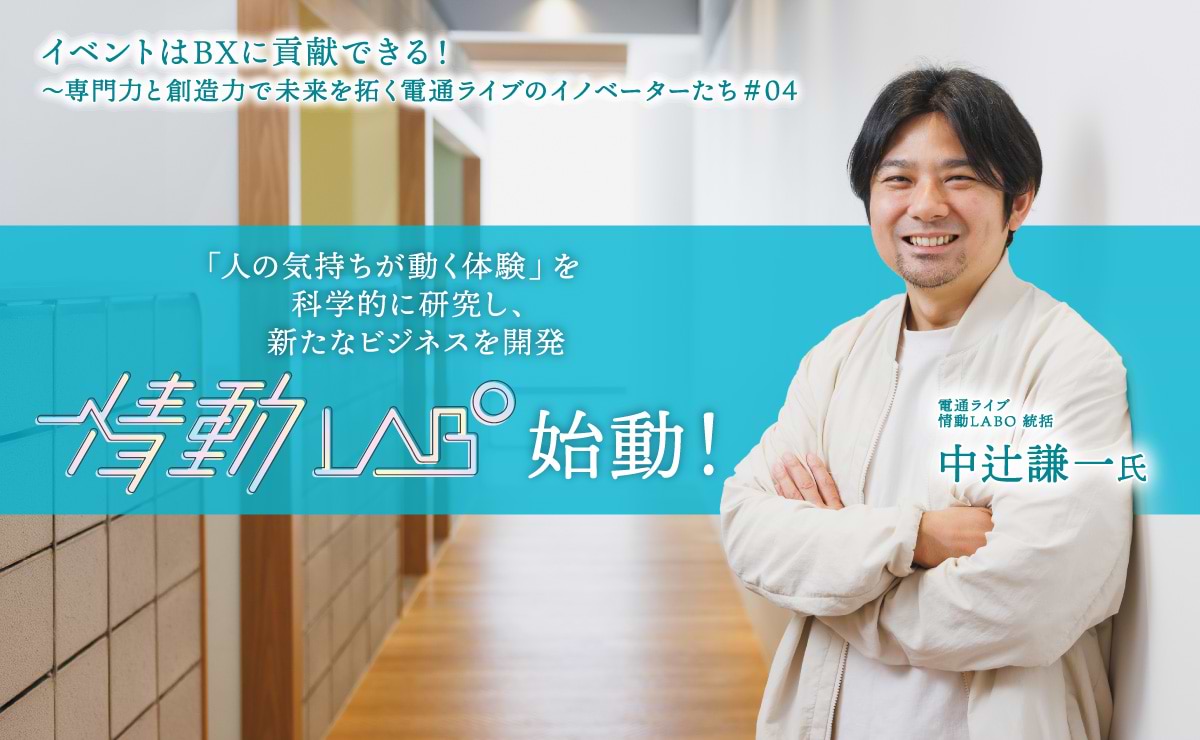
In this installment, we focus on “Emotion LABO,” established in February 2026."Emotion LABO" is a "business creation organization" that scientifically researches experiences that move people’s hearts, quantitatively measures the effects and value of real-world experiences—which are often said to be difficult to visualize—and develops and deploys the results as business ventures. We spoke with Kenichi Nakatsuji, who oversees Emotion LABO, about the research and the future it will help realize.
Events Are Perceived as Having Poor Cost-Effectiveness
──First, please introduce yourself.
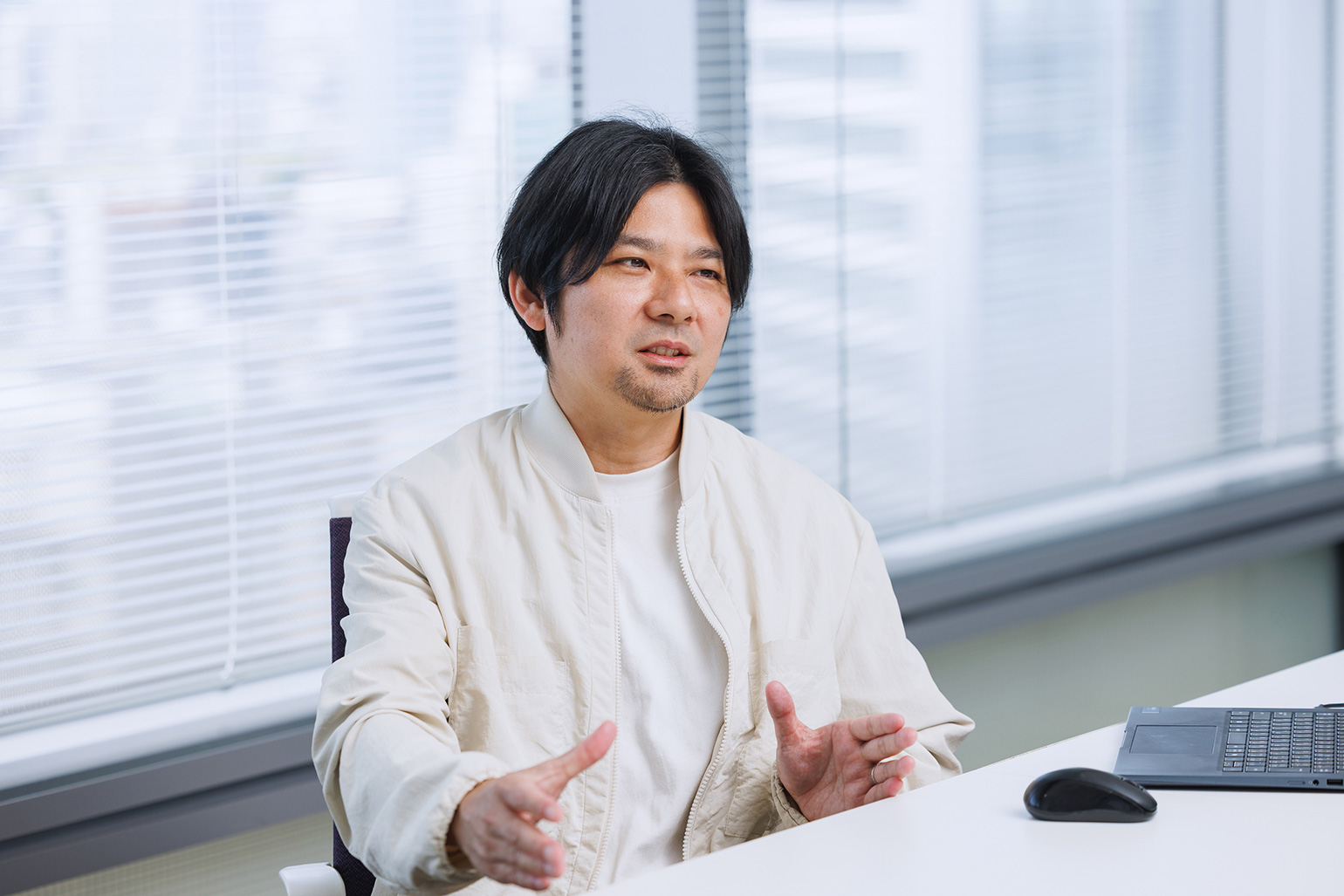
Nakatsuji: After joining Dentsu Tech (now Dentsu Live Inc.), I worked in the Kansai region designing promotional events and similar initiatives.In 2024, I was transferred to Tokyo, where I primarily managed B2C exhibition events utilizing content IP. Currently, I work in the Next Business Development Department at Dentsu Live Inc., which aims to create new revenue streams for the company, developing new mid- to long-term businesses and solutions. I serve as the head of “Emotion LABO,” leading its research and business development efforts.
──What kind of organization is “Emotion LABO”?
Nakatsuji: It is a research and development organization established in February 2026 to scientifically and academically study “emotions”—the fluctuations in human feelings—and apply those insights to new business ventures. We named it “Emotion LABO” because it is a Laboratory for Open Collaboration (LAB) based on the premise of co-creation both within and outside the company to study emotions.We believe that “Emotion LABO” will not only serve as a new business foundation for Dentsu Live Inc. but also make a significant contribution to addressing the challenges faced by the entire event and venue industry.Furthermore, given the social context—where 78% of Millennials say they “prefer to spend money on experiences and emotional fulfillment rather than material goods” (Harris Group, “Millennials Fueling the Experience Economy,” 2014)—we see tremendous potential in focusing on “emotions” as a way to create a new economic ecosystem for the future.
──What challenges does the event and venue industry face?
Nakatsuji: Events are often perceived as having poor cost-effectiveness. Of course, there are ticket sales and merchandise revenue, but those are short-term returns. We believe the true value of an event lies in the long-term returns: the emotional experiences gained at the event are deeply etched in people’s hearts, increasing their favorable impression of the company, product, or performers, and turning them into fans. However, such value is difficult to quantify.
We handle a wide range of areas, including large-scale sports events, entertainment events, exhibitions, corporate conferences, and digital events. Events are generally labor-intensive, and in-person events in particular rely on a large number of staff to operate, even though the number of attendees is limited. As a result, people tend to focus on the high costs rather than the less visible returns. Consequently, events tend to be perceived as having poor cost-effectiveness.
It is precisely in the AI era that in-person experiences hold value
—So, “Emotion LABO” was established to address the challenge of the difficulty in quantifying an event’s cost-effectiveness.
Nakatsuji: Yes. One of the catalysts was the need to clarify the ROI of events. But an even more important perspective is that, precisely because we live in an era of remarkable advancements in AI and digital technology, real-world experiences—where people share the same space and time—take on special significance. The mission of “Emotion LABO” is to scientifically and academically prove the basis for this.By clarifying questions such as “Why do people feel moved?” and “What behavioral changes result from moving experiences?”, we aim to demonstrate the value of events and spaces and apply these insights to various emotion-based businesses.
──How does “Emotion LABO” define human emotion?
Nakatsuji: “Affect” refers to phenomena such as getting goosebumps, shedding tears, or an increased heart rate. It is the “essence of those moments when the heart is moved”—moments that cannot be put into words, such as “I don’t know why, but my heart feels warm” or “I find myself crying before I realize it.” We distinguish it from “emotion” by defining affect as something felt physically, while emotion is something understood intellectually.I believe “affect” refers to those emotional movements—like a surge of pure feeling that becomes etched in memory—that lack the informational processing aspects of interpretation or thought. Affect possesses a raw energy that drives people forward.
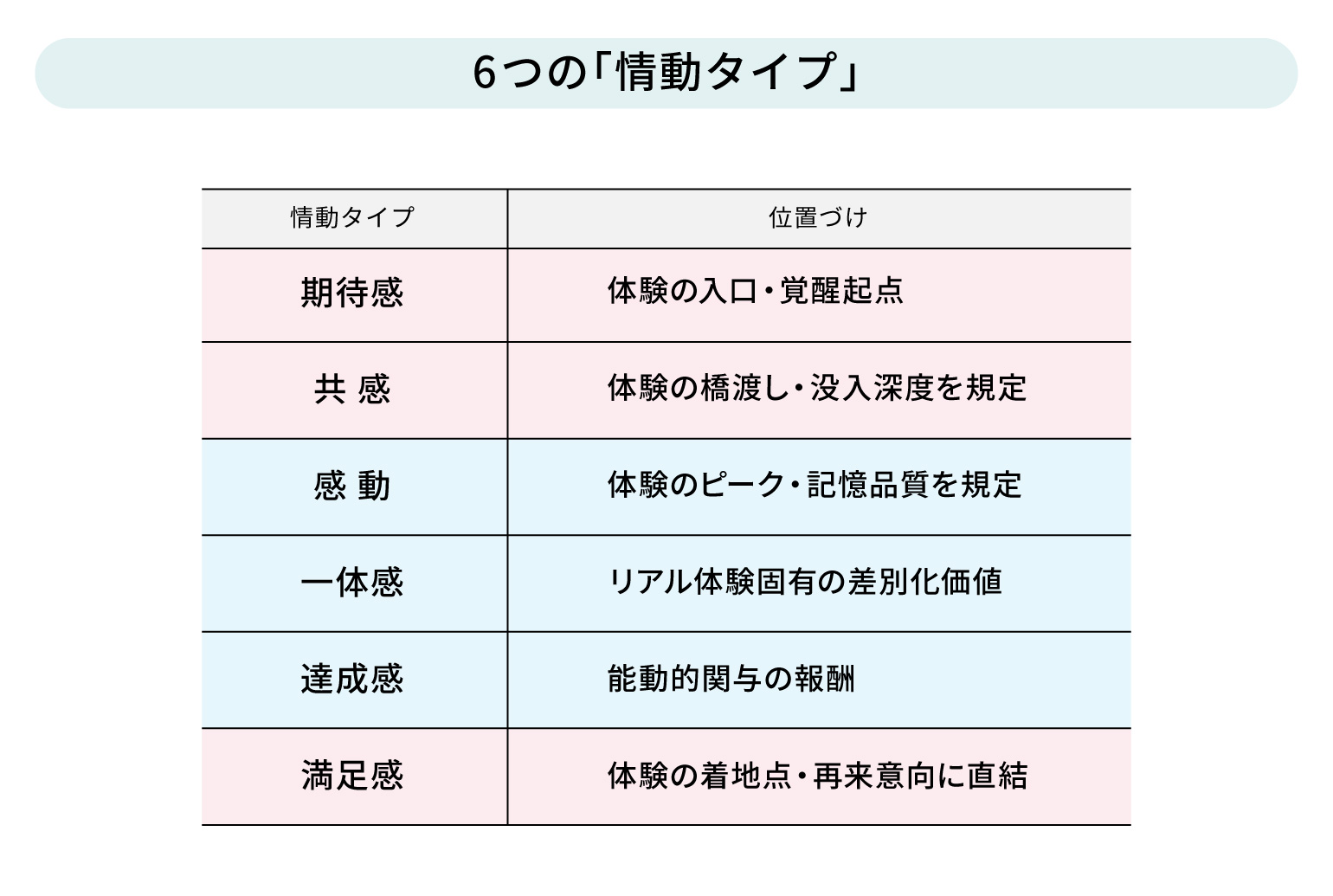
At “Emotion LABO,” we at Dentsu Live Inc. have defined six unique types of emotion—key to designing authentic experiences for events and spaces: “Anticipation,” “Empathy,” “Inspiration,” “Unity,” “Accomplishment,” and “Satisfaction.”
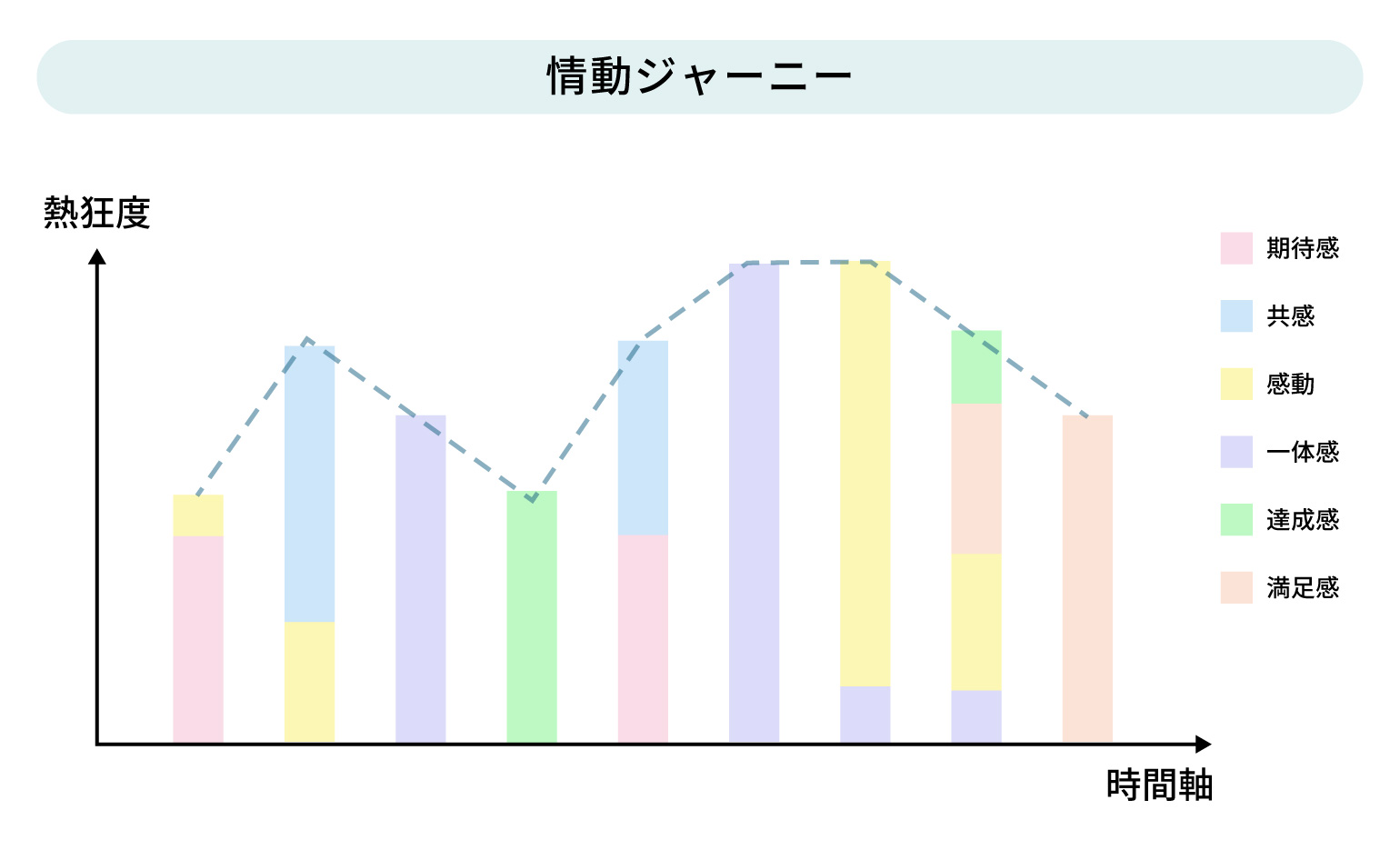
Nakatsuji: These do not exist in isolation; rather, they flow continuously and intermingle within a single system. For example, at an event, anticipation builds based on prior information; empathy and inspiration arise during the experience; and these are amplified by a sense of unity. Finally, a sense of accomplishment and satisfaction is gained, leaving a lasting memory. We call this flow the “Emotional Journey,” and we define the sum of the intensity of these six emotional elements at each moment as the “Level of Enthusiasm.”
Nakatsuji: Since we view emotions as accumulating to form the value of an experience, we are attempting to quantify and verify the total sum of these emotions. If we can quantitatively measure when, who, and to what extent emotions were felt during a single event, we believe we will be able to visualize the event’s effectiveness and significance in numerical terms.
──So “Enthusiasm Level” is essentially the experiential value itself. How do you plan to collect the emotional data that makes up this enthusiasm?
Nakatsuji: The measurement method with the lowest barrier to implementation is conducting a survey. We ask participants what they felt during which parts of the event. While this relies on the customer’s subjective perspective, one approach is to have them answer questions regarding the six elements of emotion in a survey. Furthermore, for more research-oriented measurement methods, we could collect biometric data or measure brain waves.
However, since measuring brainwaves and vital signs requires attaching devices to individuals, it’s not possible to survey large groups of people at once.Going forward, we aim to develop methods that can non-invasively detect, analyze, and measure the level of enthusiasm and excitement among large crowds. For example, at "Emotion LABO," we are working to develop systems and devices that can collect data using cameras, microphones, and various sensors, as well as systems capable of non-invasively capturing emotional data from a "crowd."
Emotional Data × Physical AI: Events Will Evolve Significantly
—How do you think the event industry will change once we can collect emotional data non-contact?
Nakatsuji: I believe we will eventually realize a world where events are physically updated in real time. To achieve this, integration with Physical AI is essential.
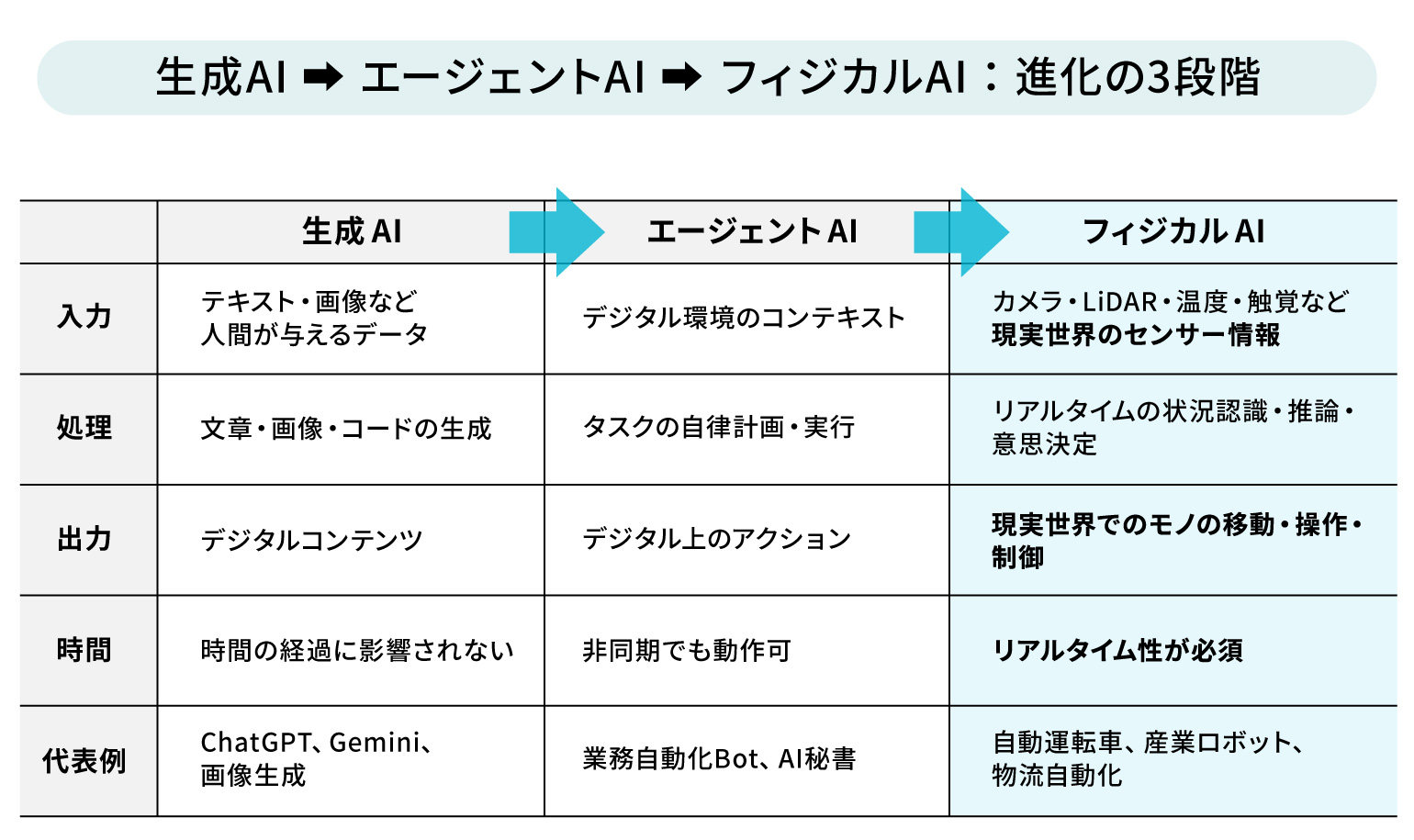
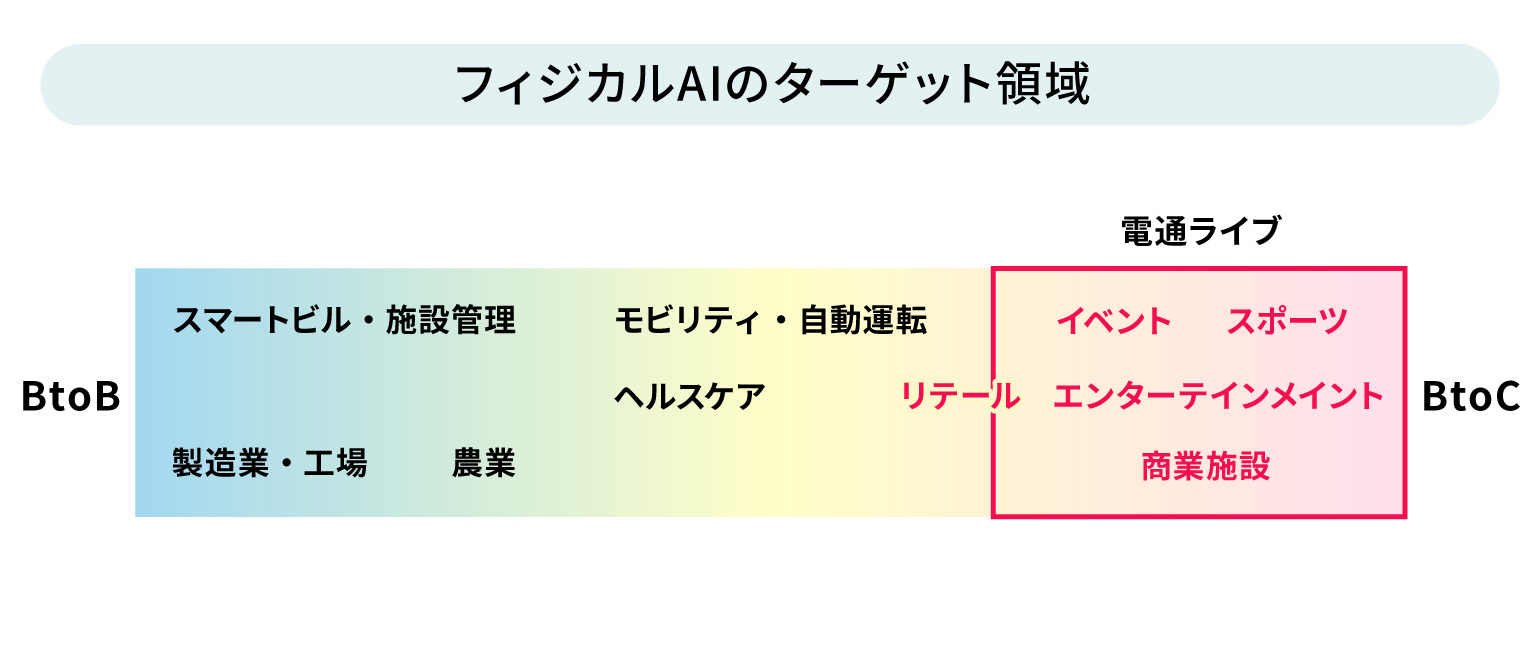
Physical AI is a technology where AI uses cameras and sensors to understand the real world (physical space) and “autonomously acts and operates” through a physical body, such as a robot. In other words, unlike generative AI that operates in digital space, it is AI that possesses a physical form and can execute the process of perception → judgment → action in the real world.Currently, physical AI is expected to be utilized primarily in B2B sectors such as manufacturing, factory robotics, and autonomous driving, but we believe it can also be applied to areas such as events, sports, entertainment, and retail.
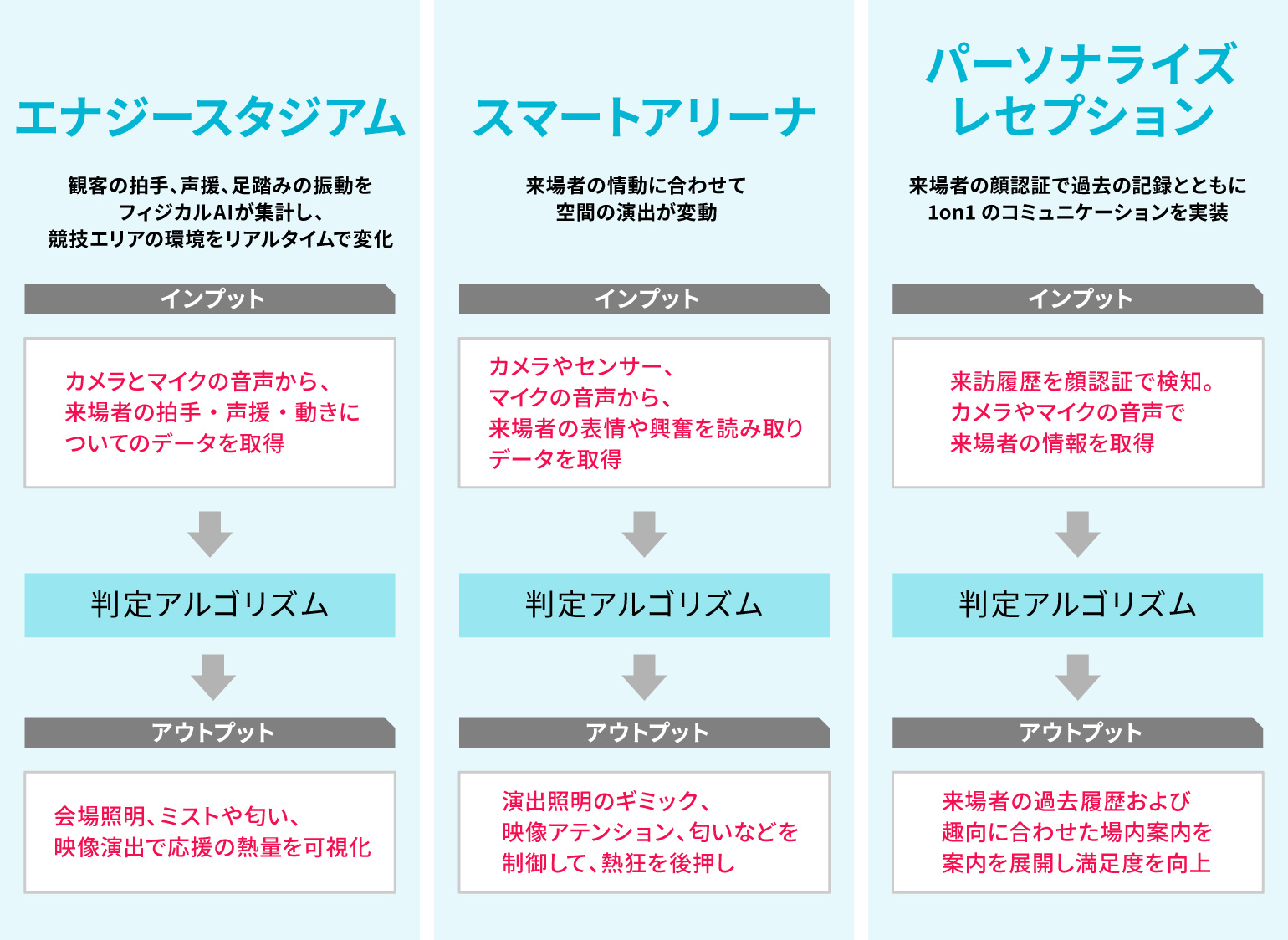
Nakatsuji: If contactless emotional data acquisition technology is combined with physical AI, events will undergo a major evolution. For example, by installing cameras, microphones, and various sensors at a live music venue, we can capture audience facial expressions, voices, and environmental data such as temperature and humidity. Based on this data, AI could control lighting, sound, and visual effects, as well as manage the environment through scents and mist, to further fuel the excitement. I believe such a future is achievable.
──Please tell us about the future outlook for “Emotion LABO.”
Nakatsuji: The first step is to visualize the impact and value of events through emotional data. Beyond that, I envision advanced events that combine the emotional data mentioned earlier with physical AI. Furthermore, we aim to expand the emotional business sector generated by such emotional measurements and ultimately implement a system in society where emotional data and experiential value circulate, building an “emotional economy.”
By collecting and analyzing emotional data and incorporating it into future events, we believe we can deliver an unprecedented “ultimate experience” to consumers. This applies not only to sports and entertainment events but also to retail, where we believe we can expand the concept of the “ultimate shopping experience.”
Looking even further into the future, I envision a world where spaces themselves are transformed by the emotions of the crowd. Venues like concert halls and music festival tents have remained largely unchanged for years. If we can use emotional data to continuously optimize both the physical space and its contents in real time, the level of excitement—a key aspect of real-world experiential value—will surely intensify.
We also envision a future where we expand the use of physical AI presets—currently used in permanent experience spaces like arenas, stadiums, theaters, and exhibition halls—to commercial facilities, parks, and city streets, allowing us to dynamically adjust the level of liveliness in real time based on people’s emotions.
"Emotion LABO" has only just been established, and we are still in the early stages of conducting full-scale research and investigation. However, fortunately, Dentsu Live Inc. is involved in thousands of events annually, providing a wealth of research subjects, and our employees have accumulated a great deal of tacit knowledge. We believe that Dentsu Live Inc.’s research into emotions and its application to events and business holds significant value, particularly in terms of formalizing that tacit knowledge.
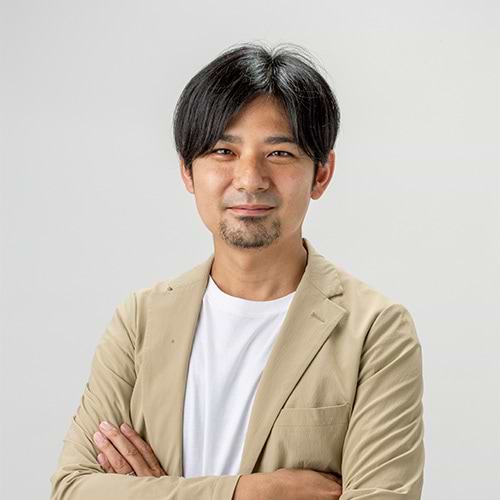
Assistant Director, Management Promotion Bureau / General Manager, Next Business Development Department (Head of "Emotion LABO")
Focusing on the planning and design of integrated solutions centered around events, and with 360° experience design that transcends traditional boundaries at its core, I am engaged in the planning and production of entertainment and content IP. Currently, in the Next Business Development Department, I am involved in the development of new businesses and solutions for the medium to long term. I serve as the director of “Emotion LABO,” primarily leading the implementation phase.

 Events Can Contribute to BX! —Dentsu Live Inc.: Pioneering the Future with Expertise and Creativity [4/5]