While the use of VR and the metaverse has become more commonplace in the wake of the COVID-19 pandemic, much of it remains limited to the “experience of watching videos.” As the value of real-world experiences is being reevaluated, “Free-Roam XR”—which allows users to walk freely through a space where the real and virtual worlds overlap and share that experience with others—has been gaining attention in recent years.
We spoke with Mr. Yoshiya Okoiyama, CEO of ABAL, and Mr. Hirokazu Ito and Mr. Kohei Katagiri of Dentsu Inc. about the potential of “Free-Roam XR”—which can serve as a new outlet strategy for IP holders and a monetization strategy for companies and facilities looking to utilize unused, idle space.
Okoiyama: I started my career as a video and commercial director, working primarily on CG-based video production. In 2016, I founded ABAL Inc., which provides “Scape®,” a next-generation entertainment platform that enables spatial expansion, and in 2025, we formed a strategic partnership with Dentsu Inc.
Ito: At Dentsu Inc.’s Media & Content Transformation Division (MCx Division), I work closely with media and entertainment companies to develop business foundations for the next generation. Under the theme of “the fusion of content and technology,” I design new consumer touchpoints and entertainment experiences, aiming to create new value and expand the IP business beyond mere consumption.
Katagiri: Like Mr. Ito, I’m also in the MCx Bureau, where I’m responsible for business development and promotion with ABAL. We’re working to create new experiential value by leveraging IP and physical spaces.
──First of all, what exactly is Free-Roam XR? Could you explain how it differs from the metaverse?
Okoiyama: “Free-roam” is short for “free roaming,” meaning the ability to move freely. The biggest feature is that you can wear goggles, walk around freely on your own two feet in a space where the real world and the VR world overlap, and share that experience with others. Multiple people enter the same space, see the same things, and react simultaneously. That sense of “being there together” and that “physicality” is the major difference from the metaverse.
There’s one scene from a Free-Roam XR experience that moved me the most. It was dinosaur-themed content, and a parent and child entered holding hands; the child got scared and clung to their parent. That’s where the value lies—being able to hold hands with your dad and share the experience together. I think that’s why people feel motivated to try it with friends and family.
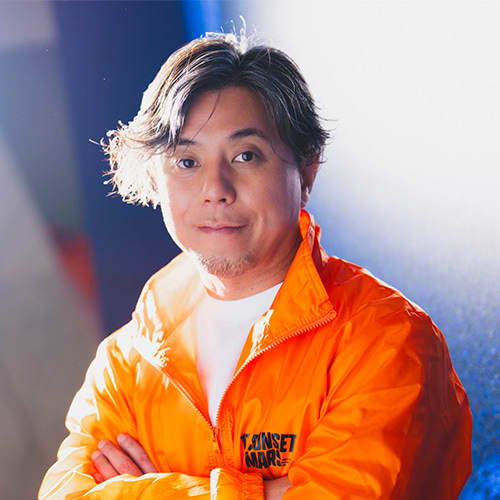
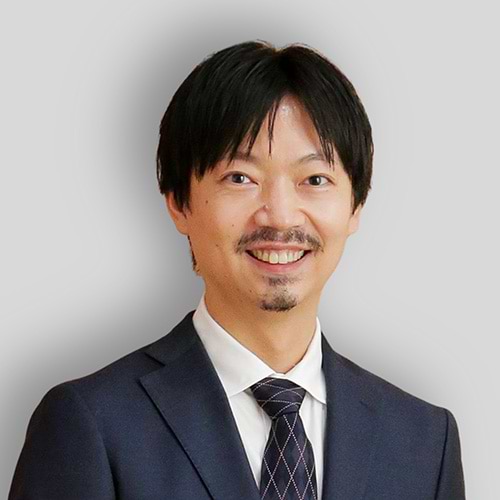
Mr. Okoiyama of ABAL
――So the design is specifically focused on creating a sense that people can experience things together.
Okoiyama: Yes. For example, while the dedicated equipment is designed to emit sound near the ears, we’ve made sure it doesn’t block the ears so that people can still talk during the experience, making it easier to create a shared experience. We’re conscious of creating a sense of seamless continuity—from before putting on the goggles, through the experience itself, and even after returning home—so it’s fundamentally different in nature from experiences mediated by avatars.
Visitors experiencing Free-Roam XR. The dedicated equipment doesn’t block the ears, allowing for natural conversation.By inserting pre-shot photos, participants can see each other’s faces, allowing them to converse just as they would in real life.
――How has Free-Roam XR gained traction?
Okoiyama: About 10 years ago, a promotional video showing people entering a VR world went viral across the globe. In Japan, we were among the first to take on this challenge, but back then, VR involved walking around with a large laptop strapped to a backpack, which presented many operational and technical challenges. While many companies experimented with it, commercialization was extremely difficult; however, through trial and error, it has become a viable reality.
Katagiri: The fact that communication in digital spaces became a reality during the COVID-19 pandemic has led to VR being accepted as something more accessible than before. Combined with technological advancements in devices like headsets during that time, we’ve now reached a stage where practical deployment is feasible in Japan.
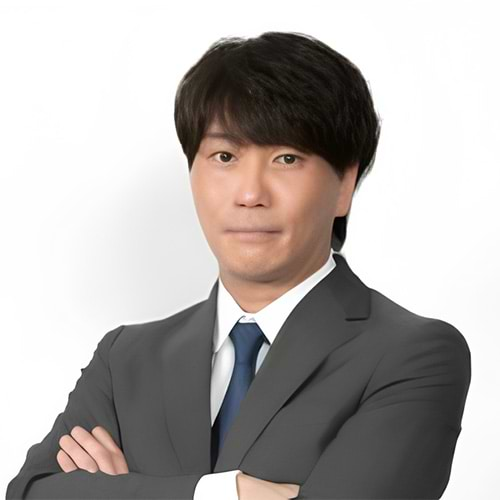
Mr. Katagiri of Dentsu Inc.
Monetizing IP and Content in Compact Spaces
――Please tell us why Dentsu Inc. is focusing on free-roam XR.
Ito: At Dentsu Inc., we’ve been focusing on metaverse projects with media companies and have handled numerous events, including virtual music concerts. However, it was during the COVID-19 pandemic that VR spaces became more accessible—and that we also began to feel their limitations. We recognized the challenges of the traditional “metaverse × community” business model, which involves gathering people from scratch and placing content within those spaces.
We want to use Free-Roam XR to enrich the IP and content held by various companies and expand the experience beyond simply “watching” to one where users can “step inside.” This seamless expansion—from manga to anime and then to Free-Roam XR experiences—holds potential for all kinds of IP, ranging from entertainment to edutainment, including dramas, variety shows, historical programs, the excitement of sports, and even dinosaurs and outer space. We believe this will become a pillar of next-generation media businesses.
This is also a crucial initiative for the media industry. Drawing on the energy that can only be generated in a physical space, we design our experiences with the primary goal of ensuring that the people right in front of us have the best possible time. I believe this will lead to the creation of new value for the media industry.
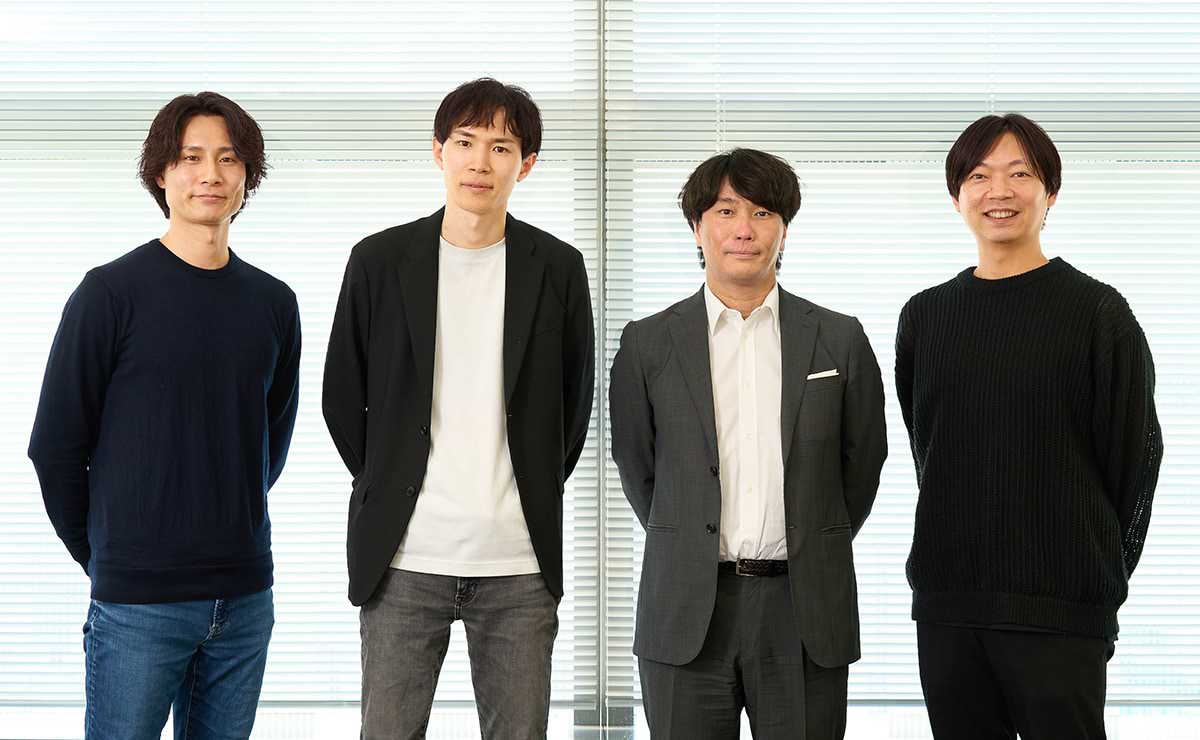
Mr. Ito of Dentsu Inc.
――What kind of service is “Scape®,” provided by ABAL and utilized in Free-Roam XR?
Okoiyama: ABAL holds 18 patents for spatial expansion technologies, including one that allows users to experience a virtual space 20 times larger—10,000 square meters—even while physically occupying a 500-square-meter real-world space. We can provide an experience where visitors feel as though they are moving through a vast virtual space, even if they aren’t physically moving within the real-world space.
Furthermore, when visitors are in the same physical space but occupy different locations in the virtual space, we can prevent collisions between them in the physical space by adjusting their avatar representations.
The “Scape®” platform utilizes these patented technologies. Its feature allowing users to save photos taken in the virtual space to their smartphones and share them on social media enables the sharing of experiences and emotions, supporting up to 100 simultaneous users. Even in limited spaces such as conference rooms or studios, it is possible to create immersive entertainment environments.
An illustration of the spatial expansion technology patented by ABAL
――Are there any specific design considerations unique to Free-Roam XR?
O-Koyama: With free-roam XR, we design spaces on the premise that the same location will be used repeatedly, in order to maximize the revenue potential of compact spaces. One of ABAL’s technological strengths is designing environments so that participants do not collide with one another. In the real world, you’d need to use different locations to offer distinct experiences, but with free-roam XR, we focus on spatial design that seamlessly transforms the same space into different environments without any sense of incongruity, while also prioritizing high turnover rates.
Furthermore, I believe the greatest value of the experience lies in fostering communication. That’s why we’re committed to incorporating numerous elements that encourage conversation—specifically, how much discussion arises among participants about the content after the experience is over.
Transforming Popular Content into Free-Roam XR to Create a “Next-Generation Theme Park”
――How was the response to the Mars travel VR event “THE SUNSET OF MARS,” held at Fuji TV headquarters from April to June 2026?
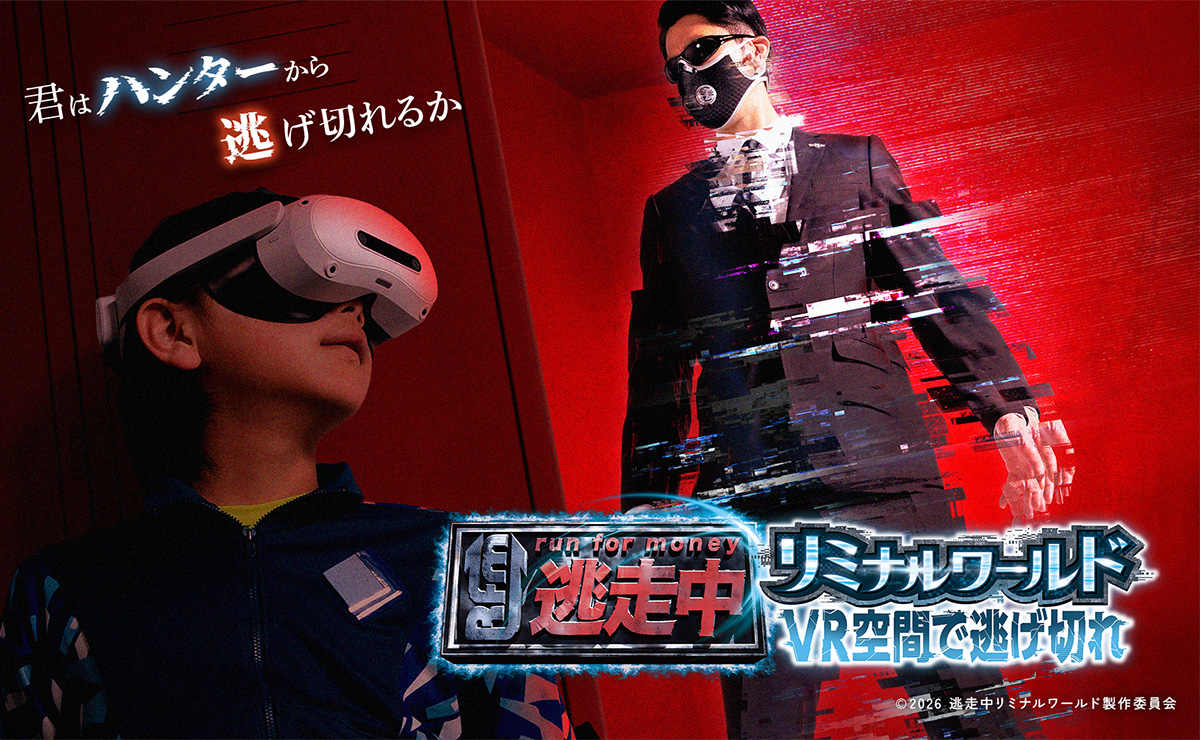
Okoiyama: On weekends, about 600 people participated each day—it was a huge success.Visitors particularly appreciated being able to take selfies within the VR space and the interactive learning experiences about Mars. “Senritsu Meikyū: Mai,” a VR horror attraction based on the original concept of Fuji-Q Highland’s haunted house “Senritsu Meikyū,” which we produced earlier, attracted 22,000 visitors in just one and a half months.“On the Run: Liminal World—Escape in VR,” which lets visitors experience the world of Fuji TV’s popular show “On the Run” in a VR space, will run through September at DiverCity Tokyo in Odaiba.
Katagiri: Regarding the Mars travel experience, we had a professor from Tokyo University of Science—who specializes in Mars research—try it out. He gave it high praise, saying, “I was able to truly feel the world of Mars,” and “I was impressed by the attention to detail, even down to the texture and color of a single rock.” The fact that an expert recognized the realism of the details is a major sign of the experience’s high level of polish.
Part of the Mars Travel VR event “THE SUNSET OF MARS”
――Please tell us about your future plans.
O-Koyama: Free-roam XR is well-suited for IP that allows users to experience places they cannot physically visit—such as locations they cannot reach, the past, or the future. Since free-roam XR and Japanese IP are a perfect match, we’d like to take on the challenge of offering experiences where users can step into the world of anime through free-roam XR.While continuing to secure IP, I also dream of expanding a “next-generation theme park” centered on “Japanese IP” globally, one that leverages Japan’s meticulous creativity to deliver physically immersive experiences.
Katagiri: The safety and meticulous attention to detail in Japanese experience design are highly regarded overseas, and we’re receiving many inquiries from abroad regarding free-roam XR utilizing Japanese IP. In that sense as well, I see tremendous potential.
Ito: For IP holders, free-roam XR is one new way to utilize their IP to provide consumers with fresh experiences. It offers the potential for increased revenue, and for companies with unused space, once they install a free-roam XR system, they can simply swap out the content data to bring various IPs to that location, creating touchpoints with a diverse range of consumers. We want to develop this into a new platform business where IP and the real world merge.The era when any IP can become a free-roam XR experience is surely not far off.
Born in Ishikawa Prefecture in 1973. Graduated from Kanazawa College of Art and Craft in 1996. Joined the Planning and Direction Department at Taiyo Kikaku Co., Ltd. that same year, beginning to direct TV commercials at the young age of 24. Founded Disbound Dimension Ltd. in 2004, where he produced video production systems and other projects from a creator’s perspective. Founded ABAL Co., Ltd. in 2016.
(Photographer: Osamu Hikawa)
Hirokazu Ito
Dentsu Inc.
Media & Content Transformation Division, Media and Content Business Transformation Production Division 2
GM
In the media business sector, he has spearheaded the launch of Japan’s largest-scale live entertainment streaming services and diverse content ventures. Since 2006, he has adopted an innovative approach to IP business, creating over 40 media business ventures and leading the market. Currently, he is driving the development of synergistic businesses and solutions that contribute to IP business expansion, as well as collaborations with startups. As a leader in new business development through co-creation with the media and content industries, he is working to create new markets through novel content experiences.
Media & Content Transformation Division, Media and Content Business Transformation Production Division 2
After working as a project manager for spatial design at Nomura Kogei and in business development for video and cutting-edge technology at NHK Enterprises, he joined Dentsu Inc. MC’s Transformation Bureau in March 2024. Currently, he is working to create new markets and maximize value in the IP business through expanding IP touchpoints and developing new content experiences.