Note: This website was automatically translated, so some terms or nuances may not be completely accurate.
Published Date: 2026/07/15
The “Emotional Resonance” Between Brands and Consumers Created by the Best Content Experiences: The Future of Advertising as Challenged by Netflix and FUKAYOMI
Netflix, which continues to release one hit show after another, is exploring new possibilities for advertising where product and brand messages are seamlessly integrated into the world of the content. Meanwhile, the “FUKAYOMI” team—part of Dentsu Inc.’s research project “Dentsu Desire Design (DDD)”—analyzes hit content using its own unique methodology to predict “future desires.”
How can we interpret content that embodies stories reflecting the times, and what possibilities can we discover in collaborations between content and advertising? Toshiyuki Tanaka, who oversees Netflix’s domestic advertising business, and Naofumi Sato of Dentsu Inc.’s “FUKAYOMI” team discussed these topics.
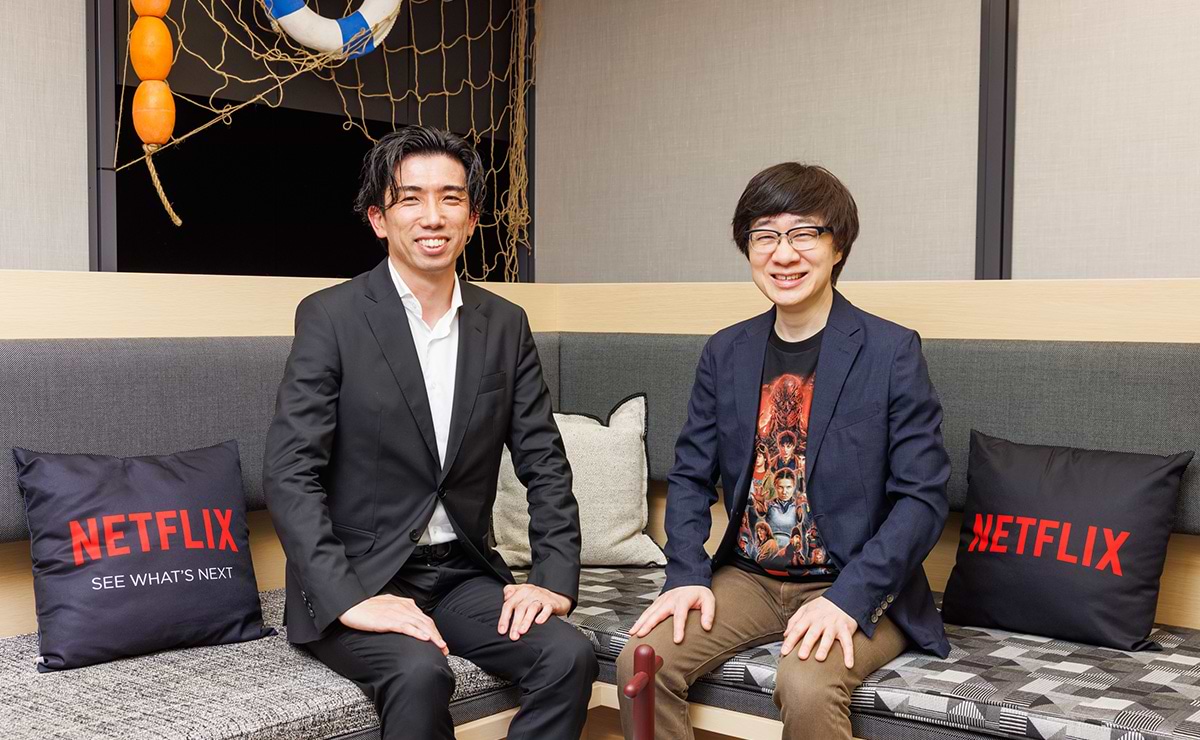
Toshiyuki Tanaka of Netflix (left) and Naofumi Sato of Dentsu Inc.
Emphasizing the Alignment of Worldview, Emotions, and Brands
──First, let me ask you, Mr. Tanaka. What philosophy is currently guiding the development of the advertising business at Netflix Ads?
Tanaka: Whenever I explain Netflix or Netflix Ads, I always emphasize that Netflix is not an advertising platform—it is an entertainment service. Based on that self-identity, we are constantly considering what advertisements delivered through an entertainment service should look like.
Centered on Netflix’s mission, “Entertain the World,” our first priority is to design the advertising experience with a “viewer-first” approach. A key characteristic of Netflix as a media platform is that many viewers watch actively and with focus—rather than just “watching in the background”—meaning we have a high “viewer engagement rate.” Therefore, we must design ads that do not disrupt viewers who are engrossed in the content they’re enjoying.
In addition to standard ad delivery, Netflix Ads also offers a solution we call “Brand Partnerships.” In these partnerships, we strive to design ads where the ad itself is a form of entertainment—one that either complements the content or extends it further, seamlessly integrating the product or brand’s message into the content’s world.
When designing ads, one task we always undertake is exploring the points of connection between the product or brand and Netflix’s content. After discussing with the advertiser—including how the brand wants to be perceived, its marketing goals and challenges, and the direction the company wishes to take—we identify areas where the brand’s message aligns with the core message of the content, and make this the foundation of the brand partnership.
Ultimately, we aim to create a situation where the product or brand resonates with viewers and becomes one of the things the fandom actively supports.
──Next, I’d like to ask Mr. Sato. FUKAYOMI analyzes hit content by viewing it as a “mechanism that drives shifts in values.” Why do you take this approach, and what does it mean for marketing?
Sato: FUKAYOMI launched this project to address the challenge of “how to identify the desires of Japanese people six months or a year from now.” Surveys and behavioral logs can tell us about the present, but not the future. At the same time, market needs revolve around wanting to “understand what the world will look like a year from now.”
We went through a process of trial and error to determine what subject matter would help us understand the future, and we eventually arrived at analyzing content. Perhaps “stories” would be a better term than “content.” Why stories? Well, I write screenplays as a hobby myself, and I believe that when creating stories, dramas, or movies, the creator’s personal desires inevitably find their way into the work.
It’s precisely because creators appeal to the audience—saying, “I want to show you this” or “I want the world to be like this”—that people respond. When a work becomes a hit, it serves as evidence that many people empathize, to some extent, with the desires the creator envisioned. We conduct our analysis based on the hypothesis that if a creator’s personal desires have the potential to resonate with a large audience, those desires or shifts in values could grow into mass desires a year from now.
At FUKAYOMI, we conduct our analysis in four steps. The first step is to identify the creator’s own desires that they sought to imbue in the story. The second is to examine how those desires were resolved within the story. Specifically, this refers to how the world or the protagonist changed during the climax. The third step is to determine what shifts in values the audience experienced after watching the work.As I’m sure you’ve all experienced, this refers to the kind of shift where, after leaving the theater, you find yourself thinking, “I wish the world were like this.” Moving on to the fourth step—though this is a slight leap from the previous point—we formulate hypotheses about what new desires people who have undergone such shifts in values will express one or two years later. We believe FUKAYOMI’s mission is to archive the hypotheses accumulated through this process and make them available for our clients to utilize.
In fact, FUKAYOMI has been active for over five years, and we have recently published a book titled *What Will Future Consumers Desire?* through Nikkei BP, which compiles our analysis of 53 hit works archived from 2020 to 2025. The book provides a more concrete understanding of FUKAYOMI’s methodology.
How to Design “Content × Brand × Audience Resonance”
—From here on, we’ll discuss specific Netflix content. The first is “Boyfriend.” How does FUKAYOMI analyze this content?
*“Boyfriend”* Japan’s first reality series featuring romantic relationships between men. In Season 1, nine men—the “Boys”—who were potential romantic partners gathered at a beach house near the ocean. As they lived together, romance and friendship blossomed, capturing the hearts of viewers. Season 2 shifts the setting to Hokkaido, where ten “Boys” live together.
Sato: I think many people start watching “Boyfriend” as a dating reality show, focusing on “how the romantic storylines will unfold.” However, when you actually watch it, I think the key point is that it richly depicts the process of these relationships settling into a broad spectrum of human connections—whether they end in friendship, romance, or something else entirely—that can’t be easily labeled as “romance.”
Typical dating reality shows often assume that the participants will move toward a single type of relationship—such as dating or marriage—but “Boyfriend” doesn’t operate on that premise. It’s okay for the relationships to end up anywhere. It feels like we’re watching the very process of how human relationships are formed; even though we don’t know where they’ll end up, we get to witness how those relationships are built.Whether to step on the gas and move forward, or take a step back—these moments are vividly captured as a documentary, and I think that’s what made it so fascinating.
Watching it brought about a shift in my values: I realized that, even in romance, we don’t have to be bound by the assumption that we must follow a single, logical path toward marriage or the like. No matter what kind of relationship it is, there are various possible outcomes. Rather, I came to see that the true way to build a relationship is to enjoy the process itself—discovering “this is who I am” through conversations with the other person, and getting to know them in the process.
Netflix Reality Series “Boyfriend” Season 2: Now Streaming Exclusively Worldwide
—What do you think of that analysis, Mr. Tanaka?
Tanaka: I think that’s exactly right. Netflix is currently working to grow genres it calls “unscripted”—including dating reality shows, comedy, and survival shows. I believe the fact that these are unscripted dramas—where the process and developments are unpredictable—is what captivates viewers and creates such excitement. Also, rather than relying on game-like twists to stir emotions, I think viewers have embraced the idea that it’s okay to be yourself—and the emotional state of accepting both yourself and others as they are.
──For Season 2 of “Boyfriend,” you collaborated with Kirin Beer on a brand partnership.
Tanaka: The discussion regarding the brand partnership with Kirin Beer began with the idea that the carefully depicted interpersonal relationships and subtle emotional nuances in “Boyfriend” align well with the message Kirin Beer’s “Kirin Ichiban Shibori White Beer” wants to convey as a brand—affirming “being yourself” and the idea that drinking it “brings a gentle feeling.”
Actually, although the members of the “Ichiban Shibori White Beer” brand team were initially aware of the series, they hadn’t watched it. However, this project gave them the opportunity to watch Season 1, and they were able to connect with the show.
I believe the most successful approach to brand partnerships is when everyone involved—including the advertiser—becomes a fan of the content. I’m delighted that we were able to achieve that with “Boyfriend.”
──That’s a new way of thinking. It’s precisely because the advertiser is a fan themselves that they want to feature their brand in that content. It’s different from the simple concept of an advertiser.
A tie-in campaign between “Boyfriend” Season 2 and Kirin Beer’s “Kirin Ichiban Shibori White Beer.” The content’s worldview and the brand’s message align around values such as “relationships where you can be yourself” and “moments when your heart relaxes.”
Sato: Until now, the advertising world has placed great emphasis on metrics such as “reach.” As we prioritize the quality of advertising through brand partnerships, how do you respond to questions from advertisers about how to ensure reach?
Tanaka: With solutions like brand partnerships, I believe it’s possible to design campaigns that not only track total reach but also significantly increase attitude change and purchase intent among the audience with a high degree of certainty. This is because the vast majority of Netflix viewers watch actively and with focus, and since most are fans of the content, we can create a state where a significant number of viewers are fully engaged and deeply moved.
With traditional advertising, marketers don’t expect that reaching 100 million people will result in all 100 million reacting and purchasing the product. Instead, the sales funnel is designed based on the assumption that, for example, out of 100 million people reached, 30 million will take notice and 10 million will actually make a purchase.On the other hand, with Netflix’s “engaged” audience, it’s not impossible to reach 11 million people and have 10 million of them take an interest in a product and proceed to purchase it.
If we can design high-quality ads based on metrics such as brand lift, purchase intent, search volume trends, and conversion rates, we should be able to create a scenario where the audience we reach—even if the reach isn’t broad—is highly likely to respond and make a purchase. By doing so, I believe we can break away from the traditional advertising world, which relies on broad reach to generate sales, and create a new world of advertising.
—So this means the funnel conversion rate will improve dramatically. How does FUKAYOMI analyze this collaboration?
Sato: Of course, the brand and the content align at the level of shared values, but from FUKAYOMI’s perspective, we see that Ichiban Shibori White Beer is proposing a new alternative as a “gentle choice” in response to this unscripted work, which represents the diversity of human relationships.The structure—new alternatives for human relationships and new alternatives for beer—is closely aligned, connected by the shared value of breaking down stereotypes and expanding options. Furthermore, within the program, alcohol functions appropriately as a tool to bring people closer, encourage them to speak their minds, and create a natural atmosphere. Having the White Beer ad—which helps unravel human relationships—integrated as a tie-in feels very natural, and the structure was designed to appeal to fans of both the brand and the content.
Restoring the Artistic Quality of Advertising
—The second example is *Stranger Things*. How does FUKAYOMI analyze this content?
*“Stranger Things: The Unknown World”* A mystery adventure set in a small town in the 1980s, in which a group of boys and girls, along with their families and friends, join forces to confront the threat of the “Upside Down” that has suddenly appeared. It has become a global phenomenon, influencing various forms of entertainment and cultural movements.
Sato: As I followed the characters’ growth and reached the climax where they defeat the final boss, I felt both the catharsis of a satisfying conclusion and a sense of loss at the thought that I wouldn’t be seeing them again. One of its defining features is how closely it adheres to the reality of the 1980s, which creates a strong sense of immersion.
This might be reading too much into it, but I felt it served as an antithesis to our current era because many of the characters are, well, a bit of a mess—they’re often otaku or geeks who excel at one thing but are lacking in others. I found the structure fascinating: it’s precisely because they’re a group of “outliers”—not all-around heroes—that they’re able to save the world.
These days, there’s a tendency to favor people who are “all 4s” in both skills and looks, but in reality, people have their ups and downs. There are many who, even if they lack something, have one thing they’re unbeatable at—and by pursuing that to the fullest, they lead interesting lives. I think this is a show that boosts the self-esteem of people like that—myself included.
Netflix series “Stranger Things” Season 5, streaming exclusively on Netflix
—Mr. Tanaka, how do you view “Stranger Things” as a series?
Tanaka: It’s extremely rare to create a new original IP (intellectual property) and produce content that has been loved worldwide for over a decade, which is precisely why we’ve cherished it so much. It’s only because we built it together with the fandom that we were able to create this massive wave of popularity and this unique worldview. You mentioned a sense of loss, but that’s exactly why we’ll keep creating new IPs—to ensure you remain Netflix fans.Recently, strong fanbases have emerged for shows like “Wednesday” and “K-Pop Girls! Demon Hunters.”
──In Season 5 of “Stranger Things,” there was a collaboration with “.ENDRECHERI.”, a project led by ZOZOTOWN and Tsuyoshi Domoto. This connects the content with real-world merchandise—what was the design philosophy behind it?
Tanaka: The key point was creating an environment where everyone involved would become a fan. This was made possible precisely because Mr. Domoto himself is an ardent “Stranger Things” fan. His own feelings as a fan are incorporated into the details, designs, and concepts of the clothing. I think it’s more accurate to say that we’re expanding the world rather than simply running an advertising campaign.
──From FUKAYOMI’s perspective, how do you interpret this?
Sato: On the surface, it may seem like Mr. Domoto is simply selling collaboration items using elements he loves, but he occupies a very distinctive position himself. As a singer, actor, and designer—active in multiple fields—he possesses a unique personality that sets him apart from others. The characters in “Stranger Things” also have their own unique personalities that differ from others, and I think the key point is that Mr. Domoto exists as one of them.
Rather than simply replicating the show’s world, he’s taken it upon himself as a producer to reinterpret it into fashion items in his own way, focusing on design details—such as the placement of buttons—that most people wouldn’t think of. It’s not just a simple collaboration; it also conveys his own personal message. I think the strength of this project lies in the fact that by wearing these clothes, consumers can bring the show’s world out into the real world while also expressing Mr. Domoto’s unique passion and individuality.
A collection produced by Tsuyoshi Domoto, resulting from a collaboration between “Stranger Things” and “ZOZOTOWN.” Domoto, himself an avid fan of the series, designed a wide range of items inspired by iconic scenes and characters from the show.
—Finally, in an era where content and brands resonate with one another, what kind of value do you think advertising will come to provide?
Sato: Listening to Mr. Tanaka, I think that if viewers can enjoy the content while also appreciating advertising as a form of art in its own right, attention will once again be drawn to the artistic quality of advertising.
The advertising industry today tends to be overly optimized for metrics like CVR (conversion rate), CPA (cost per acquisition), and ROAS (return on ad spend), and the narrative aspect of advertising is often overlooked. While I believe the pursuit of metrics is an irreversible trend, I feel that advertising—even if not to the same extent as Netflix’s content—must not lose its artistic quality, which has the power to change people’s values.I feel that Netflix’s advertising business demonstrates how it’s possible to blend performance metrics with artistic merit. It’s truly wonderful that they’re exploring ways to enhance the viewing experience rather than simply avoiding disruption to the content.
I believe that as we gain more tools to analyze what drives viewers’ desires, we’ll be able to further explore a wonderful relationship between media and advertising. I hope that FUKAYOMI—which enables optimal matching based on content value analysis and consumer insight data—can serve as a hub for this.
Tanaka: I, too, have spent my entire career in the world of numbers—CPA and ROI—but I believe advertising is an interesting solution that can not only be integrated into entertainment but also expand the experience itself, bringing what’s happening on the screen into the real world.
How can we use advertising as a solution to expand content and surprise our audience? I want to continue focusing my efforts on such initiatives moving forward.
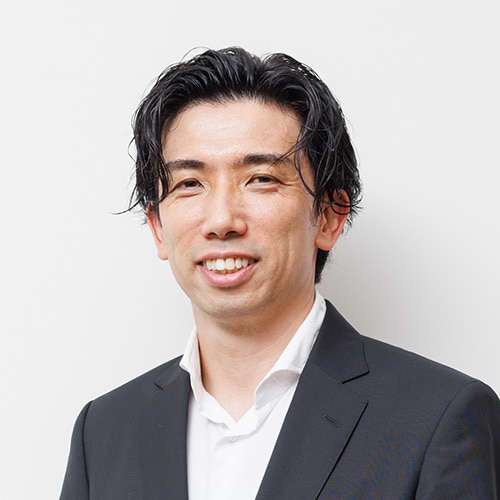
After a career in advertising sales at a newspaper company, he engaged in a wide range of roles—including advertising sales, product development, operations, and marketing—at platform providers and media companies both in Japan and abroad. In April 2024, he joined Netflix as the head of its first-ever advertising business in Japan, overseeing advertising sales in the country. Since joining, he has been working to build advertising solutions that appeal to Netflix’s diverse audience, as well as to enhance Netflix’s services and create advertising opportunities that move people’s hearts.
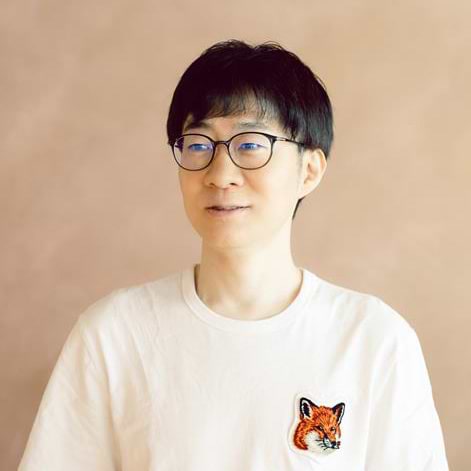
Hisashi Sato
Dentsu Inc.
Second Marketing Bureau
Planning Director
Armed with humanities knowledge from across time and cultures, I operate as “The Director,” covering “everything that makes society better”—from business growth consulting to planning and development, marketing strategy, and workshops. I am also active as a screenwriter.
The “Emotional Resonance” Between Brands and Consumers Created by the Best Content Experiences: The Future of Advertising as Challenged by Netflix and FUKAYOMI