Digital information spaces—including social media, video platforms, and apps—have become an indispensable part of our daily lives. At the same time, issues that undermine the credibility of these spaces—such as fake news, misinformation, defamation, and clickbait ads—are becoming increasingly serious.
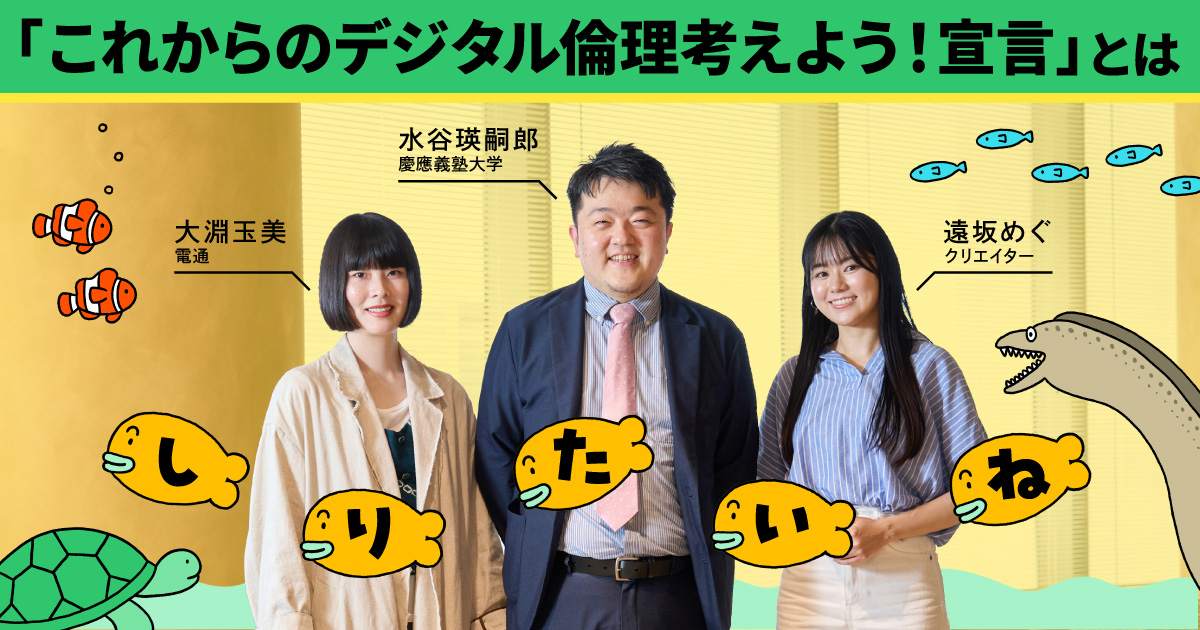
In this second installment of the series, we feature Associate Professor Eijiro Mizutani, who specializes in constitutional and media law and conducts research and makes policy recommendations on the attention economy and information health at Keio University’s X Dignity Center, andMegumi Tōsaka, a singer-songwriter and creator who has gained a following on TikTok and YouTube Shorts; and Tamami Ōbuchi, who leads the planning, experience design, and creative expression of digital communications at Dentsu Inc. Customer Experience Creative Center. We asked them for their perspectives on what is needed to foster a healthy information space.
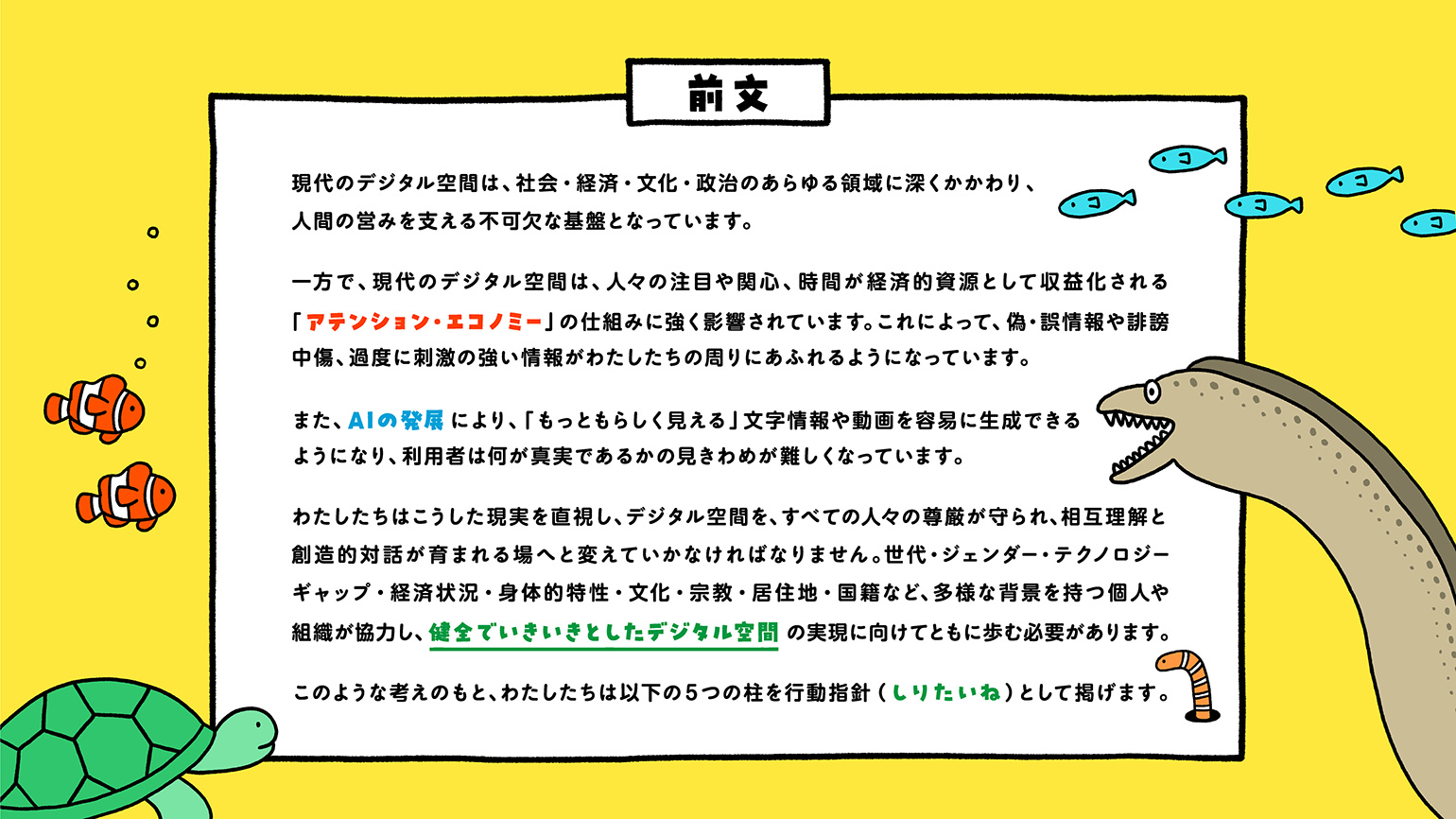
[Keio University ×Dignity Center] A research hub that conducts interdisciplinary research and practical initiatives on the future of digital society, centered on human dignity. In 2026,it announced the“Let’s Think About the Future of Digital Ethics! Declaration,” whichsets forth five action guidelines aimed at realizing a healthy and vibrant digital space. Furthermore, it plans to establish a new organization involving stakeholders from diverse generations—including young people—and various industries.
An Era Where You Must Grab Attention Within the “First Second”
──First, please tell us about the changes you’ve noticed in the digital information space through your respective activities.
Tosaka: I work as a singer-songwriter and a creator focused primarily on short videos. I’ve been performing live and pursuing a career as a singer-songwriter since middle school, but when live shows and events were canceled due to the COVID-19 pandemic, I started posting short videos on TikTok and YouTube as a new form of expression. The videos I posted there garnered a lot of attention, and now I continue to produce and share video content alongside my music career.
In terms of changes in the digital landscape, I feel that the attention span of users has become much shorter. Until recently, long, landscape-oriented videos were the norm, but now it’s become commonplace to watch portrait-oriented videos by swiping through them. It used to be said that “if you don’t hook the viewer within the first three seconds, they’ll stop watching,” but now that timeframe has been shrinking—to two seconds, then one second, and so on. In short, I feel there’s a growing trend where, if the opening doesn’t grab the viewer’s attention, they won’t watch the video all the way through.
Megu Tōsaka
Oobuchi: We’re seeing exactly the same shift in the digital advertising industry. On smartphone screens packed with information, video ads—in particular—now require a strong focus on attention-grabbing design to ensure they aren’t simply skipped over.
While companies running ads aim to convey their vision and message to consumers and society, it would be counterproductive if their efforts to grab users’ attention resulted in an unpleasant experience. Striking the right balance between capturing users’ attention and effectively delivering the company’s message—that’s something I think about every day.
Mizutani: The perspectives you two have shared as creators are very refreshing. I often talk with students from the user’s perspective, and they frequently say, “Before I know it, time has just slipped away.” They intended to watch just a short video, but end up watching for much longer, and when they suddenly snap back to reality, a significant amount of time has passed. It seems they feel they’ve lost control over their own information consumption.
Some students even go so far as to deliberately delete apps from their smartphones and watch content only through a browser. They do this because, otherwise, they’ll unconsciously open the app the moment they have a spare moment. Listening to what you both just said, I felt that the experiences of creators and consumers are truly two sides of the same coin.
Catching people’s attention isn’t inherently bad
—What exactly is the mechanism behind the “Attention Economy,” which is the theme of this discussion?
Mizutani: “Attention” in the Attention Economy refers to focus or interest. In the digital space, users’ attention and time spent on a platform translate into revenue through ad displays and data utilization. That’s precisely why content creators and platforms strive to keep users engaged with their videos or services for as long as possible. Capturing and sustaining people’s interest generates economic value. This is the basic structure of the Attention Economy.
Of course, attracting attention in and of itself isn’t a bad thing. It’s perfectly reasonable to devise ways to ensure your target audience sees your content—I, too, come up with eye-catching titles when writing academic papers. Attention is necessary to deliver information to the people you want to reach.
The problem is that attention is increasingly being skewed toward eliciting reflexive reactions from users—such as making them pause or click—rather than conveying actual content. That is where the difficulty of the attention economy lies.
──What kinds of risks are arising within this structure?
Mizutani: One element that easily captures human attention is emotion. Negative emotions in particular—such as anger or sadness—are said to draw strong attention. Some content that stirs these emotions may contain disinformation, misinformation, hate speech, or defamation, which has become a major problem.
Furthermore, generative AI has significantly lowered the barriers to entry for content creation. Of course, this also has benefits for creators. However, it allows people to produce passable content without necessarily having the required experience or making ethical judgments. As a result, some people will use this power maliciously, while others will cross ethical boundaries they should have stopped at. It is crucial to establish systems that help people refrain from crossing those lines.
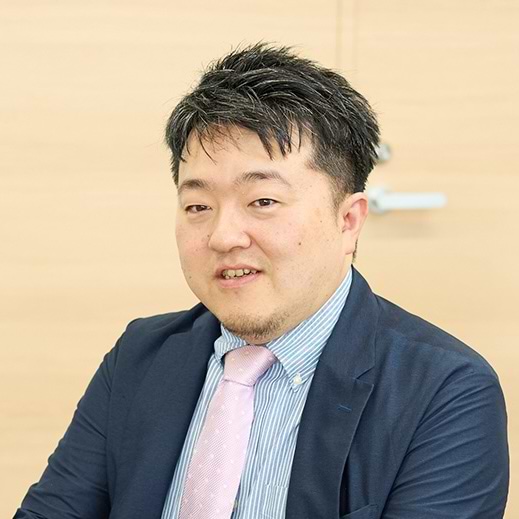
Eijiro Mizutani, Associate Professor, Keio University X Dignity Center
──Mr. Tōsaka, is there anything in particular you’re careful about when posting or sharing content?
Tosaka: I’m extremely careful about sharing information during disasters. When an earthquake or fire occurs, posts like “Things are getting really bad here” or “Please spread this information” often start circulating, right? But there’s always the possibility that this could be fake or misinformation. What you share with the intention of helping might end up spreading fake or misinformation. You can unwittingly become part of the problem, so you really have to be careful about that.
Oobuchi: When the earthquake struck Kumamoto, a piece of fake news claiming that “a lion had escaped from the zoo” went viral on social media. The image looked strangely realistic, and since it was being shared by so many people, I almost mistook it for the truth. I’ve also had other experiences where my own family sent me fake news, and I almost believed it.When a lot of people are reacting to something, you can mistakenly think you’re the only one who doesn’t know about it. And when the information comes from someone you trust, that trust compounds, making you more likely to blindly believe the information itself.
What’s important is the “after-reading impression” of people who were drawn in by the attention.
—Mr. Oobuchi, from your perspective as an advertising creator, how do you view the concept of “attention”?
Oobuchi: As an advertising creator, what I pay close attention to is the “after-reading impression” once I’ve captured attention. I aim to ensure that after viewing the content, positive emotions such as “fun,” “interesting,” or “moving” arise, or that a sense of understanding and empathy—like “I get it”—is evoked. While designing the message a company wants to convey, I place great importance on considering the after-reading impression to ensure the user—the recipient—doesn’t feel anger, sadness, or discomfort.
In fact, I sometimes receive requests to create content that “goes viral.” However, going viral shouldn’t simply mean grabbing attention to rack up impressions.
In recent years, even when evaluating digital creative content, there has been a growing emphasis not only on the number of views but also on the quality of reactions—such as the nature of the comments and how the content is being shared. We carefully examine whether users experienced positive emotions, whether the content led to desired actions, and whether engagement increased.
Tamami Oobuchi, Dentsu Inc. Customer Experience Creative Center
Tosaka: I totally agree. I started making short videos about four years ago, and back then, I experienced a viral hit with a series of songs titled “I’m Pissed!”—songs about getting angry over trivial everyday things. I even won a TikTok award that year and garnered a lot of attention. But the number of people who became interested in my music hardly increased at all. Even though it went viral, I was left with a sense of emptiness—as if nothing had really stuck.
After that, I shifted my focus to creating short videos designed to get people to actually listen to my songs. If you look purely at view counts, they might even be lower than during my most viral period. But I’ve started receiving comments like, “The lyrics saved me” or “It was encouraging,” and more people have been coming to my live shows. I’ve really come to realize the emptiness of chasing numbers alone through my own work.
Mizutani: There’s content out there that makes you regret watching it afterward, thinking, “Why did I even watch that?” Clickbait articles and headlines might generate clicks in the moment. But that kind of content can leave readers feeling regret. As content creators, can we really call that a success? I think that’s something we need to consider.
When false or misleading information spreads, even the truth comes under suspicion
—How does the spread of false or misleading information and fake videos affect the recipients of that information?
Mizutani: First, there’s the potential for real harm. If false information lowers an individual’s social standing, it constitutes an infringement of their right to reputation. In fact, there have been cases where hate directed at people with specific characteristics was linked to fake news, leading to major social incidents.
Another serious impact is that even genuine information begins to be questioned. As false and misleading information—such as the “lion on the loose” post mentioned earlier—increases, it becomes harder to determine whether the information right in front of us is real or fake.
As a result, the integrity—that is, the reliability and sincerity—of the entire information landscape declines. We are losing the environment where we can consume information with peace of mind. In the long term, this is a very serious problem.
Tosaka: Lately, I feel like I’ve seen more reactions to posts featuring images or videos asking, “That’s AI, right?” Even I, myself, find that when I see something amazing, a sense of skepticism creeps in somewhere. That’s really sad, isn’t it?
“Information Selective Eating”: The X Dignity Center’s Approach to Information Health
—The X Dignity Center is promoting a project called “Information Health.” What is the concept behind this?
Mizutani: “Information Health” is a concept proposed by Professor Fujiō Toriumi of the Graduate School of Engineering at the University of Tokyo and Professor Tatsuhiko Yamamoto of the Graduate School of Law at Keio University. It arose from a sense of concern that, in the face of the accelerating “attention economy,” we should pause and reflect for a moment.
It might be easier to understand if we use food as an analogy. When it comes to food, we’re mindful of nutritional balance and avoiding an unbalanced diet, aren’t we? If we eat nothing but junk food, it could have a negative impact on our health. That’s why, just like with food education, the idea of reevaluating the relationship between food and health has gained traction.
On the other hand, in the digital realm, a vast amount of content is generated every day. We’re inundated with so much information that we can’t possibly choose it all ourselves; instead, recommendation algorithms fill our smartphone screens with content that seems to match our preferences. But unlike food, information doesn’t come with calorie or ingredient labels. At a glance, it’s impossible to tell who created it or what the context is.
In this situation, continuously consuming only the information you prefer can, in a sense, be described as “information bias.” Of course, having a bias in itself isn’t necessarily bad. You have the freedom to be selective. However, we need to address situations where people are unaware of their bias—or, even if they are aware, are unable to control it on their own.
Efforts to Avoid a Condescending Tone in Promoting Information Literacy Through the “I Want to Know” Declaration
—The X Dignity Center has recently announced the “Let’s Think About Digital Ethics for the Future! Declaration.” What concerns led to its creation?
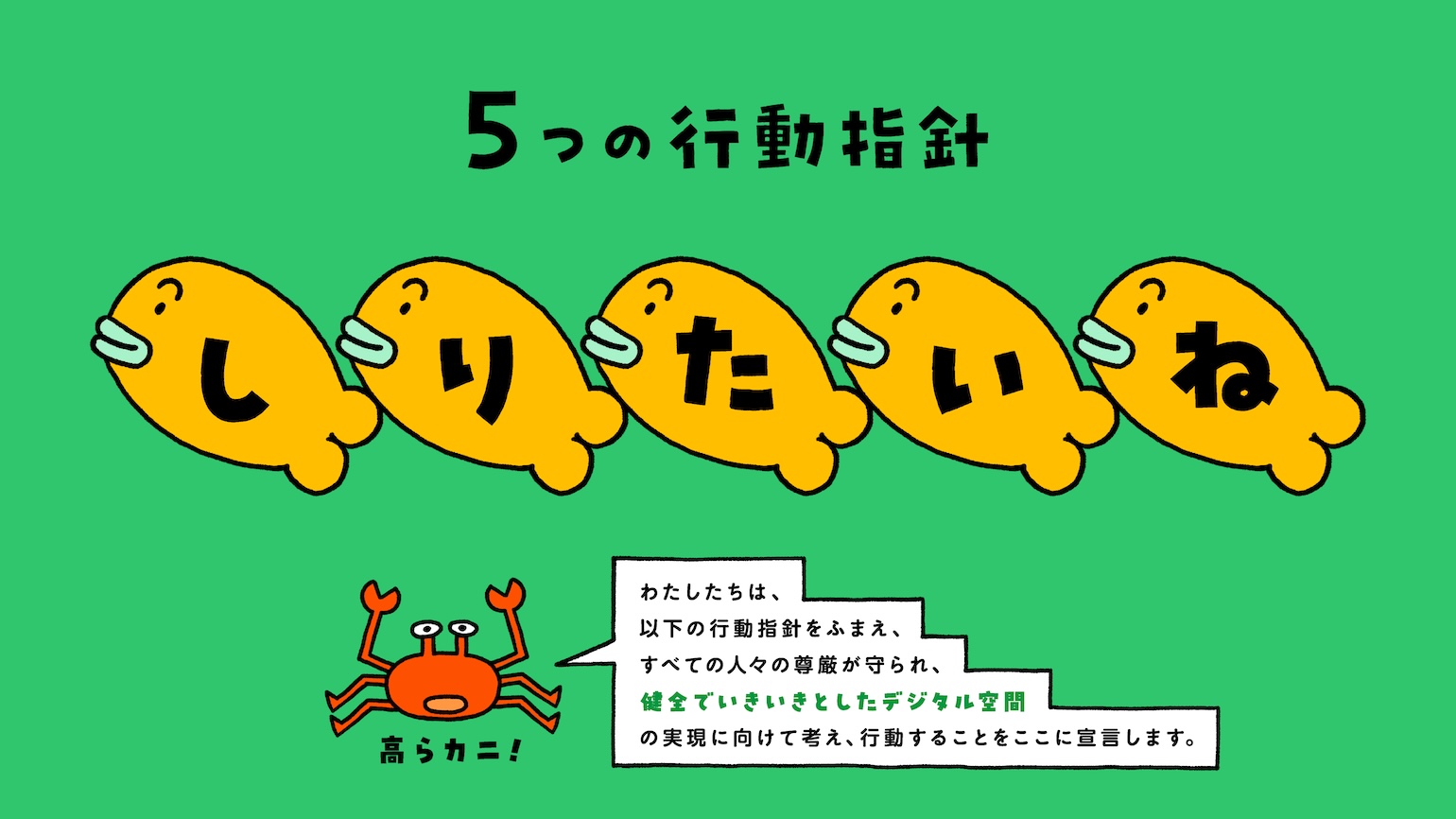
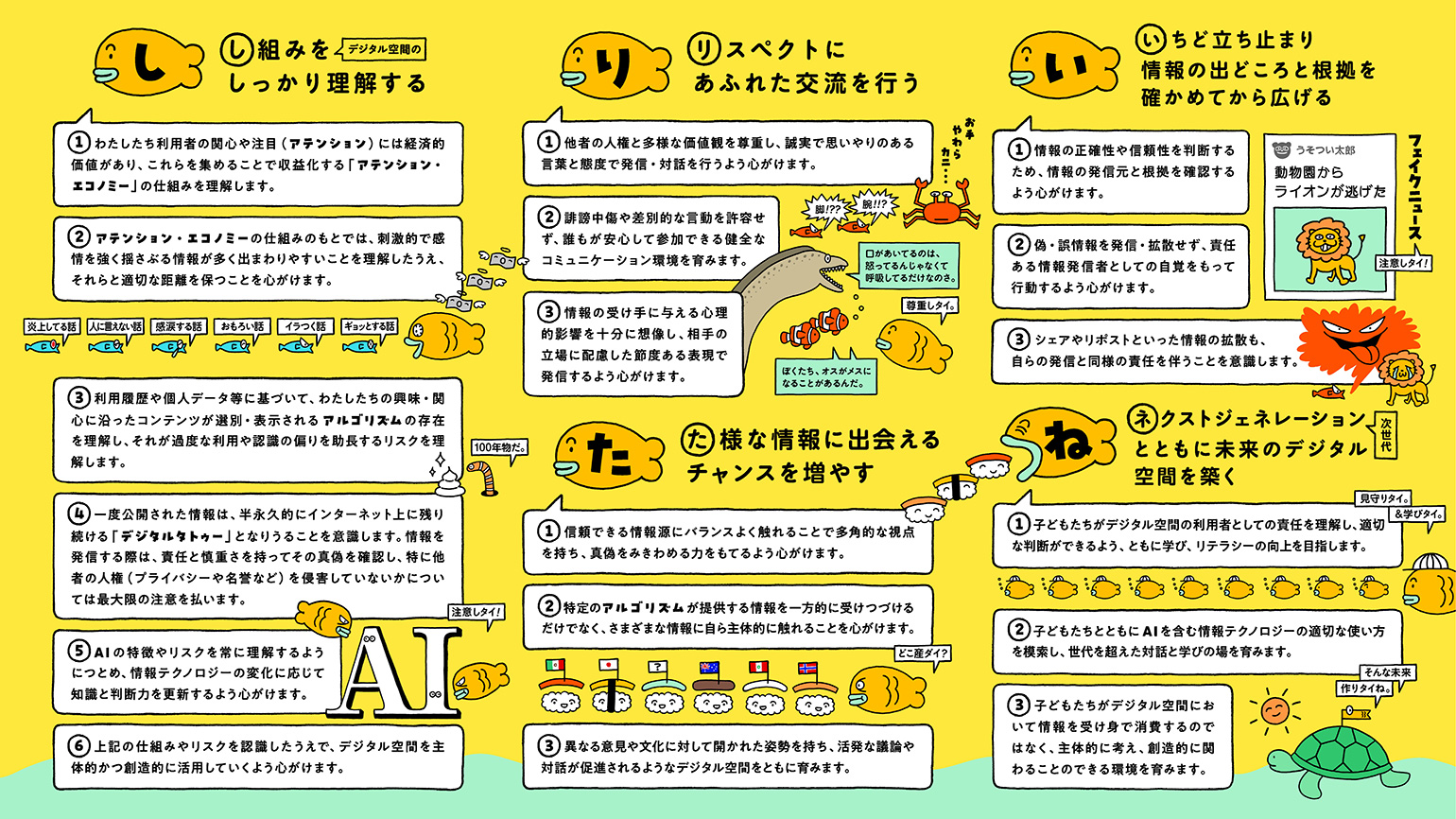
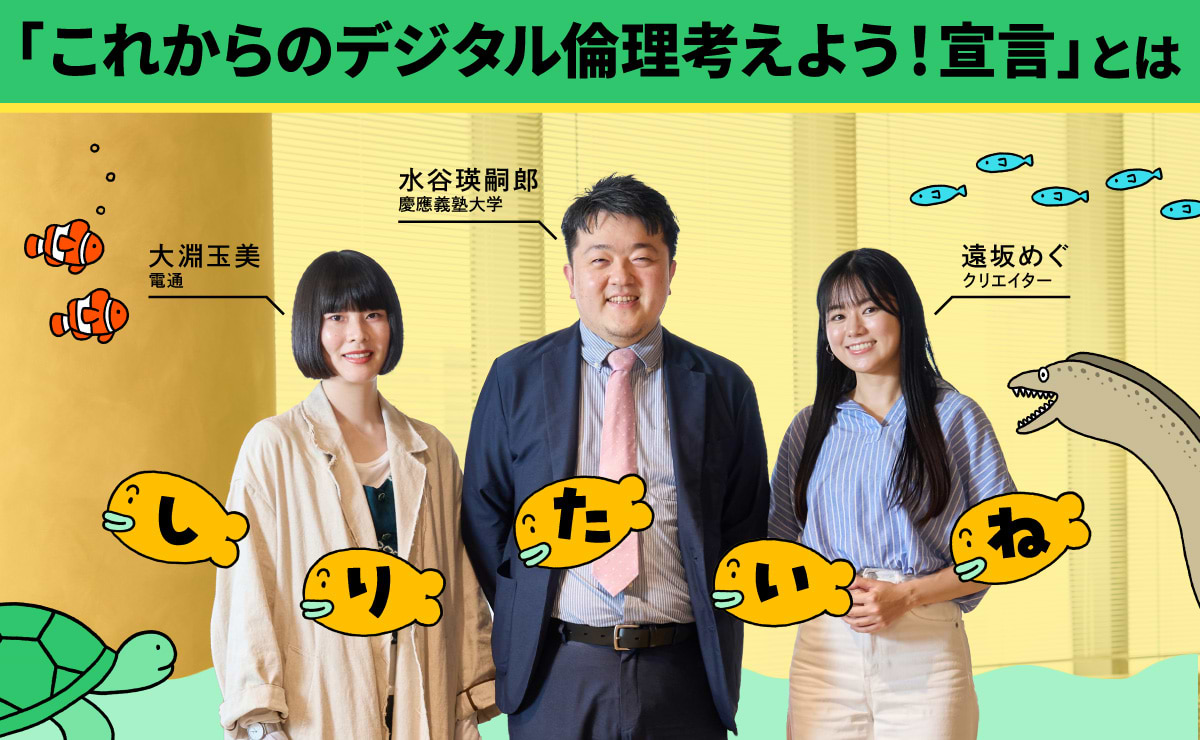
Mizutani: We refer to the “Let’s Think About the Future of Digital Ethics! Declaration” as the “Shiritaine” Declaration among ourselves. It summarizes five key points—derived from the initials of “shi-ri-ta-i-ne”—that everyone, whether they’re sharing or receiving information in the digital space of the future, should keep in mind.
The underlying concerns are linked to issues of information health and the attention economy. We are surrounded by the spread of fake news, misinformation, and defamation. Furthermore, as AI advances, it’s becoming increasingly difficult to discern whether the content reaching us is genuine. Against this backdrop, we wanted to provide the ethical guidelines necessary to protect people’s “dignity.”
However, initiatives on information literacy can sometimes inevitably come across as patronizing, as if they’re telling people “this is what you should do.” In particular, if it’s perceived as university professors speaking condescendingly, the message won’t spread—no matter how good the content is.
That’s why, this time, I aimed to create a format that puts us on the same level as the general public and encourages people to think for themselves. I especially want young people—who will lead the next generation—to consider what they can do to improve today’s digital space. It was with this in mind that I chose the format of this declaration.
──Mr. Ōbuchi, you were involved in creating the copy, characters, and visuals for this declaration. How did you approach the creative design?
Oobuchi: To be honest, when I first received the draft from the professors, it felt like a stiff legal text (laughs). Even though the content was truly wonderful and meaningful, I worried that if left as is, the younger generation in particular would just brush it off with a “Yeah, yeah, this is all too complicated” and ignore it, making it hard for the message’s value to get across.
First, copywriter Aki Kimura (Creative Planning Division 1) worked to soften the language. She realized we needed a catchphrase that would instantly bring the declaration’s content to mind, so she coined the phrase “Shiritai ne.” I drew inspiration from that five-character catchphrase, cut out the “tai” from “shiritai,” and designed an icon shaped like a sea bream (tai).Actually, if you look closely, the sea bream’s tail is shaped like a butt. It’s a little bit of playful humor to match the phrase “Shiritai-ne.”
Ethics are invisible. That’s precisely why we needed an approach that went beyond simply conveying concepts through words—one that would help people internalize them as something personally relevant. By envisioning the digital space as the ocean, we used stories of marine creatures—such as sea bream, moray eels, sea anemones, and sushi—to translate academic perspectives into design. That was the mindset with which we created this project.
Since we were co-creating with university professors, students, and corporate partners, I was a bit worried about whether they would understand the creative concept. However, they responded very positively, and through repeated team discussions, we were able to refine the content.
Mizutani: I just learned for the first time that “Shiritai-kun’s” tail is actually his butt (laughs). I think this kind of output—including the discussion about butts and the video—is something we researchers would never come up with on our own. And in this declaration, what I particularly wanted to emphasize was the first “shi”—that is, the part about “understanding the mechanisms.” Previous efforts to raise awareness about information literacy tended to focus on individual abilities, such as blaming the sender or claiming the recipient lacked sufficient skills.But what’s actually important is the design of the media environment and the architecture of the services. How and what we’re shown drastically changes the way we consume information.
Of course, not everyone needs to understand the inner workings of a platform like an engineer. But why is it designed this way? What is the intent behind how information is displayed? I believe that increasing our understanding of these details is essential for the future of information literacy.
[ “Shiritaine Declaration” and Other Creative Members] Aki Kimura (Creative Planning Division 1) · Tomoya Morohoshi (Creative Planning Division 1)
It’s cute, so you feel like checking it out
—Ms. Tōsaka, what were your impressions after seeing this declaration and the video?
Tosaka: From start to finish, I thought, “This is so cute!” I think it’s really important to use cute designs like this when conveying complex ideas. That alone can be enough to make people think, “Maybe I’ll take a quick look.”
As creators, we often think about how to communicate information, so when someone mentions “attention,” we immediately think, “Oh, that thing.” But for the general public, they might not even know what the term “attention” means in the first place. There’s a significant difference in vocabulary and understanding between people who think about information literacy and those who don’t. That’s exactly why I felt it was so important to break down the content and convey it in an accessible way.
Mizutani: Declarations and proposals like these often end with just their creation. What matters is what happens afterward. Since we’ve gone to the trouble of creating the phrase “I want to know,” short and easy-to-understand videos, and cute characters, the question is how to get this message out there. I believe that’s the major challenge ahead.
Toward an Information Space Where Honest People Don’t Lose Out
──What kinds of initiatives will be necessary going forward to realize a healthy information space?
Mizutani: The internet and the digital world have opened up a wealth of possibilities. Just as Mr. Tōsaka is making a name for himself with short videos, the channels for distributing music have definitely increased compared to the past. The advancement of digitalization itself is by no means a bad thing.
However, there are also aspects where the quality of online services and content is deteriorating due to fake news, misinformation, and defamation. If we leave this unchecked, there may be growing calls for strict legal regulations to solve these problems. Of course, appropriate regulation is necessary. However, in areas related to freedom of expression and the free flow of information, we must also be wary of overregulation and abuse of power.
To achieve this, we need to shift toward a more bottom-up approach rather than relying solely on strict legal regulations.
In a sense, the attention economy is also the result of everyone acting rationally. Platforms generate more revenue when users spend more time on their sites, and creators are happy when their page views and impressions increase. Users, too, keep using these services because they’re simply fun. Advertisers believe that the more people see their ads, the better. Under these circumstances, it’s hard for anyone to have an incentive to change the current system.
That’s precisely why we need a space where people who share the same concerns can come together and acknowledge, “Things aren’t going to end well if we keep going like this.” I describe the current environment as one where “honest people lose out.” It’s not right that creators, media outlets, advertisers, and platforms that operate seriously and with integrity end up at a disadvantage. We need to shift to a system where honest people don’t lose out. I’d like to launch a new organization—perhaps a consortium—as a space to share that goal.
──How will this new organization differ from previous initiatives?
Mizutani: At the symposium we held at Keio University in March, Mr. Tōsaka also participated in the panel discussion. It’s actually quite rare to invite creators to university symposia. However, it’s meaningless for university professors to simply make proposals like, “The current state of the world is problematic, so we should do this,” and then call it a day.
Rather, we want to create a space where various stakeholders—including creators grappling with the current environment, the next generation of young people, media companies, advertisers, and the advertising industry—can come together and consider the issues from their respective perspectives. I believe that is what makes this initiative unique.
Creating a framework for all stakeholders to think together
—What specific activities are planned for the new organization?
Mizutani: We’re focusing on three main pillars.
The first is to create a system in which media outlets, creators, platforms, and advertisers who sincerely address the integrity of the information space are properly recognized within the market.
As a foundation for this, we published the “Proposal on the Role of News Organizations in the AI Era.” The current digital landscape is an extremely challenging environment, even for news organizations. Sometimes, a trending article published that very day can attract far more page views than an investigative report based on six months of painstaking research. Nevertheless, our message is that to maintain democracy and deliver the information society needs, news organizations must produce news based on professional ethics—and that we expect them, above all, to uphold these standards more rigorously.
Through this new organization, we aim to create a forum where media companies and advertisers can share the challenges they face in their daily business operations and, drawing on insights from academia, explore ways to build a better ecosystem.
The second priority is improving the media literacy of consumers and other stakeholders in the information landscape. Since awareness campaigns focused solely on consumer literacy have their limitations, we need to develop effective initiatives that are linked to improving the literacy of content creators and businesses, as well as to the design of the ecosystem I mentioned earlier.In addition to the “Let’s Think About the Future of Digital Ethics! Declaration” we have already announced, we plan to formulate a “Vision for Digital Advertising Ethics in the AI Era (tentative title)” focused on advertising. To disseminate these proposals and declarations to the public, we would like to strengthen our outreach efforts in collaboration with companies and creators.
The third area is research. There are still many things we do not yet understand about the digital space. We intend to engage in research and investigation to clarify how it works.
──Ms. Tōsaka, as a creator, what do you expect from the new organization?
Tosaka: I believe the strength of creators lies in their close connection with general users. Messages aimed at improving information literacy can be delivered from a new perspective by combining the persuasiveness of a university professor with the trustworthiness of a creator. In that sense, I think there is great significance in participating as a creator among a diverse group of people.
The total number of creators is growing, and while some are simply looking to grab attention, others are working sincerely, carefully considering the impact of their activities and messaging. By joining this new organization, I think people will perceive us as “reputable.” For creators, it’s crucial that others see us as trustworthy and feel comfortable working with us.
Mizutani: Exactly—that perspective is a key point when considering this new organization. There are people—among creators, platforms, media outlets, and advertisers—who are sincerely striving to build a better environment. We need to envision a network where such people can see the benefits, participate actively, and connect with one another.
For example, from a brand safety perspective, it should be of great value to advertisers to have creators, platforms, and media outlets where they can confidently place their ads. People who share the same vision connect through a win-win relationship. That’s the kind of organization I want to build.
Oobuchi: Hearing what you just said has made me realize once again the role we can play as an advertising agency that works with all stakeholders—advertisers, digital creators, media outlets, companies, and consumers. Precisely because we’re in a position to act as a catalyst, I believe that if every single advertising creator possesses the right digital literacy and takes the lead, we can lay the foundation for a better digital space.
Mizutani: Actually, my family runs a business. Growing up watching my father—a businessman—from behind, I came to realize that “people who engage in unscrupulous business practices will eventually suffer the consequences.” Of course, I don’t think we can completely eliminate unscrupulous people from society. However, a society where such people have the upper hand is flawed. Isn’t this a sentiment many people can share?
What role can we play in building a system based on integrity? If advertisers, media outlets, creators, and platforms each give this some thought, there’s a possibility that society will gradually begin to change.
It may be difficult to completely prevent negative changes in the information landscape. Even so, we should be able to create a safe, healthy, and fair information environment. It’s a massive challenge, but that’s what we aim to achieve.
The information published at this time is as follows.
Singer-songwriter. In 2022, her “I’m Pissed!” series—in which she humorously sings and plays the piano about everyday stress—surpassed 600 million cumulative views on social media and won the Grand Prize in the Music Category at the “TikTok Awards Japan 2022.” She has released numerous long-running hits with over 100 million cumulative views, including “Even on Days Full of Failing Grades” and “It’s Because I’ll See You Tomorrow.”She is also actively participating in projects related to government and local authorities, including “TikTok Connect By Tourism”—a TikTok initiative to promote regional attractions—and “DIGITAL POSITIVE ACTION,” a public-private partnership project led by the Ministry of Internal Affairs and Communications.
Eijiro Mizutani
Keio University
Media and Communication Research Institute
Associate Professor
Withdrew from the doctoral program at Keio University’s Graduate School of Law after completing the required coursework. Doctor of Law. Served as an Assistant Professor in the Faculty of Law at Teikyo University and an Associate Professor in the Media Studies Program of the Faculty of Social Sciences at Kansai University; assumed current position in April 2025. Areas of expertise include constitutional law, media law, and information law. Also serves as a member of the Ministry of Internal Affairs and Communications’ “Digital Advertising Working Group.”Major publications include *Reading Media Law and Information Law* (edited), Hōritsu Bunka-sha, 2022.
Tamami Obuchi
Dentsu Inc.
Customer Experience & Creative Center
アートディレクター/プランナー
After graduating from Keio SFC and working at the Design Research Institute, she joined Dentsu Inc. She specializes in uncovering brand and consumer insights and designing experiences. She enjoys working on projects that blend “planning and design” across both digital and physical media, including print, OOH, video, web, and social media.

 A Space for Collective Thought [2/2]