In today's information space, where diverse opinions and emotions abound, ensuring the accuracy and reliability of information is an urgent challenge for each and every one of us.
DENTSU SOKEN INC. and the Japan Fact-Check Center conducted the "Information Integrity Survey" in February 2025 under the supervision of Associate Professor Shinichi Yamaguchi of the International University of Japan Global Communication Center ( details here ). This article discusses the structural problems facing the information society and the ideal form of a better information environment based on the survey results.
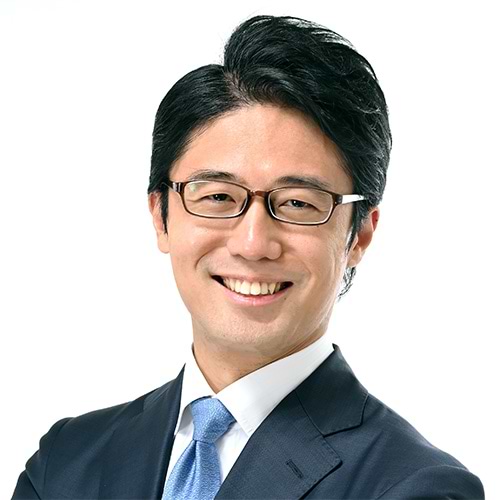
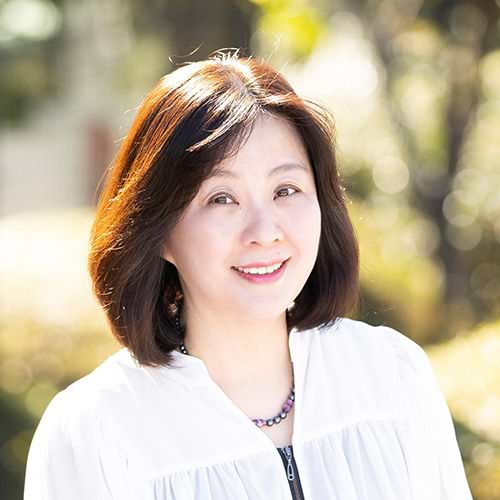
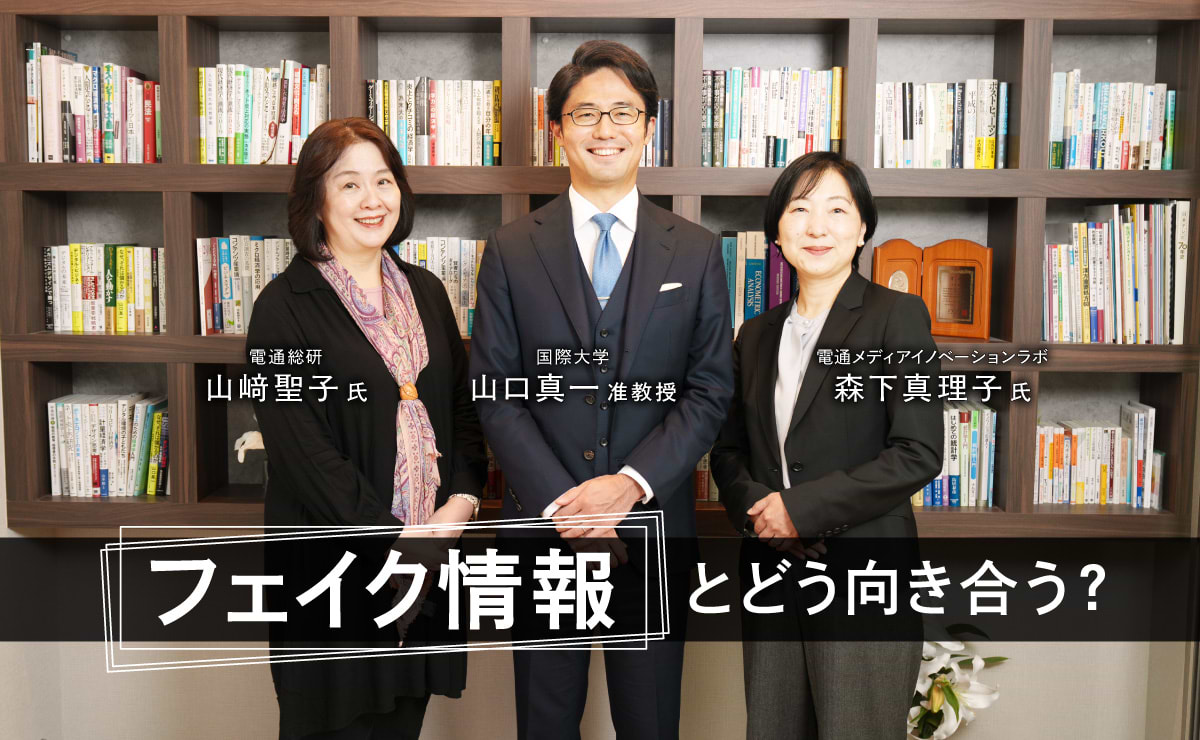
The dialogue participants are Associate Professor Shinichi Yamaguchi from the Global Communication Center at International University of Japan and Fellow Seiko Yamasaki from DENTSU SOKEN INC. Mariko Morishita from Dentsu Media Innovation Lab serves as facilitator.
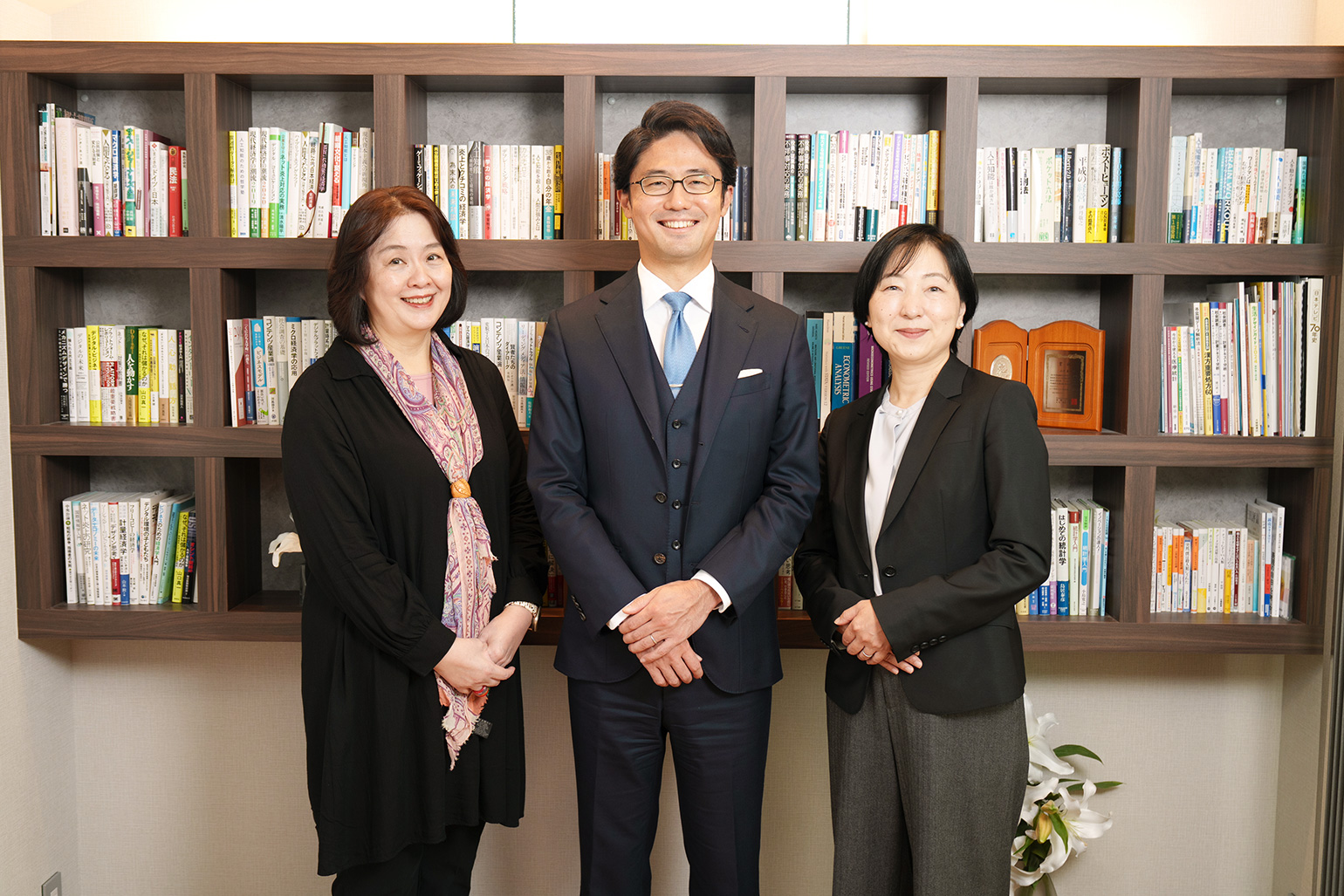
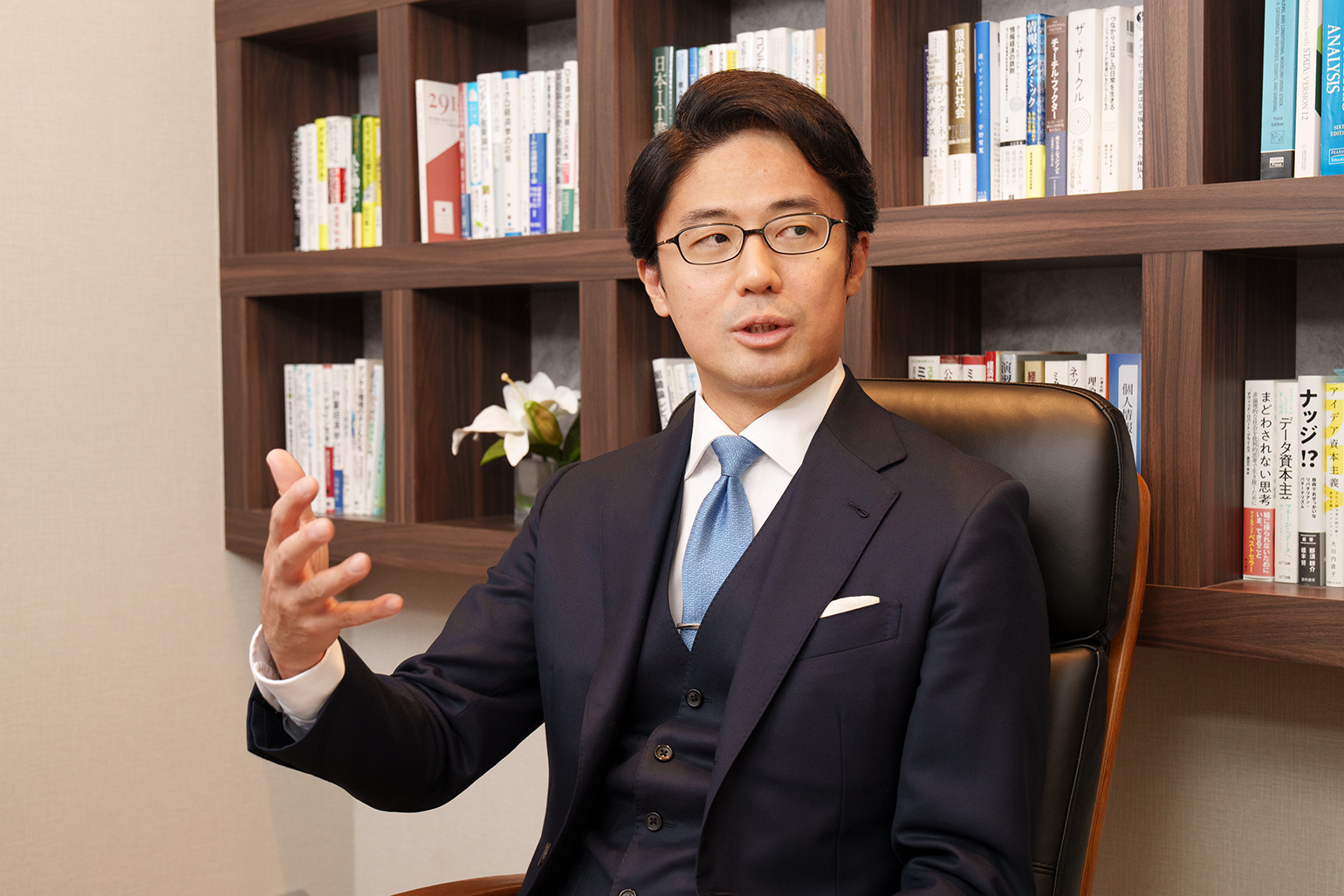
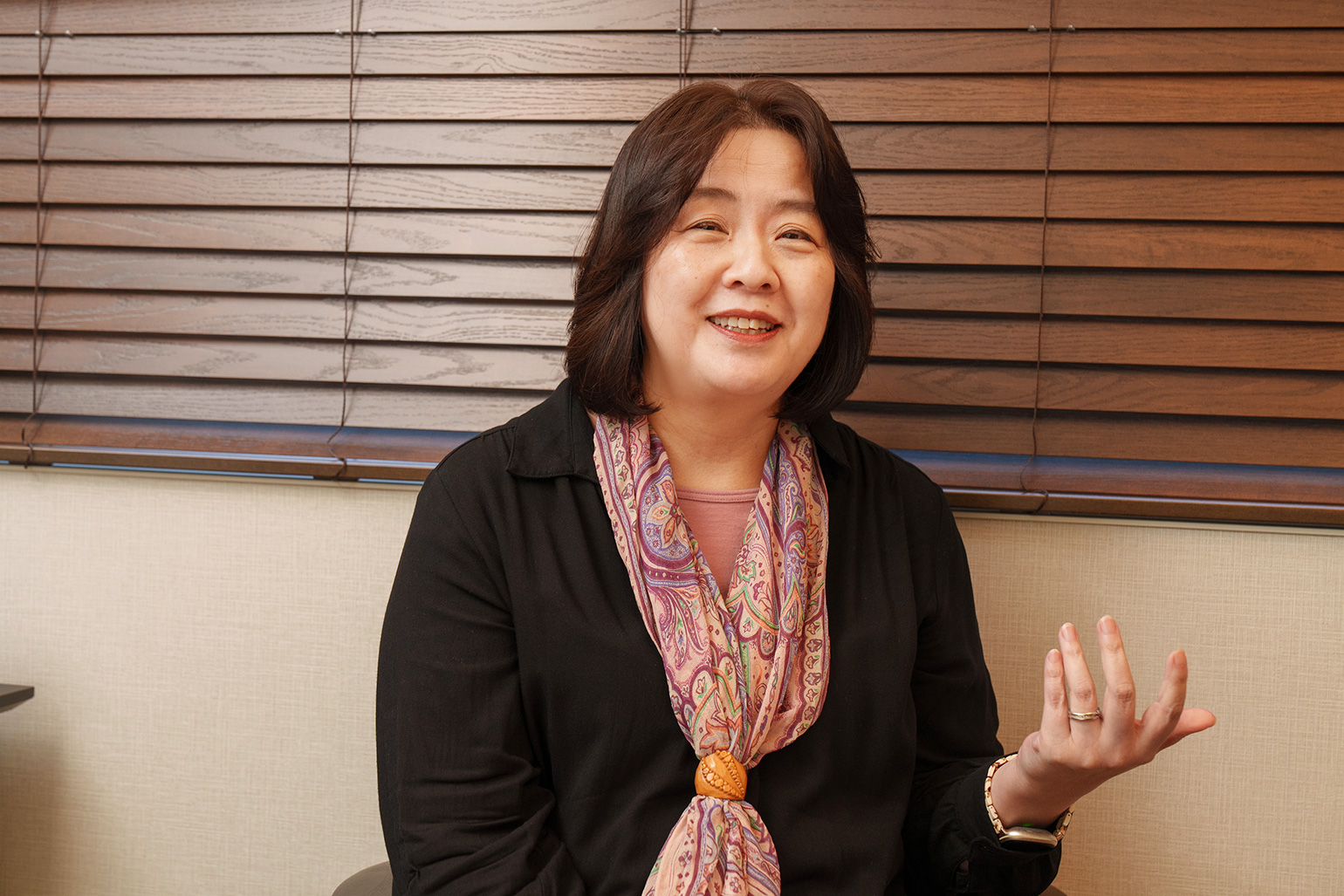
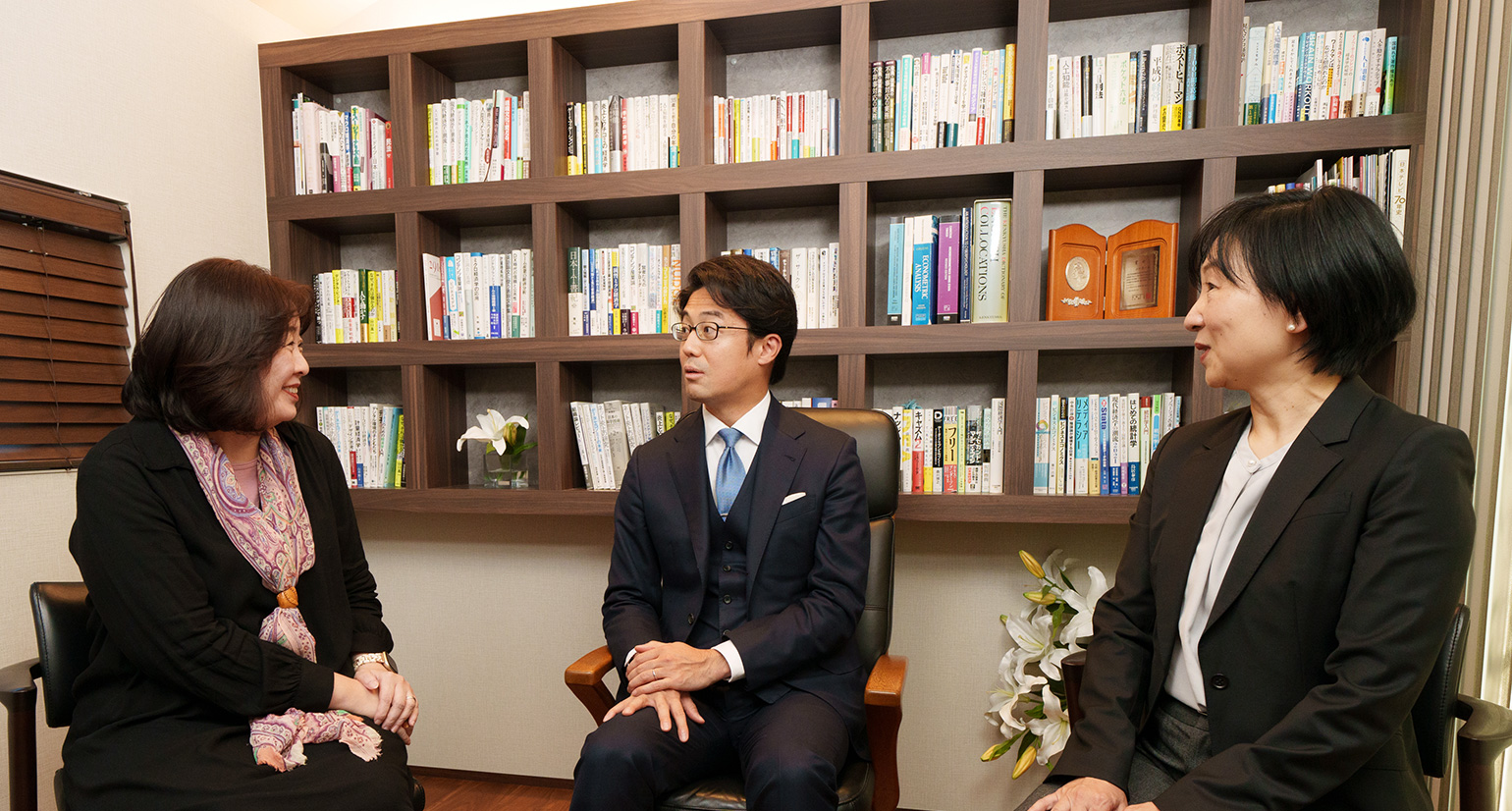
(From left) Seiko Yamasaki, DENTSU SOKEN INC.; Associate Professor Shinichi Yamaguchi, Global Communication Center, International University of Japan; Mariko Morishita, Dentsu Media Innovation Lab
Do "Trusted Media" Vary Significantly by Age Group? Recent Media Usage Trends
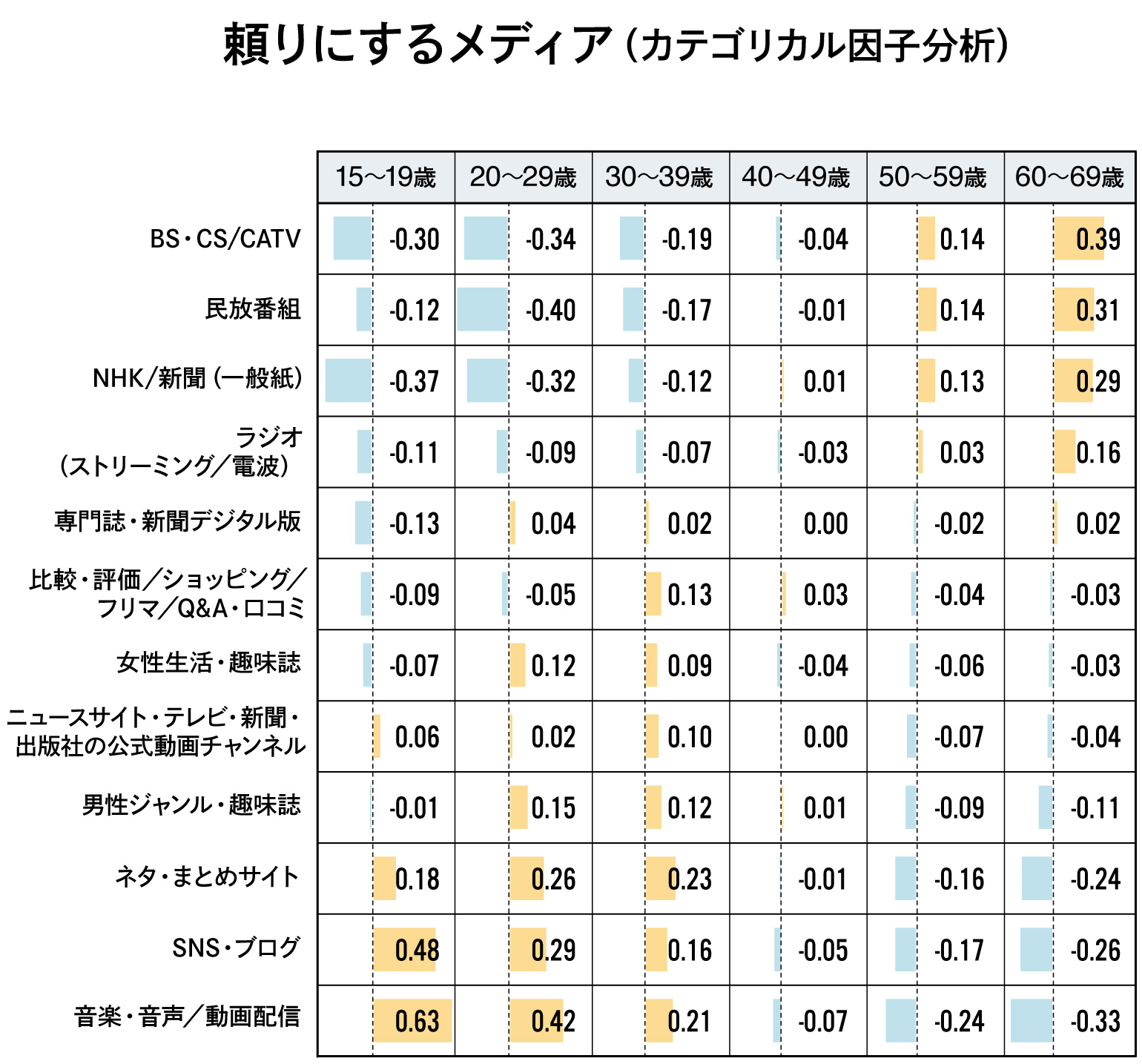
Morishita: To begin, as a starting point for understanding recent media usage trends, let me briefly share results from the " Survey on Trusted Media " conducted by Dentsu Inc. Media Innovation Lab in 2024. This research examined information source contact tendencies by generation among 4,727 consumers aged 15 to 69.
When asked about their frequency of contact with approximately 80 media outlets and information sources, we found that younger generations (ages 10-20s) had very high daily contact with personal media like SNS and blogs, and also showed strong affinity for streaming services such as video and audio content. On the other hand, middle-aged and older generations (50s-60s) tended to engage more with traditional media like TV and radio, revealing a pronounced generational difference.
Furthermore, analysis of responses regarding how much they "rely on" the media they use showed that traditional media like TV and newspapers ranked highly among those aged 50 and above. Conversely, internet-based media, including streaming and SNS, were relied upon more heavily by those aged 30 and below. The 40s age group, presumed to have high affinity with both media types, exhibited characteristics that seemed to mark a watershed point.Professor Yamaguchi, what are your thoughts on recent media usage trends?
Yamaguchi: What I've particularly noticed recently is how media exposure now significantly influences people's actions. Elections are a symbolic example. In the 2024 Tokyo and Hyogo gubernatorial elections, we saw candidates who gained traction online actually make significant gains. According to NHK's exit polls for the Hyogo election, social media and video sites were the most referenced information source for voters at 30%, while newspapers and TV were at 24%.This represents a major shift from the past. It's not limited to younger demographics; the same holds true for middle-aged and older voters. While video sites have long been used by middle-aged and older adults, it was primarily for entertainment purposes. In recent years, however, I feel they've increasingly been utilized for gathering political information and making voting decisions. In the 2025 House of Councillors election, it became clear that the primary information source used significantly influenced where people cast their proportional representation votes.
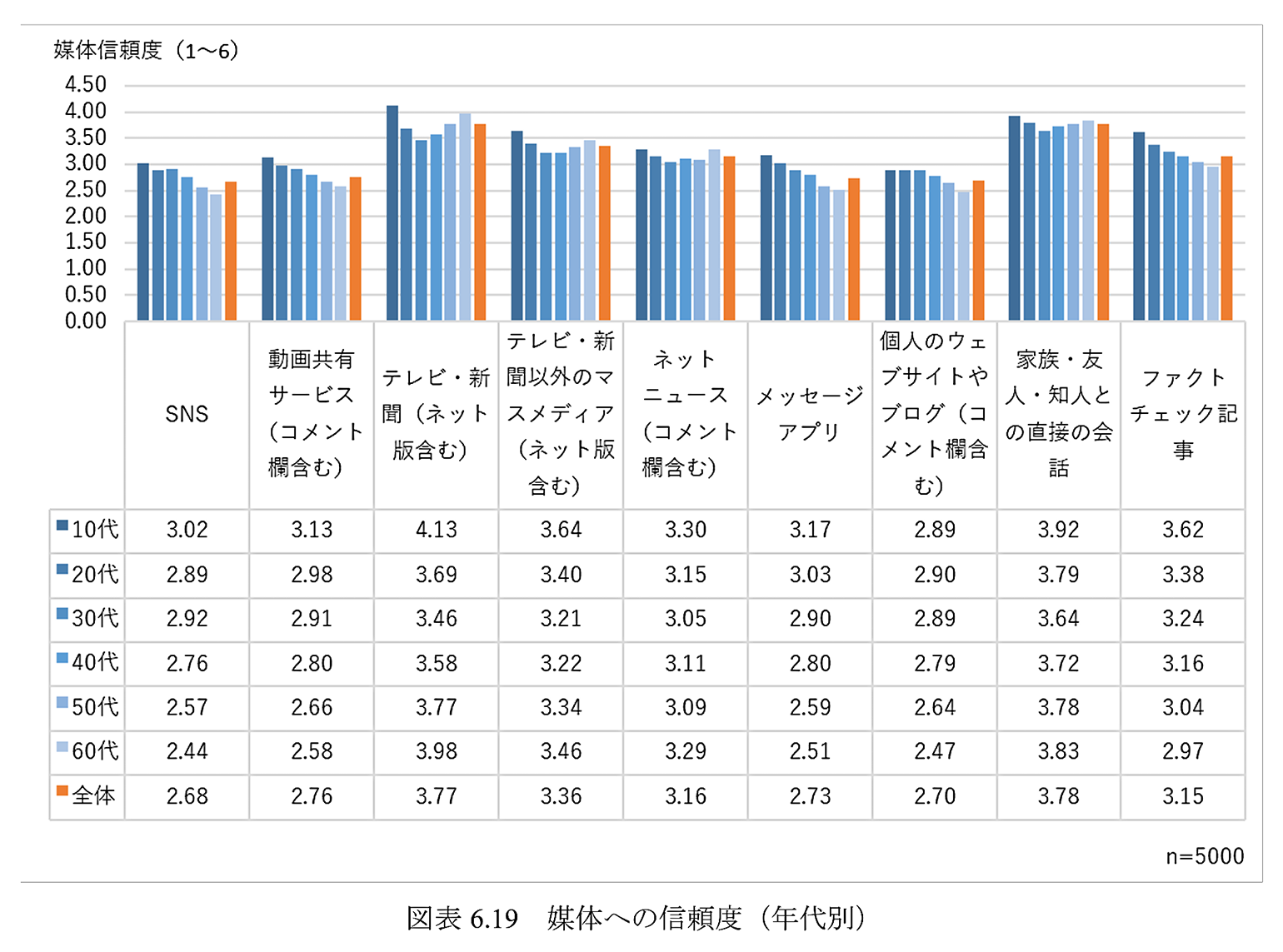
Another point, related to the discussion on "reliable media," is that when I previously conducted a "trustworthiness" survey, I found that younger generations actually trust mass media.
While it's natural that social media and video platforms have relatively higher trust levels, it's not necessarily true that mass media trust declines with younger age groups. However, in reality, people in their teens and twenties don't read newspapers and don't watch much TV. They primarily gather information from social media and video-sharing services, using that information as a reference when voting in elections. I believe this phenomenon characterizes today's information environment.
On SNS and video sharing services, anyone can freely disseminate information. I call this the "Age of Universal Media." While quality information exists, there is also a massive amount of fake and misinformation (※1). Traditional media had incentives to maintain credibility for reputational and business reasons, but individuals can post anonymously. Furthermore, there are cases where incentives are provided simply for high impressions, regardless of the information's truthfulness. This is precisely why I believe we are in an era where the reliability of information is critically important.
※1 Fake/misinformation = "Disinformation" refers to false information intentionally/consciously created to harm individuals, social groups, organizations, or nations. "Misinformation" refers to erroneous information that spreads due to misunderstandings or misinterpretations, not created with the intent to cause harm. Source: Ministry of Internal Affairs and Communications "Let's Build the Future by Better Using the Internet & SNS 2024 ICT Literacy Enhancement Project" https://www.soumu.go.jp/ict-mirai/keyword/misinformation/
Yamazaki: Hearing the survey results and Professor Yamaguchi's talk, I realized that the initiative in information acquisition has shifted to the people. Whereas we once passively received information delivered by the media, we now live in an era where we actively select it ourselves. People choose the most suitable media based on their own interests and purposes. I believe generational differences strongly reflect the influence of the information environments in which they were raised.
Moreover, we seek not just accurate and reliable information, but "information that is meaningful to us." A sense of conviction and meaning is highly valued. Information chosen as a point of connection with society—be it politics, hobbies, or conversation topics—is selected. Emotion plays a significant role here.
For instance, empathy or closeness toward the source—like a favorite influencer or expert—contributes to the perceived reliability of the information. Compared to mass media, the internet brings us closer to the source, sometimes making us feel as if they are speaking "just for us." Within this structure, we've also become more sensitive to the purpose and background behind the message. I feel we engage with media daily within this complex interplay of meaning, sense of conviction, and personal emotion.
Fake news, defamation, and shrinking freedom of expression... Why "information integrity" is being questioned now
Morishita: Now, I'd like to ask you in detail about the "Information Integrity Survey" you conducted this time. But first, what exactly does the term "information integrity" mean?
Yamaguchi: Simply put, information integrity means "the accuracy, consistency, and reliability of information." Among these, I particularly emphasize the perspective of "reliability." Today, the sheer volume of information is overwhelming, and the power of information sources that used to guarantee a certain level of quality has relatively diminished. As a result, it has become increasingly difficult for people to judge what they can trust.
Take the problem of "impersonation ads," for example.Even if fraudulent ads appear on social media, many people assume, "It's an ad on a major platform, so it must be okay." However, in reality, fraudulent ads can appear even on major platforms. Precisely because of this reality, the reliability of information—the concept of information integrity—has become extremely important. How can people access trustworthy information? How should society provide information? I feel this survey is very meaningful in helping us find clues to these questions.
Yamazaki: At DENTSU SOKEN INC., we conduct research on social issues under the theme of "Quality of Society." For this survey, we aimed to examine how people perceive their information environment, essentially performing a "health check" on the information space.Amid concerns about stress and anxiety from information overload, we wanted to understand what people perceive as problematic, as well as their future concerns and expectations. Furthermore, we intended to reexamine the necessity of information integrity from the public's perspective.
In addition to the reliability of information, as explained by Professor Yamaguchi, we positioned issues like "defamation" and "discriminatory language" as critically important themes. A 2023 UN report also warned that hate speech on social media severely undermines human rights. This survey aimed to capture the current state and impact of such problems from a broader perspective.
Yamaguchi: Defamation not only directly harms mental and physical health but also has another serious consequence: "chilling effects." For example, when you post about politics or gender issues online, you might face intense attacks from a small group holding extreme views. This can lead people to think, "I should just stop speaking up."It's a major contradiction that in an era where everyone should be able to speak freely, that very freedom ends up restricting expression. While a complete solution may be difficult, we need to work towards improving the situation, even if only slightly.
Yamazaki: Looking at the results of this survey, was there anything particularly striking?
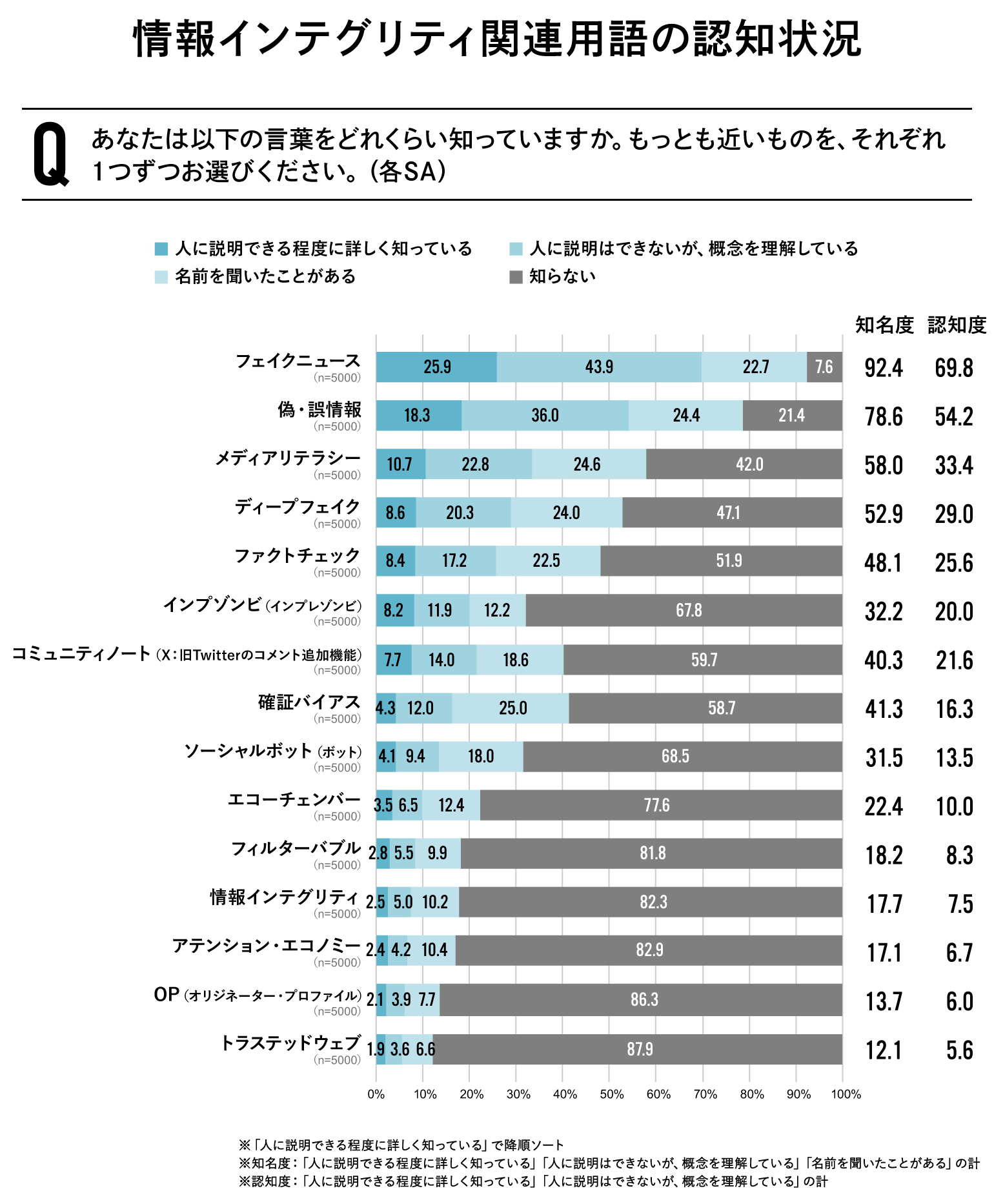
Yamaguchi: First, regarding awareness of specialized terms related to information integrity, I was reminded that concepts like "filter bubble" (※2) and "echo chamber" (※3) are still not widely understood by the general public. On the other hand, I was surprised to find that the term "fact-checking" has become quite familiar. I believe it was around 10-20% awareness a few years ago, but now many people responded that they had "heard of it."
※2 Filter Bubble = A phenomenon where algorithms on the internet filter information based on a user's past actions and preferences, displaying only specific types of information. Users become trapped within a bubble-like filter of information aligned with their interests and beliefs, receiving only preferred content and reducing exposure to differing perspectives or opinions.
※3 Echo Chamber = An environment where people with the same opinions or beliefs gather, and those opinions are repeatedly reinforced. There is a tendency for differing viewpoints or opposing opinions to be excluded.
Morishita: Regarding fact-checking, media initiatives like verification reporting during election coverage on TV might also be having an impact.
Yamaguchi: That's right. Fact-checking using AI assistants is also gaining traction on social media. Regardless of whether the content truly constitutes fact-checking, I think it's a positive trend that "verifying information" itself is drawing attention.
Yamazaki: Broadening the understanding that information inherently has mechanisms prone to bias fosters awareness. People start thinking, "The information I'm seeing might be biased," or "Is this just sensationalized to grab attention?" Consequently, how we receive and engage with information changes. In that sense, I hope concepts related to information integrity become more deeply ingrained.
What are the societal costs arising from false and misleading information?
Morishita: Next, I'd like to hear about the current situation regarding how false and misleading information is affecting people's lives.
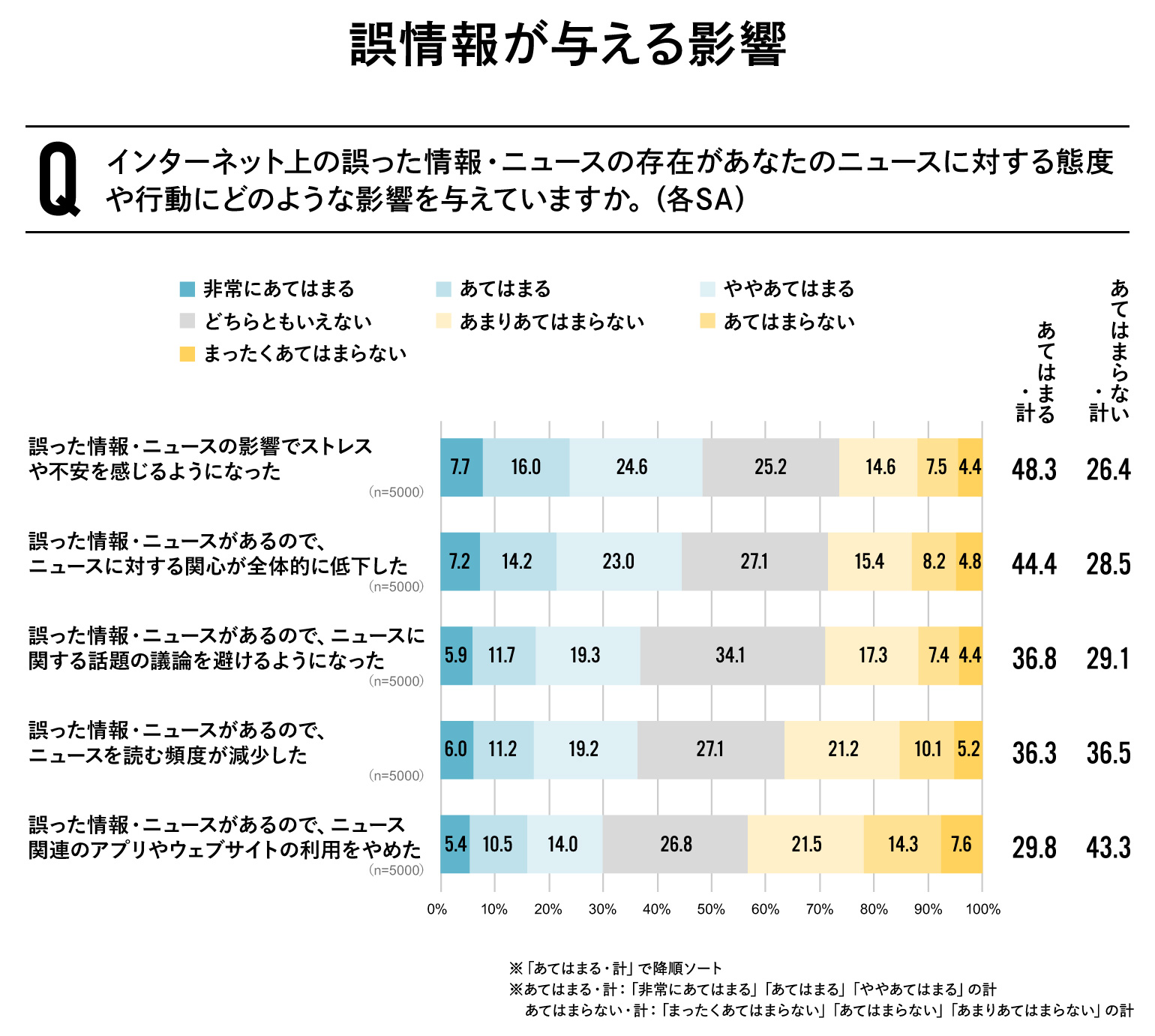
This survey revealed that while there are differences by media type, many people come into contact with false or misleading information in some form on a daily basis. Regarding the question about the impact of false/misinformation, many responses indicated "feeling stress or anxiety" and "decreased interest in news in general," suggesting a significant impact. How should we interpret this state of feeling stress or anxiety?
Yamaguchi: This is purely my hypothesis, but the very premise that "fake news might be mixed in" is already a hassle. Previously, in an Innovation Nippon survey, we showed participants five news articles and asked them to choose the one that interested them most. When we told them, "One of these is fake," the time it took them to choose increased by a full 18 seconds.In other words, even a small amount of fake information forces people to constantly question, "Is this real?" while engaging with information. This is an incredibly stressful state. Additionally, there's the anxiety that "I might be deceived and suffer harm." This survey also made me keenly aware that the indirect social costs, beyond direct harm from fakes, are substantial.
I often refer to this as the "With Fake 2.0 Era." With the proliferation of generative AI, I feel we've entered the second phase of living daily with fake information. The social cost of this is likely far greater than we realize.
Yamazaki: I agree. On social media, information spreads rapidly, and consequently, the impact of false and misleading information on society is growing exponentially. For example, alongside stress and anxiety, the finding that "interest in news has declined overall" is also significant.If falsehoods are mixed in, it's easier on the mind to simply avoid seeing it altogether. This psychological tendency leads people to distance themselves from information itself, creating a phenomenon akin to "information disengagement." Furthermore, people inherently tend to select what they want to see, and this situation risks further accelerating that tendency. I find this extremely precarious.
Moreover, information isn't merely material for judgment; it directly impacts emotions. Seeing frequent instances of people attacking others on social media or the internet can itself become unpleasant or exhausting. Consequently, some people choose to avoid social media altogether or distance themselves from the internet to steer clear of such unpleasantness.
Yamaguchi: We live in an era with overwhelming access to information, yet precisely because of this, we struggle to know what to believe. It also means we incur enormous search costs. Young people today can access far more knowledge than in the past, but the sheer volume of information leaves them little time to think. That's precisely why, alongside conveying the concept of information integrity, I believe the perspective of how to cultivate the "habit of thinking" is also crucial.
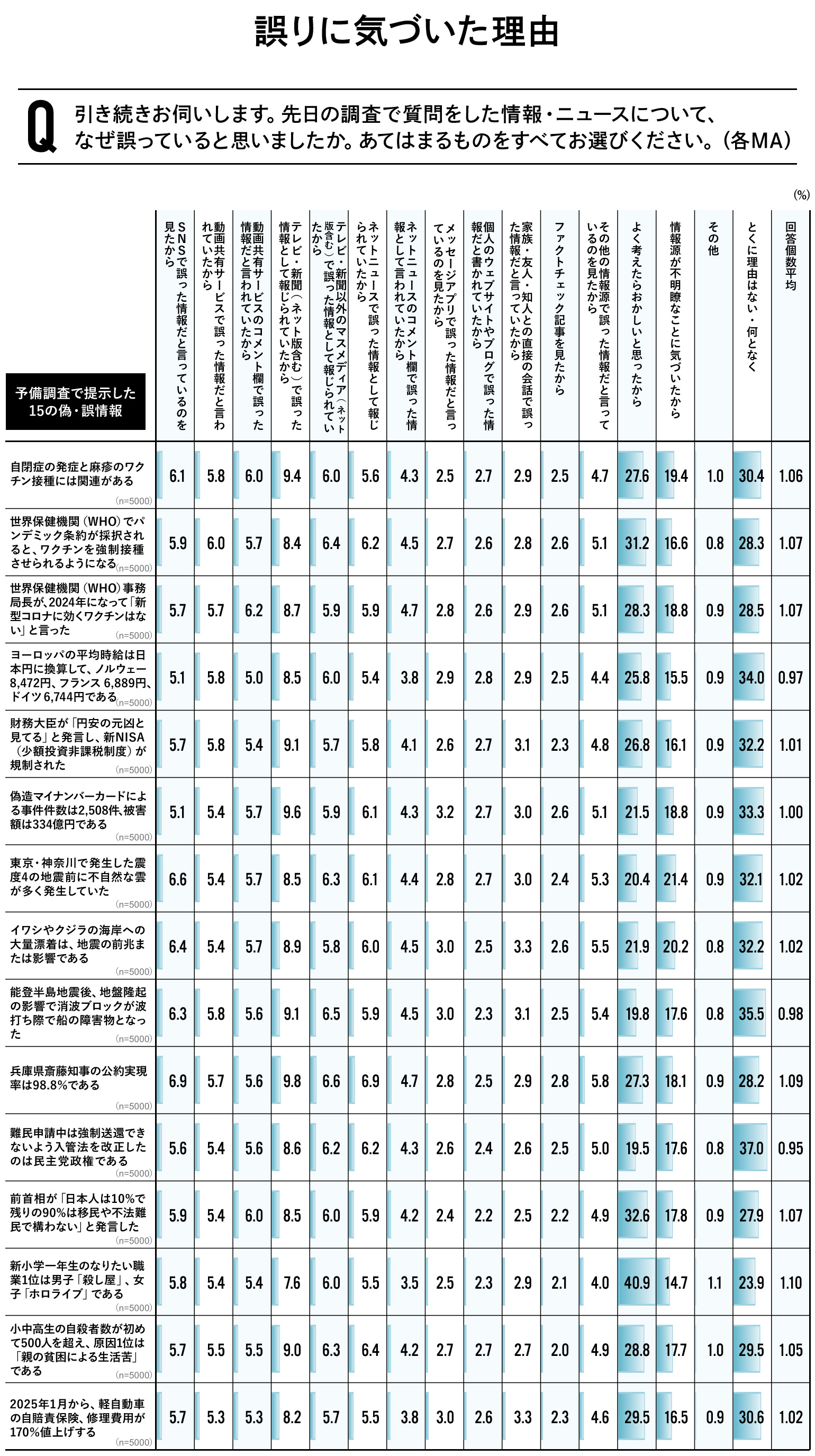
Morishita: What was interesting in this survey was that the top reasons people realized something was fake or misinformation were "I thought about it and it seemed strange" and "The source was unclear" – judgments based on their own common sense.
Yamaguchi: Logically inconsistent, scientifically implausible, or ambiguous sources. Recognizing these issues yourself means you're actively thinking critically. The response "I noticed the source was unclear" likely implies more of a questioning mindset – "Where did this even come from?" – rather than actual investigation. It underscores the importance of pausing to think.
Yamazaki: But in today's information environment, that act of thinking has become incredibly difficult, hasn't it?
Yamaguchi: That's right. If you're just passively scrolling through your social media timeline, the process of thinking tends to get skipped over.
Yamasaki: Moreover, in recent years, the term "time performance" has gained traction. The emphasis is on how efficiently we process vast amounts of information, prioritizing digestion over thinking. Ideally, we should input, think, and then output. This cycle represents the ideal way to engage with information, but currently, the "thinking" step is often skipped. This was also evident in the survey data.
What's necessary to reach reliable information
Morishita: Moving forward, let's explore what kinds of strategies and approaches exist to improve the information environment. In this survey, many responses cited "comparing multiple news sources" and "referencing the opinions of family, friends, or acquaintances" as "strategies for obtaining reliable information." Having additional reference points beyond what you're already viewing might be a relatively easy strategy to adopt.
Yamaguchi: Regarding comparing multiple news sources, it's also acceptable to simply check if "others are saying the same thing."The key is not to stop at a single perspective but to engage with multiple viewpoints. However, caution is needed regarding "referencing the opinions of family and friends." My research found that conversations with family and friends were actually the most common route for spreading fake information. We tend to accept information from trusted sources uncritically, but even they might contain false or misleading information. Therefore, maintaining a perspective that doesn't unconditionally assume everything is correct is also important.
Yamasaki: Nearly 30% of respondents said they "don't make any special effort." I suspect many people understand the need to verify information but either don't know how or find it difficult to maintain. About half also said "verifying if news is correct is difficult." This suggests lowering the barrier to action is key to improvement.
Yamaguchi: Another challenge is that methods for verifying information's authenticity are fragmented and not clearly established. While it's important to be conscious of consulting other sources, recent research also points out cases where the more you search, the more likely you are to fall for fake news.
Yamazaki: That sounds very plausible. Beyond individual efforts like "viewing information from diverse perspectives," there also seems to be room for support through user experience (UX) design. For example, if mechanisms were in place allowing users to easily verify information's reliability—like "accessing the source of information with one click"—it could significantly change how people engage with information.
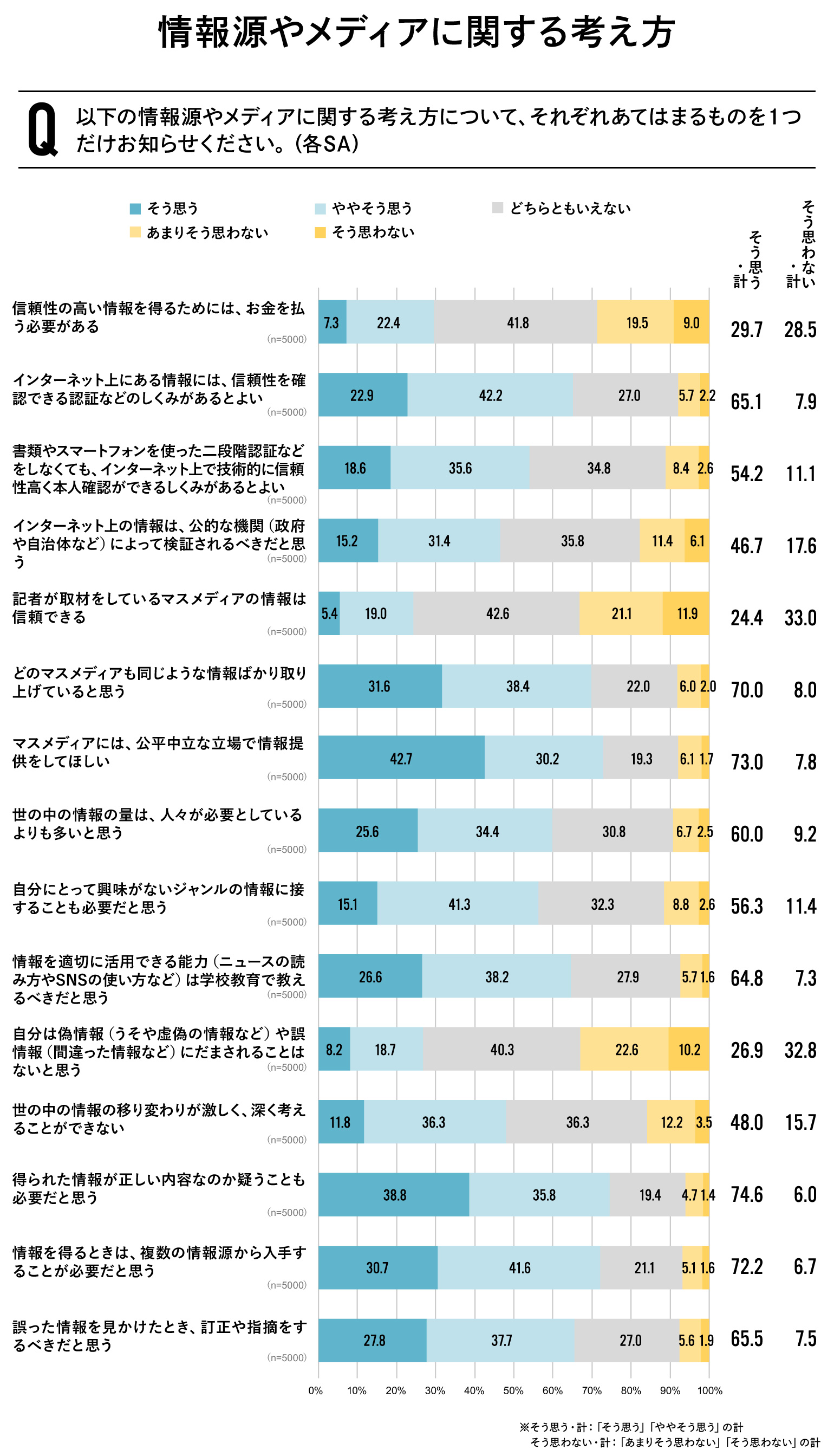
Morishita: Our survey also found that 65% of respondents agreed "it would be good to have mechanisms like authentication to verify information reliability," and over half also thought "it would be good to have mechanisms that can technically verify the identity of the source."
Yamaguchi: Indeed, there's a problem online where all information appears equally valid. With traditional media, you can judge reliability based on who published it and where, but on portal sites and social media, such distinctions are harder to make. When we ask students, many say, "I remember seeing the news on a portal site, but I don't consciously think about where the source actually came from."
That's precisely why I think a system that scores the origin and reliability of information would be beneficial. Recently, we've seen examples like "Community Notes" attached to posts to indicate the accuracy of content.
In the "Information Literacy" project at Keio University's X Dignity Center, which I participate in, we propose "ingredient labels for information," similar to food labeling. This means explicitly stating things like: "What field does this information come from? What biases does it have?" or "What perspectives are missing?" While respecting individuals' freedom to interpret information as they choose, we believe this could foster a culture that makes the underlying assumptions visible.
Morishita: Professor Yamaguchi mentioned AI earlier. How do you think AI will be involved in addressing this issue?
Yamaguchi: AI is also complicating this problem further. We're now seeing the mass adoption of deepfakes, an era where anyone can easily create fake images and videos. Recently, a fake video about bears became a hot topic, and that too was created using generative AI. Soon, we'll reach an era where even the human eye can't tell the difference.
When that happens, we'll have no choice but to counter technology with technology. For example, developing technology to determine whether something was generated by AI. I'm participating as an expert in projects across multiple countries, and it's crucial to develop this technology domestically and implement it in a way that's easy for people to use without even thinking about it.
Yamazaki: It truly is an era where integrity is demanded of AI as well.
Toward a future where we respect others and ourselves
Morishita: Finally, could you share your thoughts on what a desirable information space should look like and what we can do moving forward?
Yamaguchi: When considering the future, I believe it's crucial to position our current information society from a medium-to-long-term perspective. I view this society as being in the dawn of a new revolution following the Industrial Revolution—the Information Revolution.
Since the mid-18th century when the Industrial Revolution began, GDP rose rapidly, followed by over 200 years of sustained growth that led to modern prosperity. However, behind that growth, numerous serious challenges arose due to societal underdevelopment, such as pollution and labor issues. Improving these required a three-pronged approach: institutions, education, and technology.
Similarly, we now stand at the threshold of transitioning from the dawn to the development phase of the information society.Technologies like big data and generative AI are evolving explosively, and data circulation volumes are growing exponentially. Such growth inevitably brings with it "abuse of power." While industrial society saw pollution and labor issues stemming from the abuse of economic power, the information society is witnessing the emergence of "abuse of information dissemination power." Examples include fake news, slander, and self-denial stemming from excessive comparison with others.
That is precisely why what is needed in this era is a way to control this new power and harness it healthily. To achieve this, I feel we must reexamine our systems, technologies, and the very nature of humanity.
Morishita: Within this context, what attitude should we adopt toward information?
Yamaguchi: I often share the phrase "respect others and respect yourself." In spaces like social media, the ease of sharing information can lead to slander. That's precisely why the fundamental moral principle of "respecting others" – not doing to others what you wouldn't want done to yourself – is crucial.
Furthermore, the visibility of others' posts makes it easier for excessive comparison to lower self-esteem. For example, in a survey I conducted with the Ministry of Internal Affairs and Communications on children's internet use, "feeling stressed by comparing my own posts to others' posts" ranked second among reported problems.
However, if you have self-esteem, seeing others' glamorous posts allows you to think, "This is wonderful, but I have my own strengths." In other words, the ability to value yourself can also help alleviate the anxiety and negative emotions that arise from comparing yourself to others.
I believe a desirable information space is one where not only the accuracy and reliability of information are guaranteed, but also where the people inhabiting it can adopt an attitude of "respecting others and respecting oneself."
Morishita: Precisely. It's crucial to convey this mindset to the children who will shape our future society.
Yamaguchi: Exactly. I want children to have the ability to discover what they "love" and to work hard to deepen their understanding of it. Precisely because we are entering an era where AI is involved in all kinds of creation and decision-making, having one's own values and beliefs becomes even more important. Furthermore, this is no longer an era where adults unilaterally teach children. When encountering new technologies and information, adults must learn, think, and create rules together with children. This attitude of learning together is indispensable for the times ahead.
Morishita: Similarly, rather than placing responsibility solely on any one stakeholder, it's also necessary for each of us to fulfill our respective roles from our own positions, wouldn't you say?
Yamaguchi: Yes. Governments, local authorities, educational institutions, media, businesses, platforms, and us as individuals. Each must steadily advance what they can do. Collaborate as needed throughout that process. Building a better information society step by step in this way is crucial.
Yamazaki: I propose framing information integrity along two axes: "internal integrity" and "social integrity." The former encompasses individual capacities like discerning truth, ethical judgment, and self-restraint. The latter involves the ability to share and utilize information with others through dialogue, empathy, and consensus-building—an axis cultivated within relationships. These two axes mutually complement and enhance each other.While the former can be learned through school education and online learning, cultivating the latter requires practical experience involving others. The family, as the smallest unit of society, plays a particularly crucial role.
Moreover, in today's rapidly evolving technological world, adults are not always correct. It's vital to adopt an attitude of thinking and learning alongside children. For instance, simply asking, "What did you think about the news you saw today?" can serve as a starting point for information literacy education.
Yamaguchi: That's right. When a child asks, "What does this mean?" we can encourage them by saying, "First, try thinking about it yourself." And we think about it ourselves too. Just doing that can help us both cultivate our ability to view information and communicate effectively.
Morishita: Listening to both of you, I was reminded that both a centuries-long perspective and daily small conversations shape the future. Thank you for your valuable insights today.
[Survey Overview] ■ Overview of "DENTSU SOKEN INC. Compass vol.15 Information Integrity Survey"
Participants who answered "don't know/don't remember" to all 15 pieces of false/misinformation presented in the preliminary survey were excluded. Those who answered "have seen/heard of it" to at least one item were prioritized. They were then allocated according to the age and gender population composition ratio from the January 2025 Ministry of Internal Affairs and Communications population estimate, and the main survey was conducted.
Survey Sponsors: DENTSU SOKEN INC. & Japan Fact-Check Center
Supervised by: Associate Professor Shinichi Yamaguchi (Global Communication Center, International University of Japan)
*The percentages in the graphs are calculated based on the actual number of respondents within each category and rounded. Similarly, the combined percentage of respondents is calculated based on the actual number of respondents in the combined category and rounded. Therefore, the sum of the individual percentages may not always match the combined percentage. ※The margin of error for this survey (5,000 samples) is calculated with a 95% confidence interval. At the 50% response rate where the margin of error is largest, it is ±1.4%.
The information published at this time is as follows.
International University Global Communication Center
Associate Professor
Ph.D. (Economics). Specializes in econometrics and social informatics. Appears in various media outlets. Author of numerous books, including "A Book for Parents and Children to Read Before Giving Them a Smartphone" and "The Complete Guide to Social Media." Recipient of numerous awards, including the Telecommunications Promotion Foundation Award. Serves as a member of the Nippon Television Broadcasting Program Council, a Tokyo Metropolitan Government Digital Public Relations Fellow, and multiple government expert committee members, including the Cabinet Office's "AI Strategy Council."
Seiko Yamasaki
DENTSU SOKEN INC.
Fellow
Completed Master's degree in International Public Law, Graduate School of Law, Keio University. After joining DENTSU SOKEN INC., analyzed and researched social trends considering changes in global public awareness and values. Translations include "Cultural Evolutionism" (Keiso Shobo), co-authored works include "How Japanese Think, How People Around the World Think: Insights from the World Values Survey" (Keiso Shobo), among others.
Marketing Administration Center, Media Innovation Research Department (Dentsu Inc. Media Innovation Lab)
After working in the theater industry and research institutions, he joined Dentsu Inc. He conducts extensive research and studies on the impact of technological innovation on the information media market, focusing on audience trends. He also monitors developments in the broadcasting industry and related policies in Western countries.

 A Space for Collective Thought [1/2]