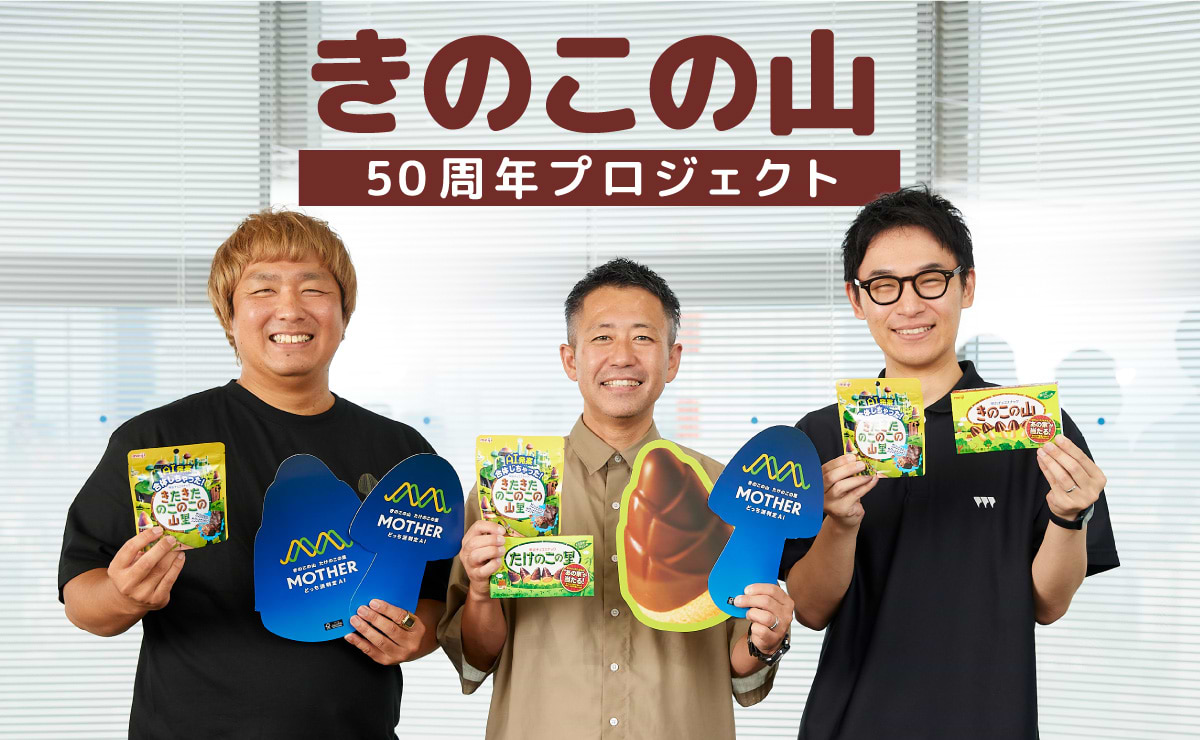
Meiji’s long-running best-selling brand “Kinoko no Yama” has been beloved by many since its launch in 1975.For a long time, alongside its sister brand “Takenoko no Sato,” it has been the subject of a long-running debate over which is tastier, and has been loved by many. Marking its 50th anniversary, the anniversary product campaign “Kita Kita no Kinoko no Yama-sato” (supported by Dentsu Inc.), which utilized generative AI, and the activation campaign “KINOTAKE MOTHER” (supported by Yomiuri Advertising), generated significant buzz.
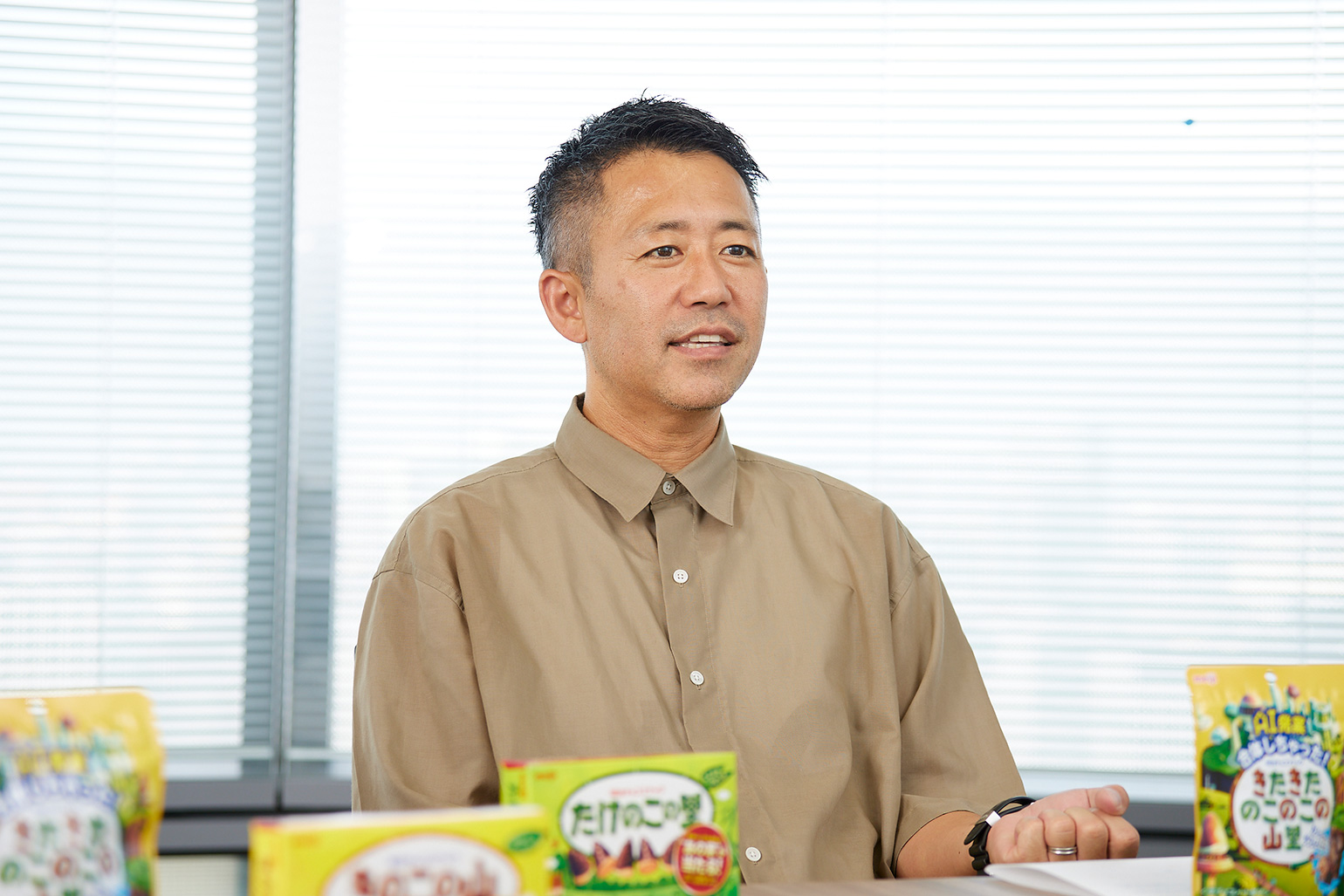
Behind the scenes, however, the three companies were not focused on “how to use AI,” but rather on the question of “how to evolve a brand that has endured for 50 years into the next era.” We spoke with Iori Yoshida, Brand Manager at Meiji; Yuhō Fuda, Planner at Yomiuri Advertising; and Yuya Kimura, Creative Director at DENTSU SOKEN INC., about the background behind the project’s creation and their approach to utilizing AI in brand building.
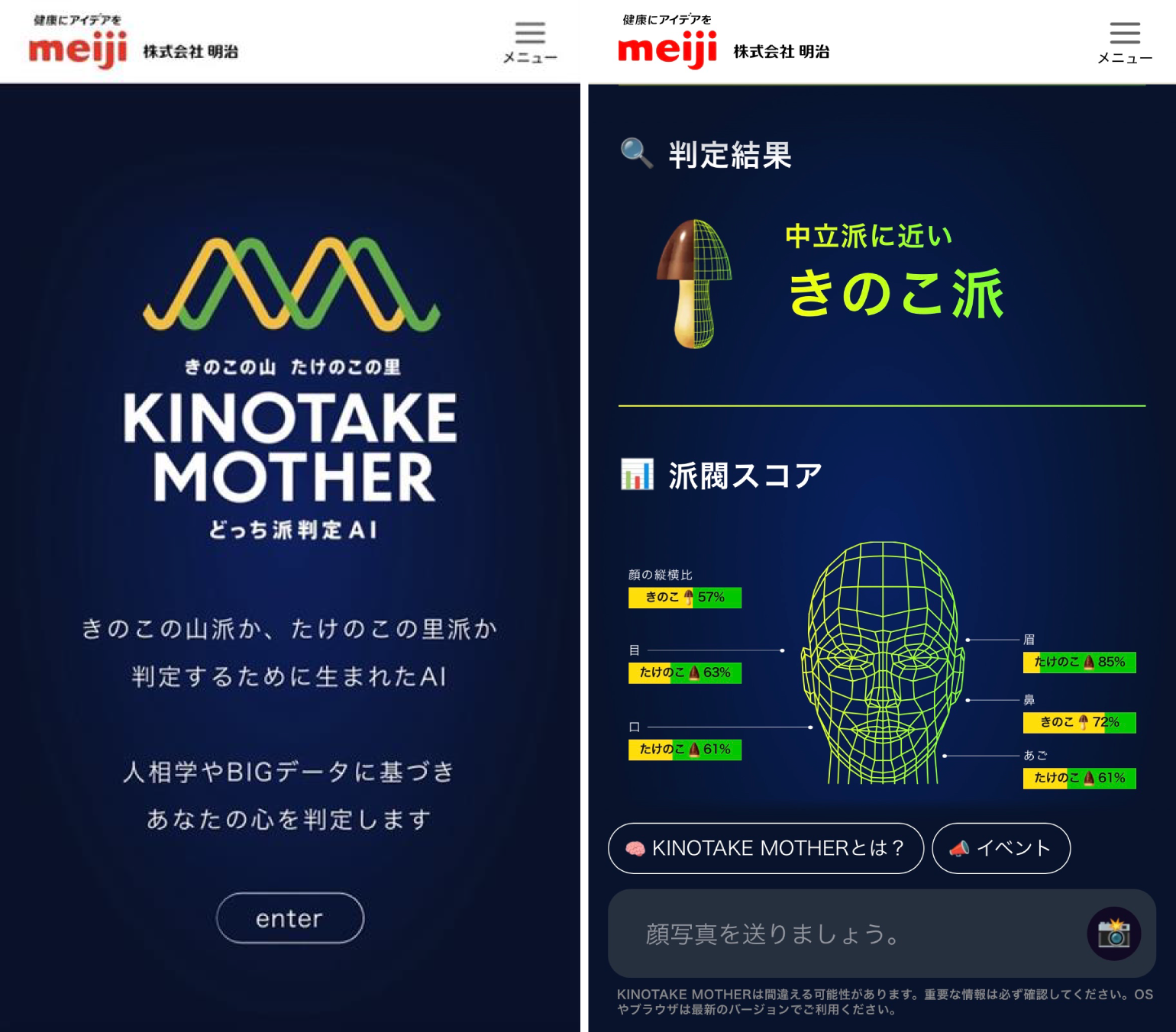
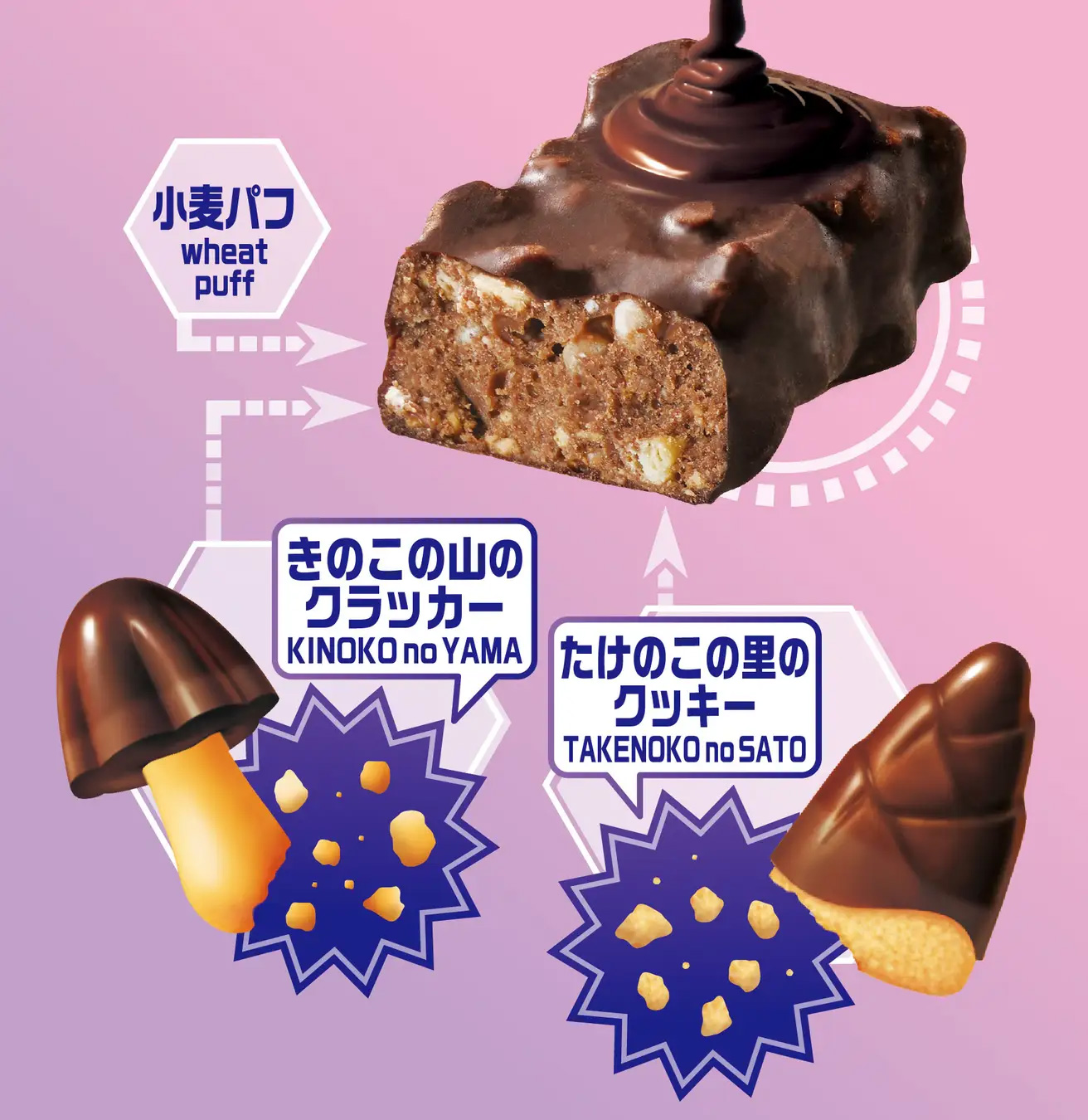
Kinoko no Yama 50th Anniversary Project Meiji released the AI “KINOTAKE MOTHER” in August 2025.“KINOTAKE MOTHER” is an AI that objectively determines potential preferences based on facial photos. According to the results of analyses of approximately 500,000 people (as of March 2026), about 52% were classified as “Mushroom fans,” about 43% as “Bamboo Shoot fans,” and about 4% as “Both fans.”Based on these results and the idea, “What if there were a product that lets you enjoy both?” the company engaged in repeated dialogue with the AI and developed “Kitakita Takeno no Kono no Yamazato,” a product that combines the flavors of both into one. It went on sale in April 2026.
The project began not with “using AI,” but with the question, “How can we help people enjoy our 50th anniversary?”
—First, why did you focus on “AI” for the 50th-anniversary project?
Yoshida: For the 50 years since its launch, “Kinoko no Yama” hasn’t just conveyed the world of satoyama; it has been a brand that has continued to share fun ideas as the times have changed, engaging in cutting-edge communication.For this milestone 50th anniversary, rather than focusing on “gratitude,” we wanted to convey even more fun and excitement. When we had that thought, the starting point for the project was the idea that it would be interesting to combine the “Mushroom vs. Bamboo Shoot Debate”—which began as an internet meme around the year 2000—with the current AI era.
Fuda: Yomiuri Advertising has been in charge of the overall marketing and communications for the “Kinoko no Yama and Takenoko no Sato” brands for over a decade, and the consistent theme has been the “Which Side Are You On?” concept. We’ve continued to delve deeper into this theme through the “National General Election”—a voting campaign held three times in the past—and the “National Grand Survey,” which coincided with the 100th anniversary of the national census.For the 50th anniversary, we knew we had to create the biggest buzz in the brand’s history. Since generative AI was just beginning to be widely adopted, our initial thought was, “What would happen if we played around with the ‘Which Side Are You On?’ concept using AI?”
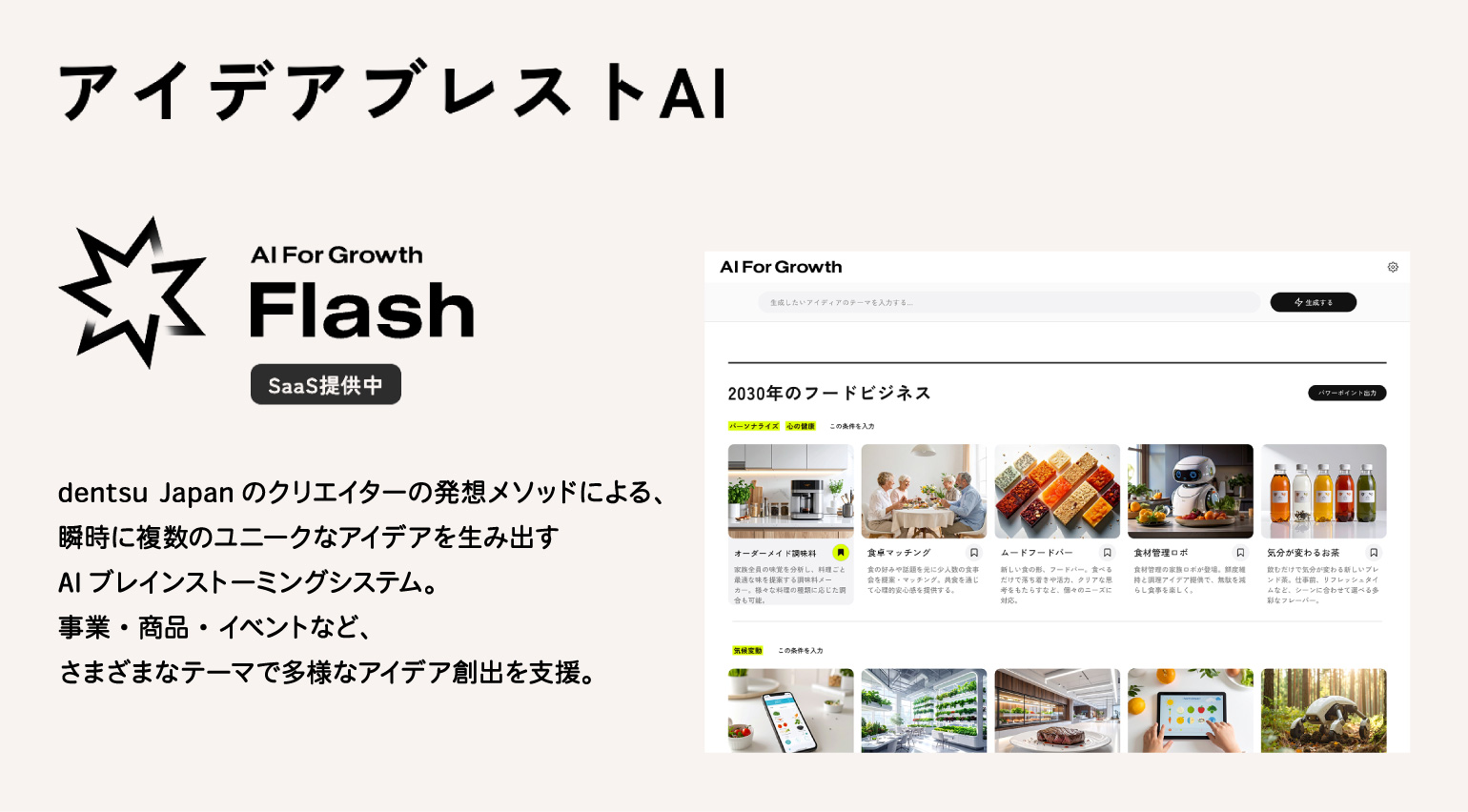
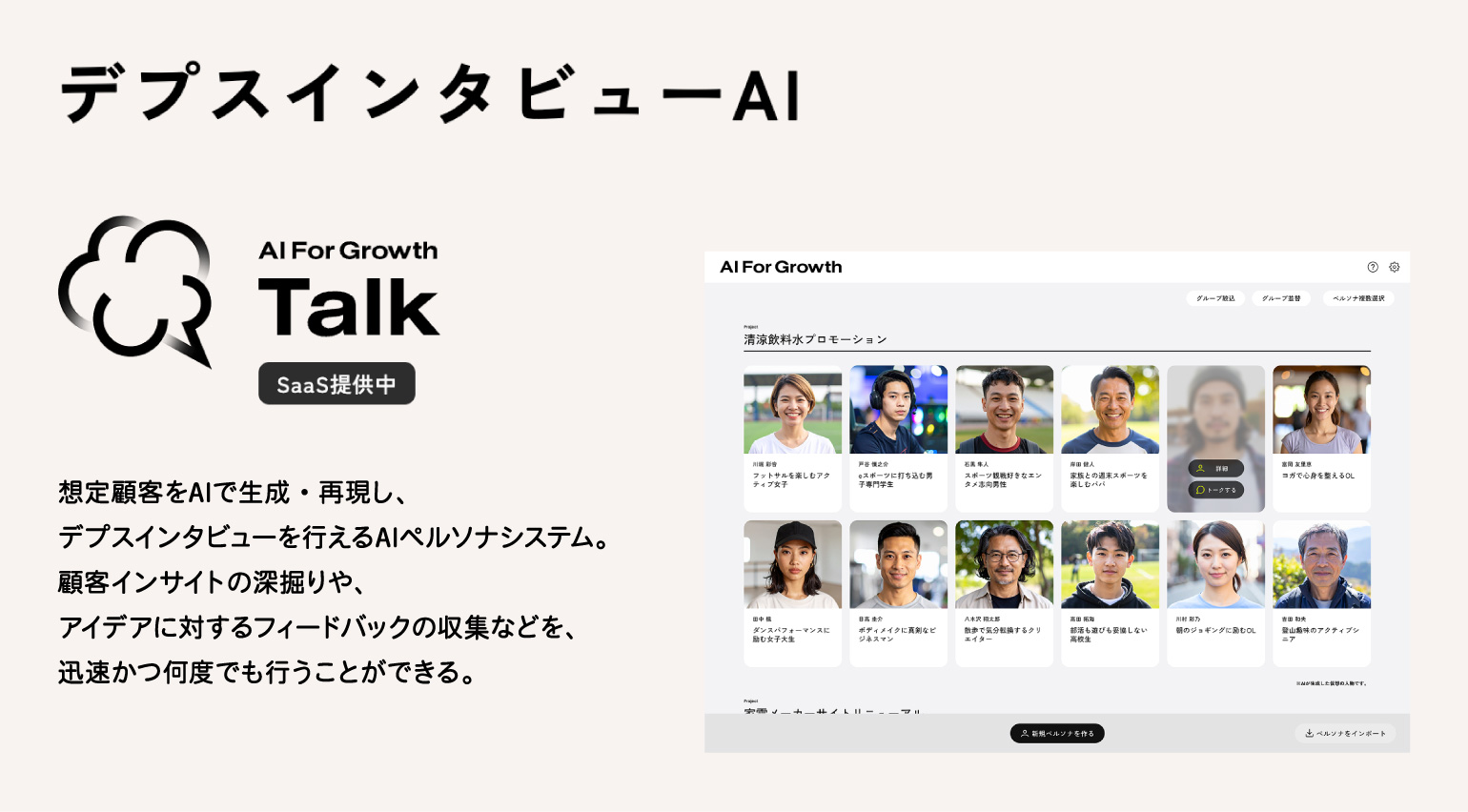
Kimura: This time, our collaboration with Dentsu Inc. involved using our AI brainstorming support tool, “AI For Growth Flash,” and “AI For Growth Talk”—which allows users to interview AI personas—to support new product planning and packaging design. At our company, we’re not only focused on AI-driven planning and production but also on providing services that help create the very environment necessary to execute those ideas.
A Reversal Revealed by a Global Survey—“KINOTAKE MOTHER,” an AI That Makes Judgments Based Solely on Faces
—Please tell us about “KINOTAKE MOTHER,” the AI that determines whether someone is a “Kinoko no Yama” or “Takenoko no Sato” fan.
Fuda: It’s an AI system that determines which camp—"Kinoko no Yama" or "Takenoko no Sato"—a person belongs to based on their facial photo. Developed using data from Meiji employees, it objectively diagnoses potential preferences, including those who prefer both.
—How did “KINOTAKE MOTHER” come about?
Fuda: It started with the idea that “we want to propose a new concept of ‘which side’ to the world to mark our 50th anniversary,” so we conducted a global survey as a preliminary step. In Japan, only Fukushima Prefecture was in the “Kinoko” camp, while all 46 other prefectures were in the “Takenoko” camp. However, when we surveyed the world, 14 out of 20 countries were in the “Kinoko” camp—the results were reversed. We thought, “Perhaps there’s a Japanese bias regarding which side people prefer.”
From there, we formulated the hypothesis that “camp allegiances can change.” We reasoned that people cling to their own camp simply because they haven’t eaten the other product in a while. If we created an AI that could determine which camp someone belongs to just by looking at their face, people who thought they were ‘Mushroom Camp’ might be classified as ‘Bamboo Shoot Camp’—and that could serve as an opportunity for them to try the other side for the first time in a long while. AI was the perfect tool for creating that opportunity.There was also a proposal to have people answer a questionnaire before being classified, but “identifying them just by looking at their faces” was the most interesting approach. So we developed an AI specifically for that purpose.
—How does it make that determination?
Fuda: With the cooperation of several hundred Meiji employees, we combined their photos with a “Which Side Are You On?” survey—featuring about 100 questions, such as “soy sauce or Worcestershire sauce?” and “dog or cat?”—to create approximately 1.67 million data patterns. We then trained the AI on this data, which served as our foundation.
Yoshida: Collecting that data was incredibly tough (laughs). That wasn’t the only reason, but I felt it wasn’t right to ask consumers to answer as many as 100 questions.The most important thing is for people to have fun. That’s why we designed the system so that the AI makes a judgment right away based solely on a photo, telling you, “You’re in the ○○ camp.” We didn’t adjust the results for “mushroom camp” versus “bamboo shoot camp” to be a 50-50 split. The AI’s judgment is based on the data, and there are people in both camps.
What’s more, it doesn’t just stop at mushrooms and bamboo shoots—it takes personality into account to suggest to each person, “You’re this kind of mushroom fan.” The range of results—to the point where almost no two people have exactly the same outcome—is something that only AI could produce instantly.
Fuda: In a way, not fine-tuning the results with AI actually creates a sense of “despair.” It’s like you can no longer decide your own faction—it’s decided by the AI—and perhaps the era of choosing “which faction” based on your own will is finally coming to an end… I wanted to evoke that kind of feeling, too.
While you can play MOTHER on a smartphone, the response to the event was tremendous. It sparked conversations among families asking, “Which faction are you on?” again, and the parents and children who came were all excited and chattering away. I think it was great that we were able to reaffirm that even a single piece of candy can spark family conversations and strengthen bonds between friends.
100 ideas, 200 ideas. New products born from workshops and AI
—What is “Kitagita no Konoko no Yamazato”?
Kimura: It’s a new product developed in collaboration with AI specifically for “both-sides fans”—one that breaks down the barriers between “Kinoko no Yama” and “Takenoko no Sato” and condenses the deliciousness of both into a single treat.
—What kind of process did you design for this new product planning?
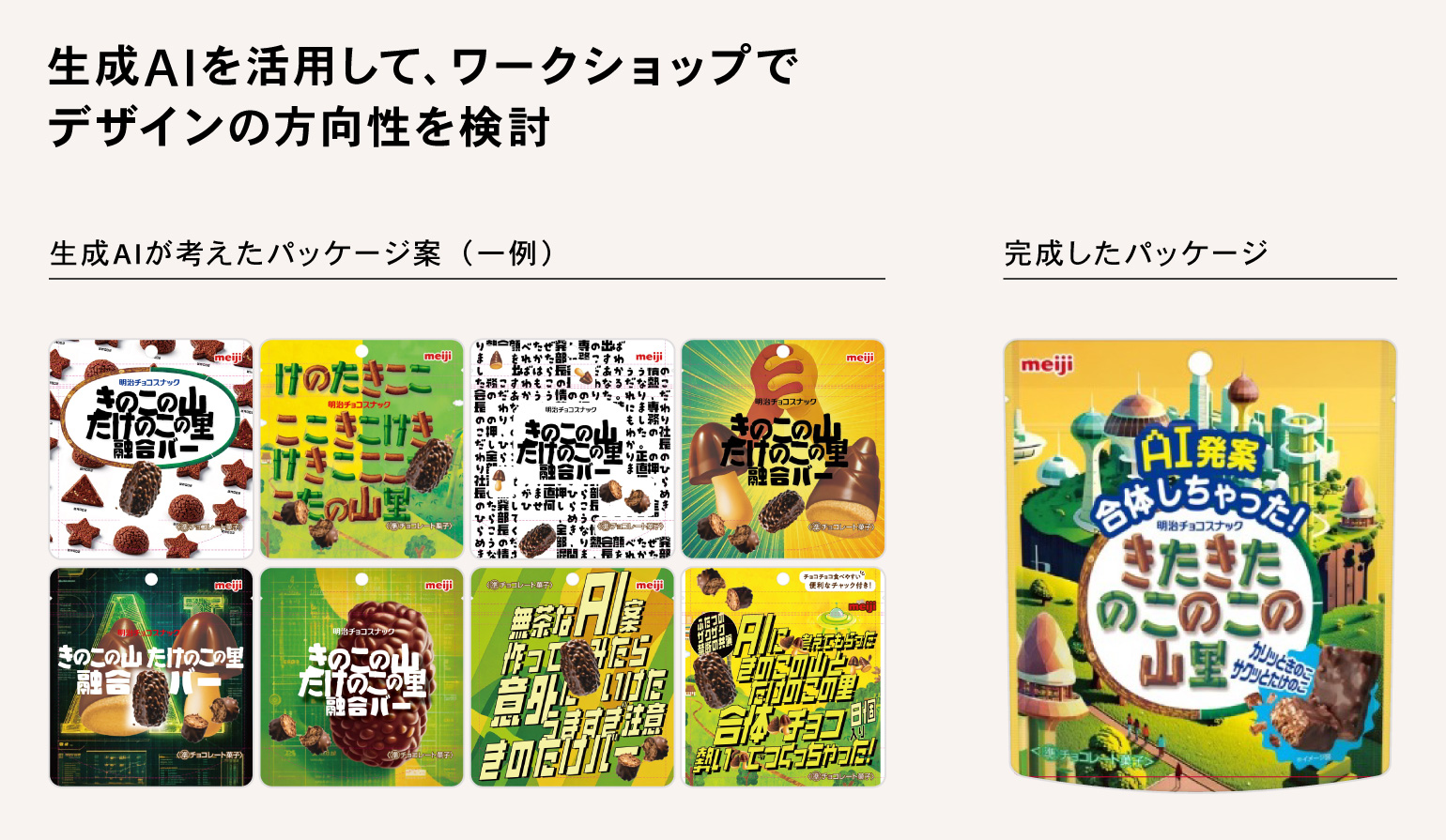
Kimura: For the theme “What kind of product should we create for our 50th anniversary?”, rather than following the traditional approach of the company giving a presentation and soliciting feedback, we proceeded in a workshop format where we brainstormed together. We followed the same process for the packaging design as well. We focused not just on efficiency, but on the challenge of how to utilize AI to “expand possibilities.”Asking the AI to generate 200 ideas for a single theme—a new product concept—is a challenge unique to AI. As we reviewed 100 or 200 proposals, we’d discuss things like, “This doesn’t feel like Kinotake,” or “I wonder why,” and this helped us articulate aspects we hadn’t been able to put into words before—such as “what must remain unchanged” and “what we want to refresh.” These insights then became instructions for the AI, leading to further refinements. We were able to create a positive cycle.
Yoshida: The breadth of ideas generated by AI was on a completely different scale. While humans have their strengths and weaknesses, AI pulls ideas from places we wouldn’t even expect. Plus, there are plenty of ideas that get rejected simply because the person proposing them isn’t good at explaining them, even though they’re actually good ideas. AI explains things in a logical, step-by-step manner, so it’s amazing how it ensures that good ideas are properly conveyed as such.
──I’ve heard that during product development, you created AI personas that matched your target audience and conducted interviews with these personas to refine your ideas. Were there any particularly memorable moments during the interviews with the AI personas?
Kimura: While exploring “what value there is in mushrooms and bamboo shoots sticking together,” there was a brief discussion about whether we should incorporate a message like “friendship.” However, when we asked the persona, they bluntly replied, “I don’t think about that when I’m eating chocolate,” and that brought us all back to our senses (laughs). We decided to simply highlight the fun texture of them crumbling and mixing together.By the way, the keywords “sticking together” and “merging” were selected from hundreds of proposals, and it was the team at Meiji who kept them in the running until the very end.
Yoshida: Ideas alone don’t make a product. It’s only when human thought is applied and the idea is converted into words that a product is born. Once an idea came up, we’d ask the AI, “So, what’s next for the design?” That back-and-forth was a lot of fun.
Precisely because we’re in the AI era, what kind of work can only be done by humans?
—What are your thoughts on the essence of creativity in the AI era?
Yoshida: What I felt strongly from this experience is that there are ways of thinking that only humans can do. If we’d left everything to the AI, given the ongoing “mushroom vs. bamboo shoot” debate, a concept like “sticking mushrooms and bamboo shoots together” would likely have been deemed off-limits.
The reason people enjoyed it was because they used their imagination and got on board with the creative process. In the end, there’s a human touch in the coordination. I think that’s the essence of it. The “fun” that AI can provide is more like “imitation”—it ends up mimicking existing creative work. Plus, since everyone uses AI these days, everyone comes up with the “correct answer.” It’s important to be aware that the answers it produces aren’t necessarily the right ones.
Fuda: Speaking of that “deviation from the ‘correct answer,’” what we value is whether it comes from “a single person’s perspective.” It might be completely wrong, but it looks incredibly interesting. People can really relate to things that make them think that. That’s why we should leave the volume of output to AI and give humans more time to think. If we use it that way, I think it will lead to more trial and error.
Besides, doesn’t AI tend to be seen primarily as a tool for efficiency? But I believe AI was originally created to enhance human potential. I ask myself: What kind of AI could bring more smiles to people’s faces and foster deeper connections between them? I think we managed to achieve that to some extent with this edition of MOTHER. It has reaffirmed my belief that it’s crucial to view AI as “AI for humans.”
Kimura: There’s also value in “crossing boundaries.” Even if you lack artistic skill, using AI allows you to create your own draft package designs—the ability to transcend job roles and abilities is a huge benefit. Another key point is that humans must define and input what the AI doesn’t know. AI doesn’t fundamentally understand human senses—for example, “deliciousness.” It’s only because we have physical bodies that we can eat, verbalize those sensations, and sense the atmosphere of the world and put it into words. I think this applies not just to creators, but to people in every profession.
Yoshida: AI can analyze “what should be done,” but it won’t tell you “what you want to do.” It’s still up to humans to articulate what they want to do. When people ask questions and receive answers without establishing that intent, they end up “not making full use of AI.” Furthermore, from a food manufacturer’s perspective, the desire to “eat something” is unpredictable. Even on a day when you were planning to eat something else, if you catch a fleeting whiff of curry at the office, you might end up thinking, “Curry it is tonight” (laughs).AI may come up with the “correct” answer, but humans don’t always follow it. I think it’s part of a human’s job to adapt to people, accepting that inconsistency is the norm.
“The ‘Both Sides’ Approach” Becomes a Product—A Finale Woven Together by Human Hands
—What kind of results did this initiative lead to?
Yoshida: Ultimately, we just wanted everyone to have fun. Because the “food” experience and the communication experience aligned so well, sales of the limited-edition product—a new item available for one week only—reached an all-time high for weekly units sold.Even though MOTHER was launched in August 2025, as of April 2026, 3,000 to 5,000 people are still participating every day. In an era where sales volumes are falling due to rising chocolate prices, both sales revenue and unit sales grew in fiscal year 2025.
Furthermore, under the theme “Which Side Are You On? It Changes,” the number of people who tried both flavors increased by approximately 1.5 million. As a food manufacturer, I think it was incredibly rewarding to have people try the product and truly embody the question, “Which side are you really on?”
──The process from MOTHER’s launch to the release of the new product was also very swift, wasn’t it?
Yoshida: MOTHER launched in August 2025, and the product went on sale in April 2026.On MOTHER, with about 5,000 people participating daily, only a very small number received the result: “You’re a ‘Both’ person.” No one ever imagined that this would actually become a product. MOTHER served as the starting point, and we were able to reach the finale with a timeline that ensured the “Both” category would properly translate into a product. That part is done by hand—we carefully consider how to connect the dots so that customers will enjoy it the most.
Kimura: The packaging also features a design with a distinct “AI feel”—something we were able to achieve precisely because the AI specifications from that time were a bit outdated. When I asked, “Is this really okay as is?” Meiji replied, “Let’s go with it as is, on purpose.” With today’s AI, the result would be indistinguishable from something designed by a human.
Yoshida: That’s right. I think this project only worked because of the timing.
(Editor’s Note) In the age of AI, it’s crucial not to let technology become an end in itself. In this project, we took the “Which Side Are You On?” brand asset as our starting point and positioned AI as a means to pose new questions. From the infinite possibilities opened up by AI, it was human hands that identified what must remain unchanged and ultimately wove it all together into a cohesive story. Brand history, creative vision, and technology—it was precisely because these three companies, each with their own strengths, collaborated that we were able to deliver new surprises and enjoyment to consumers.
Confectionery Business Division, Confectionery Marketing Department
Brand Manager, Choco Snack G
Joined the company in 2005. Has gained experience in three areas—sales, product planning, and marketing—and has consistently been involved in the growth of confectionery brands. In product planning, he was responsible for brands such as Melty Kiss, Garbo, Kinoko no Yama, Takenoko no Sato, and Karl. Currently, as a brand manager in the chocolate snack category, he oversees strategy development and promotions for the nationally beloved “Kinoko no Yama and Takenoko no Sato” brands.
Yuho Fuda
Yomiuri Advertising Co., Ltd.
Market Design Unit, Integrated Creative Center, First Creative Room
Planning Director
After a career in sales, I transitioned to a creative role. Leveraging my sales experience, I build collaborative relationships with client companies to address the fundamental challenges facing their businesses and brands. This approach allows me to propose visions and strategies that lead to the best possible outcomes, regardless of the specific tactics used. Since 2024, I have also been a member of “Pers,” an in-house creative boutique dedicated to addressing corporate management challenges.
Yuya Kimura
DENTSU SOKEN INC.
AI Development Center
Creative Director
After working at an IT startup and an entertainment company, he joined Dentsu Inc. As a Creative Director and Service Designer, he has been involved in business concept development and customer experience design. Since 2025, he has concurrently served as Unit Leader of the AI Marketing & Creative Advancement Unit at the Dentsu Japan AI Center. In 2026, he was seconded to DENTSU SOKEN INC., where he is responsible for strategic planning for the company-wide AI platform and new services.