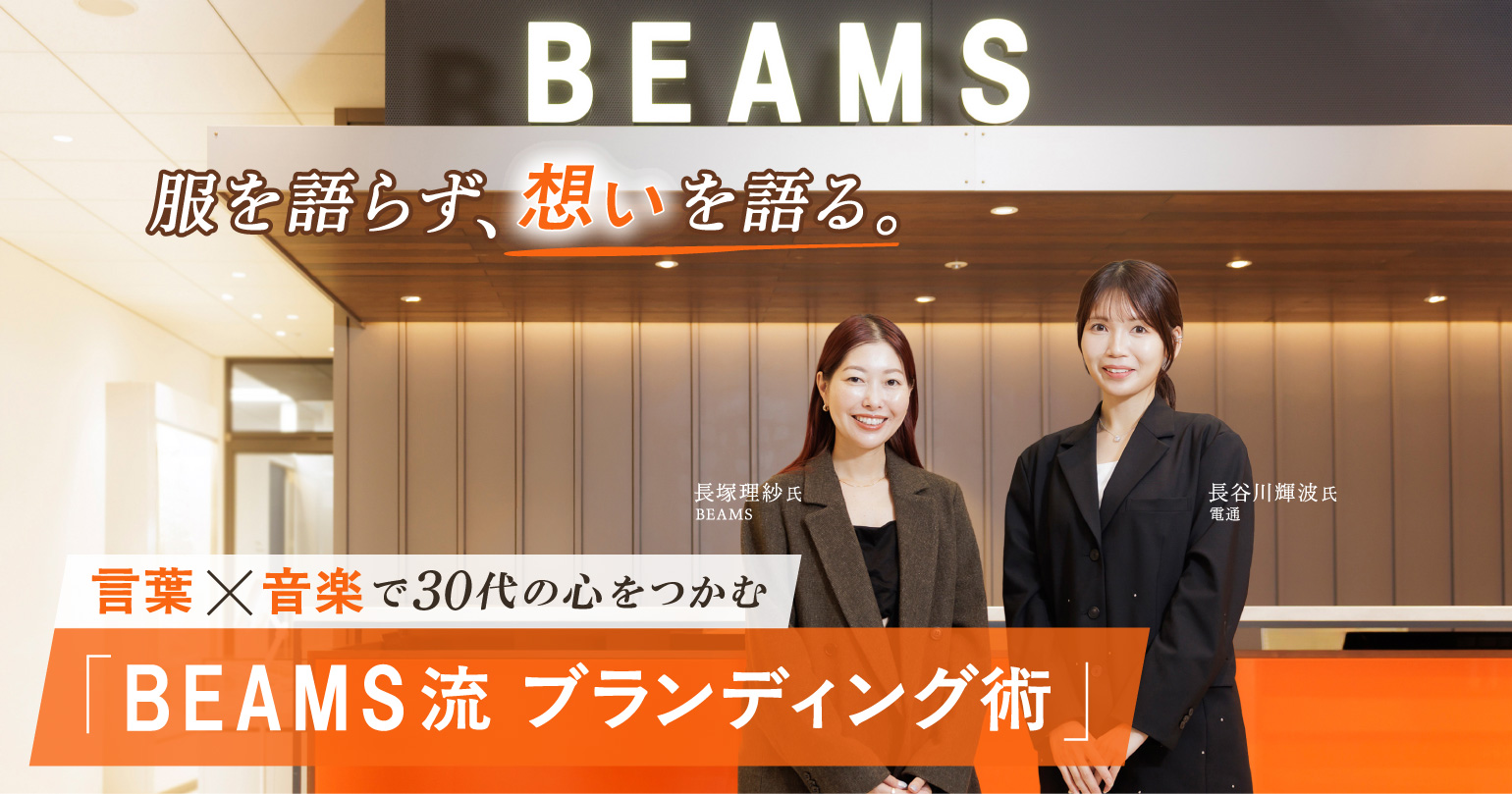
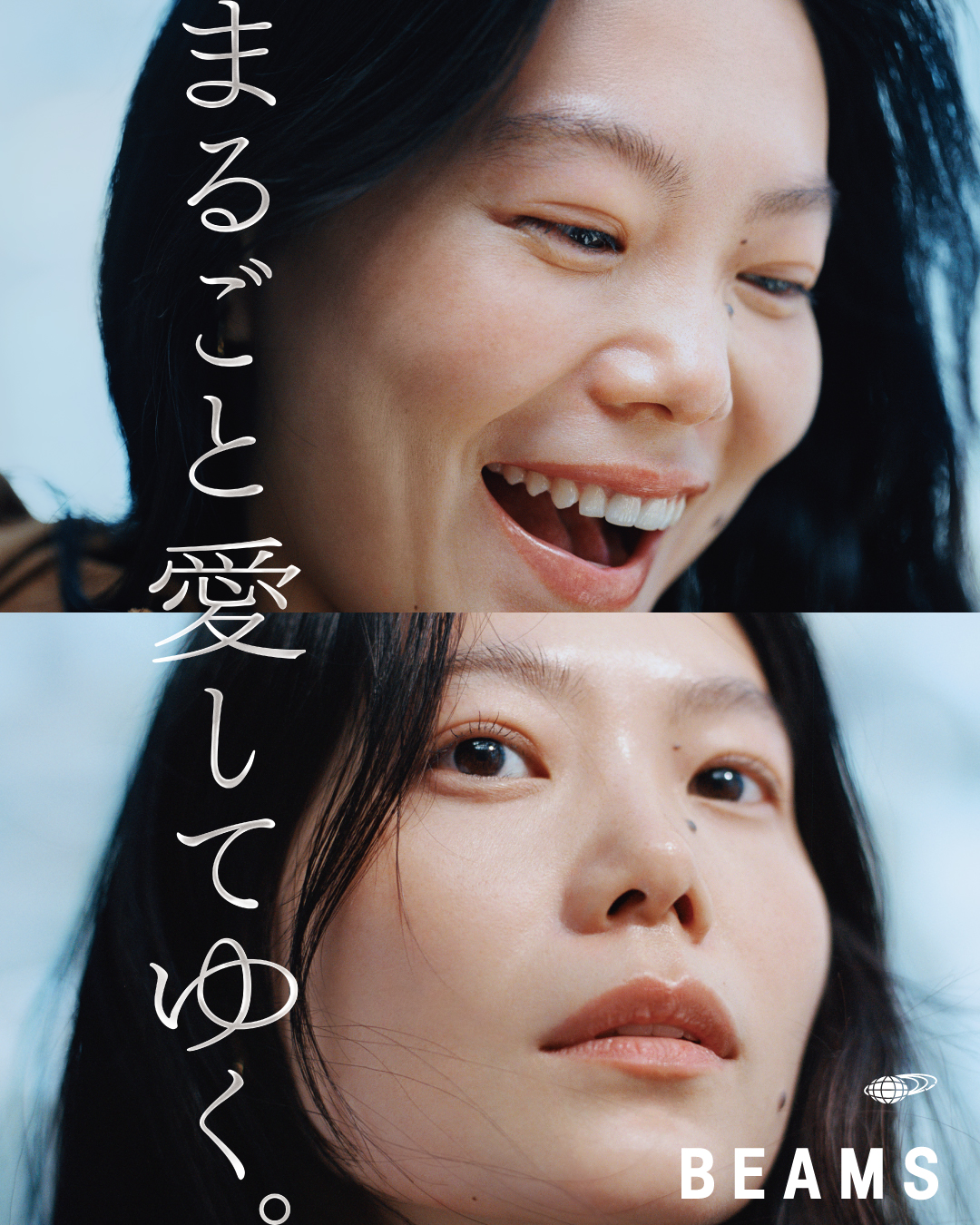
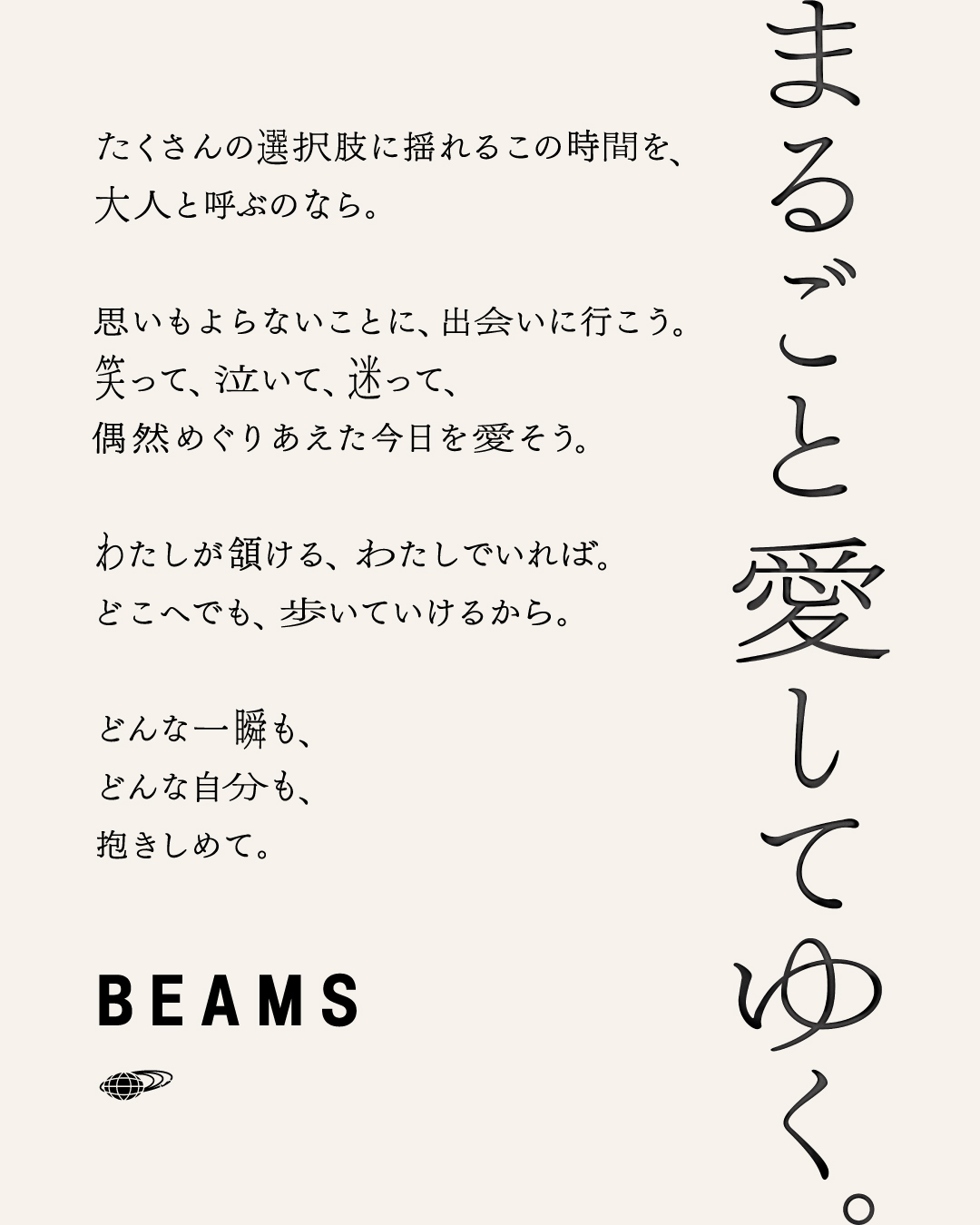
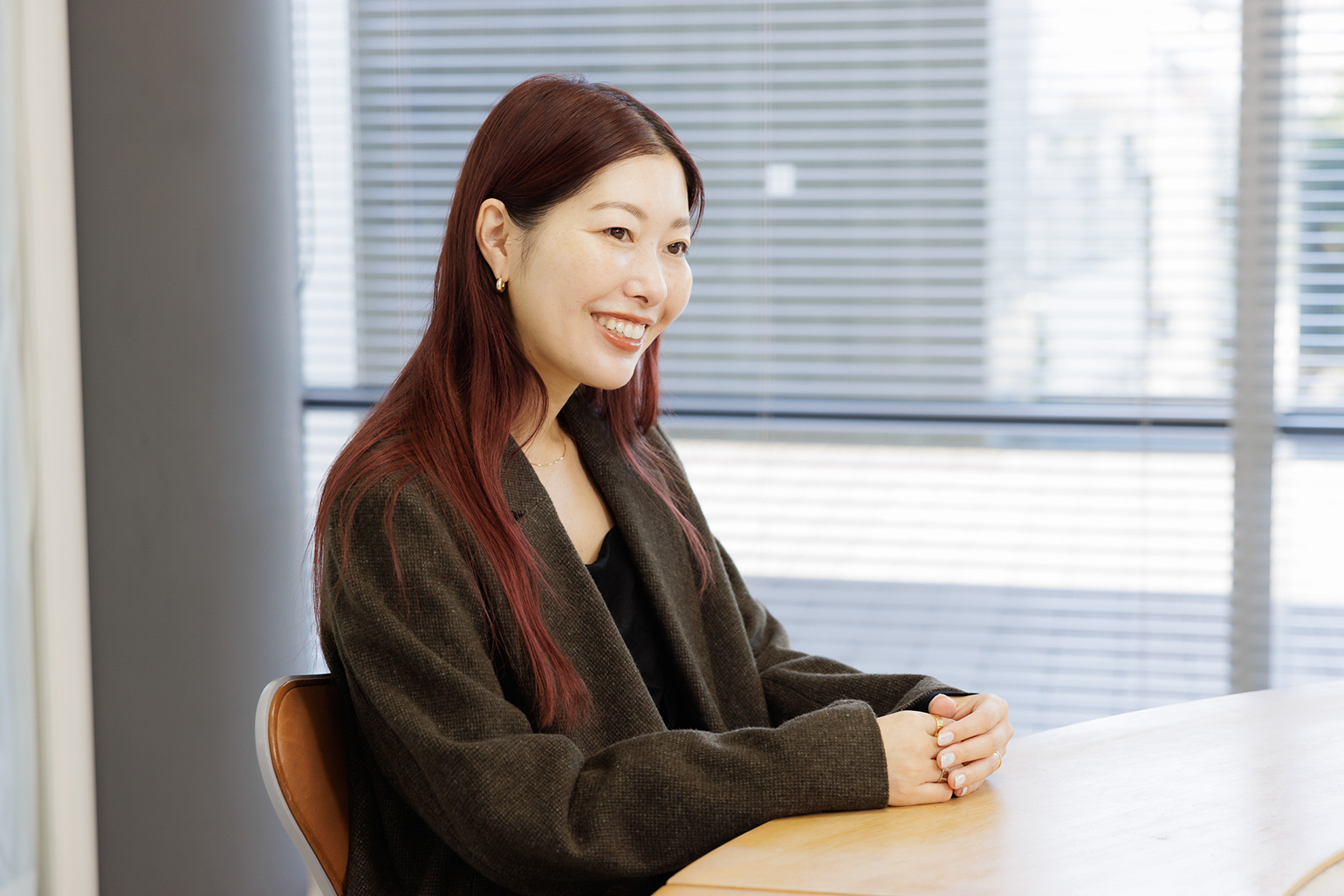
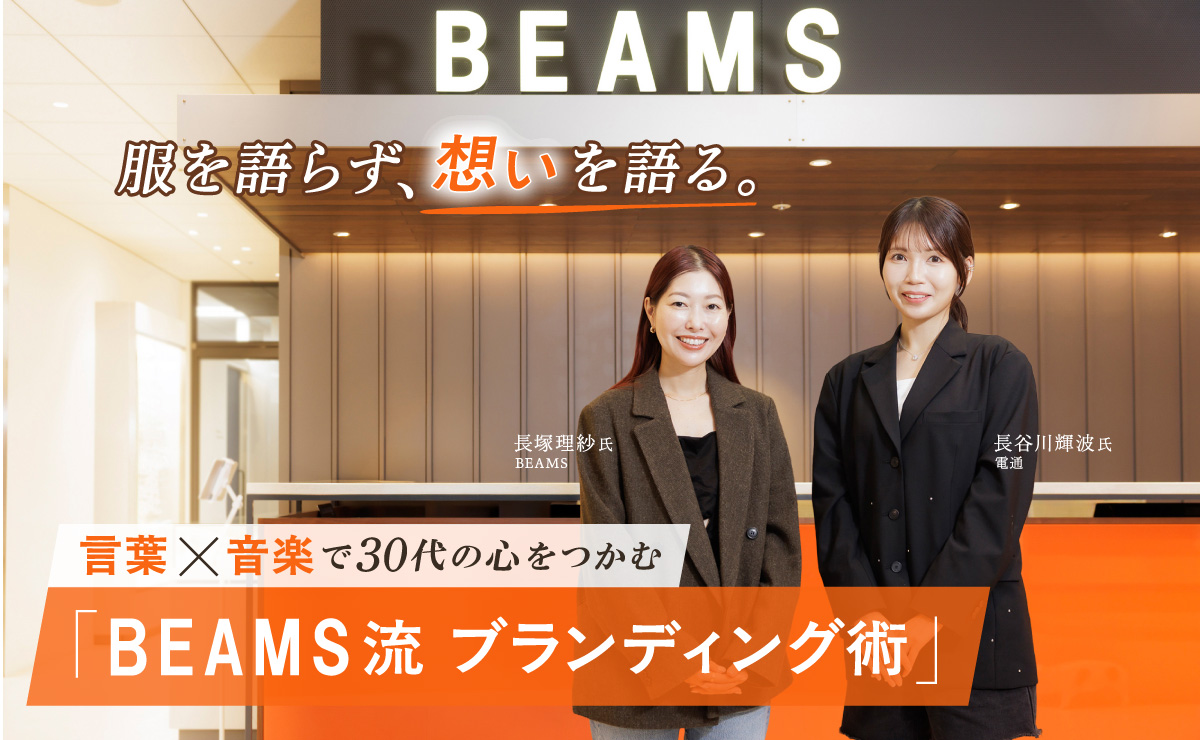
Rather than putting our own products front and center, we depict the emotions of the people we want to reach. Through that empathy, we build a new relationship with the brand—BEAMS Women’s brand campaign, targeting women in their 30s, was born from this approach.
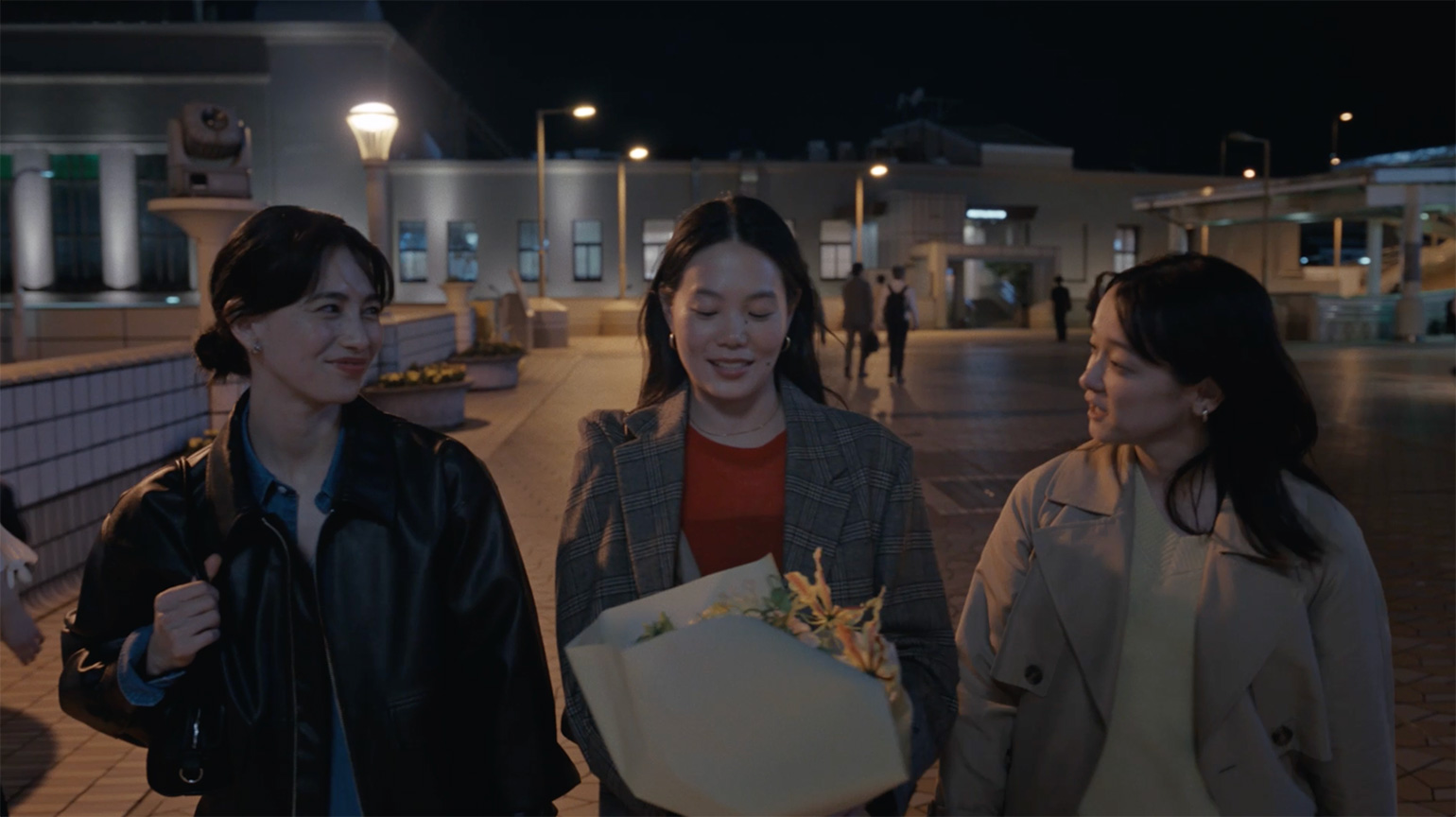
The brand message is “Love It All.” The brand video, featuring Morning Musume’s “I WISH,” uses words and music to depict the inner voices of women walking different paths in life.
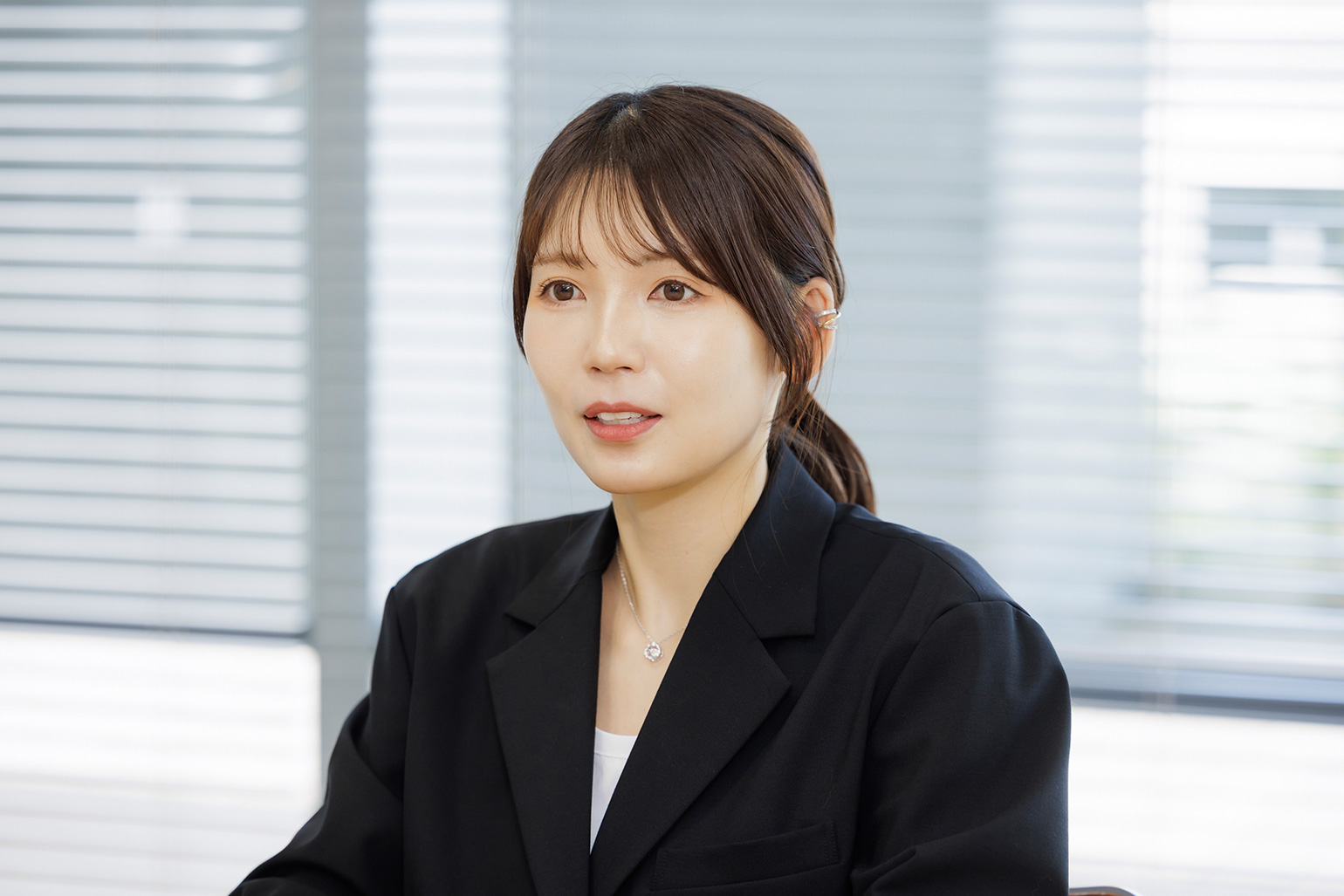
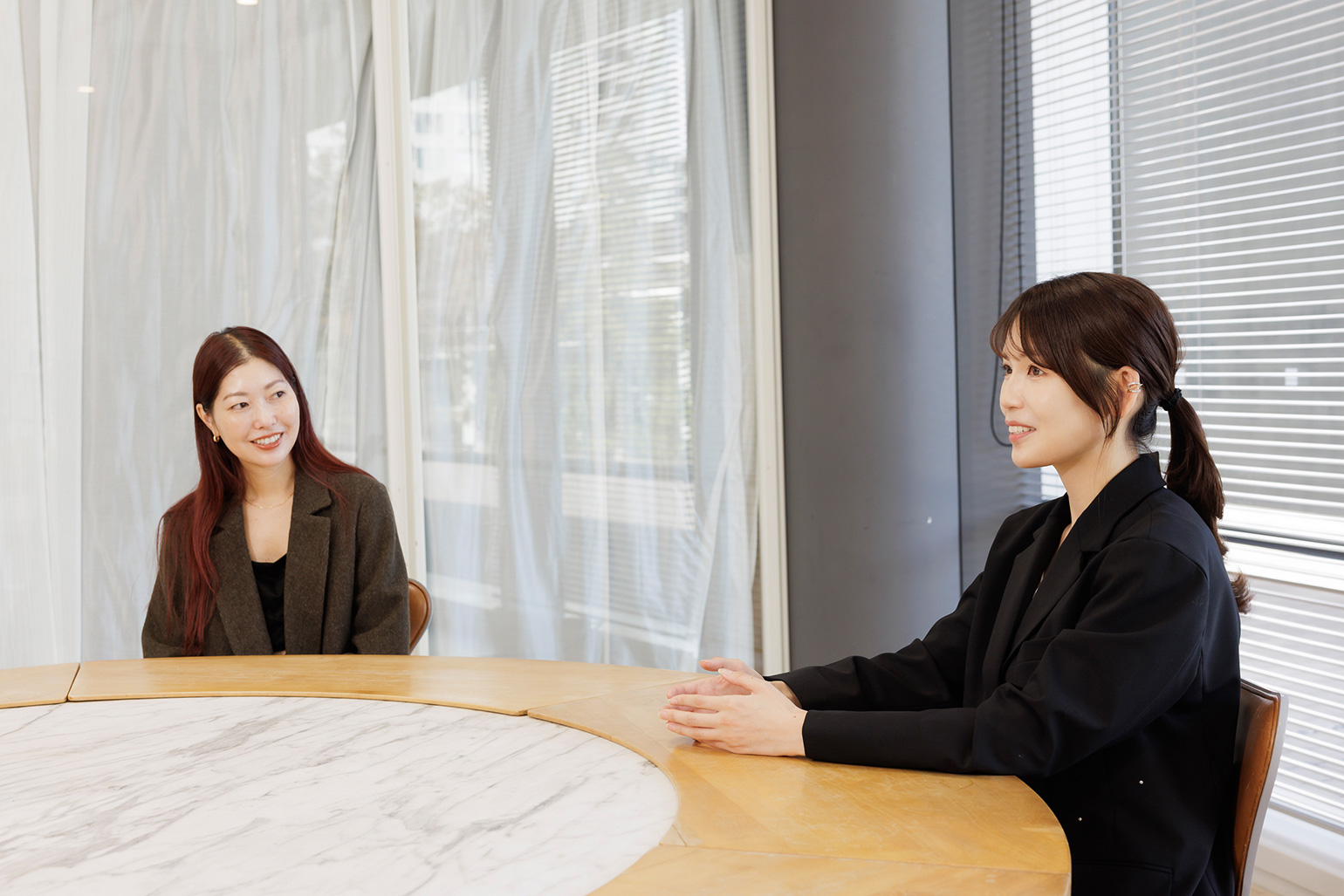
Why did they make “words” the central focus of a fashion advertisement? And how did they build the team that brought this vision to life? We spoke with Risa Nagatsuka of BEAMS and Teruna Hasegawa of Dentsu Inc.
—Could you tell us about the background behind this project?
Nagatsuka: BEAMS has a variety of labels aimed at women. While we have labels that clearly target women in their 20s and 40s, we faced the challenge of not yet reaching women in their 30s effectively. That’s why we launched this cross-label women’s project—to re-engage women in their 30s.
—Why did you choose to make “words” the central focus?
Hasegawa: There are two reasons. The first is the essence of BEAMS. With so many advertisements out there designed to make apparel brands’ clothes look attractive, we asked ourselves, “What is something only BEAMS can do?” I’ve always liked BEAMS’ advertisements and felt that it’s a company that values words, people’s hearts, and ways of life. That’s precisely why I thought that showcasing not just clothes, but also words and life itself, would make for a campaign that truly embodies the BEAMS spirit.
The other reason is that I sensed a growing interest in the written word and language among the generation we wanted to reach. Looking at reading trends and magazine features centered on language, I felt there was a demand for empathy—not just for superficial impressions, but for the ideas and spirit underlying the words. That’s why I proposed this concept.
The starting point for “Loving It All” was a letter to my peers
—How did the brand message come about?
Nagatsuka: Initially, we had the overarching theme of “Let’s love ourselves.” As we considered how to convey that, I compiled my thoughts for women of my generation in the form of a letter. Before I knew it, it had grown to about four pages, so I included it in the orientation materials.
When you reach your 30s, you often spend more time prioritizing the people and circumstances around you, putting your own feelings and sensibilities on the back burner.
But I don’t think loving yourself is just about boosting your self-esteem. It’s about cherishing your own sensibilities, letting the things you love move you, and spending time on yourself. I believe that choosing for yourself what you think is good is also a form of self-love.
I wrote with the hope that each person can enjoy making choices that are true to themselves, cherish what they love, and continue to discover new things they love no matter how old they get.
Hasegawa: The production team strongly resonated with that letter as well. I think “loving oneself” is often discussed in the context of accepting one’s flaws or moments of feeling down. But in Ms. Nagatsuka’s letter, we sensed a quiet yet powerful energy—one of loving both the negative and the positive, and using that as a springboard to move forward.
We chose the word “wholly” to encompass both aspects, and by using “to keep loving” rather than simply “to love,” we aimed to convey a sense of moving forward. It’s a short phrase, but that nuance was what we wanted to emphasize.
──How did BEAMS receive it?
Nagatsuka: Among the many copy suggestions we received, the word “love” was what I wanted to prioritize. I felt that “LOVE,” “romance,” and “love” have always been words that symbolize BEAMS. I wanted to express that essence of BEAMS to the women we’re reaching out to this time.
However, we didn’t decide on the tagline first. We thought about the story of the video at the same time, searching for words that resonated with our vision, and ultimately, “Loving as We Go” felt just right.
Turning a Nostalgic Melody into an Anthem of Support for Who You Are Today
──Please tell us the reasoning behind featuring Morning Musume’s “I WISH.”
Hasegawa: When planning a video, I usually start by deciding where to place the emphasis—whether on the cast, the filming locations, or other elements—but this time, I built the concept around the music.
I wanted people to naturally turn their heads when they heard the song—whether on the street or in an ad that happened to pop up on their timeline—and think, “This might be an ad meant for me.” To achieve that, I decided to use a familiar song that people in their 30s today listened to when they were teenagers. The idea was to gently convey, through the music, “This is a message just for you.”
In particular, when I listened to “I WISH” again, I realized the lyrics weren’t just nostalgic—they could also be interpreted as a song of encouragement for who I am today. That’s why I wanted to create a video where not only the melody but also the lyrics took center stage.
──Why did you choose a cover by Satoko Shibata?
Hasegawa: By having a Reiwa-era artist sing a Heisei-era classic, I wanted to create an opportunity for people beyond our target demographic of women to talk about this video—to spark conversations among a wide range of audiences. Ms. Shibata herself is from the generation that grew up with this song, and she’s a huge fan of Hello! Project. I was really happy to see her fans getting so excited about it, too.
──The video features three women who are on different life paths. How did you develop their characters?
Hasegawa: Initially, the plan was to focus on a single protagonist, but the director suggested making it three characters.
Even among people in their 30s, some are dedicated to their careers, while others are raising children. Some have left Japan to take on new challenges in a different place. Based on the director’s suggestion, we worked with the BEAMS team to explore the choices and emotions of people in these diverse situations, considering each character’s struggles and hopes.
Nagatsuka: Since our team included members who are raising children, we shared very relatable stories—from the conflict of feeling left behind by those around them to the happiness they find in their children. I think it was precisely because we had people in such diverse situations that we were able to infuse the characters with our own feelings.
Hasegawa: The opening narration, crafted by copywriter Mr. Kataoka, was designed to juxtapose the positive and negative emotions unique to people in their 30s. The coexistence of both makes it realistic and human. The sentiment that it’s okay to have both of these emotions ties into the final line: “I’ll love it all, just as it is.”
A team that could speak candidly produced authentic expressions
—What did you focus on when building the team?
Hasegawa: At first, we didn’t have a clear vision of what the final output would look like, so rather than focusing on who was good at what kind of expression, we decided to build a team of people from a similar generation who could talk openly and honestly. It was a team made up of people who got along well with each other. As a result, our meetings often revolved around discussions of our values.Comments like, “This phrase might hurt someone’s feelings” or “That really struck a chord with me” led to people sharing stories we’d never heard before, such as, “Actually, I had this experience.” I think it was precisely because we had a relationship where we could speak openly and honestly that we were able to create such authentic words and visuals.
Nagatsuka: On the BEAMS side, this was the first time representatives from different labels had come together as a single team. Some had worked with casual labels, while others had worked with dress labels. Since the customers we’d served and the values we’d cherished were different, it took some time to take that first step.
We started by gathering in person to discuss “What defines the BEAMS spirit?” and build mutual understanding. Progress was slow at first, and we had our share of anxieties, but because we invested that time, once we got moving, there was almost no misalignment in our vision. Even when making detailed decisions—such as direction and casting—we were able to move forward with a shared vision.
──Is there anything from the shoot that stands out in your memory?
Nagatsuka: We chose performers from the same generation so that viewers could relate to them. As it turned out, the three people we selected were actually friends in real life.
Hasegawa: In the film, friends who were laughing together in the same place go their separate ways. The scene where the three of them laugh together just before that parting, and then shed tears as they go their separate ways—I felt that was a scene that felt so real precisely because they already had that existing relationship. It was a happy coincidence.
──Is there a specific meaning behind the characters’ clothing as well?
Nagatsuka: When it comes to styling, we prioritize conveying the character’s lifestyle. We asked the stylist to imagine their entire lifestyle—for example, what kind of shoes or comfortable clothes someone raising children might wear—and put together outfits based on that. We also assigned a key color to each character so viewers can recognize them even when scenes change quickly in the short video.
Hasegawa: What we wanted to portray were women who enjoy fashion no matter how busy they are. Even in moments when they’re feeling uncertain or down, their clothes are still lovely, and you find yourself thinking, “I really like that outfit.” While this isn’t a video designed to explain specific products, as a commercial for BEAMS—a fashion company—we made sure to emphasize that aspect.
Connecting Emotional Resonance to the Brand
—When incorporating not just fashion but also culture, such as music, what aspect of BEAMS’ unique identity did you prioritize?
Nagatsuka: Delivering style is important, but that alone can sometimes end with people simply deciding, “I want to wear this” or “I don’t want to wear this.” The moment someone feels, “This isn’t me,” it becomes difficult to connect with them. That’s why we wanted to combine fashion with something that makes people feel or think—not just a simple “yes” or “no.” We put into words for these women the philosophy that BEAMS has always cherished: “This is the mindset with which we present fashion.”
Hasegawa: BEAMS is a company that goes beyond clothing to convey culture and lifestyle. I feel that at its core lies the desire to “create a better life and happiness for people.” This time as well, by depicting clothing, music, and life within a single video, we aimed for a form of expression unique to BEAMS—something other apparel brands simply can’t achieve.
──What kind of reactions did you receive after the release?
Nagatsuka: When we introduced the project’s vision and the video during an internal presentation, female staff members shared comments like, “I cried.” On social media, too, I was delighted that people didn’t just share the video—they added their own thoughts, saying things like, “This is how I felt” or “I want to share this with people like this.”
Having worked on the sales floor myself, I know the joy of hearing “thank you” from customers. Even though my role has changed, my mindset—thinking about what I want the people we’re reaching to experience—remains the same. Even if you create something great, it’s hard to create value unless people can relate to it. That’s why I also place great importance on conveying our passion to the store staff, who serve as the final point of contact with customers, while keeping that passion alive.
──How do you hope to build relationships with customers moving forward?
Nagatsuka: We’ve finally taken the first step with this project. I’d be happy if it gave people a reason to think, “Has BEAMS changed a little?” Moving forward, I want to continue communicating our message to women living in the present, so that they’ll consider our brand as one of their options. I’d also like to take on more projects like this video in the future.
Hasegawa: In advertising, we’re often asked to “reach as many people as possible,” but this time, our target audience was clearly defined. In today’s world, where each person encounters different information and sees the world differently, I feel that it’s just as important to deeply resonate with the hearts of the people we want to reach as it is to reach a broad audience.
What we portrayed this time wasn’t the clothing itself, but the feelings and lives of the people who wear those clothes—those who struggle or move forward while wearing them. It’s not just about conveying the appeal of a product; it’s about empathizing with the feelings of the person who picks it up and using words and music to make them feel, “This message is meant for me.” I believe that creating that kind of empathy is one way for a brand to connect with consumers.
I enjoy work that involves thinking about words, ideas, and businesses that transcend conventional advertising frameworks. My areas of expertise include entertainment, beauty, and social issues. Major clients include Heralbony, UNIQLO, Shiseido, and Universal Music. Recipient of the TCC Newcomer Award and the ACC PR Division Grand Prix. Also serves as a lecturer for the Advertising Association of Japan and Waseda University. Hobbies include visiting public bathhouses and standing bars.
Joined BEAMS in 2009. After working as a shop staff member and buyer, she was appointed the fifth director of <Ray BEAMS> in 2018. Currently serving as the General Director of Women’s, she oversees the overall branding of the women’s division. While valuing the sensibility of freely enjoying diverse styles, she conveys a message that encourages people to make choices that reflect their true selves through fashion.