Category
Theme

Note: This website was automatically translated, so some terms or nuances may not be completely accurate.

Transforming Both Training and Classroom Instruction: A Proposal for PLAY FIRST, Starting with Play

Toru Oyama

Toru Oyama

Lutecia Co., Ltd.

Combining education and creativity to make Japan’s unique educational system more engaging.

The "Active Learning: What About This? Research Institute" was established within Dentsu Inc. by a group of copywriters, art directors, creative directors, marketers, and others. To commemorate its 10th anniversary, we present a series of relay columns in which each member shares their discoveries and the changes they’ve observed through their involvement in education.

There are many business professionals and educators who feel the need to update “training” and “learning.” However, when attempting to introduce new methods, the focus often falls on objectives, evaluation, and defining “correct answers,” which tends to make the actual implementation process rigid.

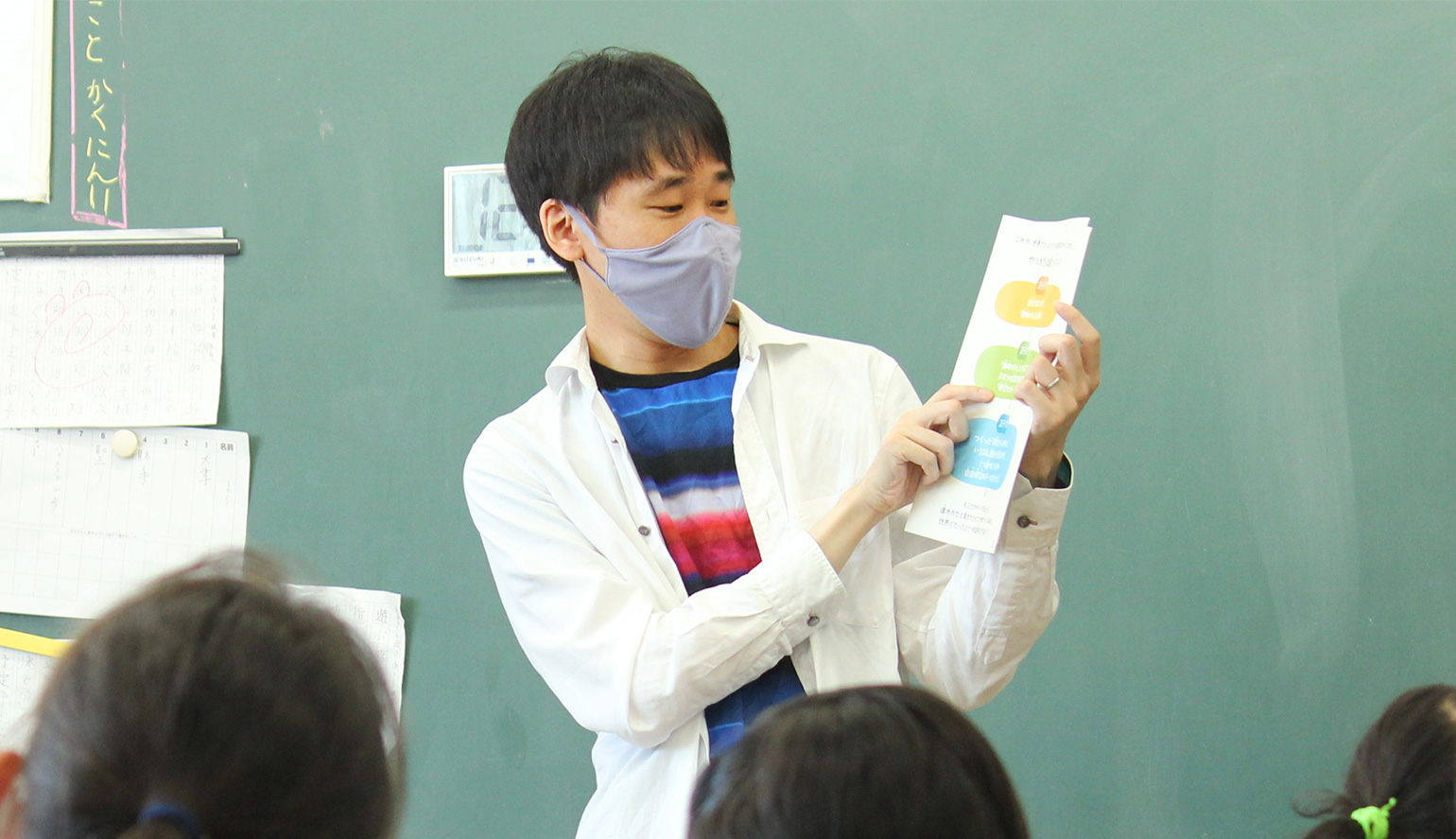
While working as a copywriter at Dentsu Inc., I have also been involved in developing programs that incorporate analog games in corporate training and educational settings. What I have consistently observed is that when people “start with play,” they become surprisingly proactive.

In this article, I will explain why “PLAY FIRST—Start with ‘Play’”—using real-world examples such as newspaper-based learning materials, math games, and idea-generation tools—is the fastest route to learning and problem-solving.

Teaching by focusing on the correct answer has reached its limits

Looking back at school education to date, it seems that much of the learning involved teachers preparing or expecting a “correct answer” in advance, and then having children arrive at that answer through trial and error. Students were evaluated based on their ability to copy mathematical formulas or historical dates written on the blackboard into their notebooks and answer correctly on tests. We have long experienced this type of “classroom instruction that simply confronts children with the correct answer head-on.”

However, in an era where AI (artificial intelligence) is rapidly evolving and the very foundations of society are beginning to shift, can memorizing pre-determined correct answers truly be called “learning” in its truest sense?

Professor Masashi Okuma, a co-researcher at the “Active Learning: What About This? Research Institute,” stated, “To thrive in a rapidly changing society, it is crucial for children to boldly tackle problems with no clear answers and accumulate experiences in overcoming them.”Taking ownership of the challenges that stand before them, engaging in trial and error to find solutions without shifting blame onto others, and working together to overcome problems—this is the true essence of learning that cultivates the versatile skills necessary to thrive in society.

So, how can we help children boldly and proactively tackle “problems with no clear answers”? One of the most powerful triggers for this is “play.”

“Play” is the most powerful trigger for active engagement

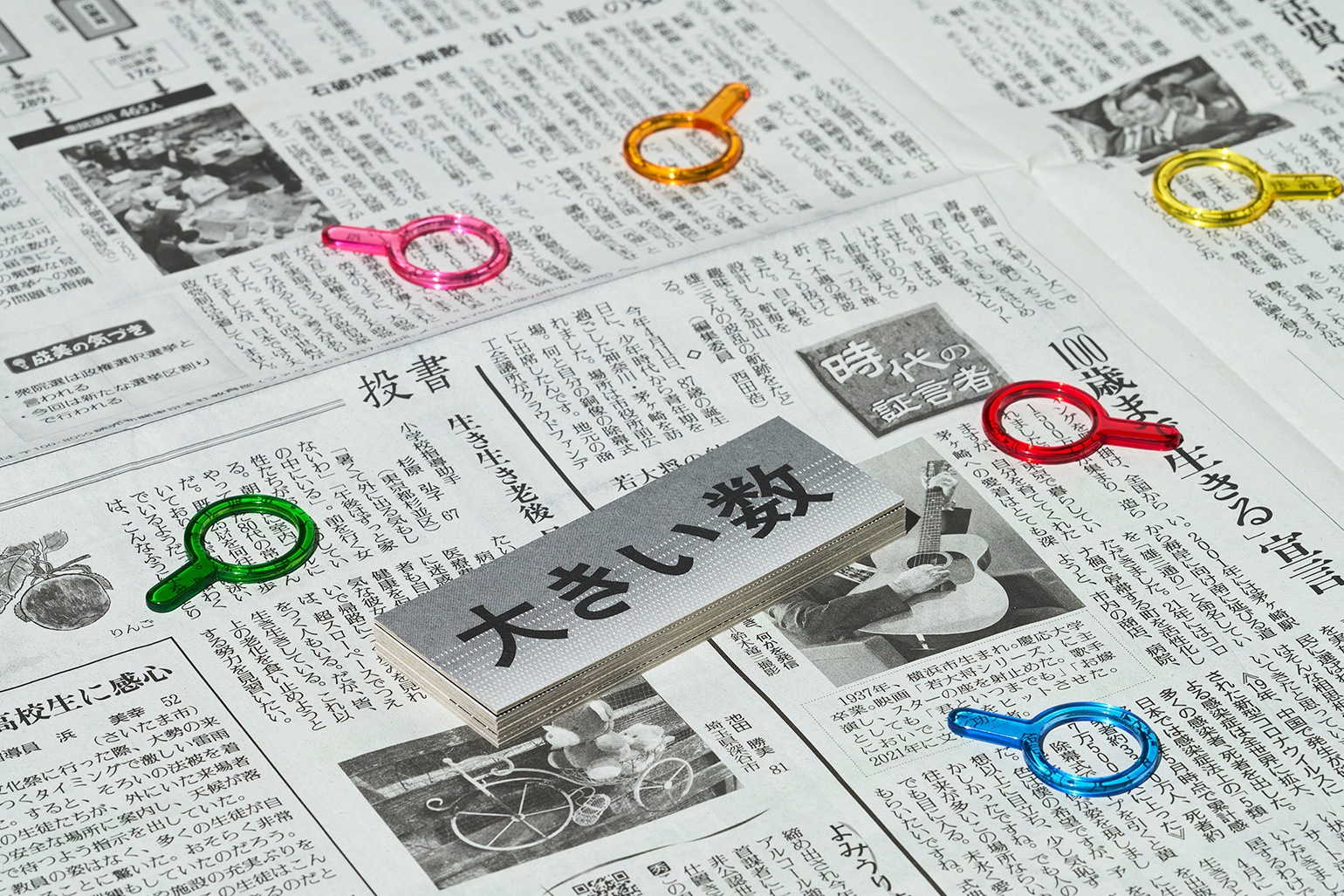
In the world of “play,” there is often no single, absolute correct answer from the start. There are many paths to victory, and the situation changes based on the players’ own choices. For example, there is a teaching material I developed called “BEST SCOOP!” This is a material that uses newspapers for play.

We live in an era where fewer households subscribe to newspapers, and many children have only ever seen a newspaper at school. Even if we confront them head-on in the classroom with “Read the text,” “This is how a newspaper is structured,” or “Read the newspaper to become knowledgeable about current affairs,” children are reluctant to open a newspaper. This is because newspapers contain a lot of text, making them a medium with a high psychological barrier for children.

"BEST SCOOP!" is an analog game played using actual newspaper pages. It’s a simple game where players spread out a newspaper on a table and race to find articles that match given prompts—such as "the largest number," "the place closest to here," or "the longest word in katakana"—faster than anyone else.

However, simply by establishing the rule of “finding specific elements within the newspaper pages,” children become engrossed in flipping through the newspaper to solve the small challenge (or game) placed before them.

Through play, the preconception that “newspapers are difficult and boring” is gradually dispelled, and their approach to information changes dramatically. Rather than adults forcing “correct answers” upon them, children dive into the information themselves through play. Drawing out this active attitude is the greatest benefit of “starting with play.”

When interest comes first, learning deepens naturally

Taking an interest in a subject drastically changes one’s impression of it. Introducing fun into the notion that “studying is painful and something you have to endure” has a very positive impact on learning outcomes.

For example, the National Institute for Materials Science (NIMS) has released a video series titled “To the Scientists of the Future.” Typically, discussions about science and academic explanations of materials are difficult to understand.However, NIMS created a video titled “Invisible Glass” that utilizes a phenomenon where glass becomes invisible when placed in a mixture of oils formulated to have the same refractive index as glass, showing a special Rube Goldberg-style contraption performing mysterious movements. By adding a “playful touch” to the scientific concept of refractive index, they captivate viewers and create a gateway that sparks an interest in science.

My own journey into seriously creating analog games was also sparked by observing my child’s attitude toward “learning.” A few years ago, when my child was just starting elementary school and learning addition, there was a period during summer vacation when they refused to do their math workbook at all. When I asked why, they said, “I understand how to do it, and I can do it. So I don’t need to do it.” In other words, they had realized that the repetitive practice of the workbook was monotonous and “not fun.”

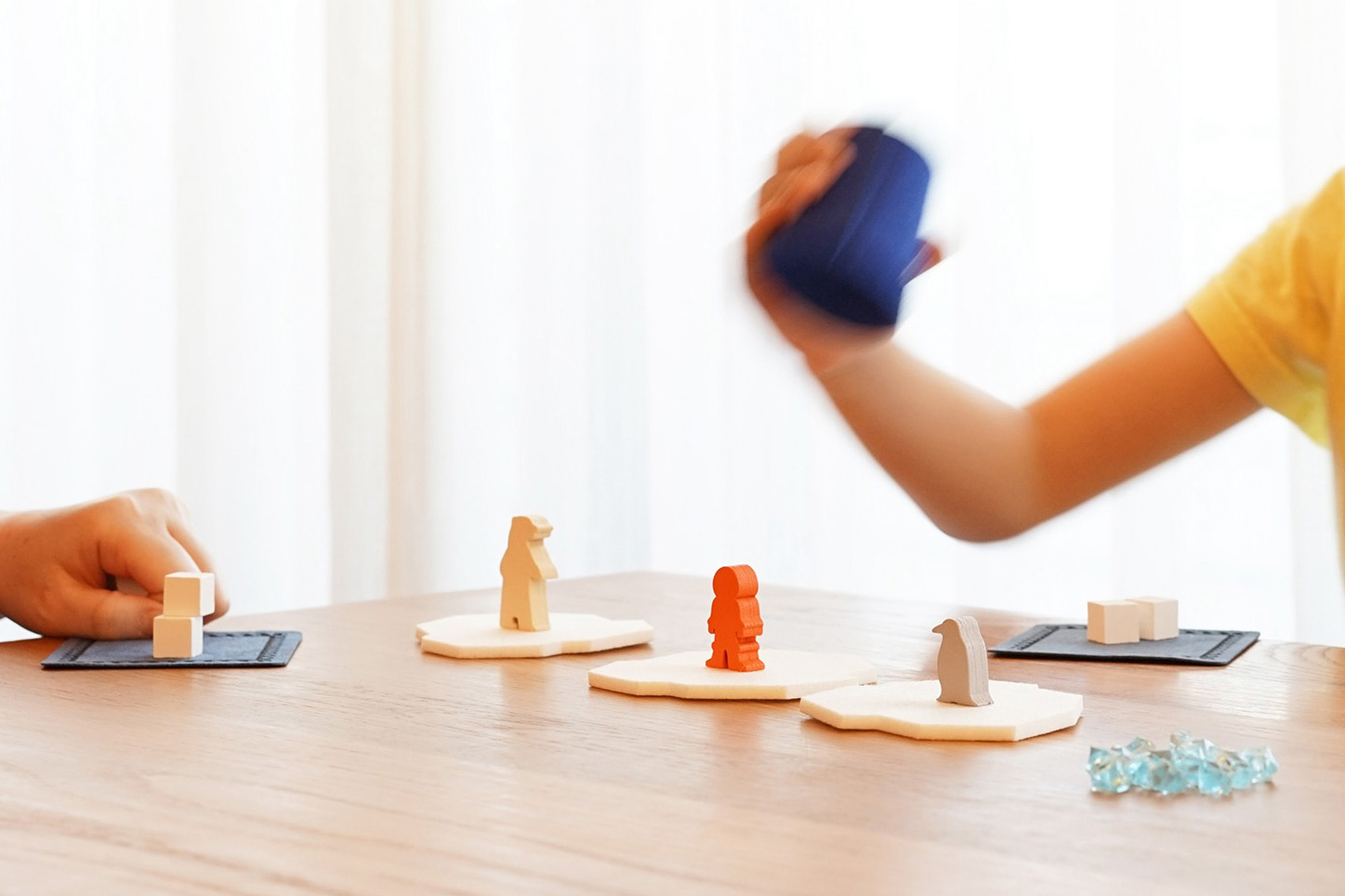
So my wife tried a trick: she held math blocks in both hands, hid them, then suddenly revealed them and asked, “How many and how many?” My child answered, “Two and three make five!” and kept answering over and over without getting bored, treating it like a game. Inspired by this experience, I thought, “What if we turned math into a game? Maybe that would make repetitive practice more fun than doing Drill Inc. worksheets.” That’s how I developed the game “Polarich.”

Addition Action Game “Polarich” (2018, Nanawari)


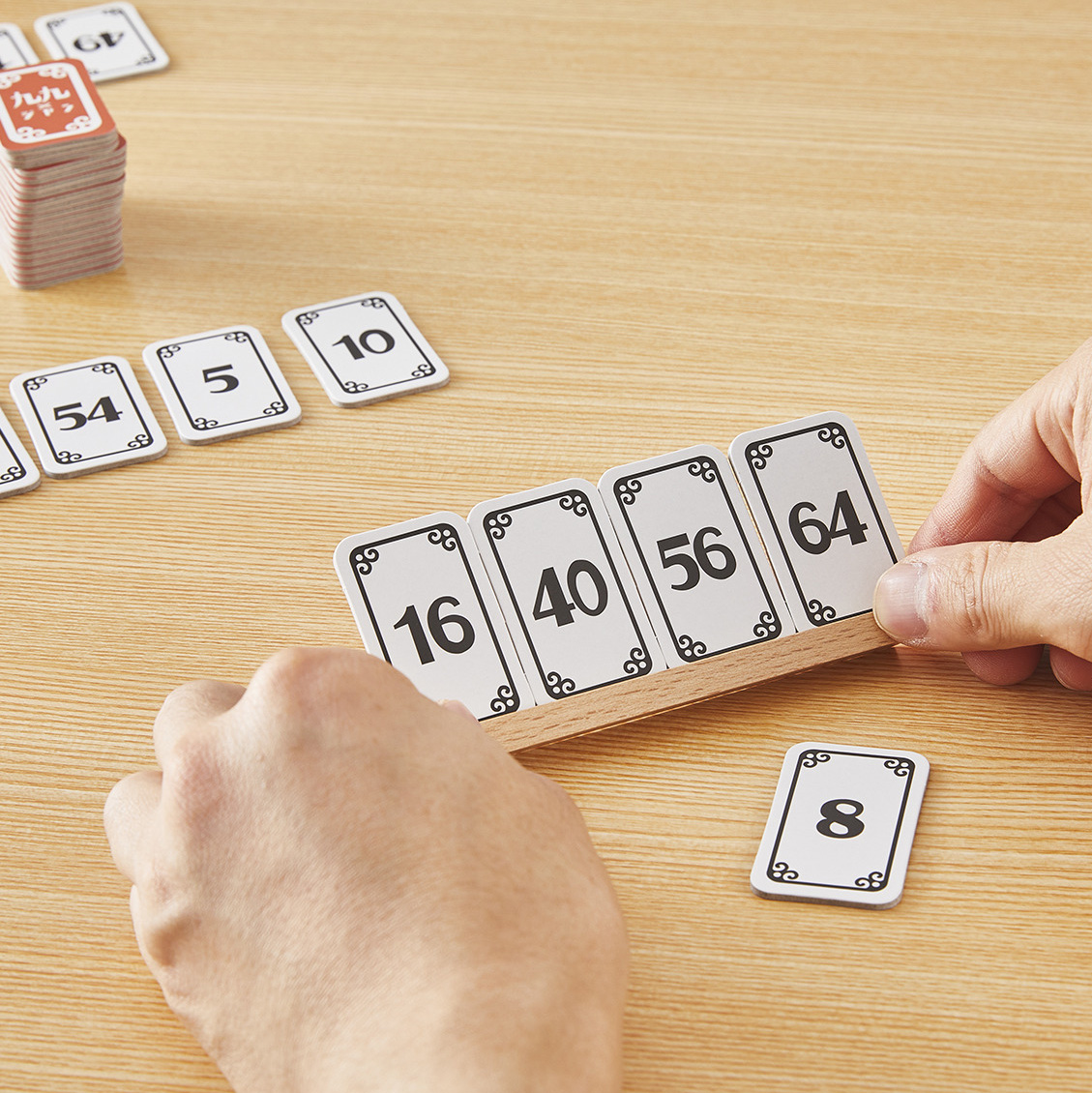
More recently, we developed a card game called “Kukujyan,” which further evolves this approach. This game combines elements of multiplication tables (“Kukujyan”) and mahjong, featuring simple rules where players collect multiplication numbers from the same table.

Memorizing the multiplication tables is a “grueling ordeal” that serves as the first major hurdle for many elementary school students. However, with “Kukujyan,” players don’t just memorize numbers; they develop the ability to instantly determine “which row a number belongs to” just by looking at it. For example, seeing the number 12 makes you see 2, 3, 4, and 6.Furthermore, the game features advanced strategic elements—such as analyzing opponents’ discarded tiles and targeting rows not already taken by other players—which makes it so engaging that not only children but adults get seriously hooked.

"While playing the game, the relationship between numbers and the multiplication table becomes clear." This is the power of play to foster interest.When the term “gamification” was once in vogue, there was a period when attention focused solely on its addictive nature and the way it stoked a desire for luck. However, the components of play and games are packed with elements that enrich people’s lives, such as puzzles that stimulate intellectual curiosity, narratives that foster immersion, and beautiful artwork. Using “play” as an entry point is a very powerful means of making learning enjoyable and fostering the ability to explore on one’s own.

Why Adults Need “PLAY FIRST” Most of All

“Play” is by no means reserved for children alone. In fact, it is adults—who are often bound by fixed notions—who most need the “PLAY FIRST” approach.

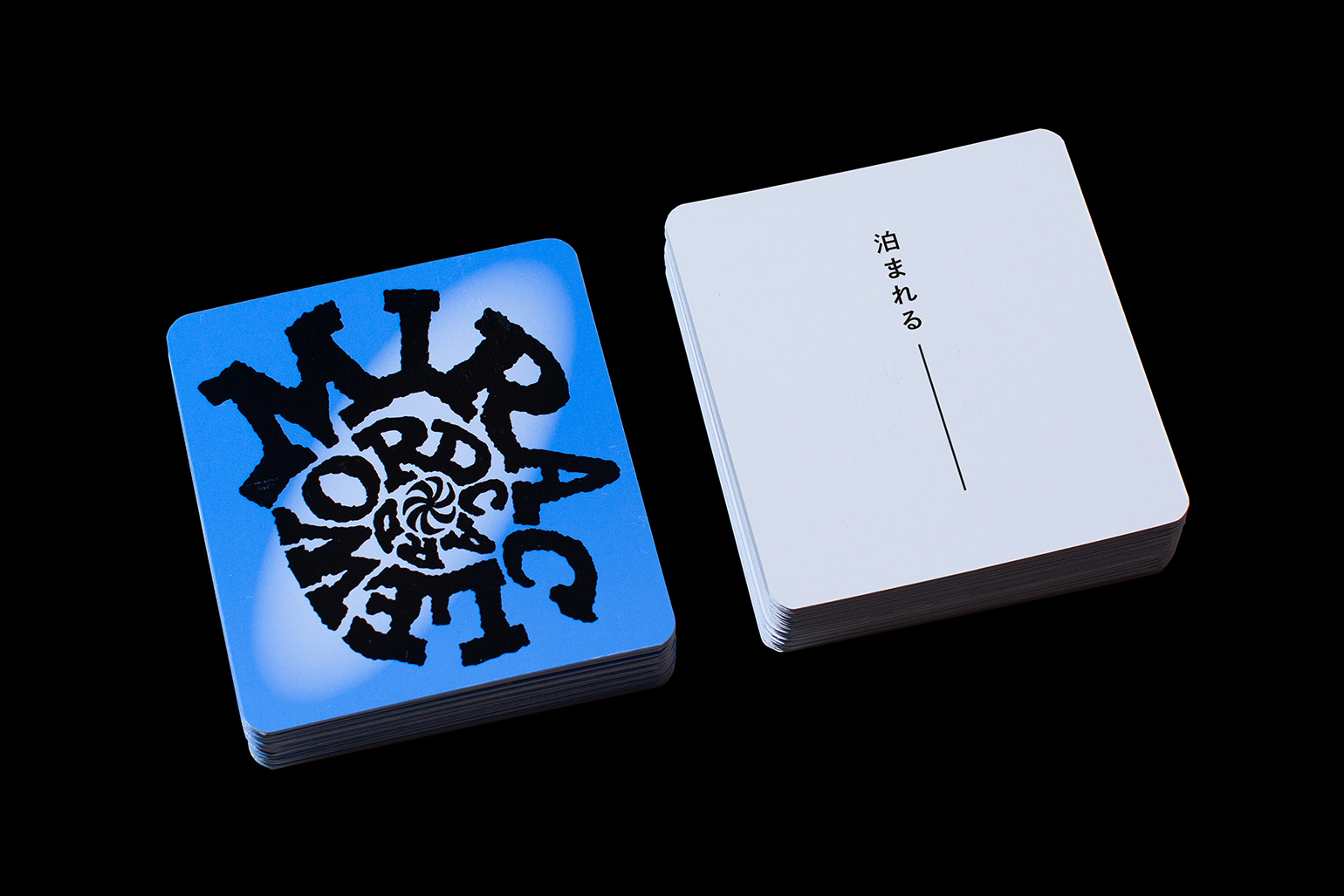
During my time at Dentsu Inc. B Team, I developed an idea-generation tool called “Miracle Word Cards.” This consists of 100 cards featuring “magic words”—phrases like “Night ____,” “Adult ____,” or “Emotional ____”—that, when simply attached to existing words (nouns), generate unexpected seeds for new projects.

Some time ago, I conducted a workshop with an NHK director on the theme of promoting understanding of “amyotrophic lateral sclerosis (ALS),” a highly sensitive and difficult social issue.Normally, when faced with such a heavy topic, adults tend to fall silent, worrying whether their ideas might be “inappropriate” or “feasible.” However, by adopting the format of a “card game” that forces participants to combine Miracle Words, ideas that would never normally occur to anyone—such as “Love Tracking” (music production using eye-tracking technology) and “Traveling ALS” (a travel experience using VR)—emerged one after another in a short amount of time.

Adults often play it safe because they are too concerned with finding the “right answer.” However, when they enter the “playful” rules of a game-like setting, psychological barriers are lowered, and unexpected leaps of imagination occur.

This is a crucial point for teachers in the classroom as well. Teachers, too, are “planners” and “creators” who devise lesson ideas, design inquiry-based learning programs, and evaluate students’ independent research projects. Rather than simply devising “lesson plans” head-on, teachers will increasingly be expected to come up with fun, playful ideas that excite them personally. “Playful lessons” created by teachers rich in creativity will undoubtedly ignite a spark in children’s hearts.

“Playing first” changes how we view challenges

When play serves as the entry point, our perspective on every challenge in the world shifts. Whether incorporating play into disaster drills to experience simulations or using an original “Game of Life” to help people grasp complex financial products, “play” proves highly effective even in solving problems for adults.

In March 2026, I decided to open a store in Kamakura City called “PLAY FIRST STAND,” which will serve as a hub for play and learning. In addition to selling board games and books, we have established a consultation desk for those who say, “I’d like to create games or teaching materials like this.” I hope this will become a place that opens up new possibilities for teachers and business professionals looking to incorporate fresh perspectives into educational settings and corporate training.

PLAY FIRST STAND Website
https://www.instagram.com/playfirststand/


“Start with play.” This is neither escapism nor frivolity; it is the best approach to reawaken our innate curiosity and make learning and problem-solving feel personally relevant. We invite everyone—children and adults alike—to incorporate “PLAY FIRST” into your daily learning and work. You’re sure to discover results and changes that exceed your expectations.

Active Learning: How About This? Research Institute Website
https://www.konnano-dodaro.jp/

Related Series:Active Learning: What About This? Report

Was this article helpful?

Share this article

Author

Toru Oyama

Toru Oyama

Lutecia Co., Ltd.

CEO & Game Designer / External Researcher at the "How About This?" Active Learning Research Institute

After joining Dentsu Inc., he worked as a copywriter in advertising production, new business development, and educational initiatives. He left Dentsu Inc. in 2023 and founded “Lutecia Inc.,” a game company based in Kamakura dedicated to integrating play into society. The company’s concept is “Things work out when you start with play.” In March 2026, he opened “PLAY FIRST STAND,” a select shop for play and learning, in Ofuna, Kamakura.

Also read