Note: This website was automatically translated, so some terms or nuances may not be completely accurate.
 Team Cool Japan Goes [1/3]
What is the Japan Brand? – An Interview with Masaki Kosakai, Producer of NHK Special "Japan Brand"
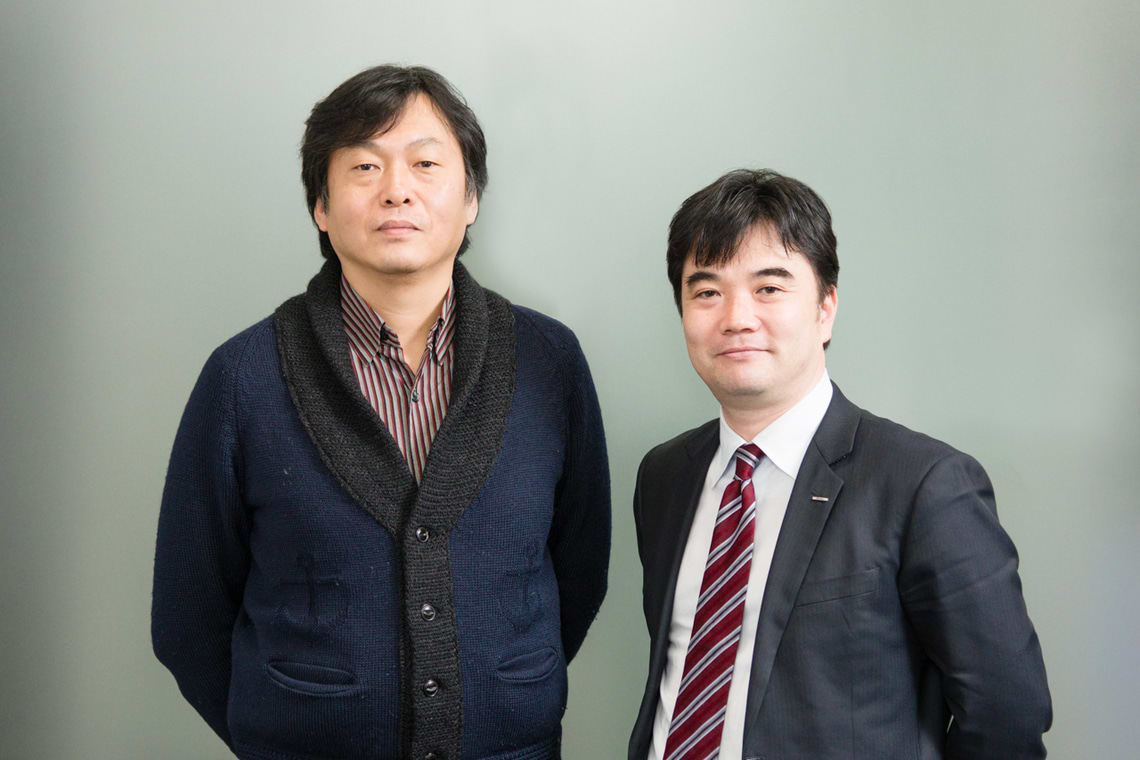
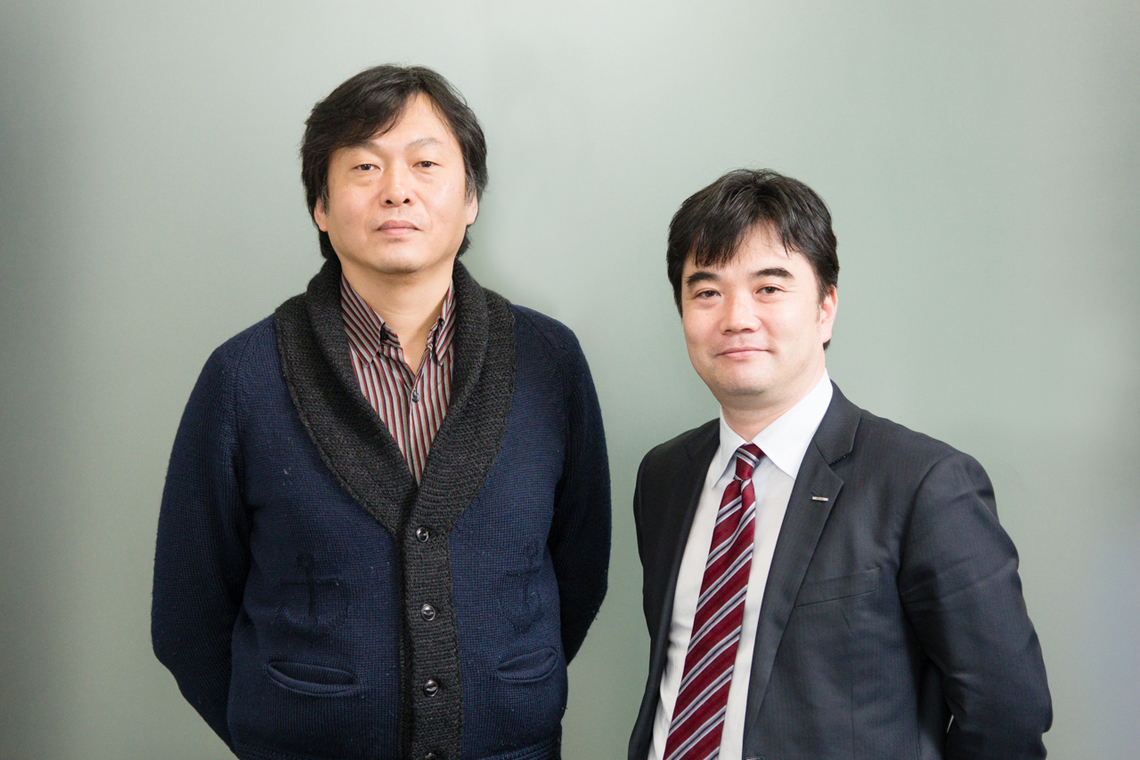
Masaki Kosakai
Japan Broadcasting Corporation

Akira Nogami
Dentsu Inc. Aegis Network Asia Pacific
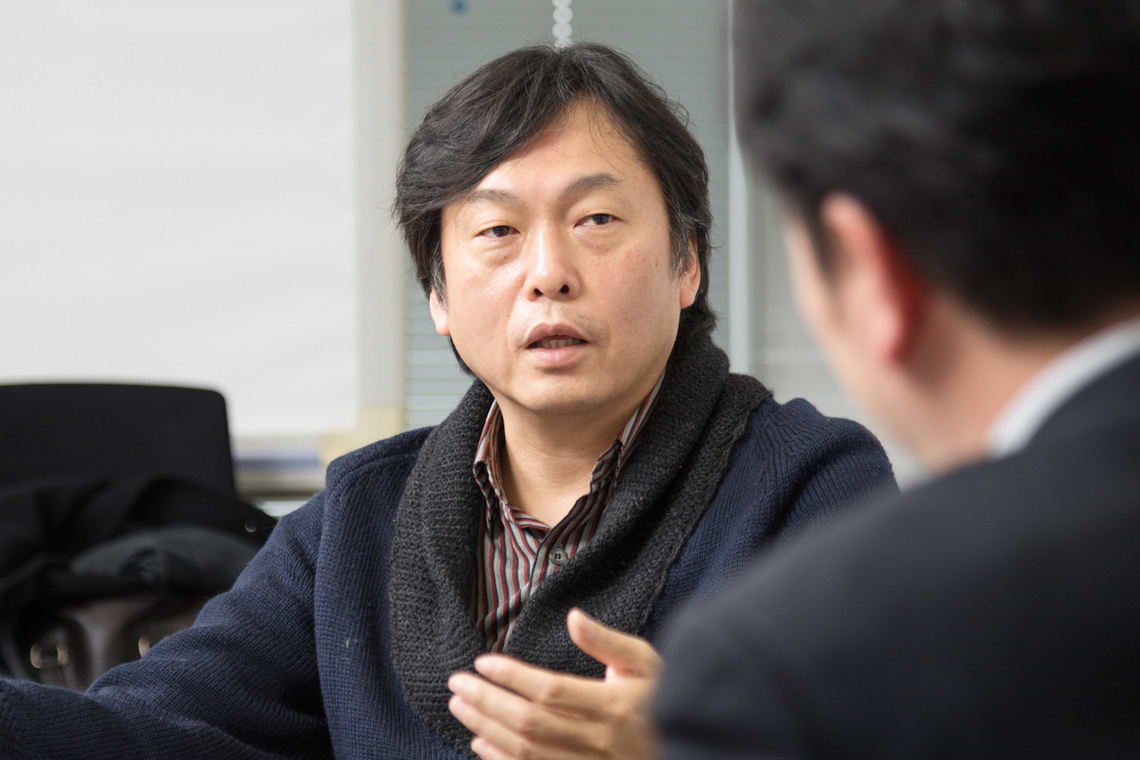
Bringing Japan's proud culture to the world. This project features members of Dentsu Inc.'s company-wide initiative "Team Cool Japan" exploring Cool Japan from various angles and considering how to communicate Japan's appeal. For the first installment, Akira Nogami of Team Cool Japan spoke with Masaki Kosakai, the producer behind the NHK Special "Japan Brand," which aired at the start of the year and generated significant buzz. "We thoroughly debated the definition of what 'Japan Brand' actually means," Kosakai shared.
The meticulousness and artisan spirit underlying Japanese work
Nogami: I found both episodes of the Japan Brand series aired this January—"Opportunities Lie in Food and Agriculture" and "Export 'Japanese-Style' Living Infrastructure"—extremely fascinating. I understand the response was huge. What led to the production of these episodes?
Kosakai: The Japan Brand series is a sequel to the 2012-13 series "Made in Japan: The Counterattack Scenario," which focused on manufacturing.
Originally, we had the problem awareness of how Japanese companies could regain their former momentum. However, in 2012, largely due to the strong yen, major manufacturers suffered massive losses across the board and fell behind their overseas competitors. We realized that merely criticizing the situation wasn't productive. To propose grounded solutions as a program, we took an unusual step for an economic show: we prepared a timeline and approached the topic from a historical perspective.
This approach was well-received, leading us to broaden our focus beyond manufacturing to the entire Japanese economy, which resulted in this current series.
Nogami: Where did the name "Japan Brand" come from?
Kosakai: Building on the production of Made in Japan, when we reconsidered keywords to showcase Japan's strength, we sensed a shared spirit flowing through it all, regardless of industry. The term "Japan Brand" happened to be mentioned by one member while we were brainstorming the concept, and it just clicked.
However, for a large-scale series like this, establishing the concept is crucial. Before production began, we thoroughly debated what "Japan Brand" meant specifically for this program. We spent the most time discussing whether it should be limited to things born in Japan, or if something "Japanese" could include foreigners doing it overseas.
Nogami: I see. So, what did you ultimately decide on?
Kosakai: We concluded that the Japan Brand embodies the Japanese spirit of meticulousness and the artisan mindset – striving for excellence without cutting corners, even when no one is watching.
For example, the meticulous work of Shinkansen cleaning staff, or the pursuit of sweeter vegetables through soil research from the ground up – it's this strong commitment, born from the mindset of "I won't be satisfied unless I go this far," that creates value. The program focused on such products and services, aiming to rediscover Japan's strengths.
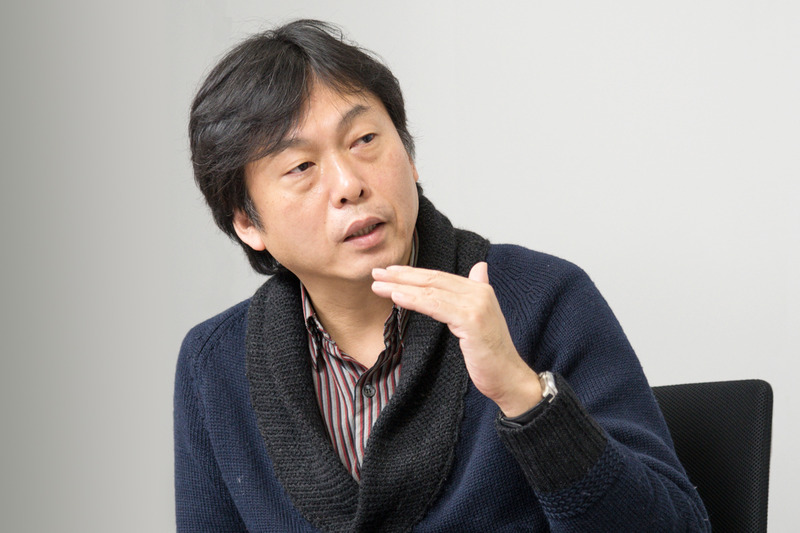
Chasing only immediate wins leads nowhere
N ogami: It's true that living in Japan, we take things like the cleanliness of train interiors for granted, but foreigners would likely be amazed. A railway company representative on the program said, "I never realized something we do routinely could hold such value." Through your research, did you find ways to better communicate Japan's value?
Kosakai: First, I think that looking at what Japan truly is paradoxically led us to consider "how it's seen from the outside." On top of that, I realized we probably shouldn't be fixated on short-term wins and losses.
Nogami: What do you mean by short-term wins and losses?
Kosakai: In other words, gains and losses. As we covered in the program, there was an episode where a consortium of Japanese companies couldn't reach an agreement on a Thai flood control project due to budget constraints. Sure, focusing only on that single instance, it might not have been worth it, but the potential for future opportunities was probably significant. In other interviews too, I often wondered if they were thinking about the next five or ten years.
Traditionally in Japan, business was conducted with the spirit of the Omi merchants' "beneficial for all three parties." Yet, it seems many major corporations have somehow transformed into straightforward short-term profit-seekers. I think that aspect needs reevaluation.
Simultaneously, I sensed issues with team composition. When projects reach the scale of participating in Thailand's flood control initiatives, Japan's leading corporations gather. But this creates a team where everyone acts like a cleanup hitter, leading to inefficiency. If ten companies must reach consensus, the outcome inevitably settles on the lowest common denominator, making it difficult to establish a solid long-term roadmap.
In contrast, for Thailand's new urban transportation project, a major Japanese trading company ultimately took the lead in organizing the team. The chairman of the Thai general contractor explained their decision to partner with the Japanese team: "They had passion. We felt they were genuinely committed to serving Thailand." Emerging market business involves risks. It's regrettable that fewer people are willing to say, "Let's overcome those risks together."
Applying Our Overcome Experiences in Emerging Markets
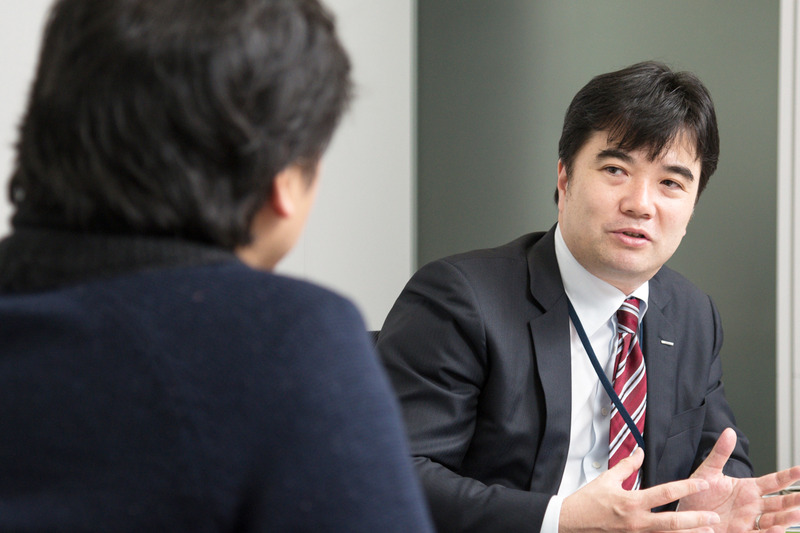
Nogami: The spirit of "benefiting all three parties" that was deeply rooted in Japan, and the idea that giving to others will eventually come back to you, are becoming harder to maintain in the modern era.
Are there examples of companies leveraging their strengths to contribute to emerging markets, even within today's environment demanding short-term results?
Kosakai: For example, a major housing equipment manufacturer is conducting experiments in Kenya on homes using renewable energy that can be inhabited even with insufficient infrastructure, targeting the impoverished.
Kenya has particularly strong diplomatic ties with Japan within Africa. Through JICA (Japan International Cooperation Agency), Japanese experts provide technical guidance locally, while Japan also accepts many Kenyan students. This mutual exchange, especially through human resource development, has built deep trust. This relationship enabled Japanese companies to step in and tackle local challenges.
This initiative can certainly be expanded to other countries, and there is significant potential to create business models for the next 10 to 20 years. Furthermore, energy and water conservation will become challenges even in developed nations, making this direction highly viable for business. Through projects like the Ministry of Foreign Affairs' aid programs, seeds for such matchmaking are actually being sown worldwide. However, due to the reality of vertically structured organizations, collaboration with the business sector remains challenging.
Another excellent example is the movement toward internationalization in Kitakyushu. The city acted as a salesperson for local companies, bridging the gap between small and medium-sized enterprises with high technological capabilities and emerging nations.
Nogami: The program covered that in considerable detail, didn't it?
Kosakai: That's right. This was another case of excellent public-private cooperation. I believe there are two reasons for its success. First, Kitakyushu City leverages its branding based on overcoming severe pollution. Beyond pollution, they're applying their efforts to tackle challenges like shuttered shopping districts, an aging population, and high poverty rates despite being a major city – solutions they aim to share with emerging nations.
The second reason is that over 20 years ago, when they began focusing on internationalization, they first prioritized accepting international students. And they did so in the thousands. These were government-sponsored students, so they were highly motivated and academically strong. Upon returning home, they often took up key positions. Consequently, when considering which country to partner with for international projects, they invariably choose Japan.
For companies to pursue such a broad vision, various factors come into play—corporate culture, organizational theory, education issues, and more. But I believe we should learn that it's essential to develop vision-driven strategies, not just tactics.
( To be continued )
Was this article helpful?
Share this article


Newsletter registration is here
We select and publish important news every day
For inquiries about this article
Author
Masaki Kosakai
Japan Broadcasting Corporation
Large-Scale Project Development Center
Chief Producer
Akira Nogami
Dentsu Inc. Aegis Network Asia Pacific
Born in Tokyo in 1967, graduated from the University of Tokyo Faculty of Economics. Joined Dentsu Inc. in 1991. As a sales executive, handled comprehensive beverage manufacturers, telecommunications companies, pay satellite broadcasting, etc. From 2005, partnered with Taiwan's largest distribution company to develop global character businesses. From 2007, worked in the radio division on business development for internet radio services, including radiko. Appointed General Manager of Radio Media Division in 2009. Assumed current position in September 2013, responsible for Cool Japan initiatives. Leader of the cross-functional internal organization, "Team Cool Japan."