
Note: This website was automatically translated, so some terms or nuances may not be completely accurate.
 Dialogue: "Business and creativity are very similar games." [1/3]
A New "Game" Where Ideas Lead Before Challenges
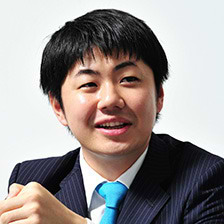
Taichi Murakami
Livesense Inc.
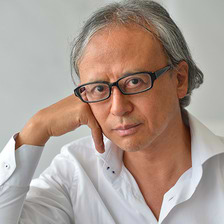
Yuya Furukawa
Furukawa Hiroya Office, Inc.
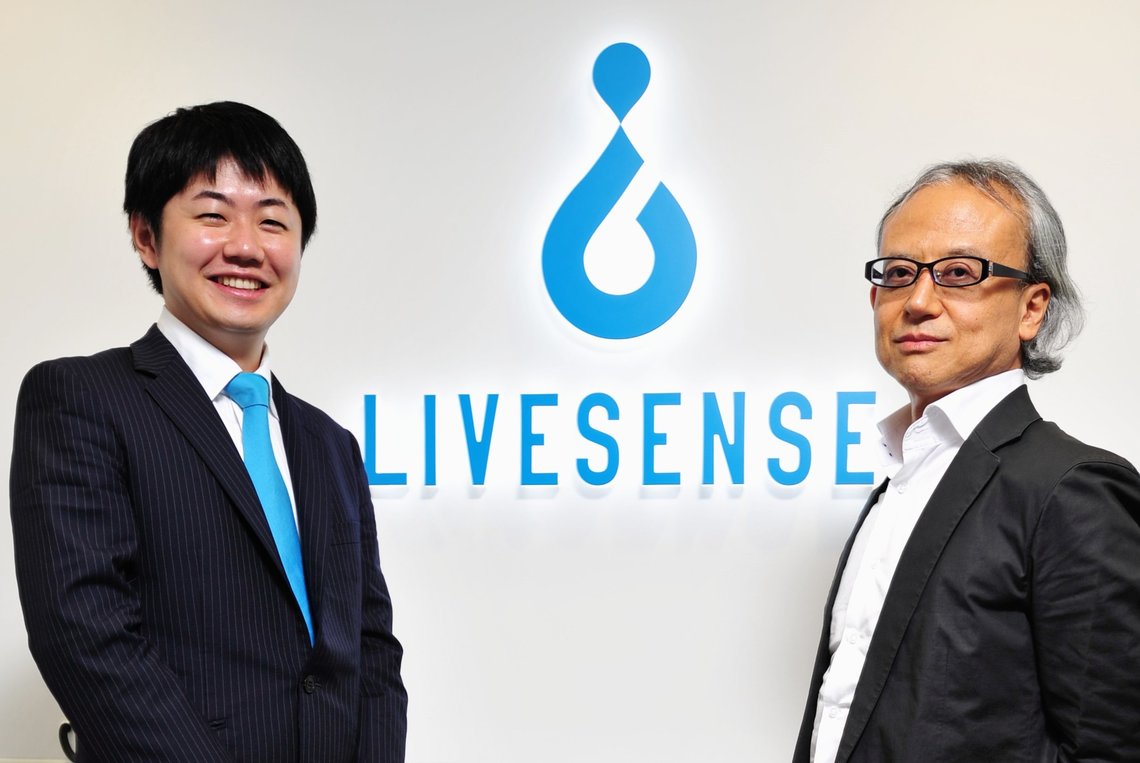
Part 1: A New "Game" Where Ideas Lead, Not Challenges
A rising business leader who achieved a public listing at the youngest age in history—25—and a creative director who has won numerous advertising awards both domestically and internationally. Though their fields of activity and generations differ, their sensibilities for capturing "the present era" resonated. What are the common keywords between the business world and the creative world?
Always Cherishing the Spirit of "Hatena"
Furukawa: This paper cup has your logo on it, and I noticed an object at your company entrance featuring dripping water, inspired by the proverb "Constant dripping wears away the stone."
Murakami: Our company has the vision: "Let's invent the ordinary." When considering what's essential to invent the "ordinary," I thought both the "hatena" (question mark) and the "droplet" – which also form our logo – were necessary. The "hatena" represents questioning the status quo, which is crucial for inventing the ordinary.
But I also thought it couldn't be just the "question mark." The spirit of "a dripping water wears away a stone" is what builds the "ordinary."
For example, the iPhone is commonplace now, but similar concepts existed before it. Yet they didn't spread. That's because they were created solely with "question marks." What made the difference? I believe it was the relentless drive to popularize this "droplet."
Furukawa: Is that like continuing to believe in yourself?
Murakami: That's close. Even when you believe your ideas are right, sticking to something that goes against common sense is quite painful, and doubts inevitably arise. Continuing to believe and persistently drip the water is what ultimately creates the "ordinary." If you give up after just a few drops, the business won't be born. I think innovation happens the moment you overcome the difficulty and pain.
Furukawa: When it comes to Livesense, your starting point was the highly acclaimed success-based part-time job site "Job Sense." How do you build such a business model in your mind? If there's something like a "Murakami Method," please tell us.
Murakami: We truly value the "Hatena" philosophy, which is also embedded in the Livesense logo. "Hatena" means maintaining an attitude of "questioning" everything. We constantly think about whether services or systems can be improved somewhere, whether they can be made better. For example, even when going out to eat with employees, I might think, "How could we increase this restaurant's sales?" Or when a new service launches, I think, "If they changed this part, it would be much easier to use." Also, in those moments, I consciously focus not primarily on the business aspect, but on what I would want if I were the user, what would make me want to use it.
Furukawa: I think there's a breakthrough moment when a product really takes off. What do you think that is?
Murakami: Generally, people want to pinpoint a clear trigger that made things work, but in reality, progress is often gradual.
Sure, an OS version update might be one factor, but behind that update, I believe there's the steady, persistent groundwork—like continuously and thoroughly refining things, or gathering customer feedback and building improvements one by one. I don't think there's ever just one thing that makes it work.
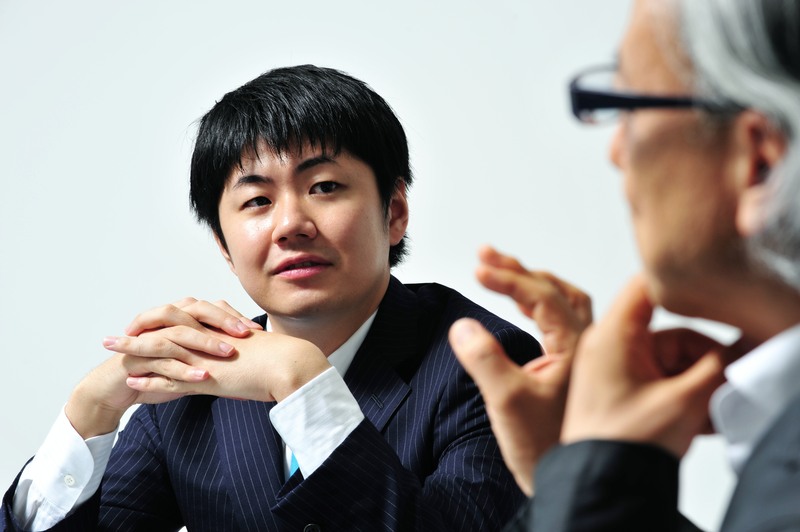
Entrepreneurs and businesspeople have become almost the same category as creatives.
Furukawa: What I found particularly interesting in Livesense's vision was the word "invent" in "Let's invent the obvious." It boldly stated that we would establish a new "universal" standard based on "invention," not just responding to needs or trends.
Murakami: Honestly, we agonized over whether to say "create the ordinary," "make the ordinary," or "invent the ordinary." We deliberately chose "invent" because we wanted to emphasize the intent to "create something that's never existed before." We wanted the word "invent" to express the act of bringing something non-existent into being.
Furukawa: Our advertising work has a very clear process. First, there's a challenge the client faces. We propose an idea to solve it, then execute it – giving it form. This "challenge → idea → execution" process has remained constant in the advertising industry.
However, this year's Cannes Lions International Festival of Creativity introduced a new Innovation category. In a way, this is incredibly groundbreaking—it's a category for creating services, products, or platforms where there isn't necessarily a predefined problem to solve. You start with a prototype or idea and then consider how it could potentially improve the world. The vector is reversed: "Idea → Problem." I felt this was closer to invention than just an idea.
For the advertising industry, I believe this marks the arrival of a groundbreaking category that changes the "rules of the game" that have persisted for 60 years. Therefore, I think advertising agencies now need to pursue creating excellent new ideas in areas without existing problems and focus on how those ideas can improve society.
What do you think about this idea→problem vector, Mr. Murakami, from your perspective in the business world?
Murakami: In business, "challenges" have often been replaced with phrases like "what I want," leading to a "challenge → idea" directionality. But it's also true that ideas have solved challenges in the opposite direction.
Take facial recognition technology, for example. People kept asking, "What on earth is that for?" yet engineers persisted in their research. Facebook acquired Face.com, an Israeli startup with facial recognition tech. That's an approach where you acquire a company with the idea to solve a problem, right?
Furukawa: Indeed, in business too, I feel there are increasing cases where an idea like "I want to do this" emerges, and it solves a problem in the world. Regarding the relationship between problems and ideas, I find the process for generating creative ideas and the process for generating business ideas are surprisingly similar. Seeing the word "invention" today made me think, "Ah, they really are the same." Entrepreneurs and creatives, in terms of their way of using their minds, have become almost the same discipline.
As Mr. Murakami says, there are indeed two types.
One pattern starts with a problem or challenge—like "That area isn't working well"—and then you think of an idea to solve it. Advertising agencies get these challenges from clients. They're essentially someone else's problems. But in Mr. Murakami's case, he started with a challenge he discovered himself: the difficulty of finding part-time job information.
The other pattern is when an idea sprouts out of nowhere—like "I just made something!" or "I think I could do this kind of thing"—from a completely blank slate with no pre-existing problem. Of course, since it's business, the ultimate goal is to generate profit. But in this case, the process starts with discovering the problem from that initial idea sprout.

Was this article helpful?
Share this article


Newsletter registration is here
We select and publish important news every day
For inquiries about this article
Author
Taichi Murakami
Livesense Inc.
President
Yuya Furukawa
Furukawa Hiroya Office, Inc.
Creative Director